


Top Tips to Style Vintage Scarves for Effortless Chic

Choosing and wearing vintage scarves can leave you feeling unsure where to start. There are endless patterns, fabrics, and ways to tie them, making it tricky to know what truly suits your style and stays looking beautiful over time. Without the right approach, it’s easy to end up with a scarf you never wear or one that doesn’t last.
This guide gives you clear, practical advice for every step—selecting authentic pieces, tying them with everyday glamour, and caring for your collection so it remains vibrant. You’ll discover proven tips for personalising your look, adding flair to your wardrobe, and making each scarf a lasting statement.
Get ready to unlock the best ways to pick, style, and protect your vintage scarves, with simple techniques you can use right away. Your favourite looks are just ahead.
Table of Contents
1. Choose the Perfect Vintage Scarf for Your Style

Finding the right vintage scarf begins with understanding what makes a piece special. A quality vintage scarf combines luxurious fabric, distinctive pattern work, and the authentic character that only comes with age.
Start by examining the material composition. Silk scarves are prized for their lustre and drape, whilst wool offers warmth and texture, and cotton provides breathable versatility. Each fabric tells a story about the scarf’s original purpose and era.
Condition matters enormously when selecting your piece. Look for minimal wear, pristine seams, and hand-rolled edges that indicate craftsmanship. Avoid scarves with stains, holes, or unravelling hems, as these damage the garment’s longevity and aesthetic appeal.
Consider what era resonates with your personal style:
1950s scarves feature elegant florals, geometric patterns, and refined colour palettes
1960s designs showcase bold prints, psychedelic patterns, and mod-inspired graphics
1970s pieces embrace bohemian prints, earth tones, and flowing silhouettes
1980s scarves display vibrant colours, abstract designs, and statement-making patterns
Authenticity indicators help you spot genuine vintage treasures. Original labels reveal manufacturing details and era information. Look for neat hemming, consistent stitching patterns, and the quality markers that define well-made garments from their respective decades.
Your scarf should complement both your existing wardrobe and personal aesthetic. If you favour neutral clothing, a bold patterned scarf becomes your statement piece. For those who love colour and pattern mixing, a vintage scarf in complementary tones ties your look together seamlessly.
Choosing a vintage scarf that reflects your individual style ensures you’ll actually wear and treasure it for years to come.
Think about versatility when making your selection. The best vintage scarves work as neckwear, headbands, belt accessories, or even bag embellishments. This flexibility means your single purchase transforms multiple outfits without overwhelming your overall aesthetic.
Pro tip: Examine the scarf under natural daylight before purchasing to ensure the colours match your skin tone and complement your wardrobe, as indoor lighting can distort how vintage dyes truly appear.
2. Master Classic Headscarf Ties for Everyday Glamour

A well-tied headscarf transforms your entire look with minimal effort. This timeless technique combines practical functionality with vintage elegance, keeping your hair neat whilst adding instant retro charm to any outfit.
The foundation of classic headscarf styling begins with the right fold. Take a square scarf and fold it diagonally into a triangle, creating a structured base that sits properly against your hair and face. This simple fold is the secret to achieving that effortless glamour you see in vintage photographs.
Position the folded triangle along your hairline, with the point facing downwards towards the nape of your neck. This placement flatters most face shapes whilst keeping wayward strands in check. The positioning determines whether your final look feels polished or playful.
There are two classic ways to finish your headscarf tie:
Back-of-neck knot creates a relaxed, bohemian feel perfect for casual days
Under-chin tie delivers structured elegance reminiscent of 1950s sophistication
Silk scarves work beautifully for this technique because they drape elegantly without adding bulk. Their natural sheen catches light gorgeously, whilst the lightweight fabric won’t flatten your hair or feel uncomfortable throughout the day. Cotton and linen scarves offer equally charming alternatives with their own distinct character.
The beauty of mastering this tie lies in its versatility. You can wear it to run errands, attend casual brunches, or dress it up for more formal occasions. One scarf, multiple personality shifts.
A classic headscarf tie instantly elevates your everyday style without requiring any complicated techniques or styling expertise.
Practice makes this technique second nature. Your first attempt might feel fiddly, but within a few tries, you’ll tie it without thinking. Soon you’ll discover subtle variations that suit your personal preferences and face shape.
This styling method also serves practical purposes beyond aesthetics. It keeps hair away from your face on windy days, protects your hair from environmental damage, and adds volume and shape to your look. Function and fashion work beautifully together here.
Pro tip: Use a scarf with printed edges or contrasting colours on each side, as you can adjust which side shows depending on your mood, giving yourself two completely different looks from a single vintage scarf.
3. Add Flair to Bags and Accessories with Scarves
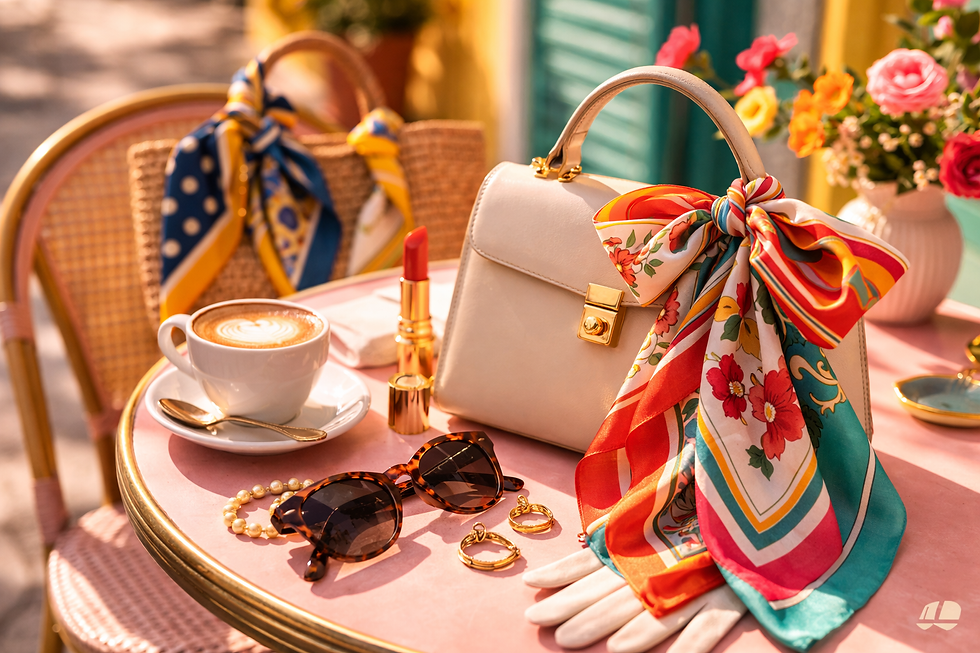
Your vintage scarf doesn’t need to frame your face or drape your shoulders to make an impact. Tying a scarf around your bag handle transforms an ordinary handbag into a personalised statement piece whilst showcasing your vintage treasure.
This styling technique is wonderfully simple yet remarkably effective. A slim scarf or twilly style works perfectly for this purpose, adding refined colour and pattern without overwhelming your bag’s design. The scarf becomes a functional accessory that ties your entire outfit together visually.
When selecting a scarf for bag styling, consider your handbag’s colour and material. A neutral bag pairs beautifully with bold patterned scarves, whilst a statement bag benefits from a more understated scarf that complements rather than competes. This thoughtful coordination elevates your overall aesthetic.
There are several ways to incorporate scarves into vintage bag styling:
Wrap around the handle for a polished, preppy look
Tie a loose knot at the handle’s base for relaxed charm
Weave through the handle and let the ends flow freely
Secure with a discreet knot inside the bag for subtle peeking details
Beyond handbags, scarves enhance other accessories beautifully. Wrap one around a wide-brimmed hat’s crown, tie it to your belt loops, or use it as a makeshift hairpiece accessory. These small touches demonstrate your attention to detail and fashion awareness.
A vintage scarf on your bag keeps your accessory visible whilst adding layers of visual interest to your complete look.
The genius of this approach lies in its versatility. You can change your scarf daily, transforming the same bag into different outfits without purchasing new accessories. This sustainability appeals to conscious fashion enthusiasts seeking creative ways to maximise their wardrobes.
Practical benefits accompany the aesthetic ones. Your scarf remains protected from excessive wear when tied to a bag, and it’s easily accessible if you need it for styling adjustments throughout your day. Function and fashion genuinely work together here.
Pro tip: Tie your scarf using a simple slip knot rather than a permanent knot, allowing you to adjust it throughout the day and swap scarves between bags without untying multiple times.
4. Create Elegant Neck Ties for Day and Evening

A vintage scarf tied elegantly around your neck transforms your entire presence, whether you’re heading to the office or an evening celebration. This versatile styling technique works beautifully across countless occasions, offering sophistication that feels effortless and refined.
The foundation starts with understanding basic folding methods. Fold your scarf into a triangle for fuller coverage, or fold it into a narrow band for delicate, understated elegance. Your choice of fold determines the final look’s formality level and visual impact.
The classic knot remains your most reliable option for everyday wear. Simply wrap the scarf around your neck and tie a gentle knot at the front, leaving the ends to fall naturally. This casual approach works perfectly for daytime outings whilst maintaining polish and sophistication.
For more refined occasions, elegant evening styles elevate your look considerably. Try these sophisticated variations:
Parisian knot ties the scarf loosely for an effortlessly chic European aesthetic
Draped bow creates formal elegance by securing a soft bow at your throat
Loose wrap allows the scarf to drape freely for romantic, evening-appropriate styling
Ascot tie folds the scarf precisely for sharp, tailored sophistication
Adjusting your knot’s snugness changes the overall mood instantly. A tightly secured knot feels structured and polished, whilst a loosely tied version suggests relaxed confidence. This flexibility allows you to transition seamlessly from daywear to evening without changing clothes.
Colour and pattern selection matters significantly for occasion appropriateness. Neutral tones and subtle patterns work beautifully for professional daytime settings, whilst jewel tones and bolder designs shine during evening occasions. Your scarf choice communicates your understanding of context and occasion.
Length considerations affect drape and comfort. Longer scarves offer more styling possibilities, whilst shorter ones provide streamlined elegance. Most square scarves of 60 to 90 centimetres work beautifully for neck styling across all occasions.
Pro tip: Practice tying your chosen knot style before the occasion, ensuring it sits comfortably around your neck and maintains its shape throughout the day without requiring constant adjustment.
5. Reinvent Outfits with Belted Scarf Techniques

A belted scarf transforms your silhouette instantly, creating a structured, flattering look from pieces already hanging in your wardrobe. This styling technique proves that you don’t need to buy new clothes to refresh your everyday aesthetic.
The technique works by draping a long scarf across your shoulders, then securing it at the waist with a belt. This creates visual definition and adds texture, pattern, and dimension to otherwise simple outfits. The belt anchors everything beautifully, creating a polished, intentional appearance.
Start with a scarf that’s long enough to drape generously. Square scarves work well, but rectangular scarves offer even more styling flexibility. The length determines how dramatically the scarf falls and how much visual impact you’ll achieve.
This method works beautifully across numerous scenarios:
Layer over plain dresses for instant pattern and personality
Drape across neutral jumpers to add colour without purchasing new knitwear
Wear over coats for daytime sophistication with minimal effort
Style with evening dresses to create dimension and visual interest
Combine with simple outfits to elevate everyday looks significantly
Belt selection matters considerably when using this technique. A structured belt cinches the scarf and creates definition at your narrowest point. Choose metallic belts for evening glamour, leather for daytime polish, or vintage belts that complement your scarf’s pattern and era.
Iconic vintage accessory styling demonstrates how this belting approach transforms modest pieces into statement looks. The scarf becomes an architectural element rather than merely decorative, creating real visual impact.
A single belted scarf reinvents an entire outfit, making your existing clothes feel fresh and fashion-forward.
Colour coordination enhances the final result tremendously. Match your belt to your scarf’s colours for cohesive elegance, or contrast them deliberately for bold, modern styling. Either approach works beautifully depending on your aesthetic preference.
This technique also works practically for different seasons. Lightweight silk scarves perfect summer layering, whilst heavier wool scarves provide autumn and winter warmth. The belt keeps everything secure regardless of weather or movement throughout your day.
Pro tip: Experiment with different belt placements from your natural waist to slightly higher or lower to find your most flattering silhouette, as subtle adjustments dramatically change how the scarf drapes and flatters your figure.
6. Layer Scarves on Coats for a Statement Look

Layering a vintage scarf over your coat transforms ordinary outerwear into a bold fashion statement. This technique combines warmth with style, turning your coat into the focal point of your entire outfit rather than mere background.
The beauty of this approach lies in its simplicity and impact. Drape your scarf loosely around your neck and shoulders before putting on your coat, allowing the fabric to sit visibly atop the outerwear. The scarf becomes architectural, framing your face and drawing attention upwards.
Texture and fabric matter tremendously when layering scarves this way. Rich fabrics like cashmere, silk, and quality wool create visual interest that plain coats cannot achieve alone. These luxurious materials catch light beautifully and convey sophistication immediately.
Consider these layering approaches for different occasions:
Loose drape works beautifully for casual daytime styling with oversized scarves
Elegant knot creates refined, polished looks suitable for professional settings
Wrapped and tucked provides structured elegance for evening occasions
Asymmetrical placement offers modern, fashion-forward styling with dramatic flair
Vintage outerwear pieces pair exceptionally well with layered scarves because their classic lines benefit from contemporary accessorising. A neutral winter coat becomes entirely fresh when combined with a bold patterned scarf, whilst a trench coat gains dimension through textured fabric layering.
Colour coordination transforms the final result dramatically. Choose scarves in jewel tones to brighten darker coats, or opt for complementary hues that echo your coat’s existing colour palette. Either approach creates polish and intentionality.
A single layered scarf converts your coat from functional outerwear into a carefully curated style statement that reflects your fashion sensibility.
Seasonal versatility works beautifully with this technique. Lightweight silk scarves suit spring and autumn layering, whilst heavier woollen scarves provide both warmth and visual impact throughout winter. The scarf serves dual purposes, addressing practical needs whilst elevating your aesthetic.
Practical considerations matter too. Ensure your scarf sits comfortably beneath your coat collar without creating bulk. Test your layering before heading out to guarantee comfort and proper drape throughout your day.
Pro tip: Choose a scarf in a contrasting colour to your coat to ensure the layering reads as intentional styling rather than appearing accidental or haphazard.
7. Care and Store Vintage Scarves to Keep Them Beautiful
Your vintage scarves deserve proper care to maintain their beauty for years to come. Thoughtful preservation ensures the colours remain vibrant, fabrics stay supple, and your treasured pieces continue bringing joy to your wardrobe.
Gentle cleaning forms the foundation of scarf care. Hand wash delicate fabrics like silk and wool in cold water using mild detergent specifically formulated for these materials. Avoid harsh chemicals, machine washing, and vigorous rubbing that damages delicate fibres and fades colours.
For scarves requiring professional attention, dry cleaning offers peace of mind. Delicate materials and heavily patterned pieces benefit from professional expertise. Choose a dry cleaner experienced with vintage textiles who understands the specific requirements of older garments.
Storage decisions significantly impact your scarves’ longevity. Proper storage methods include:
Rolling scarves loosely instead of folding tightly to prevent permanent creases
Using acid-free tissue paper as protective wrapping
Storing in breathable containers rather than plastic bags that trap moisture
Keeping scarves in cool, dry locations away from direct sunlight
Protecting against moths using lavender sachets or cedar blocks
Vintage clothing preservation techniques extend directly to scarves, emphasising environmental control. Temperature fluctuations and humidity damage delicate fabrics over time, so choosing stable storage locations protects your investment substantially.
Handling requires care throughout wearing and storage. Avoid excessive pulling or rough treatment that stresses seams and fibres. Treat vintage scarves as the treasured garments they are, handling them with deliberate attention.
Proper care transforms vintage scarf ownership from a fleeting trend into a lifelong relationship with cherished pieces.
Seasonal storage rotation keeps scarves accessible whilst protecting them from seasonal challenges. Store heavier scarves separately during summer months, and rotate seasonal pieces into accessible spaces. This organisation prevents damage from compression and keeps everything in excellent condition.
Regular inspection catches potential issues early. Check stored scarves occasionally for moth damage, colour fading, or fabric deterioration. Early intervention prevents small problems from becoming irreversible damage that compromises the scarf’s beauty and wearability.
Pro tip: Store each scarf in its own acid-free tissue paper envelope within a breathable container, keeping a handwritten inventory label visible so you can see what you own without removing everything and disturbing the storage system.
Below is a comprehensive table summarising the key points and strategies discussed in the article “Choose the Perfect Vintage Scarf for Your Style,” covering selection aspects, styling techniques, and care tips.
Aspect | Details and Actions | Purpose and Benefits |
Choosing a Scarf | Examine fabric types, authenticity indicators, and vintage eras. | Find a piece that reflects individual style and complements your wardrobe. |
Classic Headscarf Tie | Fold into a triangular shape and tie under the chin or at the neck’s back. | Offers structured elegance or relaxed charm, respectively. |
Accessorising Bags | Wrap, tie, or weave scarves around bag handles. | Adds colour and pattern, creating a personalised statement. |
Neck Ties Styling | Use classic knot, Parisian, draped bow, or loose wrap techniques. | Provides versatility for day and evening elegance. |
Belting Techniques | Drape a long scarf and secure it with a belt. | Adds dimension, texture, and a flattering silhouette to existing outfits. |
Layering on Coats | Drape or knot scarves atop outerwear. | Creates a stylish statement by elevating standard coats and jackets. |
Caring for Scarves | Hand wash delicately, store properly using acid-free materials. | Maintains quality, prolongs longevity, and preserves beauty. |
Elevate Your Vintage Scarf Style with My Vintage
Discovering the perfect way to style vintage scarves can be challenging when seeking pieces that truly reflect your personality while offering versatility and timeless charm. Whether you want to master classic headscarf ties, add flair to bags, or reinvent your entire look with belted scarves, finding authentic scarves that deliver quality and unique character is key to effortless chic.
Explore our carefully curated collection at My Vintage where every scarf tells a story from the 1940s to the 1990s and fits seamlessly into your wardrobe. Benefit from pieces crafted in luxurious fabrics and distinctive patterns ready to transform your daily outfit. Start your vintage style journey today by browsing authentic scarves and styling inspiration at My Vintage. Embrace individuality and timeless elegance with scarves that keep your fashion fresh and your look confidently classic.
Frequently Asked Questions
How can I choose the right vintage scarf for my style?
To choose the perfect vintage scarf, consider the material, pattern, and era. Examine fabrics like silk for elegance, wool for warmth, and cotton for versatility, and select a style that complements your existing wardrobe and personal aesthetic.
What are some classic ways to tie a headscarf for everyday use?
Classic headscarf ties like the back-of-neck knot or under-chin tie are simple yet effective. Fold your scarf into a triangle and position it at your hairline, then choose your preferred tying method to elevate your everyday look effortlessly.
How can I use a vintage scarf to accessorise my handbags?
You can transform your handbag by tying a vintage scarf around the handle. Consider styles like wrapping it around for a polished look or tying a loose knot, giving your bag a stylish flair without much effort.
What are some elegant ways to style a vintage scarf around my neck for different occasions?
You can style a vintage scarf around your neck using techniques like the classic knot for everyday wear or the Parisian knot for a chic look. Experiment with different folding methods and knot styles to transition smoothly from daytime to evening looks.
How do I care for and store my vintage scarves properly?
Proper care involves hand washing delicate scarves in cold water, avoiding harsh chemicals. When storing, roll them loosely in acid-free tissue paper and place them in a cool, dry location away from sunlight to maintain their vibrancy and texture for years.
Recommended

Comments