


Charm Bracelets: The Jewellery That Tells Your Story
- 4 hours ago
- 6 min read
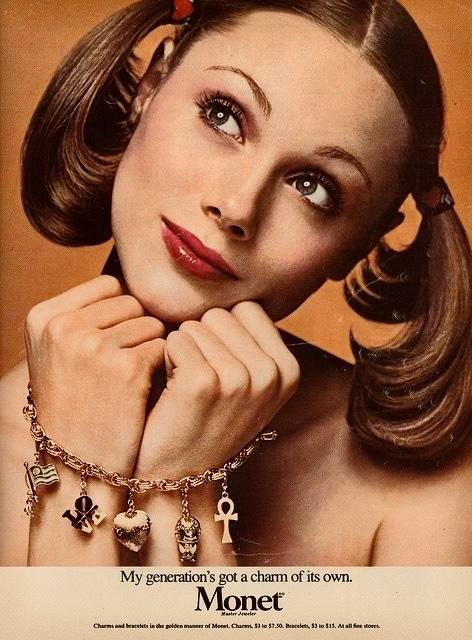
There is something wonderfully irresistible about a charm bracelet. Unlike a necklace chosen simply because it looks beautiful or a pair of earrings bought to complete an outfit, a charm bracelet can become a miniature record of a life. A tiny aeroplane might remember a first trip abroad, a key might mark a new home, a heart a romance, and a little shoe, animal or telephone might exist for no grander reason than its owner simply loved it.
That sense of personality is precisely what makes vintage charm bracelets so fascinating. They were never designed to remain static. Charms could be bought, gifted, collected and added over years, allowing an ordinary piece of jewellery to gradually become completely individual.
And while jewellery has carried symbolic, protective and sentimental meanings for thousands of years, the charm bracelet as we recognise it today has its own particularly colourful fashion story.
From Ancient Amulets to Victorian Sentiment
The idea of wearing small symbolic objects is far older than the modern charm bracelet. Jewellery has been used as decoration, protection and personal symbolism since ancient times; surviving Egyptian jewellery, for example, dates back more than 6,000 years.
But the nineteenth century brought symbolism and sentimentality into jewellery in a particularly fashionable way.
Victorian jewellery could commemorate love, mourning, travel, friendship and family. Queen Victoria herself was enormously influential in nineteenth-century jewellery fashions, while the period's fascination with travel and the ancient world inspired jewellery incorporating everything from Scottish stones to archaeological motifs. The V&A notes that Victoria's enthusiasm for Scottish hardstones helped fuel a craze for so-called "Scotch pebble" jewellery and souvenir pieces.
Travel also provided inspiration. Nineteenth-century tourists brought jewellery home from Europe, while archaeological discoveries created an appetite for pieces inspired by ancient civilisations. The celebrated Castellani workshop in Rome became particularly famous for this archaeological revival style.
The ingredients of the later charm bracelet were already there: jewellery as souvenir, jewellery as memory and jewellery as a collection of meaningful little objects.

The Charm Bracelet Comes Into Its Own
By the first half of the twentieth century, charm bracelets were developing into something much closer to the versions vintage collectors recognise today: a linked bracelet onto which individual charms could be attached. The possibilities were almost limitless.
There were hearts and horseshoes, animals and flowers, sporting motifs and religious symbols. There were miniature household objects, vehicles, landmarks and lucky tokens. Some charms opened to reveal photographs or tiny details inside; others moved, spun or contained articulated parts. Most importantly, you didn't necessarily buy the finished story.
A bracelet might begin with only one or two charms and accumulate more at birthdays, anniversaries and holidays. Someone could bring back a charm from a seaside holiday, receive another for a milestone birthday and add another simply because it made them smile.
That gradual accumulation is one of the reasons old charm bracelets can feel so personal today. Even when we know nothing about their original owner, it's difficult not to wonder why those particular objects were chosen.
The Golden Age of the Charm Bracelet
Charm bracelets became particularly visible in mid-century fashion, and the sheer variety available by this period is glorious.
Department-store and catalogue advertising offered both complete bracelets and individual charms, allowing shoppers to build their collections at virtually any pace or budget. The 1950s were certainly an established period for the fashion: The Metropolitan Museum of Art's Costume Institute, for example, holds both American and French charm bracelets dating from the decade.
This was also an era perfectly suited to the charm bracelet.
Post-war consumer culture offered an expanding world of holidays, hobbies, household goods and popular imagery that could all be miniaturised and hung from a wrist. Charms could celebrate marriage, children and anniversaries, but they could equally commemorate a favourite animal, a hobby or a destination. And manufacturers became remarkably inventive.
Open a box-shaped charm and you might discover something concealed inside. A tiny camera might have moving parts. Mechanical charms could open or articulate. Enamel added colour, while glass, imitation stones and different metals allowed charm jewellery to exist at numerous price points. The bracelet itself was only the beginning.

A Tiny Souvenir of Everywhere You've Been
Travel charms deserve a special mention because they turn charm bracelets into something rather like wearable scrapbooks. Instead of buying a postcard, holidaymakers could bring home a tiny Eiffel Tower, gondola, palm tree, map, landmark or heraldic shield. British seaside resorts and tourist destinations produced souvenir charms too, and collecting one from each trip meant the bracelet became more interesting with every journey.
This is one of the loveliest things about finding a genuine vintage example today. A seemingly random collection of objects may not actually be random at all.
A boat, aeroplane and miniature suitcase clustered together suddenly suggest somebody who loved travelling. A collection of regional crests may trace family holidays. A wedding bell followed by a pram, key and numbered birthday charm can almost resemble a tiny biography.
Of course, unless its history survives with it, we can never know for certain — and that's half the fun.
From Sentimental Keepsake to Fashion Statement
Charm jewellery didn't disappear when mid-century fashions changed. Instead, designers repeatedly played with its familiar ingredients: chunky chains, dangling objects, medallions and an ever-more-is-more approach to decoration.
By the later twentieth century, charms could be deliberately oversized and theatrical. Rather than quietly recording milestones, they could become part of the entire fashion statement.
The idea works because a charm bracelet has never really required restraint. In fact, a gloriously overloaded vintage bracelet — charms clinking together and occupying almost every available link — can be far more appealing than a perfectly coordinated one. That's rather the point.
A traditional charm bracelet wasn't necessarily curated to match. It grew.

What to Look for in a Vintage Charm Bracelet
For collectors, the individual charms are often every bit as interesting as the bracelet itself.
Look closely at construction. Older charms can be beautifully detailed despite their tiny scale, and articulated or opening examples are particularly fun to discover. A charm that initially looks like a simple object may conceal another miniature element inside.
Hallmarks and maker's marks can help identify precious-metal examples, although their absence doesn't automatically make a bracelet uninteresting. Vintage charm jewellery ranges from fine gold and silver pieces to inexpensive costume jewellery, and both can be highly collectable for completely different reasons.
Condition deserves a little common sense too. A bracelet assembled and worn over decades may show rubbing, scratches or variation between its charms. In many cases, that isn't something we'd necessarily want to erase. These were objects designed to accompany their owners through everyday life.
It's also worth looking at the collection as a whole. Is there a theme? Do several charms appear to come from the same period? Are some noticeably older than others? Does the bracelet appear to have grown over time? Sometimes the mismatched ones are the most intriguing.

Starting Your Own Charm Bracelet
Perhaps the nicest way to wear a vintage charm bracelet today is to continue the tradition rather than treating it as a finished museum piece.
You could begin with a vintage bracelet and gradually add charms that mean something to you. Equally, an existing vintage bracelet can be worn exactly as you found it, preserving somebody else's mysterious little collection.
There's no requirement for every charm to be the same age, metal or style. Historically, the joy of these bracelets was their ability to evolve. A 1950s charm can sit beside something found on holiday this year; an inherited charm can live alongside one bought purely because it is ridiculous and wonderful. In an age when so many accessories arrive perfectly coordinated and completely finished, there's something rather refreshing about jewellery that is supposed to be incomplete.
Perhaps that explains why charm bracelets keep returning.
They aren't simply bracelets decorated with miniature things. At their best, they're collections that happen to be wearable — tiny, jangling archives of places, people, interests and memories.
And no two need ever tell quite the same story.
Vintage Charm Bracelet FAQs
When were charm bracelets most popular?Small symbolic ornaments have a much longer history, but the recognisable modern charm bracelet became particularly fashionable during the twentieth century, with the mid-century decades especially associated with collectible and souvenir charms. Museum collections include numerous examples from the 1950s.
Are vintage charm bracelets valuable?
They can be, but value varies enormously. Precious-metal content, maker, age, rarity, condition, craftsmanship and the desirability of individual charms can all matter. A costume-jewellery bracelet may have little intrinsic material value yet still appeal strongly to vintage collectors.
What types of vintage charms are collectable?
Novelty, travel and souvenir charms are particularly appealing, alongside mechanical or articulated designs, unusual subjects and finely detailed examples. Ultimately, collecting charm jewellery is wonderfully subjective — sometimes the oddest little charm is precisely the one somebody wants.
Should I clean a vintage charm bracelet?
Carefully. Different charms on the same bracelet may contain different metals, stones, enamel or other materials, so a cleaning method suitable for one may damage another. When in doubt, gentle handling and advice from a jewellery specialist are safer than aggressive polishing.
Can I add modern charms to a vintage bracelet?
Absolutely. In spirit, that's exactly what charm bracelets were made for. Adding new memories to an older bracelet simply allows its story to continue.


Comments