


Complete Guide to the Difference Between Vintage and Antique

Most British collectors are surprised to learn that an item must be at least 100 years old to qualify as an antique under UK law. This clear line, set by HM Revenue and Customs, separates truly historic pieces from those simply considered vintage. Understanding these definitions is vital for anyone interested in collecting, selling, or valuing unique b[British treasures. Gain clarity on the real differences and discover what makes these objects so captivating to collectors and enthusiasts alike.
Table of Contents
Key Takeaways
Point | Details |
Antique Definition | Antiques are legally defined as items over 100 years old, whereas vintage items typically range from 20 to 99 years. |
Cultural Significance | Both vintage and antique items embody cultural history and craftsmanship, making them valuable to collectors and historians. |
Legal Standards | The UK has specific regulations governing the classification and sale of antiques and vintage items, ensuring compliance and preservation of cultural heritage. |
Collecting Insights | Successful collecting requires thorough research, awareness of legal restrictions, and understanding the importance of provenance and condition over mere age. |
Defining Vintage and Antique Items
Understanding the nuanced differences between vintage and antique items requires careful examination of their historical context, age, and legal definitions. According to Gov.uk, there are specific regulatory distinctions that help categorise these unique collectible pieces.
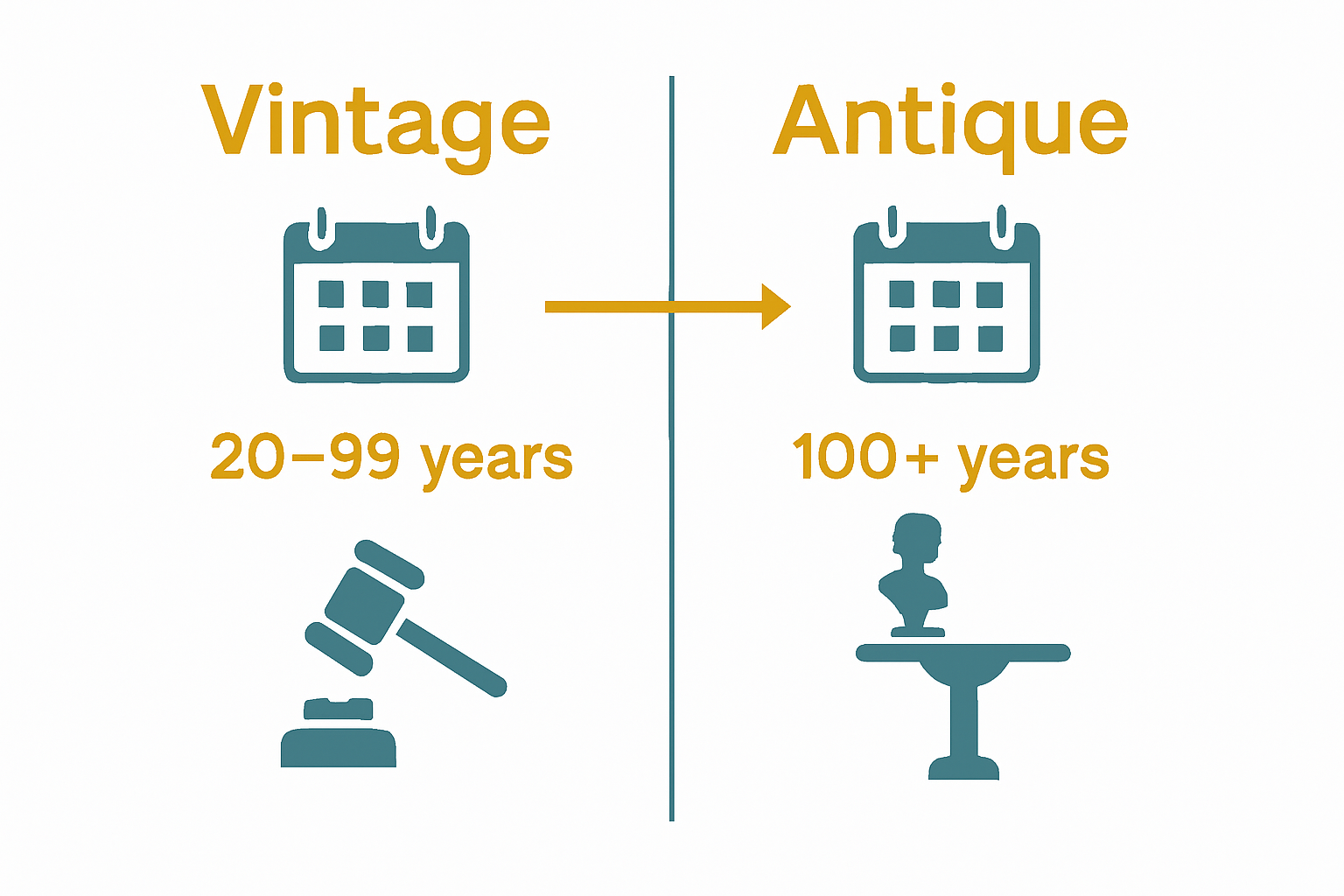
In the UK, antiques are formally defined as goods that are over 100 years old, a classification established by HM Revenue and Customs HMRC. This legal definition provides a clear demarcation for items considered genuinely antique. Vintage items, by contrast, occupy a more fluid category without strict legal parameters. Generally, they are understood as objects that are not brand new but haven’t yet reached the century milestone required for antique status.
The distinction goes beyond mere age. Vintage items typically represent a specific era’s aesthetic, design, or manufacturing style, capturing the essence of a particular period. For collectors and enthusiasts, these pieces tell stories of craftsmanship, cultural trends, and historical moments. Understanding the Role of Vintage in Style provides deeper insights into how these objects transcend simple age classifications.
Key characteristics that distinguish vintage from antique include:
Age: Antiques are 100+ years old; vintage items are generally 20-99 years old
Legal status: Antiques have clear regulatory definitions; vintage remains more interpretative
Collectibility: Both categories hold significant value for collectors and historians
Cultural significance: Each item represents a specific moment in design and manufacturing history
Key Age Criteria and Recognised Standards
Defining precise age criteria for vintage and antique items involves navigating complex legal and collector standards that extend beyond simple numerical measurements. According to Gov.uk, the UK establishes a definitive benchmark of 100 years as the threshold for classifying an item as an authentic antique, particularly for taxation and sales purposes.
Different sectors and collecting disciplines have nuanced interpretations of these age standards. For instance, the Policing and Crime Act 2017 provides a specific example by defining antique firearms as those manufactured before 1 September 1939, demonstrating how age criteria can vary across different domains. Vintage items, by contrast, typically fall into a more flexible range, often spanning 20 to 50 years old, depending on the specific industry and collector community.
These age classifications are not merely academic distinctions but have significant practical implications. Collectors, museums, insurance providers, and legal frameworks all rely on these standards to assess value, provenance, and historical significance.

Vintage Fashion Authenticity: A Reference Guide provides deeper insights into how these age criteria impact authentication and valuation processes.
Key recognised standards for age classification include:
Antiques: 100+ years old (UK legal standard)
Vintage: Generally 20-50 years old
Historical artefacts: Contextual age determined by historical significance
Collector-specific definitions: Vary by industry and collectible type
Essential Characteristics of Vintage Pieces
Vintage pieces are far more than simply old objects; they represent intricate snapshots of cultural and design history, embodying unique characteristics that distinguish them from contemporary or mass-produced items. What Makes Clothing Vintage: Understanding Its Essence highlights the nuanced qualities that transform an item from merely aged to genuinely vintage.
According to Gov.uk, items manufactured before 3 March 1947 are considered ‘worked specimens’, which provides insight into the historical significance of vintage pieces. Craftsmanship, materials, and design techniques from specific historical periods are crucial identifiers. These pieces often showcase manufacturing methods that have been superseded by modern industrial processes, making them unique representations of their era’s technological and aesthetic capabilities.
Authentic vintage pieces typically demonstrate several key characteristics that set them apart from contemporary or reproduction items. These include original construction techniques, period-specific materials, distinctive design elements, and evidence of handcrafted detailing. The patina, wear patterns, and subtle imperfections tell stories of their journey through time, making each piece a unique historical artefact.
What is Authentic Vintage? Understanding Its Essence provides deeper insights into recognising these subtle yet significant markers of authenticity.
Essential characteristics of vintage pieces include:
Handcrafted construction techniques
Period-specific design elements
Original materials characteristic of the era
Evidence of traditional manufacturing methods
Unique wear patterns and natural ageing
Limited production or small-batch manufacturing
Cultural and historical significance
Preservation of original design integrity
Distinctive Features of Antique Objects
Antique objects represent profound historical artefacts that transcend mere age, embodying intricate narratives of craftsmanship, cultural evolution, and artistic expression. Vintage Accessories Explained: Discover Unique Styles provides valuable context for understanding the nuanced world of historical collectibles.
According to Gov.uk, antique objects are typically defined as items over 100 years old, encompassing a wide range of materials including furniture, works of art, and other historically significant pieces. These objects are distinguished by their exceptional preservation, original craftsmanship, and historical provenance, representing tangible connections to past eras and cultural practices.
The true value of antique objects lies not just in their age, but in the stories they carry and the exceptional manufacturing techniques they represent. Each piece reflects the technological capabilities, aesthetic preferences, and social contexts of its originating period. Skilled collectors and historians examine minute details such as construction methods, material quality, maker’s marks, and evidence of original techniques to authenticate and appreciate these remarkable artefacts.
Key distinctive features of antique objects include:
Exceptional craftsmanship predating mass production
Original materials and construction techniques
Evidence of hand-tooling and artisan manufacturing
Patina and natural ageing characteristics
Historical documentation or provenance
Rare or discontinued manufacturing methods
Cultural and artistic significance
Preservation of original design and structural integrity
Legal and Industry Standards in the UK
Navigating the complex landscape of vintage and antique regulations requires a nuanced understanding of UK legal frameworks and industry-specific standards. The world of collectible items is governed by intricate rules that protect cultural heritage, ensure fair trading practices, and maintain the integrity of historical artefacts.
According to Gov.uk, the UK has established specific VAT regulations for antiques and works of art from historic houses, which provide comprehensive guidelines for sales and taxation. These regulations not only define what constitutes an antique but also create a structured approach to trading historical items, protecting both sellers and collectors from potential legal complications.
The legal landscape extends beyond taxation, with the UK government implementing stringent measures to preserve cultural heritage. Gov.uk has introduced legally binding regulations that aim to prevent the loss of important cultural items, ensuring that significant historical pieces remain accessible to museums, galleries, and the broader public. These standards reflect a commitment to preserving national historical assets and maintaining the cultural significance of vintage and antique objects.
Key legal and industry standards in the UK include:
Precise VAT guidelines for antique sales
Age-based classifications for historical items
Regulations protecting cultural heritage
Taxation rules for historic and artistic works
Provenance documentation requirements
Export and import restrictions for significant artefacts
Compliance standards for collectors and dealers
Legal frameworks for museum and gallery acquisitions
Collecting, Buying, and Common Misconceptions
Collecting vintage and antique items is an art form that requires deep knowledge, careful research, and a nuanced understanding of historical context. Many enthusiasts enter this fascinating world with romantic notions, but successful collecting demands more than mere passion.
According to Gov.uk, collectors must exercise exceptional diligence, particularly when acquiring items potentially made from materials like endangered species. Verification is crucial, with collectors required to confirm that worked specimens were created before 3 March 1947 to ensure legal compliance. This regulation highlights the complex legal landscape surrounding vintage and antique acquisitions.
One of the most prevalent misconceptions is that age alone determines an item’s value. In reality, factors such as provenance, condition, rarity, and historical significance play far more critical roles. What is Authentic Vintage? Understanding Its Essence emphasises that true collectibility emerges from an item’s unique story and preservation quality. Experienced collectors understand that not every old object becomes a treasured artefact.
Key considerations for vintage and antique collecting include:
Thorough research before purchasing
Understanding legal restrictions on certain materials
Verifying authenticity through expert consultation
Examining condition and restoration history
Recognising market trends and valuation factors
Documenting provenance and origin
Understanding preservation techniques
Developing a discerning, informed collecting approach
Discover Authentic Vintage and Antique Treasures with Confidence
Navigating the differences between vintage and antique pieces can feel overwhelming, especially when authenticity and historical value are essential. This guide highlights the importance of understanding age criteria, craftsmanship, and provenance to avoid common pitfalls. If you seek truly unique items that reflect rich cultural stories and impeccable design integrity, embracing a trusted source is vital.

Explore our carefully curated selection of authentic vintage clothing and retro homeware at My Vintage. Each piece embodies sustainable fashion and timeless style that respects historical craftsmanship and material authenticity. Take your first step towards owning genuine vintage treasures by visiting our site and discovering collections that celebrate individuality and enduring quality. Don’t wait to enrich your wardrobe or living space with pieces that carry a distinctive story and proven heritage.
Frequently Asked Questions
What is the main difference between vintage and antique items?
The primary difference is age: antique items are generally defined as being over 100 years old, while vintage items typically range from 20 to 99 years old. This classification is significant for collectors and historians.
How are the characteristics of vintage items different from antiques?
Vintage items often showcase specific design aesthetics and craftsmanship from a particular era, while antiques highlight exceptional craftsmanship and historical significance from before the 20th century. Vintage pieces may display signs of wear and originality that reflect their time period.
What are the legal age criteria for classifying items as vintage or antique?
In the UK, the legal standard classifies antiques as items over 100 years old. Vintage items generally fall within a flexible range of 20 to 50 years old, depending on the specific sector and collector community.
What should collectors consider when acquiring vintage or antique pieces?
Collectors should conduct thorough research, verify authenticity, examine item conditions, understand legal restrictions, and document provenance. These factors significantly influence the value and collectibility of the items.
Recommended


Comments