


Dolce and Gabbana History: The Full Story

Dolce and Gabbana is defined as an Italian luxury fashion house founded in Milan in 1985 by Domenico Dolce and Stefano Gabbana, two designers who met in 1982 and built one of the most recognisable names in global fashion. The brand is celebrated for its deeply personal Mediterranean aesthetic, drawing on Sicilian tradition, religious iconography, and the golden age of Italian cinema. What makes the Dolce and Gabbana story so compelling is not just the clothes, but the conviction behind them. From a shoestring debut at Milan Fashion Week to bespoke couture collections inspired by Caravaggio and van Gogh, this is a brand that has always known exactly what it wants to say.
How Dolce and Gabbana Started: Founders, Struggles, and Early Vision
Dolce & Gabbana was founded in Milan in 1985 by Domenico Dolce, who grew up in Sicily, and Stefano Gabbana, who was raised in Milan. The two met in 1982 while working for the same fashion atelier. Their contrasting backgrounds turned out to be a creative gift. Domenico brought the warmth, craft, and visual richness of southern Italy. Stefano brought the urban edge and commercial instinct of the north.
Their early years were far from glamorous. The pair launched their first fashion studio with almost no money, relying on friends to model their clothes and household objects as props. Their 1985 Milan Fashion Week debut was conducted on a shoestring budget, yet it announced a voice that was unmistakably their own. That resourcefulness in the face of financial pressure shaped the brand’s character from the very beginning.
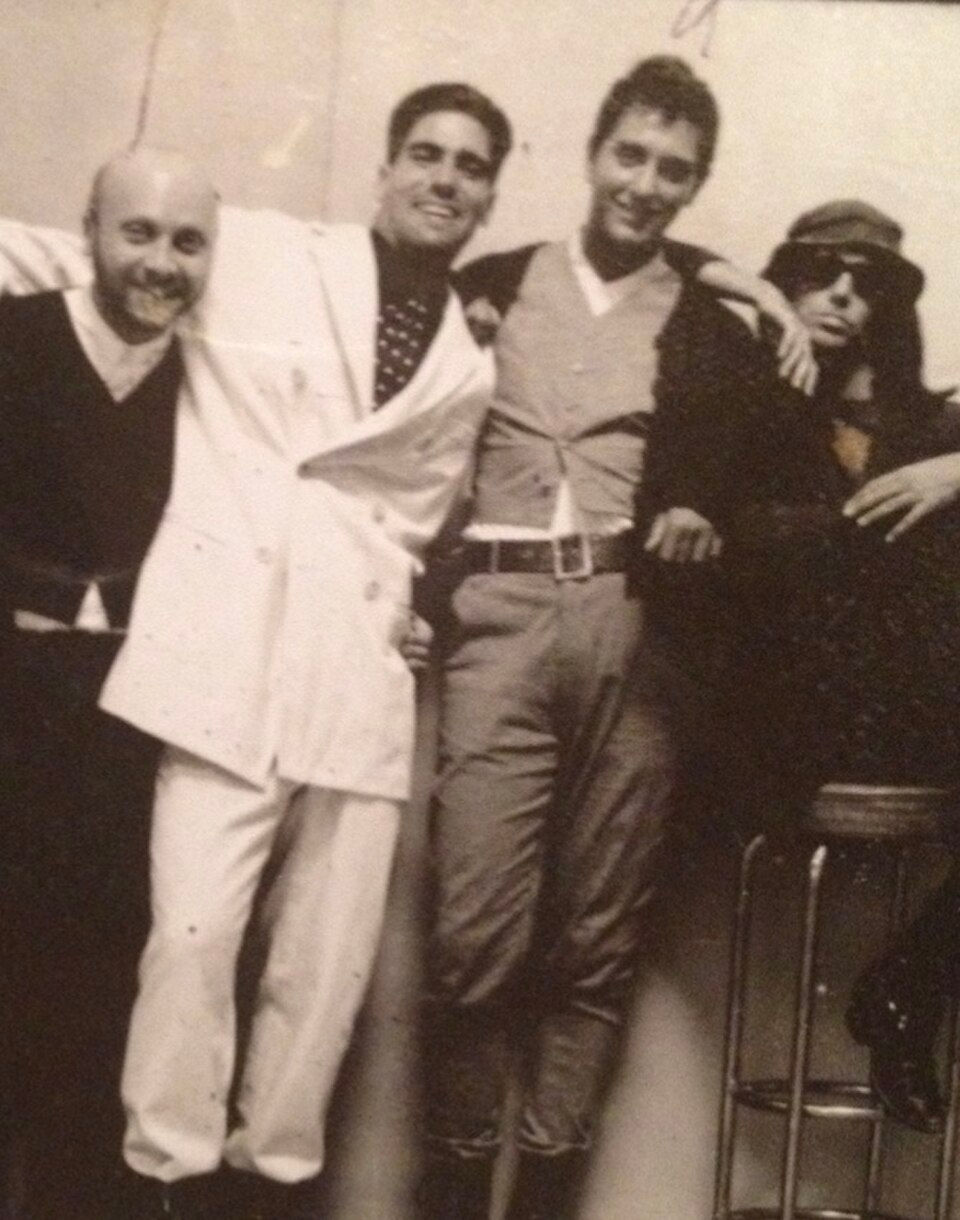
A few things defined those early collections:
A refusal to follow mainstream trends in favour of a deeply personal visual language
Silhouettes drawn from southern Italian tailoring traditions, particularly from Sicily
Fabrics chosen for texture and sensuality rather than commercial ease
A deliberate nod to the women of post-war Italian cinema, particularly the films of Federico Fellini and Luchino Visconti
Pro Tip: If you are studying Italian fashion history, look at the brand’s earliest runway images from the late 1980s alongside stills from Italian neorealist cinema. The visual connection is immediate and illuminating.
The brand opened its first boutique in Milan and quickly attracted attention from buyers and press who recognised something genuinely different. By the early 1990s, Dolce and Gabbana had established a loyal following and a reputation for clothes that felt both rooted in history and entirely of the moment.
What makes the Dolce and Gabbana Aesthetic so distinctive?
The Dolce & Gabbana aesthetic sits between Versace’s maximalism and Armani’s restraint. That is not a compromise. It is a precise position, held deliberately. The brand uses black lace, structured corsetry, and religious iconography not as decoration but as cultural statements. Every motif carries meaning rooted in Sicilian and southern Italian tradition.
The Sicilian heritage is the brand’s core influence, blending regional craft with urban sophistication. Domenico Dolce’s upbringing in Polizzi Generosa, a small town in the Palermo province, fed directly into the brand’s visual vocabulary. Lace veils, devotional imagery, and the bold sensuality of Mediterranean women all appear across decades of collections.

“The Mediterranean-inspired aesthetic of Dolce & Gabbana creates a distinct luxury identity balancing maximalism and restraint, setting them apart from other Italian designers.”
The brand drew heavily on iconic Italian women as muses. Sophia Loren, Monica Vitti, and Anna Magnani represented a particular kind of femininity: strong, earthy, and unapologetically present. That influence shows up in the brand’s preference for curves, drama, and clothes that feel worn by real women rather than draped on mannequins.
The design language expanded over time to include:
Menswear collections that applied the same Sicilian tailoring principles to suits and outerwear
Accessories, eyewear, and fragrance lines that extended the Mediterranean mood into everyday luxury
Prints featuring lemons, prickly pears, and Baroque ornament, which became signature motifs recognised worldwide
The brand’s vintage aesthetic connections are worth noting too. The recurring use of historical craft techniques, from hand-stitched lace to brocade, places Dolce and Gabbana in a tradition of fashion that values making over mass production. That philosophy resonates strongly with anyone who appreciates the depth of truly considered design.
How did the Dolce and Gabbana brand evolve over the decades?

The brand’s evolution followed a clear arc: from cult Milanese label to global luxury house, with several significant business decisions shaping its identity along the way.
The D&G diffusion line launched in the 1990s and targeted a younger audience with expressive, more accessible styles. It operated under licence for watches and accessories and ran as a distinct label with its own runway shows.
Licensing agreements for eyewear and fragrance extended the brand’s reach without diluting the main label’s positioning.
The D&G merger ended with the Spring/Summer 2012 collection shown in 2011. The D&G diffusion line folded back into the main Dolce & Gabbana label to consolidate brand identity and sharpen focus.
Leadership transition arrived in December 2025, when Stefano Gabbana stepped down as chair, a change announced in April 2026. He retains a creative role within the company.
Era | Key development |
1985–1992 | Brand founded, early collections, Milan Fashion Week debut |
1993–2010 | D&G diffusion line, global expansion, licensing deals |
2011–2012 | D&G merged into main label, brand consolidation |
2012–2024 | Alta Moda and Alta Sartoria launched, cultural positioning deepened |
2025–2026 | Leadership transition, Stefano Gabbana steps down as chair |
One of the most striking facts about the brand is that Dolce & Gabbana remains privately held by its founders. That is genuinely rare among luxury houses of this scale. Most comparable Italian brands have been absorbed into large conglomerates. The founders’ insistence on independence has given them creative freedom that few designers at this level enjoy.
Pro Tip: When researching iconic vintage fashion designers, pay attention to which brands remained founder-led. The creative consistency that comes from that ownership model is often visible in the clothes themselves.
The challenge of independence is real, though. Leadership succession and market agility become harder to manage without the resources of a larger group. The 2025 leadership change signals that the brand is actively working through those questions.
How did Dolce and Gabbana fuse art and Italian heritage in haute couture?
The launch of Alta Moda in 2012 and Alta Sartoria in 2015 marked a fundamental shift in what the brand was trying to do. These were not simply luxury product lines. They represented a reimagining of fashion as artisanal cultural expression, placing Italian heritage crafts at the centre of the creative process.
Alta Moda is the womenswear couture line. Alta Sartoria is its menswear equivalent. Both are produced in tiny quantities by specialist artisans across Italy. The shows are held not in conventional fashion week venues but in locations chosen for their cultural resonance: Sicilian palazzos, Venetian churches, Neapolitan streets. The setting is part of the statement.
The artistic references in these collections are extraordinary in their range:

Renaissance masters including Caravaggio, whose dramatic use of light and shadow maps directly onto the brand’s Baroque sensibility
Post-Impressionist painters such as van Gogh, whose swirling colour fields have appeared as embroidery and print
Surrealist artists including Dalí, whose dreamlike imagery suits the brand’s theatrical instincts
Contemporary figures such as Basquiat, bringing the couture line into dialogue with modern art history
The brand’s collections include motifs inspired by van Gogh, Caravaggio, Dalí, and Basquiat. That range tells you something important: this is not nostalgia for its own sake. It is a genuine attempt to place fashion within the broader history of visual culture.
Pro Tip: If you want to understand the Alta Moda aesthetic more deeply, look at the brand’s show films rather than just the runway images. The locations, music, and casting choices tell the full story of what the brand is reaching for.
This shift from trend following to cultural curation is what separates Dolce and Gabbana from most luxury houses. Many brands reference art. Very few build an entire creative philosophy around the idea that fashion and Italian artistic heritage are the same conversation. The roots of iconic fashion houses rarely run this deep into cultural soil.
The story of Dolce and Gabbana is ultimately a story about clothes that carry meaning. That same conviction drives what we do at My Vintage. We curate authentic vintage pieces from the 1940s through to the 1990s, chosen for exactly the qualities that make the great fashion houses worth studying: craft, character, and a point of view. Whether you are drawn to the structured elegance of mid-century tailoring or the bold prints of the 1970s, our collection rewards the same attention to detail that Dolce and Gabbana brought to their earliest Milan shows.
FAQ
When was Dolce and Gabbana founded?
Dolce and Gabbana was founded in Milan in 1985 by Domenico Dolce and Stefano Gabbana, who first met in 1982.
Who are the Dolce and Gabbana founders?
The founders are Domenico Dolce, who grew up in Sicily, and Stefano Gabbana, who is from Milan. Their contrasting backgrounds created the brand’s distinctive blend of southern Italian craft and urban sophistication.
What happened to the D&G diffusion line?
The D&G line targeted younger audiences during the 1990s and 2000s before being merged back into the main label with the Spring/Summer 2012 collection, consolidating the brand’s identity.
What is Alta Moda?
Alta Moda is Dolce and Gabbana’s bespoke womenswear couture line, launched in 2012. It is produced in tiny quantities by Italian artisans and shown in culturally significant locations across Italy.
Is Dolce and Gabbana privately owned?
Yes. Dolce and Gabbana remains privately held by its founders, making it one of the few luxury houses of its scale to maintain full independence from major conglomerates.
Recommended


Comments