


Jacqmar: Britain's Iconic Scarves
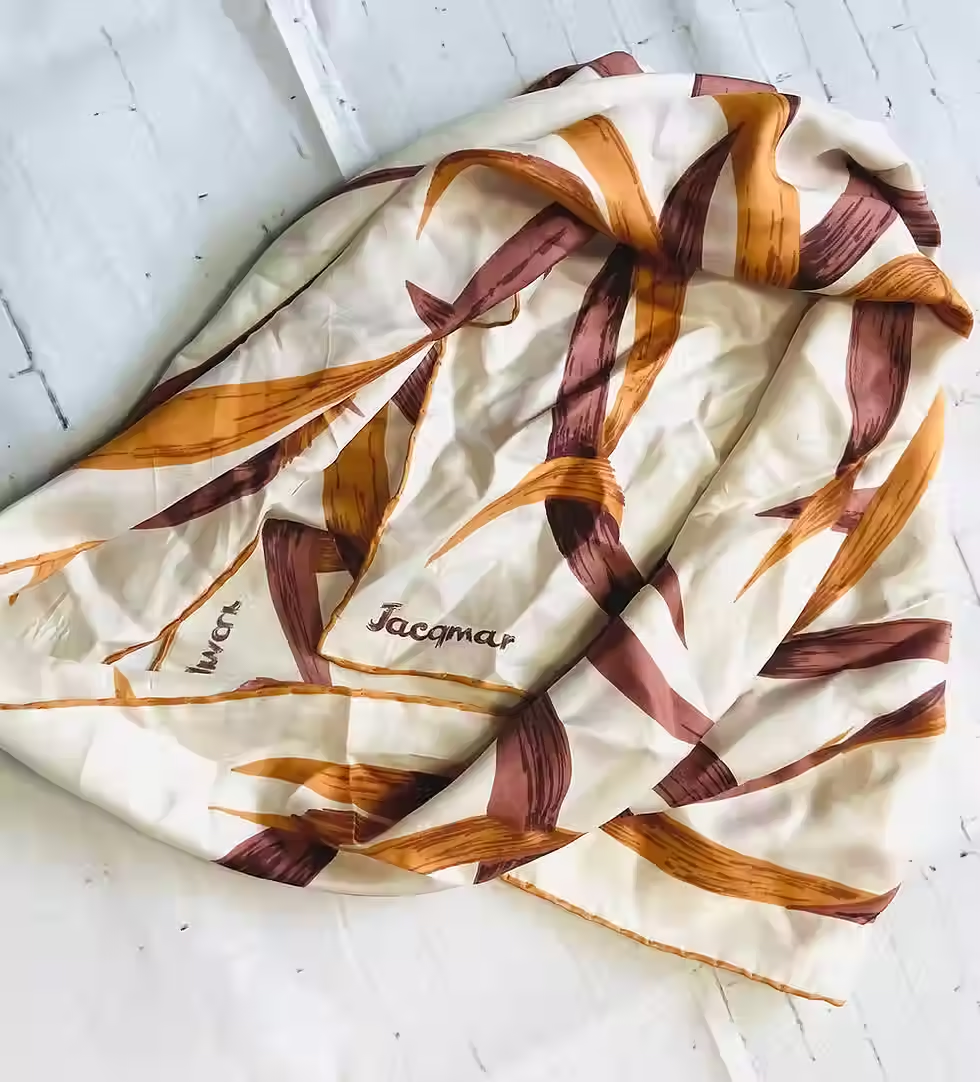
Jacqmar scarves are British luxury printed head squares, founded by Joseph ‘Jack’ Lyons and Mary Lyons, and celebrated above all for a remarkable series of patriotic wartime designs produced from 1941. The brand’s distinctive house style, shaped largely by designer Arnold Lever, combined expressive line drawing with loosely registered colour blocks to create pieces that were simultaneously fashionable accessories and morale-boosting public messages. Today, originals are held by the Imperial War Museums and the Victoria and Albert Museum, making Jacqmar one of the few British fashion houses whose output is treated as both cultural artefact and collectible textile.
At a glance:
Jacqmar was established in Mayfair and retailed through Harrods, Selfridges and Liberty from the 1930s onwards.
From 1941, the brand produced patriotic propaganda scarves in silk, rayon and wool, now documented in IWM and V&A collection records.
Wartime pieces are often unsigned; authentication relies on house-style markers rather than a label.
This guide covers the full Jacqmar scarves history, how to identify and date originals, where to view museum examples, and how My Vintage can help collectors with provenance queries.

How did Jacqmar scarves begin?
The story starts with a name. ‘Jacqmar’ is a blend of Jack and Mary, the first names of founders Joseph ‘Jack’ Lyons and his wife Mary. The couple established the business in Mayfair, operating from a flagship showroom at 16 Grosvenor Street, one of London’s most prestigious commercial addresses. The brand appears in commercial directories from 1936 through to 1972, a span that reflects both its longevity and its consistent presence in the luxury market.
The early business model centred on silk importing and the production of printed scarves, which placed Jacqmar firmly in the upper tier of British accessories from the outset. Retailing through Harrods, Selfridges and Liberty was not incidental; it was a deliberate positioning that associated the brand with the finest department stores in the country. Here is a brief timeline of those formative years:
Mid-1930s: — Jacqmar established at 16 Grosvenor Street, Mayfair, trading as a fabric and silk importer.
That shift in 1941 was the making of Jacqmar’s lasting reputation.
Why are Jacqmar’s wartime scarves so historically important?

From 1941, Jacqmar became the leading creator of patriotic propaganda scarves on the British home front, producing luxury accessories in silk, rayon and wool that carried slogans and imagery designed to support the war effort. Rayon appeared as a wartime substitute when silk became scarce, and its presence on a piece is itself a dating clue. These were not cheap novelties. Under wartime rationing, a scarf could require the surrender of two clothing coupons, which made buying one a considered, meaningful act.
The designs covered a striking range of themes:
Salvage and civilian duty: — Slogans such as ‘Switch Off That Light’ encouraged home-front compliance. The IWM holds a surviving example of this design, printed on rayon, which illustrates both the graphic directness of the messaging and the material realities of wartime production.
Scholars describe Jacqmar’s wartime output as something more than propaganda. As Paul Rennie has written, the scarves operated as social signifiers, blending glamour with patriotism in a way that distinguished Jacqmar’s refined studio approach from more populist commemorative textiles.
Jacqmar’s wartime scarves were designed to be worn and exchanged — fashionable objects that carried public messages while also serving as tokens of connection between civilians and servicemen. They are, in that sense, wearable history.
The V&A’s collection entry for ‘London Wall’ by Arnold Lever captures this quality precisely: expressive line work, loosely registered colour, and a design that reads as both art print and street scene. Many wartime prints were intentionally unsigned, which is why house-style recognition matters so much to collectors today.
What made Jacqmar’s design style so distinctive?
Arnold Lever was the designer most closely associated with Jacqmar’s house style, and his influence is visible across the wartime and early post-war output. His approach favoured expressive, dynamic line drawings with a loosely registered application of colour blocks, sometimes tipping into a cubist-influenced aesthetic that gave the scarves an energy quite unlike the more static commemorative prints of the period. The V&A’s ‘London Wall’ entry documents this style in detail and remains the best single reference for understanding Lever’s visual language.
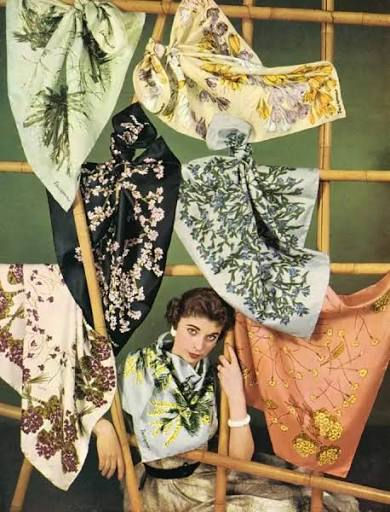
Other designers contributed to the Jacqmar studio over the years, though their credits are less consistently documented. The wartime pieces in particular were rarely signed, a deliberate choice that prioritised the brand identity over individual attribution.
For collectors, the practical visual identifiers to look for are:
Loose colour registration: — Colour blocks that slightly overlap or sit just off the drawn outline are a hallmark of the Jacqmar printing process and a key authentication marker.
Pro Tip: When comparing pieces, use the V&A’s online collection records as a visual benchmark. The ‘London Wall’ entry includes high-resolution imagery that lets you check colour registration and line quality against a museum-authenticated example.
Materials also vary by period. Silk was the prestige choice for pre-war and post-war luxury pieces. Rayon appears on wartime prints as a substitute, and wool was used for heavier scarves. Feeling the fabric and checking the drape can help narrow down a date range before you even look at the design.
How did Jacqmar’s reputation develop after the war?
Post-war, Jacqmar returned to luxury silk head squares as its core product, and the brand’s reputation only grew through the late 1940s and 1950s. The quality of the printing and the sophistication of the designs attracted a clientele that included royalty, and the brand was present at major national events including the 1948 London Olympics and the 1953 Coronation, both of which generated commemorative scarf designs that are now sought-after collector’s pieces.
The Grosvenor Street showroom continued to anchor the brand’s Mayfair identity, and the relationship with Harrods, Selfridges and Liberty remained central to distribution. Named designers contributed to the post-war collection, and pieces from this era are more likely to carry a designer credit or a Jacqmar label than their wartime predecessors.
More recently, the brand has undertaken heritage revival projects, reissuing archive designs and reconnecting modern customers with the original Jacqmar aesthetic. The official Jacqmar heritage page documents this activity and provides useful context for anyone researching the brand’s contemporary chapter alongside its historical one.
How do you identify, date and care for a vintage Jacqmar scarf?
Authentication starts with the label, but it does not end there. Wartime pieces often have no label at all, or carry only a simple ‘Jacqmar’ woven or printed mark without a designer credit. Post-war luxury pieces are more likely to show a full label with the brand name, sometimes a designer’s name, and occasionally a stockist’s mark from Harrods or Liberty. A My Vintage product page for a 1970s autumnal Jacqmar scarf gives a useful real-world example of how labelling and condition present on a documented piece.
Provenance and dating clues to look for:
Museum accession numbers: — If a piece has a documented provenance trail linking it to an IWM or V&A accession, that is the gold standard of authentication.
Condition issue | What to look for | Care recommendation |
Fraying edges | Loose threads at hem or rolled edge | Store flat; avoid hanging; consult a textile conservator for repairs |
Colour loss | Fading, particularly on rayon | Keep away from direct light; acid-free tissue for storage |
Print wear | Surface cracking or flaking on colour blocks | Dry clean only; never machine wash printed silk or rayon |
General soiling | Yellowing or tide marks | Specialist silk cleaning; test a hidden area first |
Fold creases | Permanent creases from long-term folding | Roll rather than fold for storage; steam very gently if needed |
Pro Tip: Before buying, ask the seller for close-up photographs of the label, the hem finish, and a corner where the colour registration is visible. Comparing these against the V&A’s ‘London Wall’ imagery or the IWM’s ‘Switch Off That Light’ object record will tell you a great deal about authenticity before you commit./

My Vintage’s team has handled documented Jacqmar examples and can offer practical guidance on provenance queries for pieces you are considering adding to your collection. Browse our curated vintage scarves selection for a sense of how Jacqmar sits within the broader vintage scarf world.
Where can you view originals and research Jacqmar further?
The two primary museum collections are the Imperial War Museums and the Victoria and Albert Museum, and both are accessible online.
Imperial War Museums (IWM): — The IWM holds multiple Jacqmar wartime scarves, including ‘Switch Off That Light’ (rayon, with a blackout slogan), ‘Into Battle’, and designs referencing American forces and the Free French. The IWM’s home-front patriotic scarves page provides interpretive context, while individual object records give material details, dimensions and accession numbers useful for provenance comparison.
Auction catalogues and image archives: — Major auction houses periodically offer Jacqmar pieces, and their catalogue entries often include condition reports and provenance notes that help establish fair market context. Searching by ‘Jacqmar’ alongside a design name or motif description usually surfaces relevant results.
My Vintage: Our product pages include documented examples with condition notes and provenance context. For wartime-era British fashion background, our article on how WWII shaped British style provides useful context for situating Jacqmar within the broader rationing and coupon economy.
When researching provenance, note the IWM and V&A accession numbers for any design you are comparing against. These numbers are the reference points that link a physical object to its museum record, and matching design details to an accession entry is the most reliable way to confirm a piece’s authenticity.
Key Takeaways
Jacqmar scarves are among the most historically significant British fashion accessories of the twentieth century, combining luxury craftsmanship with genuine wartime cultural purpose from 1941 onwards.
Point | Details |
Founded in Mayfair | Jack and Mary Lyons established Jacqmar at 16 Grosvenor Street, retailing through Harrods, Selfridges and Liberty from the 1930s. |
Wartime significance from 1941 | Jacqmar produced patriotic scarves in silk, rayon and wool carrying slogans and Allied motifs, now held by the IWM and V&A. |
Authentication by house style | Wartime pieces are often unsigned; loose colour registration and expressive line work by Arnold Lever are the key markers. |
Rayon signals wartime origin | Rayon fabric on a Jacqmar piece points strongly to a 1941–45 date, when silk was restricted by wartime supply. |
My Vintage for collectors | My Vintage holds documented Jacqmar examples and offers provenance guidance for collectors researching or buying vintage pieces. |
Useful sources and further reading
For anyone going deeper into the Jacqmar scarves history, these are the primary records to consult:
Patriotic scarves that encouraged people to do their bit
These patriotic scarves encouraged people to ‘do their bit’ during the Second World War
scarf, Jacqmar, ‘Switch Off That Light’ | Imperial War Museums
London Wall | Lever, Arnold | V&A Explore The Collections
British propaganda scarves of WW2 (Paul Rennie / The New Pamphleteer)
V&A contextual article (useful for production/technique background)
When citing museum records in your own research, always include the accession number alongside the institution name. For the IWM’s ‘Switch Off That Light’, for example, the object number appears directly in the collection URL and should be quoted in any provenance note.
Vintage Jacqmar scarves at My Vintage
If the Jacqmar scarves history has sparked a desire to own a piece of it, My Vintage is a natural place to look. We are a UK-based vintage retailer with over two decades of experience sourcing and curating authentic vintage clothing and accessories, and our collection includes documented Jacqmar examples with detailed condition notes and provenance context.
What sets My Vintage apart for collectors is the care that goes into each listing. Rather than a quick photograph and a vague description, our product pages reflect real knowledge of what makes a vintage scarf worth buying: fabric type, label condition, print quality, and any provenance details we can establish. Whether you are hunting for a post-war silk head square or simply want to see what a genuine Jacqmar piece looks like up close, browsing our vintage scarves and accessories is a good place to start. Have a question about a piece you have already found? Get in touch with the team directly. We are always happy to help.
Recommended

Comments