


Men's Vintage Shoes: Classic Style for Modern Wardrobes

There is a particular thrill that comes with finding a pair of shoes that feel like they were made for another era yet fit perfectly into your life today. Men’s vintage shoes occupy a unique space in fashion, offering a depth of character and craftsmanship that modern footwear rarely matches. But finding the right pair is genuinely tricky. Authenticity, comfort, fit, and condition all have to align, and the choices can feel overwhelming whether you are hunting for a true original or a well-made vintage-inspired alternative. This guide walks you through everything you need to know.
Point | Details |
Prioritise fit and comfort | Great vintage shoes should look good but also fit well and be wearable all day. |
Choose timeless styles | Invest in classics like oxfords and loafers, which remain stylish across eras. |
Compare vintage to modern options | Vintage-inspired shoes may offer modern comfort while preserving retro style. |
Maintain shoes properly | Care and the right products can keep vintage shoes looking sharp and lasting longer. |
How to Choose the Right Men’s Vintage Shoes

Choosing men’s vintage shoes is not simply a matter of picking something that looks good in a photograph. The best pairs balance genuine visual appeal with real-world wearability, and that balance takes some thought. Here is what to keep in mind before you commit to any purchase.
Comfort and fit come first. Vintage lasts (the foot-shaped moulds used to construct shoes) often differ from modern ones, meaning a size nine in a 1960s brogue may feel nothing like a contemporary size nine. Always check the internal measurements if you are buying online, and if you can try before you buy, do so. Look for adequate toe box width, appropriate arch support, and sufficient cushioning, because vintage shoes were not always built for all-day wear.
Material quality tells you everything. Genuine leather, suede, and even canvas vintage uppers age beautifully when well-maintained, and a quality original will often outlast its modern equivalent with the right care. Look closely at stitching, welt construction, and sole integrity. A Goodyear welt, for example, means the shoe can be resoled repeatedly, making it a genuinely long-term investment rather than a fashion impulse.
Breathability matters more than you might think. Original leather shoes made before synthetic linings became common can actually be remarkably breathable, but condition matters enormously. Cracked linings, compressed insoles, and degraded leather all reduce breathability significantly. If a shoe has been poorly stored, no amount of conditioning will fully restore interior freshness.
When assessing wearability, consider these key factors:
Fit across the widest part of the foot, not just length
Cushioning and insole condition
Breathability of the upper and lining materials
Traction and sole condition, particularly on leather soles
Overall construction quality and resoling potential
“When choosing vintage-inspired sneakers, consider measurable performance factors such as fit, breathability, cushioning, and traction, because these qualities affect wearability beyond appearance.” This principle applies just as meaningfully to all vintage footwear, not just trainers.
As retro sneaker performance research confirms, fit, breathability, and traction are the measurable benchmarks that separate a shoe you will actually wear from one that sits in a box looking beautiful.
Pro Tip: If you are new to vintage footwear, our vintage shoe styles guide is an excellent place to start building your visual vocabulary before you shop.
Finally, consider whether a true vintage original or a vintage-inspired reproduction better suits your lifestyle. If you are commuting, standing on your feet all day, or need a shoe that performs in variable weather, a well-made modern interpretation of a classic silhouette will often serve you far better than a fragile original.
Top Men’s Vintage Shoe Styles to Elevate your Look
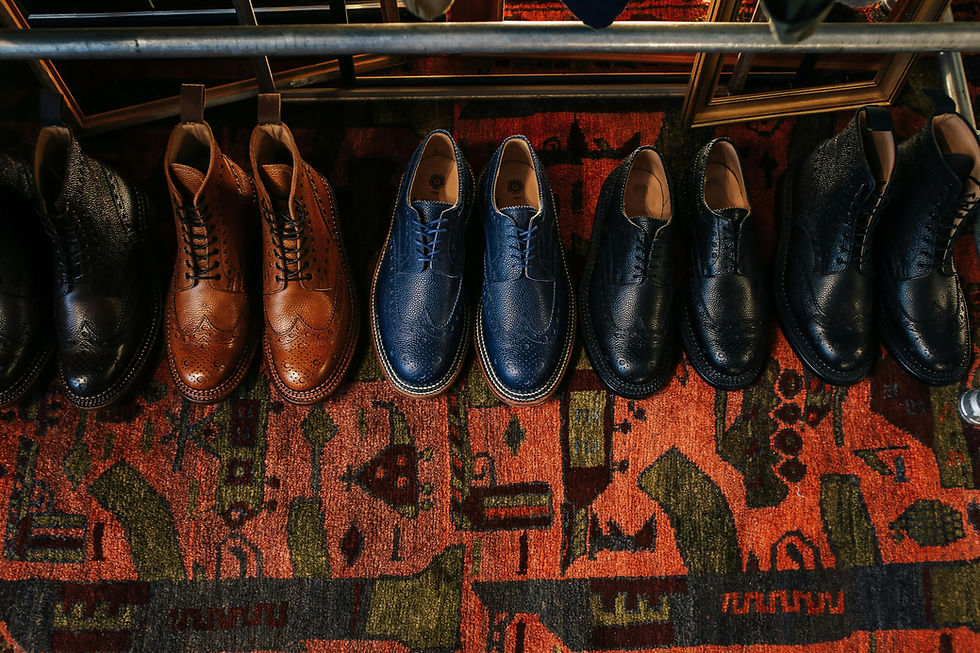
Now that you know what to look for, let us explore the definitive style icons that define men’s vintage footwear. Each of these styles has a rich history, a distinctive silhouette, and a genuine ability to transform an outfit when worn with confidence.
Oxford shoes are the bedrock of formal vintage dressing. Originally popularised in the early twentieth century, the Oxford is characterised by its closed lacing system, low heel, and clean lines. A well-preserved pair of 1950s cap-toe Oxfords communicates a kind of quiet authority that no modern shoe quite replicates. Cap-toe Oxfords and penny loafers are rightly framed as the foundation of a serious wardrobe rather than trend-driven footwear, and that philosophy has never felt more relevant than now.
Penny loafers bridge the gap between smart and casual with effortless grace. The iconic strap across the vamp (the front section of the shoe) gives the penny loafer its distinctive look. Popular from the 1950s onwards, they pair beautifully with tailored trousers and chinos alike, and a vintage pair in tan or burgundy leather can anchor an entire outfit.
Brogues bring texture and personality to footwear through their signature decorative perforations, known as broguing. Originally a practical feature allowing water to drain from the shoe during country wear, broguing became a style statement in its own right by the 1930s. Full brogues (wingtips) are bold and characterful, while quarter brogues offer a subtler nod to the style.
Chelsea boots carry the energy of the 1960s mod scene and the 1970s rock world in every pair. Their defining feature is the elastic side panel, which gives them a sleek, pull-on profile. A vintage pair in black leather looks equally at home with slim-cut jeans or tailored trousers, making them one of the most versatile styles in the vintage canon.
Retro trainers deserve their place in any conversation about men’s vintage footwear. Classic silhouettes from the late 1970s and 1980s, think clean leather uppers, simple colour palettes, and minimal branding, carry genuine visual weight when styled thoughtfully.
Style | Era | Best occasion | Key detail |
Oxford | 1930s to 1960s | Formal, business | Closed lacing, clean toe |
Penny loafer | 1950s to 1970s | Smart casual | Strap vamp detail |
Brogue | 1930s to 1960s | Casual, smart casual | Decorative perforations |
Chelsea boot | 1960s to 1980s | Casual to smart | Elastic side panel |
Retro trainer | 1970s to 1980s | Casual | Minimal, clean silhouette |
For a deeper look at specific styles available right now, our guide to vintage shoes and boots is well worth exploring.
Oxfords work best with tailored suits and formal trousers
Penny loafers suit chinos, slim jeans, and summer linen
Brogues add personality to everything from denim to tweed
Chelsea boots pair well with skinnies, straight-leg jeans, and tailored separates
Retro trainers elevate casual looks without sacrificing vintage credibility
Vintage vs Modern: How Retro Shoes Compare Today
With those styles in mind, it is important to weigh the pros and cons. Should you hunt for original vintage, or invest in modern homages that capture the spirit of the era?

The case for original vintage is compelling. True vintage shoes carry genuine provenance, patina, and character that simply cannot be manufactured. A pair of 1960s Chelsea boots in original leather develops a unique surface texture over decades that tells its own story. There is also the collectability factor. Rare originals from notable makers can hold or increase their value, making them an investment as much as a wardrobe addition.
The case for vintage-inspired modern shoes is equally strong for many buyers. Retro sneakers are often updated with modern technology, meaning that buyers benefit from contemporary cushioning, improved sole compounds, and more consistent sizing, all wrapped in a silhouette that honours the original. For daily wear, this is often the more practical choice.
Factor | Original vintage | Vintage-inspired modern |
Authenticity | Genuine provenance and age | Designed to evoke the era |
Comfort | Variable; depends on condition | Consistent; modern materials |
Sizing | May differ from modern standards | True-to-size or consistent |
Durability | Excellent if well maintained | High with modern construction |
Resale value | Potentially high for rare pieces | Lower but accessible |
Sustainability | Inherently circular | Varies by brand and material |
Pro Tip: Check our July vintage arrivals for original pieces that arrive regularly. Acting quickly on genuinely rare finds is always wise, because the best vintage shoes rarely wait around.
Material upgrades in modern vintage-inspired shoes are significant. Contemporary rubber compounds offer better grip than original leather soles, and modern insoles provide support that was simply not a design priority in earlier decades. If you plan to wear your vintage footwear regularly on varied surfaces, this matters.
Sizing and fit deserve special mention here. Vintage European and British sizing systems do not always correspond neatly to today’s standards. A vintage British size eight may measure closer to a modern seven and a half in some cases. When buying true vintage originals, always measure the internal length in centimetres and compare to your own foot measurements. With lab-tested retro sneakers, modern sizing consistency removes much of this guesswork.
The honest answer is that most vintage enthusiasts end up owning both. A prized pair of original Oxfords for occasions that call for authenticity, and a well-made modern interpretation for daily rotation.
How to Wear and Care for Men’s Vintage Shoes
You have chosen your style and understand the difference between original and inspired. Here is how to wear them well and maintain them for years to come.
Styling vintage shoes with confidence comes down to understanding the occasion and trusting the era. Classic dress-shoe silhouettes like cap-toe Oxfords and penny loafers are the foundation of a serious wardrobe, and that means they deserve serious outfits. Pair Oxfords with tailored trousers and a well-fitted blazer. Wear penny loafers with turn-up chinos and an open-collar shirt. Let the shoes lead the conversation.
For a broader view of how vintage footwear fits into a complete look, our vintage mens clothing tips offer practical styling guidance across different eras.
Essential care steps for leather vintage shoes:
Remove dirt gently with a soft, dry brush before applying any product
Clean the upper with a leather-specific cleaner, never general-purpose soap
Apply a good moisturising conditioner to prevent cracking and restore suppleness
Use a matching shoe cream or wax polish to restore colour and add a protective layer
Buff with a clean cloth to bring up the shine without over-polishing
Use cedar shoe trees between wears to maintain shape and absorb moisture
Store in breathable cotton bags, never plastic, to prevent mould and material degradation

When to resole or restore is one of the most important questions vintage shoe owners face. If the sole has worn through to the welt, resoling is urgent. A good cobbler can work wonders on even significantly worn soles, and a Goodyear-welted shoe can be resoled repeatedly without affecting the upper. If the leather upper shows deep cracking rather than surface dryness, professional restoration may be needed before the shoe deteriorates further.
Pro Tip: A thin leather insole placed over a compressed original insole can dramatically improve comfort in vintage shoes without altering their appearance or affecting the fit at the toe.
Styling mistakes to avoid include over-matching your vintage shoes too rigidly to a specific decade. Wearing a complete 1960s outfit risks looking like costume rather than personal style. Instead, mix one vintage statement piece with contemporary items. A pair of 1970s platform Chelsea boots worn with modern slim-fit jeans and a plain white shirt creates a look that feels confident and intentional rather than themed.
Also avoid neglecting the soles. Many vintage enthusiasts polish the uppers religiously while ignoring worn heels and scuffed toe taps, which undermine the overall effect immediately.
Our Perspective: Making Vintage Style Work for You
We have been sourcing and celebrating vintage fashion since 2004, and one myth keeps coming up that we want to address directly. The idea that vintage shoes only work for a specific aesthetic, that they belong exclusively to the rockabilly crowd, or the tailored traditionalist, is simply not true.
The joy of vintage footwear lies precisely in its versatility. A pair of 1950s brogues looks extraordinary with raw denim. Retro trainers from the late 1970s work beautifully with relaxed tailoring. The boundaries are genuinely open.
What we would always say is this: fit and comfort are not a compromise, they are a requirement. A beautiful pair of shoes that hurts after twenty minutes is not a good purchase, regardless of how authentic or rare it is. Vintage style is meant to be lived in, not suffered for.
Our other strong advice is to mix old with new without apology. The most compelling personal styles we see are never entirely vintage. They are always a creative conversation between eras. Our menswear style spotlight explores exactly this approach with real examples and genuine inspiration. Do not dress like a museum exhibit. Dress like someone who knows their history and uses it well.
Find your Next Pair of Men’s Vintage Shoes
If this guide has sparked an interest in building your vintage shoe collection, we would love to help you take the next step. At My Vintage, we curate a carefully sourced selection of authentic vintage and vintage-inspired footwear, updated regularly so there is always something fresh to discover.

Whether you are searching for a classic pair of leather Oxfords, a striking set of Chelsea boots, or something completely unexpected, our collection is built around quality and individuality. While you are exploring, it is also worth browsing our wider range, including beautifully curated vintage homeware for those who want to bring the same considered vintage sensibility to their home. Every item we stock is selected with the same passion and care. We hope you find something that speaks to you.
Frequently Asked Questions
How do I know if men’s vintage shoes are genuine?
Check for era-specific construction details such as hand-stitched welts, period-appropriate branding, and natural leather linings. Authenticity lives in the smaller details like stitching quality, logo style, and material patina rather than in overall appearance alone.
Can vintage shoes be worn daily?
Many vintage shoes are entirely suitable for regular wear provided they are structurally sound and comfortable. Always assess the condition of the sole, lining, and upper carefully before committing to daily rotation.
What makes vintage-inspired shoes different from true vintage?
Vintage-inspired shoes reproduce classic silhouettes using modern materials and manufacturing techniques, offering better comfort and consistency. As noted, many retro styles are updated with contemporary cushioning and sole technology, making them practical choices for everyday wear.
Are vintage shoe sizes the same as modern sizes?
Vintage sizing systems often differ from today’s standards, particularly in older British and European sizes. Always measure the internal length in centimetres and compare against your own foot measurements rather than relying on the marked size alone.
How should I care for leather vintage shoes?
Use a gentle leather cleaner, a quality moisturising conditioner, and a matching shoe cream or wax polish. Avoid excess moisture, store shoes with cedar trees, and seek professional restoration if the leather shows deep cracking or the sole has worn through to the welt.
Recommended


Comments