


Susan Small: Britain's Elegant Occasionwear Icon

Susan Small is a mid-20th-century British ready-to-wear label best known for its beautifully crafted party and evening dresses, produced from the early 1940s until its closure following a Courtaulds acquisition around 1978. Founded by Leslie and Fay Carr Jones, the label built its reputation on couture-quality finishing at ready-to-wear prices, with head designer Maureen Baker shaping its aesthetic for over three decades. If you spot a garment with a neat woven label reading “Susan Small” alongside fine seam finishes, careful lining work, and petite-friendly tailoring, you are almost certainly holding something genuinely worth collecting.
Susan Small at a glance
A quick reference for collectors before we go deeper into the history and authentication detail.
Founded: Early 1940s by Leslie and Fay Carr Jones
Head designer: Maureen Baker, appointed 1943, remained until the label closed
Trading period: Early 1940s to circa 1978
Group affiliations: Model House Group (1947), renamed the Fashion House Group in 1958; Leslie Carr Jones served as its head
Acquired by: Courtaulds, leading to closure around 1978
Signature garments: Party dresses, evening wear, high-quality daywear
Sizing note: Frequently cut for petite frames; pieces often run smaller than modern UK dress sizes
Finishing hallmarks: Couture-style seam finishes, careful linings, quality zips, and occasional hand-finishing
How Susan Small grew from wartime roots to a British institution
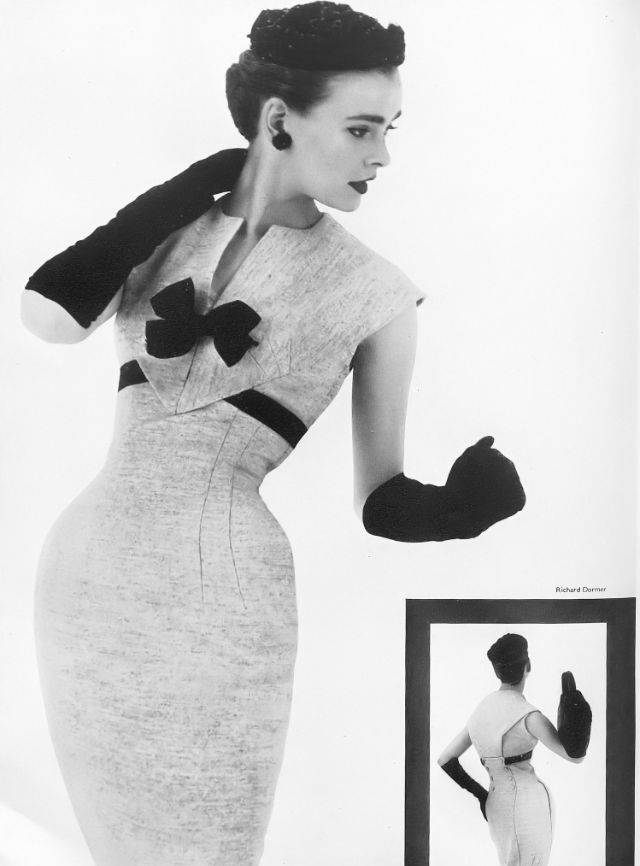
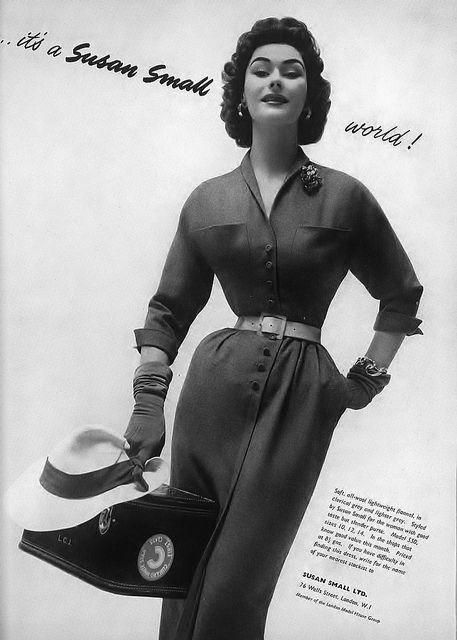
Susan Small was founded in the early 1940s, during a period when British ready-to-wear was beginning to carve out a serious identity alongside couture. The Carr Jones family positioned the label as premium ready-to-wear, advertising to what they called “the smaller smart woman” and pricing garments in guineas, a deliberate signal of quality that set the brand apart from mass-market competitors.
Decade | Key development |
Early 1940s | Brand founded by Leslie and Fay Carr Jones; wartime and post-war ready-to-wear positioning |
1947 | Joined the Model House Group alongside labels such as Horrockses and Polly Peck |
1950s | Growth period; petite sizing emphasis; advertising to the “smaller smart woman”; six collections per year |
1958 | Model House Group renamed the Fashion House Group; Leslie Carr Jones appointed head |
1960s | Expanded advertising, designer staff additions including Brian Duffy as assistant designer |
1970s | Licensing arrangements, including work under licence from international houses |
Circa 1978 | Courtaulds acquisition; label closes; Maureen Baker departs to found Maureen Baker Designs |
The Model House Group strategy was genuinely clever: by pooling resources with other respected British labels, Susan Small could attract national and international buyers to combined shows that no single label could have funded alone. For collectors today, this matters because trade-show catalogues and press coverage from those events can help date a piece with real precision.
The label produced six collections annually throughout much of its history: two main collections, two mid-season, and two “trendsetter” collections. That output means there is a reasonable volume of surviving pieces, though condition varies considerably across the decades.

The people who shaped the Susan Small look
Leslie and Fay Carr Jones were the commercial engine behind the label. Leslie, in particular, took an active role in the wider British fashion industry, eventually heading the Fashion House Group. Their business instincts, including the decision to hire Maureen Baker in 1943, defined the label’s trajectory.
Maureen Baker is the creative figure collectors most need to know. She joined Susan Small in 1943 and remained its head designer until the company closed, a tenure of extraordinary loyalty and consistency. For much of that time she worked largely anonymously, her name unknown to the public even as her designs dressed some of Britain’s most prominent women. Her most celebrated commission came in 1973, when she designed Princess Anne’s wedding dress while still at Susan Small. The V&A collection also holds a coat Baker designed for Princess Anne, worn at the investiture of the Prince of Wales in 1969 at Caernarfon Castle. The Telegraph obituary documents her career chronology in detail and is worth reading for anyone serious about provenance.
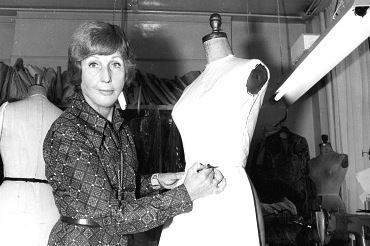
Baker’s anonymity has a direct consequence for collectors. Attribution often rests on construction details and label evidence rather than any designer credit on the garment itself. A Susan Small piece from the 1950s or 1960s is, in all likelihood, a Maureen Baker design, but the label will simply read “Susan Small.”
Brian Duffy served as an assistant designer during the label’s growth years in the 1960s, though his contribution is less documented than Baker’s. His presence is a reminder that the label had genuine design depth beyond its head designer.
How to authenticate and date a Susan Small dress
Start with the label. Match the typography, stitching, and placement against dated examples from auction records, the Vintage Fashion Guild’s label resource, or My Vintage’s own product pages. A genuine woven label, neatly stitched at all four corners, is your first positive signal.
Move to the construction. Open the seams gently with your fingers and look at the seam allowances: mid-century British ready-to-wear typically shows generous, neatly finished allowances. Check the zip: a metal zip with a clean, narrow tape is consistent with 1940s–1960s production; a nylon zip can indicate the 1960s onwards. Stitch density matters too. Tight, even machine stitching with no skipped stitches is characteristic of quality mid-century manufacture.
Provenance checks are worth the effort. Ask sellers for original receipts, old photographs showing the garment being worn, or prior auction or shop listings. Trade-show catalogues from the Model House Group or Fashion House Group era can confirm a design’s date if you can match the silhouette. Pieces with a clear ownership history, particularly those from notable collections, carry a premium for good reason.
Dating by materials is reliable when combined with other evidence. Fabrics such as pure silk taffeta and fine wool crepe are consistent with 1950s–1960s production. Polyester blends begin to appear in the late 1960s and become more common through the 1970s.
Red flags to watch for: modern invisible zips, replacement linings in cheap polyester, suspiciously new press-stud hardware, and machine-stitched hems that look too uniform for the supposed era. None of these individually rules out authenticity, but a cluster of them should prompt careful questioning.
Pro Tip: Ask for a close-up photograph of the label stitching, not just the label face. A label re-attached with modern thread or a different stitch pattern from the surrounding fabric is a sign it may have been moved from another garment.
Where to find genuine Susan Small dresses in the UK today
Authentic pieces turn up across several channels, and each one rewards a slightly different approach.
Specialist online vintage retailers such as My Vintage curate and verify pieces before listing them, providing label close-ups, measurements, and condition notes. A 1960s Susan Small navy polka dot dress is a good example of how a verified listing presents provenance and construction detail, making it easier to buy with confidence.
Auction houses (regional and specialist fashion auctions) occasionally offer Susan Small pieces, sometimes with provenance from original owners. Always request condition reports and additional photographs before bidding.
Specialist vintage shops in cities such as London, Brighton, and Edinburgh are worth visiting in person, where you can inspect construction directly.
Marketplace listings (eBay, Vinted, Depop) carry a wider range of pieces but require more due diligence. Always request label close-ups, seam photographs, and full measurements.
Specialist Facebook groups dedicated to vintage British fashion can be excellent sources, with knowledgeable sellers who often provide detailed provenance.
Before committing to any purchase, request: full bust, waist, and hip measurements; a close-up of the label (front and stitching); photographs of the main seams and lining; a zip close-up; and any known provenance or prior ownership history.
Pro Tip: Susan Small pieces frequently run one to two sizes smaller than their stated UK size by modern standards. Always ask for actual measurements rather than relying on the label size alone.
Susan Small remains one of the most rewarding British ready-to-wear labels to collect, combining genuine design quality from Maureen Baker’s long tenure with the kind of couture-level construction that holds up beautifully decades later.
Find verified Susan Small pieces at My Vintage
At My Vintage, we have been sourcing and curating authentic vintage clothing since 2004, and Susan Small pieces are among the labels we genuinely love finding. Every listing includes detailed provenance notes, label close-ups, and full measurements, so you can assess a piece properly before you buy. Our 1960s Susan Small purple evening dress is a lovely example of the kind of quality and character the label consistently delivered. Browse our current Susan Small listings on the My Vintage site, or get in touch with our team if you have a specific piece in mind or need help verifying a garment you have already found.
Useful sources for further research
A short list of the most authoritative references for Susan Small history, Maureen Baker’s career, and label dating.
Susan Small (fashion) — Wikipedia: the clearest single-page overview of the label’s founding, trading period, and closure; good starting point for dating context.
Maureen Baker (fashion designer) — Wikipedia: covers Baker’s career chronology, her role at Susan Small, and her later work at Maureen Baker Designs.
Maureen Baker obituary — The Guardian: the most detailed account of Baker’s anonymity and late recognition; essential reading for understanding designer attribution.
Maureen Baker obituary — The Telegraph: supplies career chronology and contemporary photographic reference useful for visual provenance work.
Susan Small — Grace’s Guide: trade-directory record with address and exhibition activity; useful for corroborating business-history facts and dating.
Model House Group history — UAL Research Online: academic source on the group’s formation and strategy; best for understanding trade-show provenance and how to use catalogues for dating.
Susan Small — Vintage Fashion Guild: label resource with visual references; particularly useful for matching label typography to dated examples.
Susan Small coat — V&A Collections: primary museum record of the Princess Anne investiture coat; authoritative for high-profile provenance research.
Recommended

Comments