


The 1970s Does the 1930s: When Vintage Fashion Went Vintage
- 13 minutes ago
- 6 min read

Fashion has always had a habit of looking backwards. Today, designers regularly raid the wardrobes of previous decades for inspiration, but this fascination with fashion nostalgia is nothing new. In the 1970s, while platform shoes, flares and psychedelic prints were busy creating some of the decade’s most recognisable looks, another rather more romantic influence was quietly making its return.
The 1930s were back. Not as a perfect reproduction, of course. Seventies fashion rarely copied history quite so obediently. Instead, designers and dressmakers borrowed the languid silhouettes, fluid fabrics, wide trousers and old-Hollywood glamour of the interwar years and filtered them through a distinctly 1970s eye. The result was something rather wonderful: vintage-inspired fashion that has itself now become vintage.
Why Were the 1970s Looking Backwards?
The early 1970s arrived after a decade obsessed with youth, modernity and the future. The 1960s had given fashion space-age fabrics, geometric shapes, mini skirts and a sense that everything old could happily be discarded in favour of something new. By the seventies, the mood was becoming more complicated.
Nostalgia crept into popular culture, and fashion began rummaging enthusiastically through history. Victorian and Edwardian influences appeared alongside 1920s, 1930s and 1940s references. Flea markets and second-hand clothing offered inspiration, while old films provided a glamorous wardrobe of ideas waiting to be rediscovered. The 1930s proved particularly tempting.
It was a decade whose fashions could feel sophisticated without being stiff. Long lines, beautifully draped fabrics and an emphasis on movement offered something quite different from the abbreviated, structured shapes that had dominated much of the previous decade.
The 1930s Silhouette Returns
One of the great innovations of 1930s fashion was the widespread use of the bias cut.
Rather than cutting fabric along the straight grain, cutting it diagonally allowed it to fall, stretch and drape around the body in an entirely different way. In the hands of designers such as Madeleine Vionnet, it helped create the extraordinarily fluid evening gowns now synonymous with 1930s glamour.
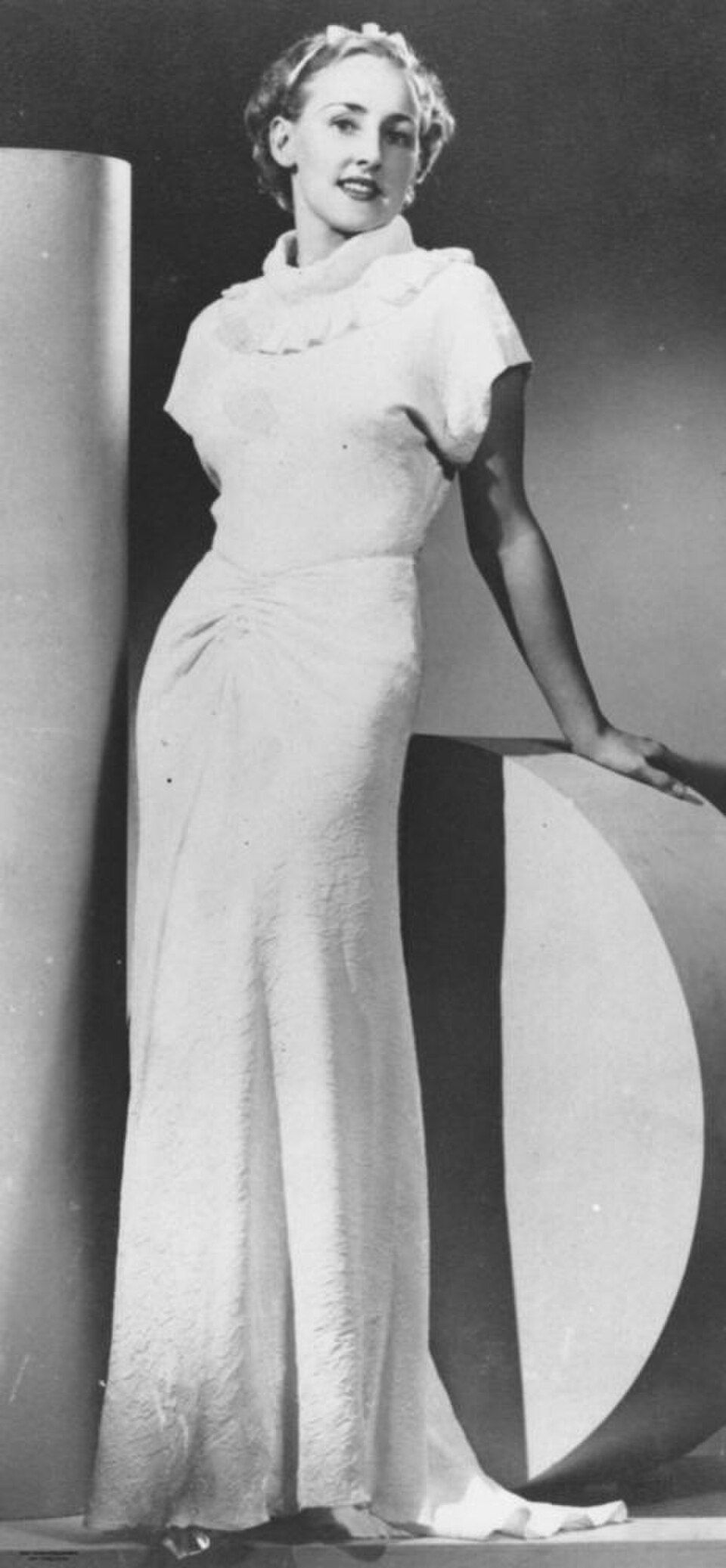
These dresses didn't require the rigid foundations associated with some earlier fashions. Instead, fabric could skim the body's natural curves before falling into long, graceful skirts.
It is easy to understand why the look appealed again decades later.
Seventies fashion was already embracing longer hemlines and a freer approach to dressing. The long, sinuous shapes of the thirties could therefore be revived without feeling like historical costume. In jersey, satin-like fabrics and other soft materials, the idea became unmistakably seventies.
Look through fashion catalogues from the period and there they are: plunging necklines, long slinky dresses, softly flared hems and clothes designed to move with the wearer.
They weren't 1930s dresses. But their fashion ancestors weren't particularly difficult to spot.
Old Hollywood Finds a New Audience
By the 1970s, the golden age of Hollywood already belonged to another era, and its stars offered a ready-made vision of nostalgic glamour. Photographs and films preserved an enticing world of satin evening gowns, elegant dressing rooms, cocktail clothes and impossibly polished screen sirens. Seventies designers could borrow that glamour while loosening it up.

Where a 1930s gown might have appeared alongside carefully waved hair and immaculate accessories, its seventies descendant could be worn with long natural hair, towering shoes or a decidedly more relaxed attitude. That contrast is part of what makes revival fashion so interesting. Fashion rarely returns exactly as it was. A silhouette may survive while everything around it changes.
It Wasn't All Evening Gowns
The comparison becomes even more interesting once we step away from the red carpet.
1930s wardrobes also included wide-legged trousers, beach pyjamas, flowing separates and elegant resort wear. Women had begun wearing trousers more visibly during the interwar years, particularly for leisure, holidays and informal occasions, and some of the resulting silhouettes can look surprisingly familiar to anyone who knows 1970s fashion. Wide trousers became one of the great shapes of the seventies.

They might be teamed with fitted knitwear, jackets, blouses or matching separates, but that dramatic sweep through the leg had already enjoyed a fashionable life decades earlier.
Again, this wasn't simply copying. The seventies took an existing idea and made it belong to a completely different generation. That is perhaps a more accurate way to understand fashion revival altogether. Clothes don't necessarily return; ideas do.
The Art Deco Thread
There was another reason the thirties fitted so comfortably into the seventies fascination with the past: Art Deco itself was enjoying renewed attention. The elegant geometry and stylised decoration associated with the interwar years provided a rich source of inspiration. Deco-style motifs, fan shapes, sweeping lines and graphic details could sit surprisingly comfortably alongside the bold decorative tastes of the 1970s.

There is an interesting contradiction here. Art Deco had once represented modernity. Decades later, those same visual ideas could evoke nostalgia. That transformation happens repeatedly in fashion. What one generation considers startlingly modern can become another generation's shorthand for the past.
The Seventies Didn't Stop at the Thirties
Of course, it would be far too neat to pretend the 1970s had selected one historical decade and faithfully worked its way through the wardrobe.
Seventies fashion was gloriously indiscriminate. It borrowed from everywhere.
Prairie dresses could evoke Victorian or Edwardian clothing. Romantic blouses brought ruffles, lace and high necklines back into fashion. Flapper influences recalled the twenties, while wartime styling and forties-inspired shapes had their moments too. Folk dress, historical costume and far-flung textile traditions were mixed into the decade's enormous fashion melting pot.
Sometimes several influences appeared in the same outfit.
That matters when looking at surviving vintage clothing today. A long floral 1970s dress isn't automatically “1930s inspired” simply because it looks old-fashioned. The strongest thirties connections tend to appear in the line and movement of the garment: fluid fabrics, body-skimming cuts, long proportions, elegant wide trousers and that unmistakable sense of languid glamour.
When Vintage Became Fashion
Perhaps the most fascinating part of the story is that the seventies weren't merely borrowing old silhouettes. Attitudes towards old clothes themselves were changing.
Second-hand and vintage clothing increasingly became sources of individual style. Dressing from the past could offer an alternative to mainstream fashion, while designers discovered that previous decades contained an enormous library of shapes and ideas ripe for reinterpretation.
It helped establish a cycle we now take completely for granted.
The 1930s influenced the 1970s. The 1970s subsequently became a source of inspiration for later designers. Today, both decades are revisited again and again. A seventies dress inspired by the thirties can now be fifty years old in its own right — a genuine piece of vintage clothing based on a style that was already nostalgic when it was made.
There is something rather brilliant about that.
How to Spot the 1930s Influence in 1970s Vintage
When you're looking at genuine 1970s clothing, don't expect to find a carbon copy of a thirties gown. Instead, look for echoes. A long dress that follows the body rather than standing away from it may be one clue. Softly flaring skirts, fluid fabrics, plunging or draped necklines and elegant eveningwear proportions can all suggest the influence. Wide-legged trousers and flowing resort-style separates offer another connection, while Deco-inspired decorative details can sometimes complete the picture.
Context matters, though. The seventies produced an enormous variety of romantic and historically inspired clothing, and not all of it leads back to the same decade.
That is part of the pleasure of studying vintage fashion. Once you begin recognising the references, an individual garment can reveal a much longer story than the date on its label.
Fashion Never Really Starts Again
We tend to describe fashion trends as though they suddenly appear: the maxi returned, wide trousers came back, vintage glamour was rediscovered.
In reality, fashion is much more like an ongoing conversation.
Every generation inherits a wardrobe of ideas from the one before it. Some are rejected, some forgotten and some quietly wait until the cultural mood makes them interesting again.
The 1970s fascination with the 1930s is a particularly lovely example because the two decades appear, at first glance, to belong to completely different worlds. Look more closely, however, and the connections begin appearing everywhere: in the sweep of a trouser leg, the fall of a long skirt, the gleam of a fluid evening dress and the irresistible appeal of dressing like you might have stepped out of another era.
And now, more than half a century later, we're looking backwards at the seventies looking backwards at the thirties.
Fashion really does love a full circle. ❤️


Comments