


The 90s Celestial Style Guide: Cosmic, Bold, Iconic

There is something quietly remarkable about the 90s celestial aesthetic. More than star-print crop tops and moon-shaped pendants, it was a genuine cultural mood rooted in astrology, millennial anxiety, and a collective fascination with the cosmos. The 90s celestial trend captured something real about what it felt like to be alive at the end of a century, and that is precisely why it keeps coming back. Whether you are new to the look or a seasoned vintage collector, understanding where it came from makes wearing it feel entirely different.
Table of Contents
The cultural roots of 90s celestial style
To understand why stars, moons, and suns dominated 1990s fashion and décor, you need to understand the decade itself. The 90s were defined by a particular tension: optimism about the future sitting alongside deep unease about what that future might hold. Youth culture pushed back against corporate conformity, rave scenes rewrote the social rulebook, and astrology quietly moved from the fringes to the mainstream.
The single most dramatic celestial event of the decade was Comet Hale-Bopp. Visible to the naked eye for a record-breaking 18 months and peaking in March and April 1997 with 1.2 million daily web hits, it became a shared global experience unlike anything the modern world had seen before. People stepped outside and looked up. The sky felt personal again, and that feeling fed directly into fashion, décor, and popular culture. The comet’s impact was not entirely joyful, of course. The Heaven’s Gate tragedy in March 1997, when a cult linked the comet to an alien spacecraft, demonstrated just how profoundly the celestial had gripped the collective imagination. It was a reminder that the 90s cosmic obsession had genuine emotional weight behind it.

Astrology added another layer entirely. Saturn’s transit through Pisces between 1993 and 1996 was linked to the minimal, structured tailoring that defined early 90s fashion. As Saturn moved into Aries from 1996 to 1999, the aesthetic shifted sharply toward rebellion, androgyny, and self-expression. That shift is written all over the clothes of the era.
Several key forces shaped how 90s celestial themes manifested in style:
Rave culture: The rave scene was an early adopter of cosmic aesthetics, using neon fabrics, holographic materials, and glow-in-the-dark accessories to mirror the energy of the cosmos long before it reached the high street.
Millennial anxiety: With the year 2000 approaching, there was a genuine cultural fascination with space, time, and the unknown that translated into symbolic dressing.
Celebrity influence: Figures like Geri Halliwell, Björk, and Madonna wore celestial-inspired pieces in ways that made them feel aspirational rather than niche.
Mysticism entering the mainstream: Tarot, crystal healing, and astrology columns in teen magazines brought cosmic symbolism into everyday life for millions of young people.
“The late 90s fashion chaos blended space-age paranoia with youthful rebellion, creating a unique, aggressive style landscape unlike anything that came before it or after it.”
Fashion and Jewellery of the 90s Celestial Era
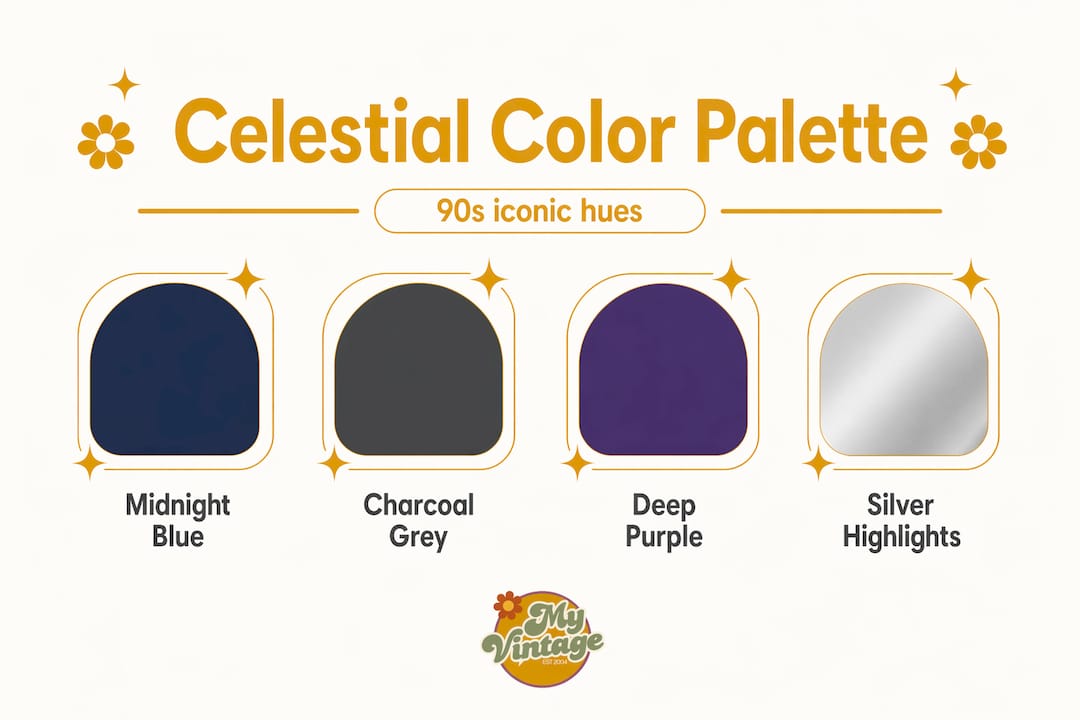
The clothes and accessories of the 90s celestial moment were unmistakable. Star and moon motifs appeared on everything from velvet slip dresses to platform trainers, and the colour palette was just as distinctive. Think midnight blue, deep charcoal, rich purple, and forest black, all offset by silver and white accents. The contrast was the point: dark, moody, and mysterious, then suddenly a flash of silver catching the light.

The 90s celestial aesthetic’s characteristic palette of charcoal, midnight blue, and deep purple with silver highlights has been described as sitting at the heart of what became known as whimsigothic culture. It was glamorous and gothic at the same time. Silk and velvet were the fabrics of choice for eveningwear, while holographic and metallic finishes appeared in clubwear and festival fashion.
Jewellery was where the celestial aesthetic truly showed off. Diamond belly chains became a signature piece of the era following Chanel’s 1994 runway moment, and cross necklaces encrusted with stones were worn by pop stars and supermodels alike. The Victoria’s Secret Fantasy Bra of 1996, valued at $1 million, pushed jewellery as fantasy firmly into the cultural conversation. Chokers with crescent moon pendants, star-shaped ear cuffs, and layered arm cuffs all became wardrobe staples. If you wanted to look through moonstone and opal pieces today as a modern nod to that era, you would find the same ethereal quality that defined the jewellery of the decade.
The most-loved celestial fashion pieces of the 90s included:
Star-print velvet slip dresses in midnight navy or black
Crescent moon chokers in silver or white gold
Holographic crop tops and co-ords from the rave scene
Diamond-set arm cuffs and layered wrist pieces
Silver star-shaped earrings, both hoop and drop styles
Pro Tip: When hunting for authentic 90s celestial jewellery, look specifically for pieces marked 925 sterling silver with simple satin or hammered finishes. Star and moon motifs in this finish are the most likely to be genuine period pieces rather than modern reproductions.
If you love the layered jewellery look, a piece like the crystal igneous necklace captures that same raw, cosmic energy that made 90s celestial accessories so compelling.
Celestial Themes in 90s Home Décor
The 90s celestial trend did not stop at the wardrobe. It moved into bedrooms, living rooms, and every other domestic space with the same confidence it had on the runway. The aesthetic in the home was part mystical sanctuary, part teenage rebellion against bland interiors.

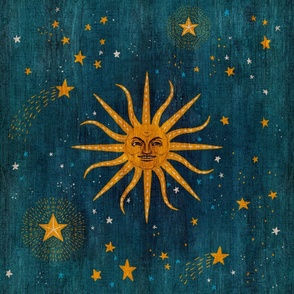
Sun and moon wall art was everywhere. Cast iron plaques, painted wooden wall hangings, and embossed metal prints featuring stylised suns with human faces were a staple of independent gift shops throughout the decade. Glow-in-the-dark star stickers on ceilings were practically a rite of passage for young people, and crescent moon fairy lights added that signature moody warmth to bedroom spaces.
Here is how the key décor motifs compare between the original 90s era and what you find in vintage markets today:
Décor element | Original 90s style | What survives in vintage markets |
Sun face wall art | Cast iron or painted wood, earth tones | Still widely available, often painted over or distressed |
Moon window hangings | Suncatchers in cobalt blue or amber glass | Increasingly rare; hand-blown pieces command higher prices |
Star garlands | Metallic card or foil, party-style | Common finds; quality varies enormously |
Mystical candle holders | Pewter or dark bronze with celestial engravings | Excellent finds at car boots and estate sales |
Zodiac cushions | Printed cotton or tapestry weave | More common, relatively affordable |
The whimsigothic atmosphere these pieces created was one of mystery layered over comfort. It was an interior aesthetic that said something personal about the person living there, which is exactly why these pieces are enjoying such a strong resurgence in vintage and second-hand markets right now.
When sourcing authentic 90s celestial décor, car boot sales and estate sales in larger towns consistently yield the best finds. Independent vintage homeware dealers are also worth bookmarking, particularly those who specialise in late 20th century pieces. Condition matters enormously. A well-preserved sun face wall piece is worth considerably more than a chipped reproduction.
Bringing 90s Celestial Into Your Style Today
The good news for anyone wanting to build a wardrobe around the 90s celestial aesthetic is that its modern revival is thoughtful rather than costume-like. Current celestial fashion trends are moving away from repetitive star motifs toward intricate, mythological, and symbolism-rich designs, which actually gives vintage pieces an even greater edge. An original 90s velvet moon-print dress looks far more interesting than a mass-produced celestial print from today.

Pro Tip: Start with one anchor piece, a velvet slip dress, a silver choker, or a star-print blouse, and build around it with neutral separates. Celestial pieces have the most impact when they are the focal point of an outfit rather than competing with other bold prints.
When mixing vintage celestial pieces with a contemporary wardrobe, a few approaches work particularly well:
Pair a 90s zodiac-print top with wide-leg tailored trousers for a look that reads modern but has genuine vintage credentials.
Layer a crescent moon choker over a plain jersey turtleneck for effortless texture contrast.
Use celestial jewellery to update classic wardrobe staples. A simple midi dress becomes something entirely different with a set of layered silver star pendants.
In the home, mix one or two authentic 90s celestial décor pieces with cleaner, more contemporary items. A sun face wall plaque above a modern shelf creates exactly the kind of contrast that makes interiors feel curated rather than cluttered.
The 1990s aesthetic guide from My Vintage is an excellent resource for understanding how to balance vintage and contemporary elements without losing the authentic feel that makes original pieces so special.
Astrology’s Role in 90s Celestial Identity
One of the most under-appreciated aspects of the 90s celestial trend is how deeply personal it was. Wearing a star sign pendant or a moon phase necklace was not just decorative. It was a form of self-identification, a way of saying something about who you were without using words. 90s celestial aesthetics mirrored a collective cultural search for identity and meaning, connecting fashion directly to personal and planetary influences.
Astrology gave young people in the 90s a language. Teen magazine horoscope columns became enormously popular reading, and wearing your star sign symbol was considered genuinely meaningful rather than ironic. Saturn’s cycles had a particularly strong influence on the broader cultural mood, as the planet’s transits brought structural shifts in fashion that designers, consciously or not, responded to through their collections. Carolyn Bessette Kennedy, widely regarded as one of the most elegant women of the 90s, embodied the Saturn-in-Pisces minimal aesthetic before pivoting with the era into something more expressive as the decade progressed.
The Saturn return cycle that so many people aged 27 to 30 experience today connects directly back to those 90s astrological conversations. The modern resurgence in both astrology and celestial fashion is not coincidental. It reflects the same desire for meaning and personal expression that drove the original trend.
“Celestial symbolism functioned as a cultural language in the 90s, one through which young people expressed belonging, identity, and a sense of connection to something larger than themselves.”
The 90s fashion icons and self-expression article from Myvintage explores this idea further, looking at how the decade’s most memorable style moments were rooted in genuine personal narrative rather than simple trend-following.
My Take on the Enduring Magic of the 90s Celestial Trend
I have spent years working with vintage fashion and something I find genuinely fascinating is that the 90s celestial look was never just decorative. It was a response to a very specific cultural moment: the end of a century, a generation reaching adulthood without a roadmap, and a world that suddenly felt both enormous and knowable through the internet for the first time. The stars and moons people wore and displayed were, in a very real sense, coping mechanisms dressed up as fashion.
The pieces I always return to in vintage collections are the ones that have that quality of quiet conviction. A well-made silver crescent moon choker from 1997 does not feel like a relic. It feels like something worn with genuine belief. That is what separates the 90s celestial aesthetic from trend-driven costume wear, and it is exactly why I encourage people to look for authentic vintage pieces rather than modern imitations. The joy lies in wearing something that carries its own story.
Find Your Own Piece of 90s Cosmic Style
If this has you itching to start building your own 90s celestial collection, we have good news.
At My Vintage, we source and curate authentic vintage pieces with exactly this kind of depth and character in mind. One piece worth exploring for the celestial aesthetic enthusiast is the 1950s atomic magazine rack, a genuinely striking mid-century piece that bridges the space-age design sensibility of the 50s with the cosmic obsessions of the 90s. Pair it with a few well-chosen celestial décor pieces and you have an interior narrative that feels considered and personal. Browse the full vintage homeware and accessories collection at Myvintage and see what speaks to you.
Frequently Asked Questions
What is the 90s celestial aesthetic?
The 90s celestial aesthetic refers to the widespread use of star, moon, and sun motifs in fashion, jewellery, and home décor throughout the 1990s, rooted in astrology, rave culture, and a collective fascination with the cosmos as the millennium approached.
Why were celestial themes so popular in the 90s?
Celestial themes reflected the cultural mood of the decade, shaped by events like Comet Hale-Bopp’s 1997 visibility, Saturn’s astrological transits, and the rise of astrology in youth culture as a tool for personal identity and expression.
What colours were typical of the 90s celestial look?
The signature palette included midnight blue, deep charcoal, rich purple, and black with silver and white metallic accents, creating the moody, mysterious atmosphere associated with the whimsigothic aesthetic of the era.
How can I style 90s celestial pieces today?
Use vintage celestial pieces as the focal point of an outfit, pairing a star-print velvet top or moon pendant with contemporary neutral separates. The modern celestial revival favours symbolism-rich vintage pieces over repetitive novelty prints.
What jewellery defined the 90s celestial trend?
Key jewellery pieces included crescent moon chokers, diamond belly chains, star-shaped ear cuffs, layered arm cuffs, and cross necklaces set with stones, all characterised by silver tones and bold celestial symbolism.
Recommended

Comments