


The Cocktail Dress: A Short History of Dressing for Drinks

There was once an entire category of clothing devoted to the hours between afternoon and evening. Not quite daywear, not quite dinner dress and certainly not the sort of thing one wore to nip out for a loaf of bread, the cocktail dress occupied that deliciously specific part of the wardrobe reserved for drinks, conversation and the possibility that the evening might turn into something rather more exciting.
Today we tend to use “cocktail dress” rather loosely. A wedding invitation might request cocktail attire, shops apply the name to almost anything sufficiently party-like, and most of us would be hard pushed to identify the precise moment at which cocktails officially begin. Historically, however, the cocktail dress belonged to a changing social world in which women were going out more, entertaining differently and needed clothes that could bridge the increasingly blurred territory between day and evening.
Before the Cocktail Dress
The dress may have been new, but the idea of changing clothes according to the hour certainly wasn't. For fashionable women in the late nineteenth and early twentieth centuries, a well-stocked wardrobe could contain morning dresses, afternoon dresses, visiting dresses, tea gowns, dinner dresses and formal evening gowns, each intended for a slightly different setting. Clothing acted almost like a social timetable.

The First World War and the enormous social changes that followed began to loosen many of those conventions. During the 1920s, fashionable life became increasingly associated with restaurants, hotels, nightclubs and cocktail drinking, while women's clothes became shorter and less cumbersome. The glamorous beaded dresses we now instinctively associate with a Jazz Age cocktail party were generally described at the time in other terms, however. The modern idea of the “cocktail dress” was still taking shape.
Cocktails Change the Wardrobe
Cocktail drinking became particularly fashionable in America during Prohibition, despite the rather inconvenient detail that selling alcohol was illegal. By the 1930s, the cocktail hour had become an established part of fashionable social life on both sides of the Atlantic, and fashion responded with clothes suited to it.
These dresses needed to perform a clever balancing act. A full-length evening gown could look absurdly grand at six o'clock, while ordinary daytime clothes might feel too practical for drinks and entertaining. Dresses intended for the late afternoon and early evening therefore became smarter and more decorative than daywear without acquiring all the ceremony of formal evening dress. Fashion magazines and department stores increasingly recognised cocktail clothing as a category of its own.

Accessories mattered enormously. Gloves, jewellery, a small handbag and a suitably fabulous hat could transform a relatively restrained dress into something distinctly cocktail-worthy. The outfit was sophisticated rather than spectacular; the wearer was dressed for an occasion, but not yet dressed for the ballroom.
Dior and the Golden Age of the Cocktail Dress
If any period truly belongs to the cocktail dress, it is the 1950s. After the restrictions of the Second World War, fashion rediscovered conspicuous femininity, luxurious fabrics and clothes designed unapologetically for pleasure. Christian Dior's New Look of 1947, with its narrow waists and generous skirts, helped establish the silhouette that would dominate much of the following decade.
The classic 1950s cocktail dress often finished around the knee or lower calf, with a beautifully fitted bodice and either a full skirt or a sleek, narrow one. Silk, satin, lace, velvet, taffeta and brocade brought evening richness without requiring the length of a ball gown. Black was eternally useful, but cocktail dresses were by no means uniformly sombre: jewel colours, florals, metallic threads, embroidery and exuberant prints all had their place.

There was something wonderfully theatrical about the whole ritual. The dress might be accompanied by a neat little jacket or stole, a structured handbag, gloves, sparkling costume jewellery and immaculate shoes. Getting ready was part of going out, rather than the inconvenient bit that happened before it.
The Little Black Dress Finds Its Perfect Hour
The cocktail dress also gave one of fashion's most enduring ideas an ideal habitat: the little black dress. Black had been fashionable long before the 1950s, of course, and Coco Chanel's simple black dresses of the 1920s are frequently credited with helping to detach the colour from its older associations with mourning. But the post-war cocktail wardrobe demonstrated just how versatile a short black dress could be.
In beautifully cut silk, crepe, velvet or lace, black could move effortlessly between restrained and glamorous depending on its accessories. Pearls made one impression, rhinestones another; gloves, a dramatic brooch or an evening bag could change the mood again. For women who could not justify a wardrobe full of occasion dresses, that adaptability was enormously useful.
The idea has survived remarkably well. Remove the period gloves and hat from many mid-century black cocktail dresses and they can look startlingly contemporary, which perhaps explains why good examples remain so appealing to vintage buyers.

The 1960s Loosen the Rules
Then the Sixties arrived and began cheerfully dismantling the etiquette. Hemlines rose, silhouettes became straighter and younger designers challenged the assumption that sophisticated clothes had to look conventionally ladylike. The cocktail dress survived, but its appearance changed dramatically.
Full-skirted 1950s shapes gave way to shifts, A-lines and increasingly abbreviated mini dresses. Brocade, lace and satin remained, but they shared the decade with metallic fabrics, sequins, bold prints and new synthetic materials. A sleeveless mini dress could now fulfil much the same social role as the carefully accessorised cocktail frock of a decade earlier.

Youth culture changed the atmosphere too. Going out increasingly meant clubs, parties and music rather than a formally observed cocktail hour, and clothes became less dependent on rigid distinctions between afternoon, cocktail and evening wear. The occasion dress wasn't disappearing; it was simply becoming much less interested in following instructions.
From Cocktail Hour to Party Dress
By the 1970s, the borders had become even harder to police. A glamorous maxi dress might appear at dinner, a slinky jersey dress at a party, and disco eventually provided an entirely new reason to own something shiny. Through the 1980s came ruching, dramatic sleeves, peplums, sequins and unapologetic glamour, while the 1990s stripped things back again with slip dresses and pared-down minimalism.
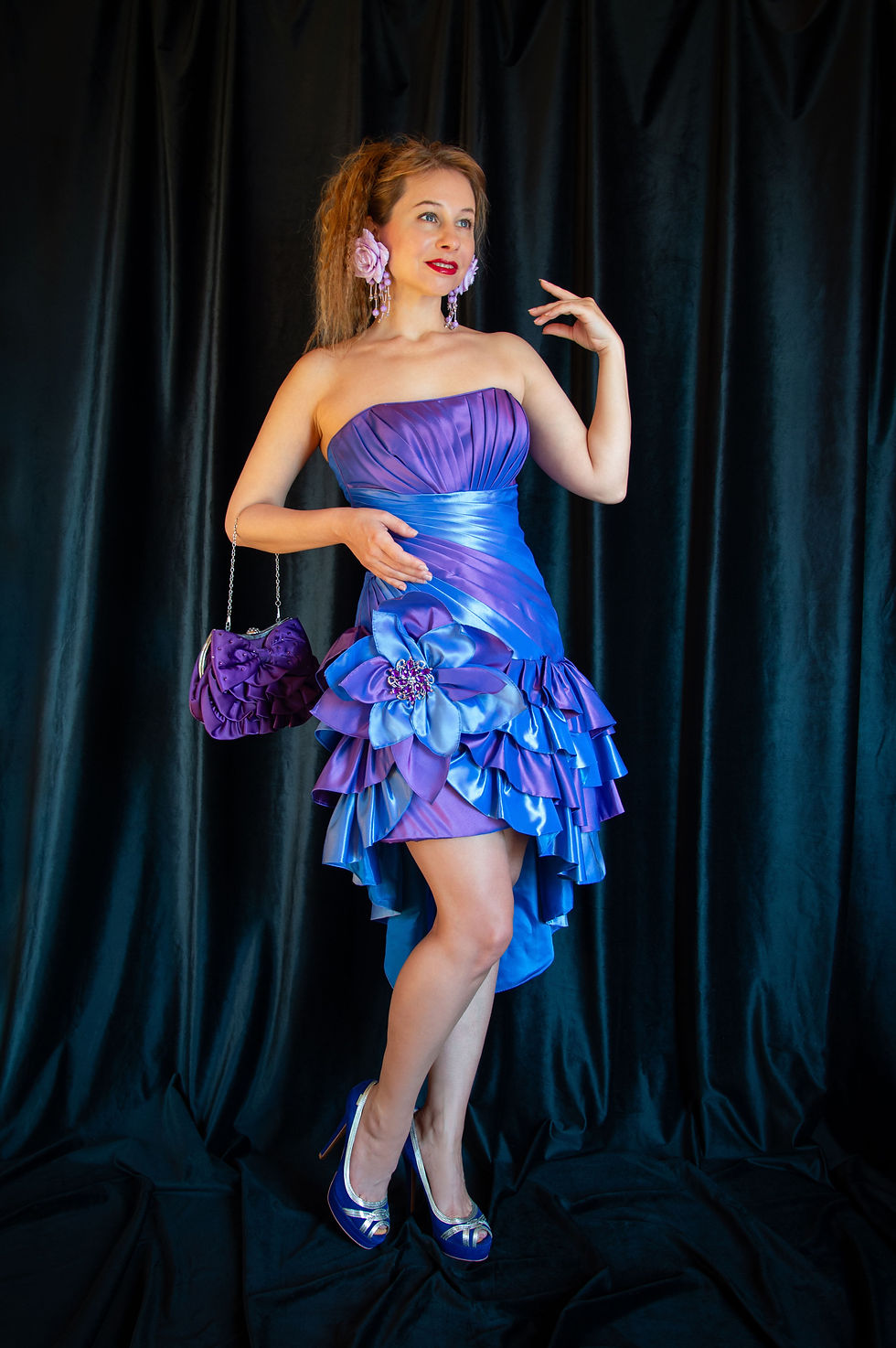
“Cocktail dress” remained useful fashion vocabulary, particularly for invitations and semi-formal occasions, but the old distinction between a dress for cocktails and one for the rest of the evening had largely disappeared. Modern wardrobes simply don't operate according to the elaborate timetable that once made such categories necessary.
And perhaps that's why genuine vintage cocktail dresses are so evocative. They weren't merely party dresses. They belonged to a culture in which different parts of the day had different clothes, and six o'clock could apparently require an outfit of its own.
What Makes a Vintage Cocktail Dress?
There isn't one foolproof formula, and vintage sellers can sometimes be rather enthusiastic with the term. A cocktail dress is better understood through its intended level of formality than through a particular neckline, fabric or skirt shape.
Generally, we're looking for a dress that sits between everyday clothing and full formal evening wear: sufficiently special for drinks, dinner or a smart party, but without the grandeur traditionally associated with a ball gown. Period, fabric, construction and styling all matter, which is why a 1950s silk fit-and-flare dress and a sparkling 1960s mini can both legitimately belong to the story.
That flexibility is also a useful reminder that vintage terminology isn't always as tidy as we'd like it to be. Clothes were worn by real people, wardrobes overlapped and a favourite dress undoubtedly went to plenty of places its original shop label never anticipated.
Why the Cocktail Dress Still Works
We may no longer schedule our wardrobes around afternoon tea, cocktails and dinner, but the problem the cocktail dress solved hasn't gone anywhere. We still need something for those occasions when everyday clothes aren't enough and full evening glamour would be far too much.
Vintage examples do that particularly well because they often combine a sense of occasion with extraordinary detail: beautiful fabrics, interesting construction, unusual trims and silhouettes that don't look identical to everything currently hanging on the high street. And unlike some pieces of historical fashion, a cocktail dress doesn't necessarily require an elaborate vintage look around it. Wear one with modern shoes and simple jewellery and it can feel completely at home in the present.

The cocktail hour itself may have become considerably less formal, but there is still something irresistible about owning a dress that suggests you might at any moment be summoned to a hotel bar for a martini. Even if, in reality, you're drinking a glass of wine in the kitchen while deciding whether you can be bothered to go out. Some aspects of social life have definitely improved.
When did cocktail dresses become popular?
The idea developed during the 1920s and 1930s as cocktail drinking and early-evening entertaining became increasingly fashionable, but the cocktail dress enjoyed its great heyday during the 1950s.
What is the difference between a cocktail dress and an evening dress?
Traditionally, cocktail dresses occupied the space between smart daytime clothing and formal evening wear. They were generally less formal than full-length evening gowns and suitable for late-afternoon drinks, parties and early-evening occasions.
Does a cocktail dress have to be short?
No. Although we now commonly associate cocktail dresses with knee-length or shorter styles, historical examples varied considerably. Mid-century dresses could fall below the knee or to mid-calf, and the appropriate length changed along with fashion.
Can you wear a vintage cocktail dress today?
Absolutely. In fact, cocktail dresses are among the easiest pieces of vintage occasion wear to bring into a modern wardrobe. Keeping shoes, jewellery and other accessories relatively simple allows the dress to provide the vintage character without making the whole outfit feel like costume.


Comments