


The Going-Out Top: A 90s & Y2K Fashion Icon

There was a time when the answer to “What are you wearing tonight?” was wonderfully predictable: jeans and a nice top. The jeans could be the same pair you had worn the previous weekend and quite possibly the weekend before that, because nobody was particularly concerned about them. All the responsibility rested on the top. It had to shimmer, sparkle, drape, plunge, fasten in an unnecessarily complicated manner or reveal a strategic patch of skin, transforming an otherwise ordinary pair of trousers into an outfit worthy of a Saturday night.
During the 1990s and early 2000s, the going-out top became one of the most recognisable pieces in a young woman's wardrobe, and decades later its peculiar magic is being rediscovered.
What makes the going-out top so interesting is that it was never really a single style of garment. It was more of a job description. A satin camisole could qualify, as could a sequinned halterneck, a sheer mesh blouse, a corset-inspired number or something made from approximately twelve square inches of handkerchief-shaped fabric held together by optimism. What united them was their purpose: these were tops intended for evenings out, and everybody somehow knew one when they saw one.
When Did the Going-Out Top Become a Thing?
Special tops for evening wear certainly existed long before the 1990s. Earlier generations paired decorative blouses, beaded shells and glamorous separates with skirts or tailored trousers, while the 1970s and 1980s produced more than their fair share of lurex, sequins, metallic fabrics and dramatic evening blouses. What changed during the 1990s was the combination in which the top was worn.
Denim had become an increasingly normal part of almost every wardrobe, and dressing for a night out no longer necessarily meant wearing a dress or an obviously formal ensemble. A pair of jeans could make the journey from daytime to evening simply by changing whatever was worn above them. It was practical, comparatively affordable and allowed the glamorous part of the outfit to do all the talking.

By the latter half of the decade, minimalism also had an enormous influence on fashion. Sleek slip dresses, spaghetti straps, bias-cut satin and simple silhouettes offered a very different kind of glamour from the conspicuous excess of the 1980s. The little camisole fitted perfectly into this new aesthetic, particularly when worn with denim or a pair of tailored trousers. As the decade moved towards the millennium, however, minimalism began acquiring embellishment, colour, unusual cuts and a rather enthusiastic relationship with synthetic fabrics.
The going-out top was about to enter its golden age.
The 1990s Going-Out Top
The classic 1990s version often looked deceptively simple. Satin and silky fabrics were everywhere, particularly in camisoles with shoestring straps, softly draped necklines or delicate lace trims. Halternecks offered a little more drama, while sleeveless fitted tops worked beautifully with the straight and bootcut jeans of the period. Black was inevitably popular, but jewel tones, metallic finishes and rich shades of burgundy, purple and deep blue all suited the evening mood.
There was also something appealingly grown-up about these tops. For teenagers and young women beginning to venture into pubs, clubs and bars, a slinky camisole could feel infinitely more sophisticated than everyday clothes without requiring the formality of a cocktail dress. Add a tiny shoulder bag, heeled sandals or boots and perhaps a liberal application of body glitter, and the transformation was complete.
Celebrity culture and glossy magazines helped reinforce the formula. Red-carpet dressing might have belonged to another universe, but photographs of actresses, singers and models leaving restaurants, attending parties or simply being photographed about town provided much more attainable inspiration. A pair of jeans and a glamorous top felt like something that could genuinely be recreated.

Y2K Turns Up the Volume
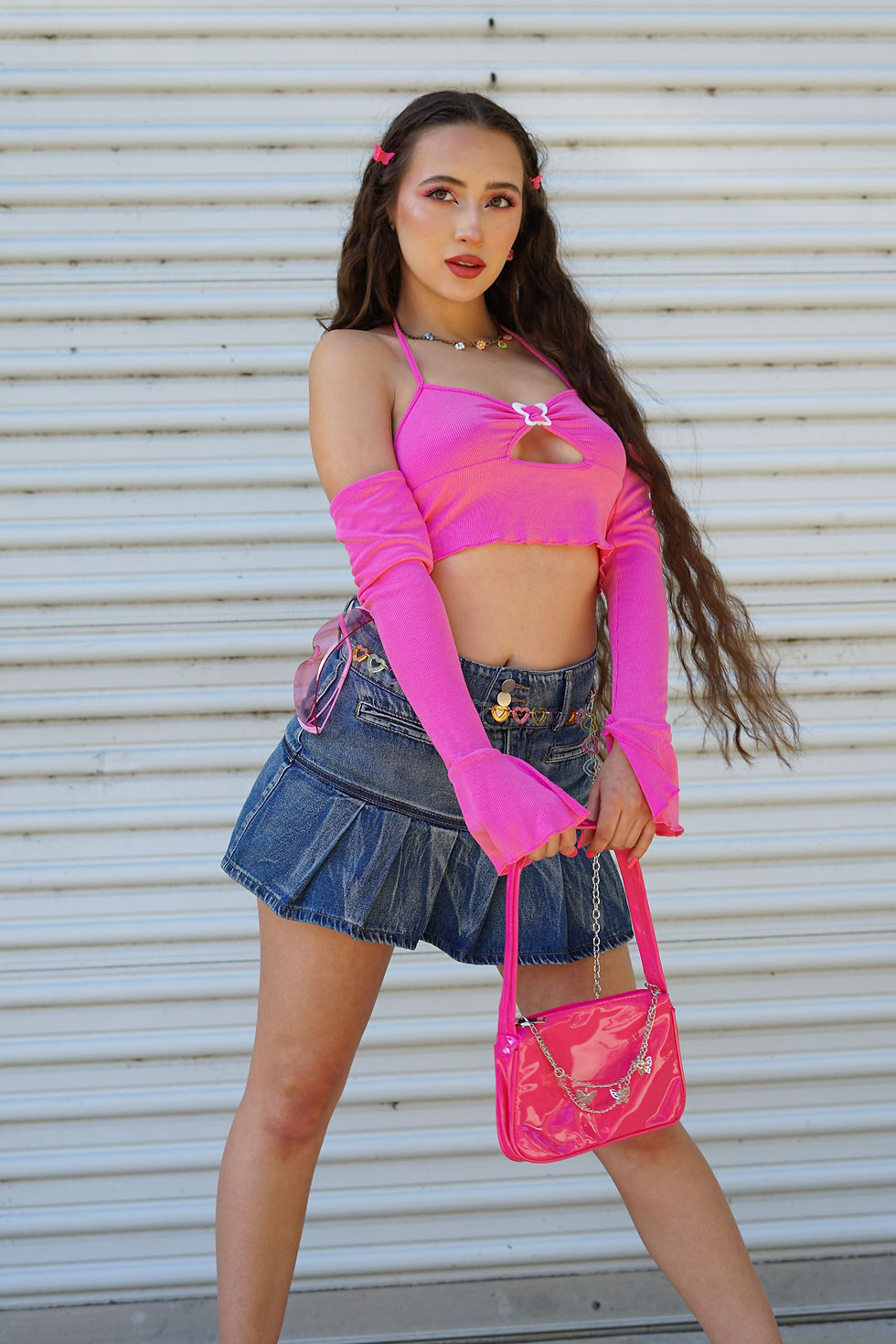
If the 1990s going-out top could sometimes be restrained, the early 2000s version had considerably less interest in subtlety. Fashion entered the new millennium with metallics, rhinestones, asymmetric hems, sequins, mesh, ruching, cut-outs, corset details and an impressive determination to experiment with straps.
Halternecks became particularly important, ranging from relatively sensible designs to tops that appeared to require an engineering degree to put on correctly. There were backless styles, scarf tops, handkerchief hems, one-shouldered designs and barely-there camisoles. Some fastened with ties around the neck and back; others involved buckles, rings, chains or decorative hardware. Sequins and beads caught nightclub lights, while satin remained a favourite in the bright colours that became increasingly associated with Y2K fashion.
The proportions changed too. As jeans dropped lower on the hips, tops frequently became shorter, creating that unmistakable early-2000s silhouette of low-rise denim and an exposed midriff. A wide belt might be added for good measure, often positioned so low that its practical relationship with the actual waistband was questionable.
It is easy to caricature Y2K fashion now, but there was genuine creativity in these clothes. The going-out top offered an accessible place to experiment. You might never have contemplated metallic silver trousers, but a silver top with your favourite jeans suddenly seemed entirely reasonable.

“Jeans and a Nice Top”
The phrase eventually became almost shorthand for a particular approach to dressing. “Jeans and a nice top” solved the problem of countless birthdays, nights at the pub, first dates, university evenings and Saturday nights when the dress code occupied that awkward territory between casual and dressed up.
Part of its success came from simple economics. Instead of needing a completely different outfit for every occasion, one dependable pair of jeans could support an entire rotation of tops. Change the top, shoes, bag and jewellery and the outfit felt different enough. Long before wardrobes were expected to produce a constant stream of entirely new looks for social media, repeating the same jeans was hardly worth mentioning.
The top also offered possibilities that a dress did not. Someone who felt uncomfortable in a tiny mini dress could still participate in the prevailing evening look. There were glamorous tops with sleeves, loose chiffon styles, fitted camisoles, plunging necklines and high necks. Within the broad category, there was considerable freedom to find a version that felt right.

The Accessories Were Half the Fun
A proper going-out top rarely travelled alone. The late 1990s and early 2000s produced an entire ecosystem of accessories seemingly designed to accompany it. Small shoulder bags tucked neatly under the arm, while strappy heels, pointed boots and platforms appeared below. Chokers gave way to delicate pendant necklaces and then to longer chains, depending on exactly where you were on the Y2K timeline.
Hair clips, glittery make-up, frosted eyeshadow and glossy lips completed the picture, while a spray of something sweet and unmistakably turn-of-the-millennium provided the finishing touch. The overall effect could be glamorous without looking formal, which was precisely the point.
There was, however, one item conspicuously absent from many outfits: a sensible coat. The determination with which an entire generation queued outside nightclubs in tiny tops during a British winter deserves serious historical recognition. Covering your carefully selected outfit with practical outerwear apparently represented defeat, and goosebumps were simply part of the aesthetic.
Why Did the Going-Out Top Disappear?
It never vanished completely, but its dominance gradually faded as fashion moved on. The later 2000s and early 2010s brought different evening silhouettes, from tunic tops and leggings to bodycon dresses, peplums and other trends that briefly became ubiquitous. Dresses in particular became an easy one-piece answer to going-out dressing, while changing denim fashions altered the familiar jeans-and-top formula.
The way we shopped changed as well. Faster trend cycles and the rise of social media increasingly encouraged the idea of the complete “look”, rather than a small collection of special tops worn repeatedly with dependable basics. What had once been a category in its own right became harder to define.
Yet the phrase never really left British fashion vocabulary. Ask somebody who went out regularly during the late 1990s or 2000s about a “nice top” and there is a very good chance they will know exactly what you mean.
Why the Going-Out Top Is Back
Fashion's renewed fascination with the late 1990s and Y2K era has inevitably brought the going-out top with it. Vintage camisoles, halternecks, mesh tops, corset-inspired pieces and embellished designs suddenly make sense to a generation discovering these silhouettes for the first time, while those who wore them originally are experiencing the slightly alarming phenomenon of seeing the clothes of their youth become vintage inspiration.
There is more to the revival than nostalgia, though. The original logic of the going-out top remains remarkably sound. A distinctive top can completely change familiar trousers or a skirt, making it possible to create an evening outfit without buying an entirely new ensemble. Vintage examples are especially appealing because this was an era of extraordinary variety: unusual prints, embellishment, interesting straps and decorative details mean that two pieces rarely need to look alike.
Modern styling does not have to reproduce an early-2000s outfit exactly, either. A slinky vintage camisole can work with high-waisted denim and a blazer; an embellished halterneck can be balanced with simple wide-leg trousers; a sheer blouse can be layered rather than worn as it might have been twenty-five years ago. The fun lies in borrowing the spirit rather than dressing as though you have accidentally travelled here from a nightclub queue in 2002.

What Counts as a Going-Out Top?
There has never been an official definition, which is rather part of its charm. Generally, a going-out top is more decorative, glamorous or revealing than an everyday top and is intended to turn relatively simple separates into an evening outfit. Satin camisoles, sequinned tops, halternecks, corset styles, sheer blouses, embellished pieces and unusual asymmetric designs can all qualify.
The real test is probably instinctive. If you could imagine looking at it on a Saturday afternoon and thinking, “I'll wear that with my jeans tonight”, you are almost certainly in going-out-top territory.
Are 90s and Y2K Going-Out Tops Vintage?
Pieces dating from the 1990s and early 2000s increasingly sit within the vintage clothing market, although definitions of exactly where vintage begins can vary. What matters to collectors and vintage lovers is often the authenticity of the piece itself: its fabrics, construction, labels, silhouette and details can capture its period far more convincingly than a modern reproduction.
Original examples also provide a wonderful record of just how broad the trend really was. The phrase “going-out top” may sound like one fashion, but look through surviving pieces and you find everything from restrained satin minimalism to gloriously excessive sequins and complicated Y2K creations.
How Can You Style a Vintage Going-Out Top Today?
The easiest approach is remarkably close to the original one: let the top be the interesting part. Denim remains an obvious partner, although today's jeans can completely change the proportions of an older piece. Wide-leg or high-waisted styles can make a tiny Y2K top feel contemporary, while tailored trousers can give an embellished or sheer design a more polished finish.
Above all, there is no need to recreate every detail of the original era. Vintage becomes much more wearable when it is allowed to live in the present rather than being treated as costume. Keep the pieces you love, mix decades freely and make the combination your own.
The going-out top may have been small, but it occupied an enormous place in late-1990s and early-2000s fashion. It belonged to an era of tiny handbags, glossy lips, questionable amounts of body glitter and Saturday afternoons spent deciding which “nice top” deserved another outing with the same trusty jeans. Its return feels less surprising when you remember why the formula worked so well in the first place: one fabulous piece could transform clothes you already owned, make an ordinary evening feel like an occasion and, for a few glorious hours at least, render a coat completely unnecessary.


Comments