


The Peplum: Fashion’s Favourite Waist Detail
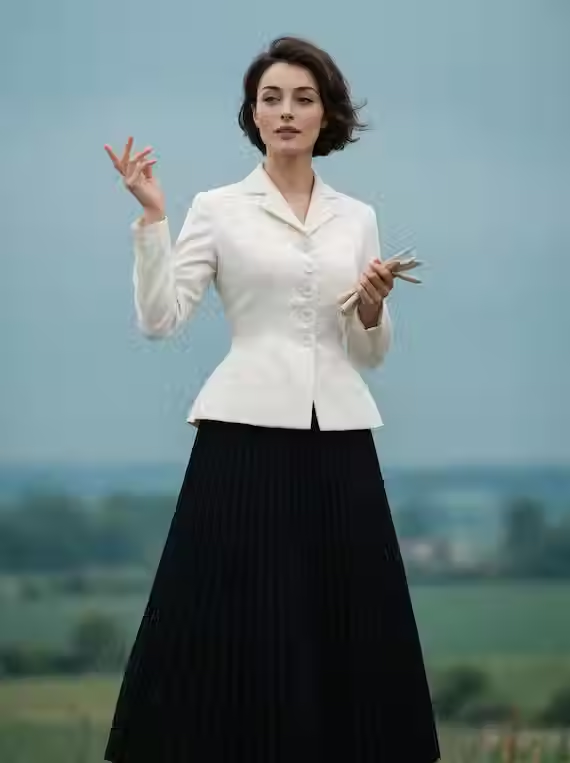
Few fashion details can change a silhouette quite as quickly as a peplum. Add a little extra fabric around the waist of an otherwise straightforward jacket, blouse or dress and suddenly the proportions are completely different: the waist looks more defined, the hips gain shape and even fairly simple tailoring acquires a little drama. It is one of those details that fashion has repeatedly rediscovered, usually just when everyone has decided it belongs firmly to another decade.
For vintage lovers, the peplum is particularly interesting because it never really has one fixed identity. A neatly tailored 1940s peplum can feel practical and polished, a 1950s version beautifully feminine, while the exaggerated peplums of the 1980s belong to an entirely different world of shoulder pads, belts and unapologetic silhouette. The basic idea remains the same, but every generation seems to find its own way of playing with it.
What Exactly Is a Peplum?
In its simplest form, a peplum is an additional section of fabric attached around the waist of a garment, creating a short flare over the hips. It might be softly gathered, sharply pleated, cut in a smooth circle or sculpted into something altogether more architectural. Some are barely more than a gentle extension of a jacket, while others are impossible to miss.
The term has historical roots much older than the twentieth-century fashions we usually associate with it, and variations on overskirts, basques and flared hip details have appeared repeatedly in dress history. What makes the modern peplum so recognisable, however, is the way it emphasises the contrast between waist and hip. Rather than hiding the body beneath volume, it uses that volume very strategically.
That is also why the detail has survived so many changes in fashion. Designers can make a peplum soft or severe, romantic or businesslike, depending on the fabric and construction, which gives something apparently quite decorative a surprising amount of versatility.
The 1940s: Tailoring With a Feminine Shape
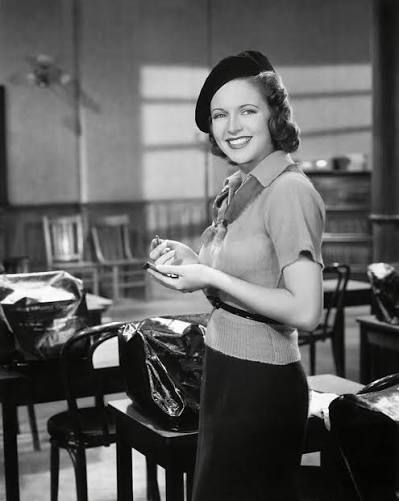
The peplum was particularly at home in 1940s fashion, when structured jackets and clearly defined waistlines played such an important part in the fashionable silhouette. Wartime clothing was shaped by practicality and restrictions, but clever cutting could still create interest without relying on lavish amounts of fabric or excessive decoration.
A fitted jacket that flared gently below the waist gave structure to the upper body while creating the impression of a fuller hip. Combined with the strong shoulders seen in much 1940s tailoring, the result was a distinctive hourglass shape that could look both authoritative and feminine.

Peplums appeared on suits, dresses and blouses, sometimes incorporated almost invisibly into the cut and sometimes made into a much more obvious feature.
The detail also worked beautifully with the decade's straight or gently flared skirts. Rather than relying on an enormous skirt to create shape, the emphasis happened around the waist itself, which allowed relatively practical garments to retain a wonderfully considered silhouette.
The 1950s and the New Emphasis on the Waist
If the 1940s proved that the peplum could work with practical tailoring, the following decade showed just how glamorous it could become. Christian Dior's hugely influential 1947 New Look placed renewed emphasis on a narrow waist, rounded shoulders and fuller hips and skirts, helping to establish the hourglass proportions that would dominate much of 1950s fashion. Dior's famous Bar jacket used a strongly shaped, flared hip line to create precisely that effect.
Peplums fitted naturally into this new approach to shape. On cocktail dresses and eveningwear they might be softly draped or asymmetric, while tailored versions could be crisp and sculptural. Designer Charles James, for example, used peplum forms within some of his extraordinarily constructed garments during the 1940s and 1950s, demonstrating just how sophisticated the apparently simple idea of adding volume at the hip could become.
Not every 1950s peplum was couture, of course. The idea translated easily into everyday dresses and separates because it offered an instant way to create a fashionable shape. Even a fairly plain blouse could feel considerably dressier once the waist was fitted and the hem flared gently over a skirt.
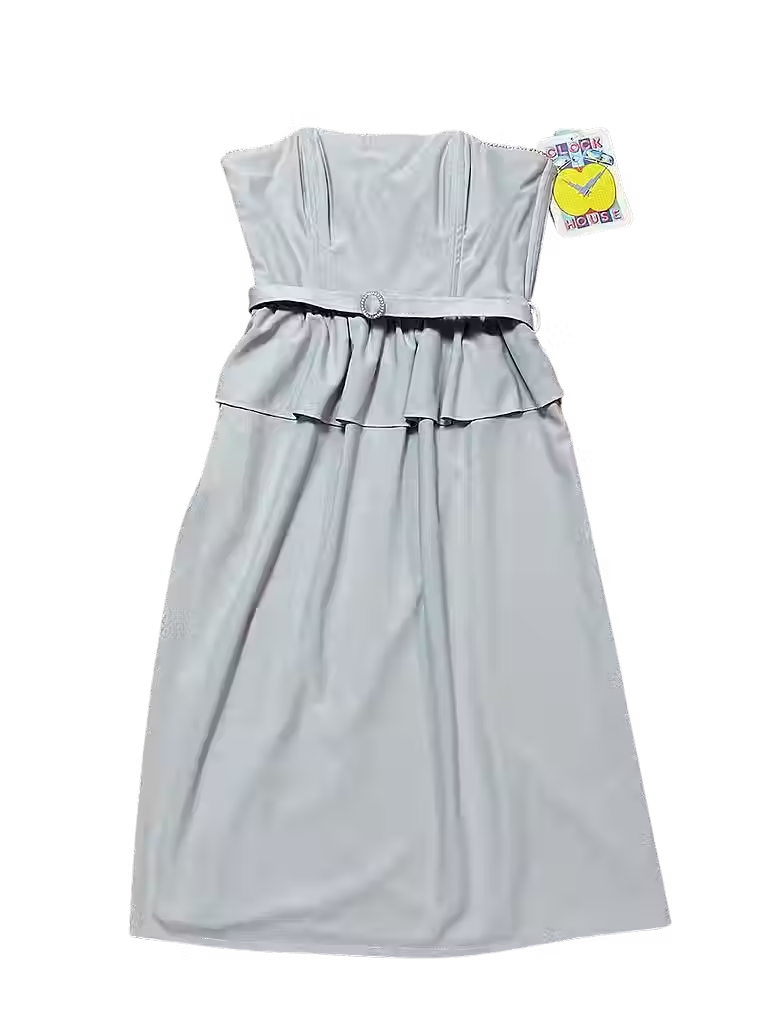
When the Peplum Quietened Down
Fashion's fascination with the waist changed dramatically during the 1960s. Straighter dresses, shifts and youthful mini silhouettes did not necessarily need the pronounced waist-to-hip contrast that had suited the peplum so well, and the detail became less central to mainstream fashion.
It never vanished completely, though. Softer versions continued to appear, particularly in eveningwear and more formal tailoring, and designers periodically returned to historical silhouettes when they wanted to introduce shape or drama. That ability to retreat and then reappear is one of the peplum's most interesting characteristics. It is rarely gone for long; it simply waits for fashion to become interested in the waist again.
By the late 1970s and early 1980s, that moment was most definitely approaching.
The 1980s: The Peplum Gets Bigger
There was never much danger of the 1980s doing a peplum quietly. Fashion was embracing broad shoulders, strong waistlines, belts and exaggerated proportions, and the peplum provided exactly the sort of sculptural shape that designers could push further.
Jackets often combined padded shoulders with a fitted waist before flaring dramatically over the hips, creating the powerful triangular proportions now so closely associated with the decade. The Fashion Institute of Technology's fashion history archive notes the peplum as one of the prevailing shapes of the early 1980s, appearing alongside power belts and the wider power-dressing silhouette.
Where a 1940s peplum might have been carefully integrated into a tailored jacket, its 1980s descendant could be much more obvious. Ruffles, pleats, stiff fabrics and asymmetry all appeared, sometimes paired with pencil skirts and sometimes incorporated into dresses.
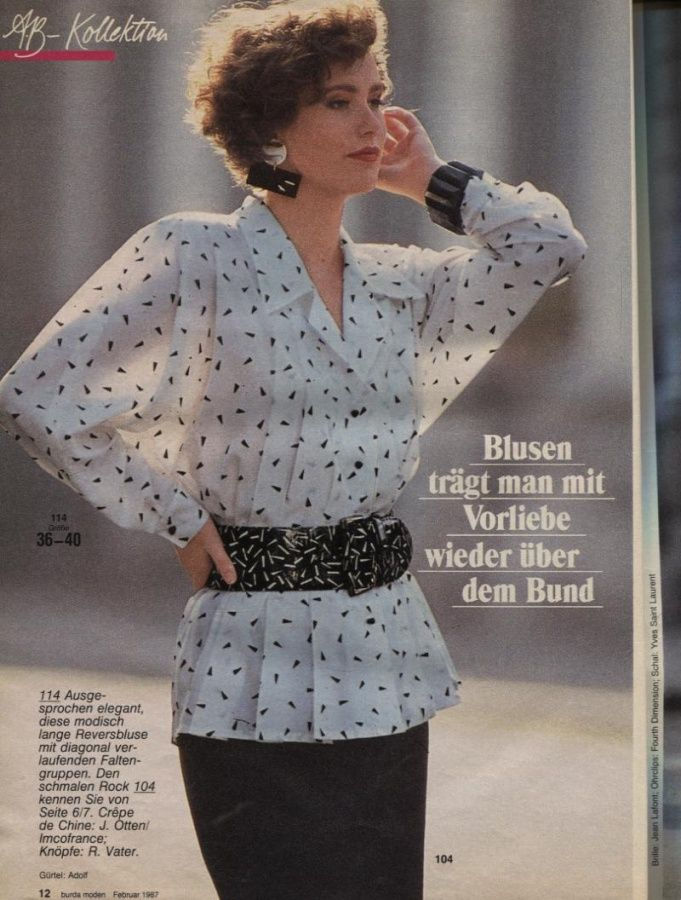
It was less interested in subtlety than in creating a memorable outline, which is precisely why original 1980s examples can be so much fun today.
Why Does the Peplum Keep Coming Back?
Part of the answer is that fashion never seems to tire of rediscovering the waist. When silhouettes become oversized or straight for several seasons, something fitted inevitably begins to feel fresh again, and the peplum offers designers an immediate way of introducing structure without simply returning to an old-fashioned fitted jacket.
There is also enormous freedom within the shape. A peplum can begin almost imperceptibly at the hem of a blouse or explode into dramatic folds around the hips. It can be cut from stiff tailoring fabric, soft jersey, lace, satin or cotton, and each material gives it a completely different personality.
Modern designers have repeatedly revisited historic peplum silhouettes too. The House of Dior itself has returned to the proportions of the original Bar jacket many times, including later interpretations that retain the fitted waist and flared hip while changing the surrounding garments completely. That constant reinvention is a good reminder that fashion rarely brings anything back exactly as it was.
How to Wear a Vintage Peplum Today
The easiest way to wear one now is to let the shape do most of the work. A strongly defined peplum already creates plenty of visual interest, so it rarely needs a complicated outfit around it. A fitted vintage peplum jacket with simple trousers or a pencil skirt can look wonderfully sharp, while a softer peplum blouse works easily with denim.
Proportion matters more than following any particular decade. Because a peplum introduces volume around the hips, a cleaner lower half often balances it beautifully. That might mean a straight skirt, cigarette trousers or something softly fitted, although fuller skirts can work too when the peplum itself is more delicate.
It is also worth remembering that vintage pieces do not need to be styled as complete period outfits. A dramatic 1980s peplum jacket can look surprisingly modern with uncomplicated separates, while a neat 1940s-inspired shape can slot into an everyday wardrobe without requiring matching gloves, hat and handbag.
What Should You Look for When Buying Vintage Peplum Clothing?
Construction is one of the most interesting things to examine. Look at where the peplum begins, whether it is cut as part of the garment or attached separately, and how the fabric has been manipulated to create its shape. Pleats, gathers and curved seams can completely alter the way it sits.
Fit at the waist is particularly important because that is where the whole silhouette depends. Vintage sizing can differ considerably from modern sizing, so actual garment measurements are far more useful than relying on the label alone.
Condition around the waist seam deserves attention too, especially on heavier or highly structured garments where the peplum may place extra strain on the fabric. Beyond that, it really comes down to the shape you enjoy wearing. Some vintage peplums are wonderfully subtle, while others enter the room several seconds before you do — and frankly, there are occasions when that is exactly what you want.
A Small Detail With a Very Long Fashion Life
The peplum has survived because it is far more than an ornamental frill. At its best, it is part of the architecture of a garment, changing the relationship between shoulders, waist and hips and creating a silhouette that would not exist without it.
Its different lives also make it a particularly enjoyable vintage detail. The restrained tailoring of the 1940s, the sculpted femininity of the 1950s and the glorious exaggeration of the 1980s may seem worlds apart, yet a simple flare of fabric at the waist connects them all.
Perhaps that is why designers keep returning to it. Fashion can change the fabric, the proportions and everything worn alongside it, but the peplum still knows exactly what it is there to do: give the waist a little emphasis and an otherwise ordinary outfit considerably more personality.


Comments