


Types of Retro Decor: 6 Decades & Styles for Inspiration
Updated: Apr 3

Retro decor isn’t a single style. It’s a rich tapestry spanning six distinct decades from the 1940s to 1990s, each with unique colours, furniture forms, and patterns. UK homeowners often assume retro means one vintage look, but choosing the right decade-specific style requires understanding these differences. In "Types of Retro Decor: 6 Decades & Styles for Inspiration" we will walk you through authentic retro decor styles, helping you select pieces that suit your home’s architecture, room function, and personal taste while sourcing genuine vintage finds across the UK.
Types of Retro Decor: 6 Decades & Styles for Inspiration - Table of Contents
How to Choose Your Retro Decor Style: Key Selection Criteria
1950s Retro Decor Overview: Optimistic Mid-Century Modern Revival
1970s Retro Decor Overview: Earthy Tones and Textural Richness
Summary Comparison: Decade-by-Decade Retro Decor at a Glance
Situational Picks: Choosing the Right Retro Decor for Your Home
Key Takeaways
Point | Details |
Decade Diversity | Retro styles vary widely from 1940s cozy practicality to 1990s minimalism, each with signature colours and materials. |
Selection Criteria | Choose based on home architecture, room function, colour preferences, and furniture compatibility. |
Authenticity Matters | Genuine vintage pieces require careful sourcing from UK specialists to ensure period accuracy. |
Balance Modern Elements | Mixing retro with contemporary design demands restraint to maintain authenticity without visual clutter. |
How to Choose Your Retro Decor Style: Key Selection Criteria
Before diving into decade-specific styles, establish a practical framework for selection. Start by evaluating period authenticity. True 1940s pieces differ dramatically from 1970s items in construction, materials, and design philosophy. Your home’s architecture plays a crucial role too. A Victorian terrace handles 1950s mid-century modern differently than a 1980s build.
Understand each decade’s colour palette and pattern language. The 1940s favoured muted pastels and small florals, while the 1970s embraced bold earth tones and geometric graphics. These distinctions guide cohesive room schemes. Recognise key furniture styles and materials per era. Teak and elm defined the 1950s, whereas pine and rattan dominated the 1970s.
Match retro styles to specific rooms or functions. Retro interior design tips suggest 1950s pieces suit compact kitchens and dining spaces, while 1970s earthy tones work brilliantly in lounges and dens. Finally, plan sourcing from UK vintage and specialist retailers. Provenance verification ensures you’re buying authentic period pieces, not modern reproductions.
Evaluate architectural compatibility with your existing home features
Research decade-specific materials and construction techniques
Consider room size and natural light when selecting colour palettes
Budget for quality pieces rather than quantity
Verify authenticity through trusted UK vintage dealers
Pro Tip: Start with one signature piece per room before committing to a full decade theme. A genuine 1950s teak sideboard or 1970s rattan chair lets you test the style’s fit with your space and lifestyle.
1940s Retro Decor Overview: Cozy Post-War Practicality

The 1940s brought a distinctly practical aesthetic shaped by post-war sensibilities. 1940s retro decor is characterised by cozy, post-war practicality with muted floral patterns, wood paneling, and pastel kitchens featuring linoleum flooring in geometric patterns. This era prioritised function over form, creating warm, efficient spaces that reflected rationing realities and the need for durable, multipurpose furniture.
Colour palettes leaned toward muted florals and soft pastels. Think butter yellow, robin’s egg blue, mint green, and dusty red. These hues appeared in kitchens, bathrooms, and living spaces, often paired with cream or white trim. Linoleum flooring dominated, showcasing geometric and hexagonal tile patterns that added visual interest to functional spaces.
Wooden furniture took centre stage, emphasising practicality. Kitchen cabinets, dining tables, and storage units featured simple construction in oak, pine, or painted finishes. Wood paneling appeared prominently on walls, creating cozy interiors that required minimal heating. 1940s retro decor examples showcase how these elements combine to deliver authentic period charm suited to smaller UK homes.
Muted pastel colours including yellow, red, blue, mint, aqua
Linoleum flooring with geometric and hexagonal patterns
Functional wooden furniture for kitchens and bathrooms
Prominent wood paneling for warmth and insulation
Cozy, efficient design reflecting post-World War II needs
1950s Retro Decor Overview: Optimistic Mid-Century Modern Revival
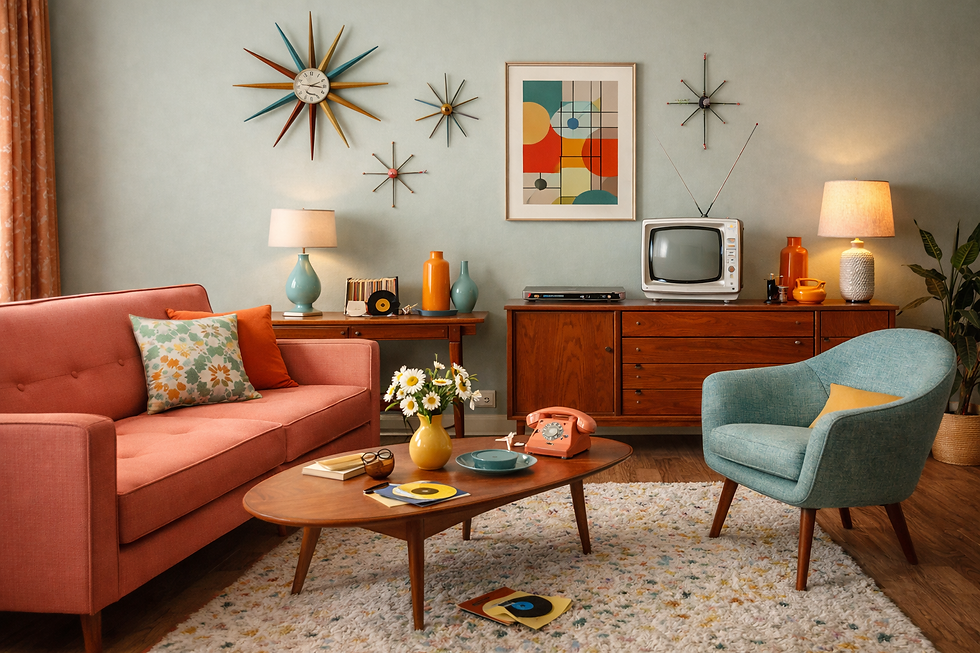
The 1950s marked a dramatic shift toward optimism and modernity. The 1950s retro decor style ushered in optimistic pastel colour palettes such as mint green, pale pink, and sunny yellow, combined with mid-century modern furniture featuring tapered legs and sleek, minimalist lines. This decade embraced brighter hues and cleaner furniture forms, reflecting post-war prosperity and technological advancement.
Bright pastels dominated interiors. Mint green, pale pink, butter yellow, and powder blue appeared in coordinated schemes, particularly in kitchens where appliances matched cabinetry. This colour coordination extended to bathroom fixtures and living room accents, creating harmonious spaces that felt fresh and modern.
Mid-century modern furniture featured woods like teak with cleaner lines and functional forms suited for smaller UK post-war homes, alongside pastel painted kitchens with coordinated appliances. Tapered legs, sleek profiles, and minimalist detailing defined dining chairs, sideboards, and coffee tables crafted from teak, beech, and elm. 1950s vintage furniture trends continue influencing contemporary UK interiors, proving the style’s enduring appeal.
Bright pastel colours like mint green, pale pink, butter yellow
Mid-century modern furniture with tapered legs and sleek lines
Teak, beech, and elm woods in furniture construction
Coordinated kitchens with matching appliances and cabinetry
Iconic atomic and geometric patterns in textiles and wallpaper
1970s Retro Decor Overview: Earthy Tones and Textural Richness

The 1970s introduced a warmer, more tactile approach to interiors. 1970s retro decor featured earthy palettes like mustard yellow, burnt orange, avocado green, with textured finishes such as shag carpets, macro patterns, and natural materials like rattan and wood panelling. This decade prioritised comfort and natural materials, creating cozy lounges and dens that invited relaxation.
Earth tones dominated colour schemes. Mustard yellow, burnt orange, avocado green, and chocolate brown appeared on walls, upholstery, and accessories. These hues paired beautifully with natural wood finishes and created warm, inviting spaces perfect for UK homes seeking cozy ambiance.
Shag carpets have been reimagined in modern neutral colours and textures to complement contemporary interiors while preserving retro warmth. Original 1970s versions featured deep pile in bold colours, but today’s iterations offer neutral tones that balance vintage texture with modern sensibilities. Rattan furniture and macramé wall hangings added natural, tactile elements. Wood paneling and layered textures through cushions, throws, and curtains created depth and visual interest. Bold graphic wallpaper suited eclectic lounges and dens, bringing personality to feature walls.
Earth tones like mustard yellow, burnt orange, avocado green
Shag carpets providing warm, textured flooring
Rattan and macramé furniture for natural ambiance
Wood paneling adding depth and warmth to walls
Bold graphic wallpaper for feature walls and eclectic spaces
Pro Tip: Introduce 1970s earth tones through accent pieces like cushions, throws, or a single rattan chair before committing to larger furniture investments. This approach lets you test the 1970s retro colour palette against your existing decor.
Summary Comparison: Decade-by-Decade Retro Decor at a Glance

A side-by-side comparison clarifies each decade’s distinctive characteristics, helping you make informed decisions about which retro styles suit your UK home best.
Decade | Colour Palette | Furniture Style | Key Patterns | Signature Pieces | Best Rooms | UK Sourcing |
1940s | Muted pastels, florals, cream | Practical wooden pieces, simple construction | Small florals, geometric linoleum | Linoleum floors, wood paneling, painted cabinets | Kitchens, bathrooms | Moderate availability |
1950s | Bright pastels, mint, pink, yellow | Mid-century modern, tapered legs, teak | Atomic, geometric, abstract | Teak sideboards, coordinated kitchens, Formica tables | Dining rooms, kitchens, small spaces | High availability |
1960s | Bold primaries, psychedelic hues | Mod style, plastic, chrome accents | Op art, swirls, pop art prints | Egg chairs, space-age lighting, vinyl records | Living rooms, social spaces | Moderate availability |
1970s | Earth tones, mustard, orange, avocado | Rattan, pine, low seating | Macro, geometric graphics, nature motifs | Shag carpets, macramé, wood paneling | Lounges, dens, cozy spaces | High availability |
1980s | Neon, pastels, black and white | Glass, chrome, lacquer finishes | Memphis design, bold graphics | Mirrored furniture, neon signs, geometric art | Home offices, eclectic rooms | Growing availability |
1990s | Earth tones with bright accents, minimalism | Simple lines, IKEA-style, natural woods | Minimal patterns, solid colours | Futons, beanbags, CD racks | Bedrooms, casual spaces | High availability |
This comparison reveals how dramatically retro styles evolved decade by decade. Colour shifted from muted to bright to earthy and back to minimal. Furniture moved from practical wood to sleek mid-century to tactile natural materials. Patterns progressed from small florals to bold graphics to stripped-back minimalism. Understanding these progressions helps you select authentic pieces that match your intended era.
Situational Picks: Choosing the Right Retro Decor for Your Home
Your home’s unique characteristics dictate which retro style works best. Consider these practical scenarios to guide your selection.
Small Spaces and Compact Homes: Choose 1950s mid-century modern. Tapered legs and sleek profiles create visual lightness, making rooms feel larger. Teak sideboards and compact dining sets maximise functionality without overwhelming small UK flats or terraces.
Energetic Social Living Rooms: Opt for 1960s mod style. Bold primary colours, space-age lighting, and playful pop art prints energise entertaining spaces. Chrome accents and vinyl record displays add personality perfect for lively gatherings.
Cozy Lounges and Dens: Embrace 1970s earthy tones. Mustard sofas, avocado cushions, and rattan chairs create inviting spaces ideal for relaxation. Shag carpets and wood paneling amplify warmth in rooms where comfort matters most.
Budget-Conscious Decorators: Target 1990s minimalism or late 1970s pieces. These decades offer affordable entry points with solid construction and timeless appeal. Simple pine furniture and neutral palettes blend easily with modern elements.
High-Authenticity Collectors: Invest in 1950s designer pieces or rare 1960s items. Find retro decor by era through specialist dealers who verify provenance and condition, ensuring genuine vintage quality.
Mixing Retro with Modern: Balance is critical. Select one signature retro decade as your anchor, then introduce modern neutrals to prevent visual clutter. A 1950s teak sideboard pairs beautifully with contemporary white walls and minimal accessories.
Pro Tip: Photograph your room before introducing retro pieces. Compare images as you add items to ensure the space remains balanced and avoid overwhelming your existing architecture with too many competing styles.
Discover Authentic Retro Decor at My Vintage UK

Now that you understand decade-specific retro styles, it’s time to explore authentic pieces that bring your vision to life. My Vintage offers handpicked retro decor spanning the 1940s through 1990s, curated specifically for UK homeowners seeking genuine vintage quality. Each piece undergoes expert evaluation for authenticity, condition, and timeless style.
Browse new vintage arrivals regularly updated to keep your home fresh with unique finds. Discover top vintage homewares that perfectly complement your chosen decade aesthetic. Whether you’re drawn to 1950s mid-century elegance or 1970s earthy warmth, My Vintage delivers carefully sourced pieces with proven provenance. Explore retro interior design guidance to confidently integrate authentic vintage style throughout your UK home.
Frequently Asked Questions
What Are the Distinctive Colour Palettes for Each Retro Decade?
The 1940s featured muted pastels like butter yellow and mint green alongside small florals. The 1950s brought brighter pastels including pale pink and powder blue. The 1970s embraced earth tones such as mustard yellow, burnt orange, and avocado green. The 1980s introduced neon brights and pastel combinations, while the 1990s returned to earth tones with vibrant accent colours and minimalist neutrals.
How Can I Incorporate 1970s Shag Carpets into a Modern UK Interior?
Shag carpets from the 1970s, once seen as purely vintage, are now trending again in neutral tones suited for modern interiors. Use neutral-coloured versions in beige, grey, or cream to add warmth without dominating your space. Balance the textured pile with modern neutral backgrounds and simple furniture lines to maintain visual harmony. Limit shag carpets to one room or area to prevent overwhelming your home’s overall aesthetic.
Where Can UK Homeowners Find Authentic Retro Decor Pieces?
Specialist vintage and retro decor UK sources offer curated selections with verified provenance. Online vintage marketplaces, estate sales, and dedicated retro shops across the UK provide authentic options. Always check item condition, materials, and construction techniques before purchase. Trusted dealers provide documentation and detailed descriptions ensuring you receive genuine period pieces rather than modern reproductions.
Can I Mix Different Retro Decades in One Room?
Mixing decades requires careful balance. Choose one era as your primary style, then introduce subtle accents from other periods. For example, anchor a room with 1950s mid-century furniture, then add a single 1970s rattan chair as an accent. Maintain colour harmony across decades to prevent clashing. Avoid combining too many bold patterns or competing furniture styles, which creates visual confusion rather than eclectic charm.
Which Retro Decade Suits Small UK Homes Best?
The 1950s mid-century modern style works brilliantly in compact spaces. Furniture with tapered legs and sleek profiles creates visual lightness, making rooms feel more spacious. Bright pastel colours reflect light, enhancing airiness. Functional design principles from this era prioritised smaller post-war UK homes, meaning pieces naturally suit contemporary flats, terraces, and modest properties without overwhelming limited square footage.
Recommended


Comments