


Understanding 1950s Styles: Timeless Influence on Fashion Today

Most advice about 1950s fashion overlooks how British designers played a powerful role in shaping this influential era. The decade was more than full skirts and pearls, with styles marked by fresh innovations and unexpected diversity. While many picture only strict silhouettes and pastels, the reality is that teenagers led trends and synthetic fabrics transformed closets. Unpacking these common misconceptions reveals how 1950s style still influences today’s wardrobes and the ongoing appeal of authentic vintage looks.
Understanding 1950s Styles: Table of Contents
Key Takeaways
Point | Details |
Transformative Era | The 1950s fashion era symbolised societal rebirth and feminine empowerment, moving away from wartime utility towards luxury and sophisticated design. |
Diverse Styles | Contrary to misconceptions, 1950s fashion was not monolithic; it showcased a variety of silhouettes and styles influenced by youth culture and rock ‘n’ roll. |
Innovative Fabrics | The decade saw significant advancements in textiles with the introduction of synthetic materials, enabling a broader range of vibrant colours and patterns. |
Enduring Influence | 1950s fashion continues to inform contemporary style, promoting sustainable practices through timeless design and high-quality craftsmanship. |
Defining 1950s Styles and Common Misconceptions
The 1950s fashion era represents far more than nostalgic clothing trends - it was a transformative period symbolising societal rebirth and feminine empowerment. Post-war fashion styles dramatically shifted from wartime utility towards celebrating femininity, luxury, and sophisticated design.
Contrary to popular belief, 1950s fashion was not uniformly conservative or restrictive. While structured silhouettes dominated, the decade introduced remarkable diversity in clothing styles. Christian Dior’s revolutionary ‘New Look’ dramatically reshaped women’s fashion by introducing an hourglass figure emphasising narrow waists and fuller skirts. Vintage dress designs typically featured nipped waistlines, prominent busts, and sweeping circle skirts that represented a radical departure from previous utilitarian wardrobe approaches.
Misconceptions about 1950s fashion often portray the era as monolithic, when in reality, it was nuanced and complex. Teenage fashion emerged as a distinct category, with rock ‘n’ roll influencing casual wear and youth culture. Designers experimented with new fabrics, patterns, and cuts, challenging traditional fashion norms. Synthetic materials like nylon and polyester began replacing natural fibres, enabling more affordable and varied clothing options.
Pro Tip for Vintage Enthusiasts: When incorporating 1950s style into modern wardrobes, focus on capturing the era’s essence through key pieces like high-waisted skirts, fitted bodices, and statement accessories rather than attempting exact historical reproduction.
Distinctive Silhouettes and Signature Garments
The 1950s fashion landscape was defined by revolutionary silhouettes that transformed women’s clothing from wartime utility to elegant sophistication. Signature garments of the era included intricate pieces like basques, petticoats, corolla skirts, and strapless sheath dresses, each designed to emphasise feminine curves and create a distinctive hourglass shape.
Women’s fashion underwent remarkable transformations throughout the decade, with styles evolving from structured, dark-toned dresses to more vibrant and experimental designs. Early 1950s fashion initially featured long skirts with nipped-in waists, characterised by a conservative and elegant aesthetic. As the decade progressed, youth culture and rock ‘n’ roll influences introduced more dynamic and playful clothing elements, leading to straighter waistlines and brighter colour palettes.
Key signature garments that defined the era included circle skirts, fitted sweaters, pencil skirts, and tailored suits. Designers like Christian Dior and Coco Chanel played pivotal roles in establishing these iconic styles, with Dior’s ‘New Look’ revolutionising women’s fashion by celebrating femininity through structured yet elegant designs. Accessories such as gloves, pillbox hats, and pearl necklaces complemented these outfits, creating a complete and polished ensemble that symbolised sophistication and grace.
Pro Tip for Vintage Fashion Lovers: When recreating 1950s looks, focus on proportion and fit rather than exact reproduction, ensuring modern interpretations capture the era’s essence of elegance and confidence.
Fabrics, Patterns, and Popular Colours of the Era
The 1950s textile landscape represented a vibrant revolution in fashion, marked by innovative materials and exciting aesthetic expressions. Fashion colours underwent dramatic transformations, with designers embracing brighter palettes including emerald green, cherry red, and bold turquoise that signalled a departure from the muted wartime tones.
Fabric technologies advanced significantly during this period, introducing synthetic materials like nylon, polyester, and orlon that offered unprecedented versatility and affordability. Cotton remained a staple, but now featured more intricate weaves and finishes. Wool remained popular for tailored suits and winter wear, while silk continued to represent luxury and elegance. Popular textile patterns included polka dots, gingham checks, subtle florals, and geometric designs that reflected the era’s optimistic and forward-looking aesthetic.
Colour coordination became an art form in 1950s fashion, with coordinated ensembles that matched accessories, shoes, and handbags. Pastel shades like powder blue, soft pink, and mint green dominated daywear, while deeper jewel tones emerged for evening attire. The decade’s textile innovations allowed for more structured yet comfortable clothing, with fabrics that maintained shape while providing increased mobility compared to earlier periods. Iconic prints like Hawaiian shirts, atomic-inspired patterns, and rockabilly designs emerged, representing the era’s cultural dynamism.
Pro Tip for Vintage Fabric Enthusiasts: When collecting vintage textiles, examine the fabric’s weave, check for original manufacturing labels, and understand how different synthetic and natural fibres age to ensure authenticity and preservation.
Below is a reference table outlining notable 1950s fabrics, patterns, and typical uses:
Fabric/Pattern | Main Description | Typical Use in the 1950s |
Nylon | Lightweight, durable | Dresses, lingerie, stockings |
Wool | Warm, structured | Suits, outerwear |
Polka Dots | Bold, playful pattern | Day dresses, blouses |
Gingham | Chequered, crisp texture | Summer dresses, shirts |
Silk | Smooth, luxury finish | Eveningwear, scarves |
Women’s and Men’s Fashion: Key Variations
The 1950s marked a profound transformation in fashion, with distinct yet interconnected trajectories for women’s and men’s clothing. Men’s fashion experienced radical generational shifts, where older generations maintained traditional formal wear with crisp shirts, conservative ties, and baggy trousers, while younger men boldly embraced more vibrant colours and experimental styles.
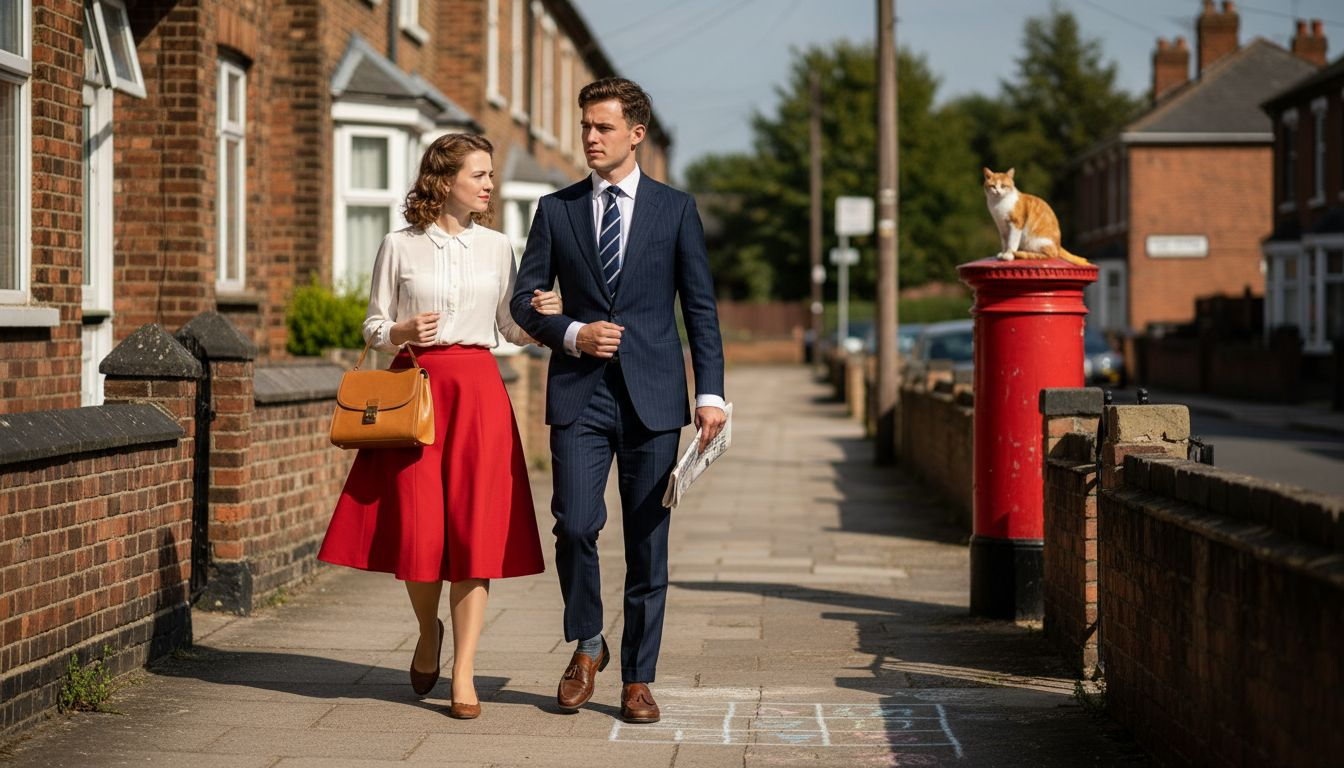
Menswear underwent significant stylistic evolution during this era, challenging previous gender fashion norms. Previously effeminate styling elements like slim-bodied silhouettes and brighter colour palettes became increasingly acceptable. Iconic looks emerged such as the rebellious rockabilly style with fitted leather jackets, narrow trousers, and pompadour hairstyles, contrasting sharply with the more conservative business attire dominated by grey flannel suits and structured blazers.
Women’s fashion simultaneously experienced its own revolutionary transformation, moving from structured post-war elegance to more playful and individualistic expressions. While Christian Dior’s ‘New Look’ initially defined feminine silhouettes with cinched waists and full skirts, the latter part of the decade saw the rise of more relaxed, youthful styles. Teenagers began expressing themselves through circle skirts, tight sweaters, and bold prints, creating a distinct subculture of fashion that challenged previous generational dress codes.
Pro Tip for Vintage Style Enthusiasts: When recreating 1950s looks, focus on understanding the nuanced differences between generational and subcultural styles rather than adopting a monolithic approach to vintage fashion.
Here is a summary of key differences between women’s and men’s fashion in the 1950s:
Aspect | Women’s Fashion | Men’s Fashion |
Dominant Silhouettes | Hourglass, fitted bodices, full skirts | Slim trousers, structured suits |
Influential Designers | Christian Dior, Coco Chanel | Hardy Amies, Pierre Cardin |
Common Fabrics | Cotton, silk, new synthetics | Wool, tweed, flannel, gabardine |
Iconic Accessories | Gloves, pillbox hats, pearls | Fedora hats, narrow ties, cufflinks |
Youth Influences | Circle skirts, playful prints | Rockabilly style, colourful shirts |
Accessories, Hairstyles, and Homeware Trends
Women’s accessories in the 1950s represented intricate expressions of social etiquette and personal style. White gloves, structured handbags, pearl necklaces, and elegant hats were not merely fashion items but sophisticated social signifiers that communicated refinement and status. Hairstyles ranged from the meticulously coiffed ‘Sweater Girl’ look with soft waves and pin curls to more rebellious teenage styles featuring shorter, more dynamic cuts that challenged traditional feminine expectations.
Homeware design during this period reflected broader societal transformations, blending practicality with aesthetic innovation. Functional yet stylish items like tailored housecoats and decorative aprons symbolised the era’s domestic ideals. Interior decor embraced bold geometric patterns, pastel colour palettes, and streamlined furniture designs that celebrated technological progress and modernity. Formica kitchen surfaces, atomic-inspired wallpapers, and ergonomic furniture pieces became emblematic of mid-century modern design philosophy.
Accessory trends demonstrated remarkable diversity, bridging generational and cultural divides. Younger generations embraced more experimental styles with vibrant costume jewelry, while older women maintained classic, understated elegance. Men’s accessories evolved similarly, with narrow ties, fedora hats, and carefully selected cufflinks becoming markers of personal sophistication. The emergence of teenage fashion cultures further diversified accessory trends, introducing more playful and rebellious styling elements.
Pro Tip for Vintage Style Collectors: When sourcing 1950s accessories, prioritise authenticity by examining manufacturing details, understanding period-specific design characteristics, and verifying materials used during the specific decade.
Enduring Influence and Sustainable Style Choices
The 1950s fashion era continues to exert a profound influence on contemporary style, demonstrating remarkable resilience and timeless appeal. Fashion historians consistently highlight how mid-century design principles continue to inspire modern designers, with structured silhouettes, bold colour palettes, and distinctive cuts repeatedly reinterpreted across subsequent decades.
Sustainability has emerged as a critical lens through which vintage fashion is now understood, with 1950s clothing representing an inherently eco-conscious approach to consumption. The era’s garments were typically crafted with superior materials, exceptional craftsmanship, and a focus on durability that stands in stark contrast to contemporary fast-fashion practices. Vintage pieces from this period often feature high-quality natural fibres like wool, cotton, and silk, constructed using techniques that prioritised longevity over disposability.
Contemporary fashion designers increasingly draw inspiration from 1950s sustainable practices, recognising the value of well-constructed, versatile garments that transcend seasonal trends. The decade’s approach to clothing - where individual pieces were carefully selected, meticulously maintained, and frequently repaired - provides a compelling model for modern sustainable fashion consumption. Moreover, the renewed interest in vintage clothing reflects a growing awareness of fashion’s environmental impact, with consumers seeking alternatives to mass-produced, environmentally destructive clothing manufacturing processes.
Pro Tip for Sustainable Fashion Enthusiasts: When building a sustainable wardrobe, prioritise vintage pieces from the 1950s that showcase exceptional construction quality and timeless design elements, focusing on versatility and long-term wearability.
Discover Timeless 1950s Style with Authentic Vintage Pieces
The 1950s offered a revolutionary shift towards feminine elegance and bold design but capturing this era’s essence today can be challenging. Whether you seek the iconic hourglass silhouette, playful patterns, or statement accessories, finding quality pieces that truly reflect the decade’s craftsmanship and sustainable values is key. At My Vintage, we understand your desire for authentic vintage fashion that embodies the 1950s spirit without sacrificing modern wearability or environmental responsibility.
Explore our curated collection that celebrates the era’s signature garments, fabrics, and accessories. From structured dresses and circle skirts to classic gloves and pearl necklaces, each item is hand-picked to help you recreate that confident, timeless look with ease. Don’t wait to embrace sustainable style – visit My Vintage today and transform your wardrobe with genuine 1950s treasures crafted for longevity and individuality.
Frequently Asked Questions
What are the defining characteristics of 1950s fashion?
The defining characteristics of 1950s fashion include structured silhouettes, feminine curves, and iconic garments such as circle skirts, fitted sweaters, and tailored suits. The decade is known for its vibrant colours and diverse styles that evolved from the conservative post-war aesthetic.
How did 1950s fashion influence contemporary style?
1950s fashion continues to influence contemporary style through its emphasis on structured designs, bold colour palettes, and distinctive cuts. Modern designers often draw inspiration from mid-century aesthetics, leading to a resurgence of vintage styles in today’s fashion landscape.
What types of fabrics and patterns were popular in the 1950s?
Popular fabrics in the 1950s included nylon, wool, and cotton, often featuring patterns like polka dots, gingham checks, and florals. These textiles reflected the era’s optimism and innovative spirit, allowing for versatility in design and wearability.
How did the role of accessories evolve in the 1950s?
The role of accessories in the 1950s evolved to become sophisticated expressions of personal style and social status. Items like gloves, pearl necklaces, and structured handbags complemented outfits, while hairstyles ranged from elegant waves to more rebellious cuts, reflecting wider cultural shifts.
Recommended


Comments