


Vintage Blouses: Authentic Style and Fit

Vintage blouses are defined by their period-specific construction, sizing, and design details, setting them apart from anything produced by modern fast fashion. These are garments shaped by decades of distinct silhouettes, from the strong padded shoulders of the 1940s to the novelty prints of the 1980s. Whether you are building a personal wardrobe, assembling a costume, or adding to a collection, understanding what makes a blouse genuinely vintage changes everything about how you shop and style. At My Vintage, we have been sourcing and celebrating authentic vintage pieces since 2004, and we know that the joy lies in the details.
What are vintage blouses and how do you identify them?
Vintage blouses are tops produced during a specific past fashion era, typically pre-1990s, and distinguished by construction methods, fabrics, and silhouettes no longer used in mass production. The term “vintage women’s shirts” is sometimes used interchangeably, but in the trade, “blouse” refers specifically to a looser, often more decorative top with feminine detailing such as pintucks, lace trim, or gathered sleeves. Knowing the difference helps you search more effectively and describe pieces accurately.
Authentic vintage garments carry physical clues. Metal zips and absent care labels indicate original vintage pieces, while plastic zips and printed care labels suggest modern reproductions. Hand-finished seams, hook-and-eye fastenings, and hand-stitched hems are further signs of genuine mid-century construction. Running your fingers along the inside of a garment tells you as much as the label ever could.
Fabric is another reliable indicator. Cotton sateen and viscose blends offer the best period-appropriate look and drape, far closer to original textures than plain polyester. Rayon was widely used from the 1940s through the 1960s and gives a distinctive fluid weight. If a blouse feels stiff and synthetic, it is almost certainly a modern piece regardless of its styling.
How do vintage blouse sizes compare to modern sizing?
Vintage sizing runs significantly smaller than modern standards, and this surprises most first-time buyers. A vintage UK size 14 often corresponds to a modern UK 8 or 10. Buying by label alone is one of the most common and costly mistakes in vintage shopping. Always treat the label as a starting point, not a guarantee.
The most reliable approach is to measure the garment flat across the bust, waist, and shoulder width, then compare those measurements to a blouse you already wear and love. For a full vintage size conversion guide, My Vintage has a dedicated resource that walks you through the process step by step. Flat measurements remove the guesswork entirely.
Beyond bust and waist, pay close attention to these details:
Shoulder seam placement: The seam should sit at the edge of your shoulder, not drooping onto your upper arm.
Sleeve length: Vintage sleeves often run shorter than modern cuts, particularly in 1950s and 1960s styles.
Blouse length: Many vintage blouses were designed to be tucked in, so the hem may sit higher than you expect when worn loose.
Armhole depth: Vintage armholes tend to be higher and smaller, which affects movement and layering.
For plus-size shoppers, pattern grading for sizes 18–26 produces a far better fit than simple scaling. Quality reproduction brands re-engineer their patterns specifically for larger sizes rather than just enlarging a smaller block. This distinction is worth asking about before you buy.
Pro Tip: Lay a well-fitting modern blouse flat on a table and measure it across the bust, from seam to seam. Use that number as your benchmark when reading vintage garment measurements online.
What are the hallmark styles of vintage blouses by decade?
Each decade produced blouses with recognisable construction signatures. Learning these signatures lets you date a piece accurately and style it with confidence.
1940s: Tailored Strength
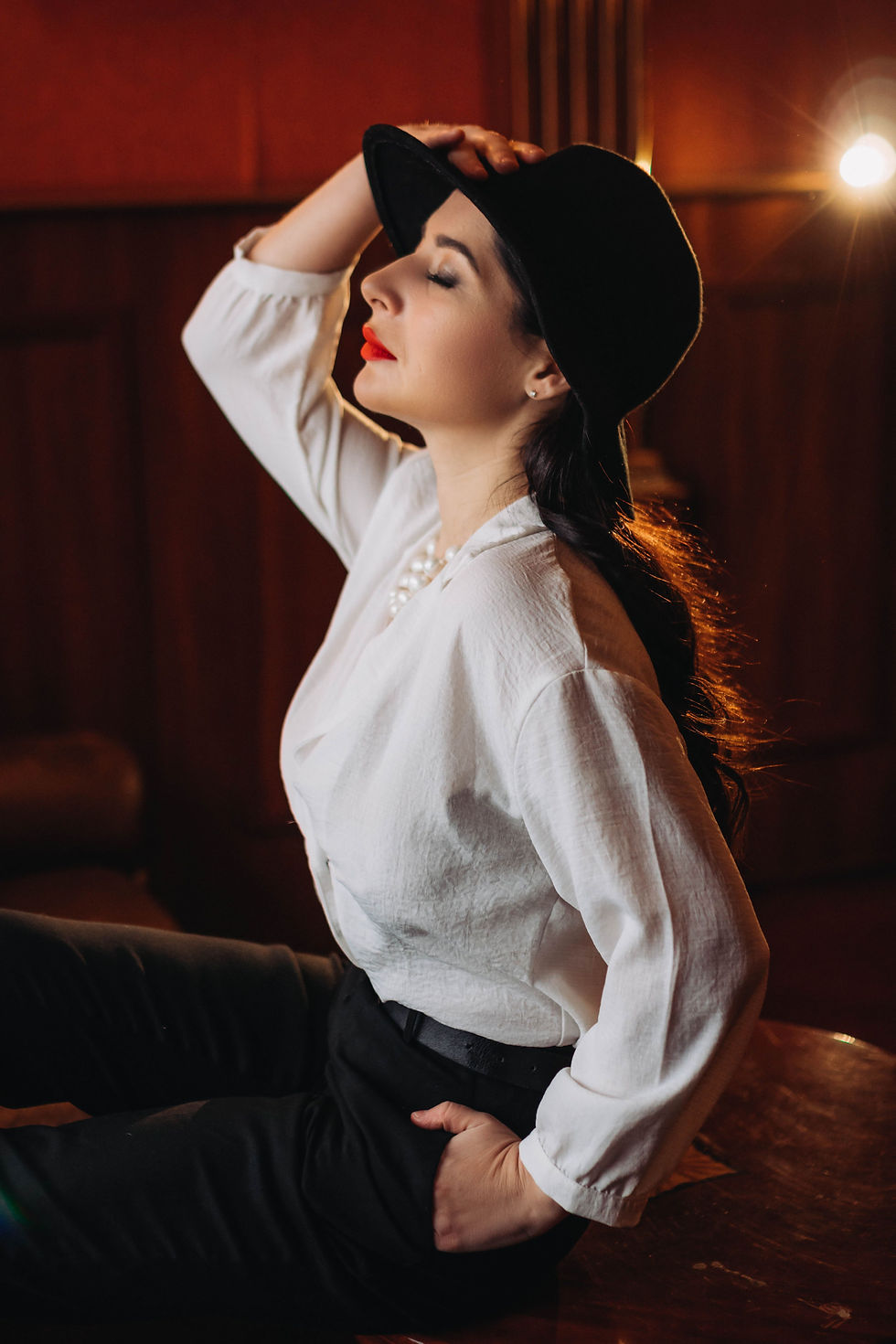
1940s blouses are defined by padded shoulders, bishop sleeves, and tailored waist details. The silhouette is strong and structured, reflecting wartime utility combined with feminine elegance. High necklines and full-length sleeves are common, often finished with neat button plackets or tie necks.
1950s: Softness and Charm
The 1950s brought cap sleeves, puff sleeves set at the shoulder, Peter Pan collars, and a generally softer, more playful silhouette. Unique floral blouses in cotton sateen were enormously popular, often worn tucked into full circle skirts. The waist was always the focal point.

1960s and Beyond
The 1960s shifted sleeve fullness lower on the arm. Elbow-break puff sleeves with wrist gathering are a hallmark of this era, quite different from the shoulder-set fullness of the 1940s. Wider collars and bolder prints arrived alongside the mod movement. By the 1980s, 80s style tops embraced oversized shapes, bold geometric prints, and statement collars in synthetic fabrics.

The table below summarises the key construction features by era:
Decade | Sleeve style | Collar type | Typical fabric |
1940s | Bishop, full-length | High neck, tie neck | Rayon, cotton |
1950s | Cap, shoulder-set puff | Peter Pan, sweetheart | Cotton sateen, viscose |
1960s | Elbow-break puff, wrist gather | Wide, pointed | Rayon, cotton blends |
1980s | Oversized, balloon | Statement, wide lapel | Polyester, synthetic blends |
One detail that trips up even experienced collectors is mismatching collar and sleeve eras. A 1940s bishop sleeve paired with a wide 1960s collar creates a costume effect rather than an authentic vintage look. When both elements belong to the same decade, the result reads as genuinely period-correct.
Structural details also signal quality. Lined bodices, princess seams, boning, and waist stays are all signs of mid-century construction that preserves both shape and durability. These features are rarely found in modern fast fashion and are worth seeking out in both original pieces and quality reproductions.

How to Style Vintage Blouses in a Modern Wardrobe
Vintage blouses work beautifully in modern wardrobes when you balance their volume and structure against contemporary pieces. The key principle is contrast: a full puff sleeve needs a sleek, fitted bottom half.
Pair with high-waist trousers or skirts. A 1950s puff-sleeve blouse tucked into high-waist wide-leg trousers creates a polished, era-inspired look without feeling like a costume.
Balance volume deliberately. If the blouse has significant sleeve volume, choose slim-cut or tailored trousers rather than wide-leg styles. Two voluminous pieces compete rather than complement.
Layer with modern outerwear. A classic blouse styles piece worn under a contemporary blazer or longline coat bridges eras effortlessly. For guidance on pairing, the My Vintage vintage blazer guide covers proportions and styling in detail.
Use a belt to define the waist. Many vintage blouses were designed to be tucked in. Wearing one loose can obscure the intended silhouette. A slim belt worn over the blouse restores the original shape.
Choose prints for the occasion. Unique floral blouses in soft cotton work for casual daywear. Geometric 1980s prints in bold colours suit evening looks. Tailored 1940s styles in neutral tones translate well to professional settings.
Pro Tip: For petite figures, choose blouses with vertical details such as pintucks or narrow plackets rather than wide horizontal yokes. These draw the eye upward and create length.
Colour plays a bigger role than many people realise. Authentic vintage pieces often use slightly muted, earthy tones rather than the saturated brights of modern printing. If a “vintage” blouse has colours that look freshly printed, it is likely a reproduction. That is not necessarily a problem, but it is worth knowing.
Where to buy authentic vintage blouses with confidence
Sourcing genuine vintage blouses requires a combination of knowledge and the right questions. The market ranges from original pre-1970s pieces to high-quality reproductions, and both have their place depending on your purpose.
When assessing any piece, look for these indicators of authenticity and quality:
Construction details: Lined bodices, proper darting, and hand-finished seams indicate genuine vintage or quality reproduction.
Fabric composition: Ask for the fabric content. Cotton sateen, rayon, and viscose blends are period-appropriate. Plain polyester is a modern substitute.
Measurements provided: Any reputable seller should provide flat garment measurements, not just a label size. If measurements are absent, ask before buying.
Condition notes: Honest sellers describe any wear, repairs, or alterations clearly. Vague condition descriptions are a warning sign.
Provenance information: For true vintage pieces, sellers who can describe the garment’s origin or approximate dating demonstrate genuine expertise.
For online purchases, the My Vintage guide to buying vintage online covers the key checks in practical detail. Specialist curated platforms and boutiques with dedicated vintage expertise offer far more reliable sourcing than general resale marketplaces. Reproductions from quality brands that invest in bespoke prints and lined bodices are a sound choice when original pieces in your size are hard to find. For women’s vintage-inspired knitwear and tops, quality reproduction pieces such as those found at A+Majice demonstrate what thoughtful construction looks like in practice.
Key Takeaways
Authentic vintage blouses are identified by their construction, fabric, and era-specific design details, making measurement and knowledge the two most reliable tools for any buyer.
Point | Details |
Vintage sizing runs small | A vintage UK 14 typically corresponds to a modern UK 8–10; always measure flat. |
Metal zips indicate true vintage | Absent care labels and metal zips are the clearest signs of pre-1970s origin. |
Sleeve fullness places the era | Shoulder-set fullness reads 1940s; elbow-break fullness reads 1960s. |
Fabric composition matters | Cotton sateen, rayon, and viscose blends are period-accurate; plain polyester is not. |
Match collar and sleeve eras | Mismatched construction details from different decades create a costume effect. |
Complete your vintage look with My Vintage
At My Vintage, the passion for authentic vintage extends well beyond clothing. A beautifully chosen vintage blouse deserves surroundings and accessories that share the same spirit of quality and individuality.

My Vintage has been curating original vintage and retro pieces since 2004, and the homeware collection is just as carefully chosen as the clothing. From the striking 1950s atomic magazine rack to the Art Deco beaded purse that pairs perfectly with a 1920s-inspired blouse, every piece is selected for its authenticity and character. Explore the full collection at My Vintage and find the finishing touches that bring your vintage style to life.
Frequently Asked Questions
What makes a blouse genuinely vintage rather than retro?
A genuinely vintage blouse was produced during a specific past era, typically pre-1990s, and carries physical signs such as metal zips, absent care labels, and hand-finished seams. Retro blouses are modern pieces designed to evoke a past style.
How do I know what size to order in a vintage blouse?
Always request flat garment measurements for bust, waist, and shoulder width, then compare them to a blouse you already wear. Vintage sizing runs significantly smaller than modern standards, so the label alone is not reliable.
Can I wear vintage blouses to work?
Yes. Tailored 1940s styles with high necklines and structured shoulders translate well to professional settings, particularly in neutral tones. Pair with slim trousers and modern outerwear for a polished result.
What fabric should I look for in a quality vintage blouse?
Cotton sateen, rayon, and viscose blends are the most period-accurate fabrics for vintage blouses from the 1940s through the 1960s. These materials drape and feel distinctly different from the polyester blends used in modern reproductions.
How do I avoid buying a vintage blouse that does not fit?
Measure a well-fitting modern blouse flat across the bust and shoulders, and use those numbers as your benchmark. Ask any seller for flat garment measurements before purchasing, and check that the shoulder seam placement and sleeve length match your proportions.
Recommended

Comments