


Vintage Brooches: History, Style and Investment
- 3 days ago
- 8 min read

There is something quietly thrilling about pinning a mid-century brooch to your lapel and knowing it has a story to tell. Once dismissed as your grandmother’s keepsake, vintage brooches from the 1940s, 1950s and 1960s are enjoying a remarkable renaissance among collectors, stylists and jewellery enthusiasts alike. These small but spectacular pieces blend artistry, social history and genuine investment potential in a way that few other collectables can match. Whether you are just starting your collection or looking to deepen your knowledge, this guide covers the heritage, key designers, authentication techniques and current market value of mid-century vintage brooches.
Point | Details |
Mid-century roots | 1940s–1960s brooches reflect shifting fashion and innovative materials. |
Expert authentication | Hallmarks, clasp types and construction help confirm real vintage pieces. |
Major designers | Trifari, Mazer and Cartier showcase fine and costume examples prized today. |
Growing market value | High-quality brooches can appreciate between 8–12% per year. |
Sustainable style | Revival is driven by sustainability and personal expression, not just nostalgia. |
A Brief History of Mid-Century Vintage Brooches
Vintage brooches have a fascinating trajectory through the mid-20th century. What began as an everyday accessory gradually shifted into a more situational, occasion-wear piece as garment styles evolved and fashion priorities changed. Understanding this shift helps collectors appreciate why certain designs are rarer and more sought-after than others.
During the 1940s, wartime restrictions had a profound influence on materials and manufacturing. In Britain and the United States, the use of platinum was restricted for military purposes, pushing jewellers towards sterling silver, gold plate and base metals. Rhinestones, glass stones and even Lucite (a type of clear acrylic) became fashionable substitutes for precious gems. Far from diminishing quality, these constraints inspired extraordinary creativity. As women’s brooches in the 1940s evolved, bold geometric shapes, floral motifs and sculptural forms defined the era’s aesthetic, with materials like sterling silver and rhinestones reflecting both wartime ingenuity and post-war optimism.
By the 1950s, the mood lifted considerably. The Retro style, which had its roots in the late 1940s, gave way to a more exuberant sensibility. Yellow gold returned to prominence, and brooches became larger, more three-dimensional and richly textured. Florals remained perennially popular, joined by novelty motifs: bows, animals, insects, baskets of fruit and abstract sculptural forms. The 1960s brought a modernist influence, with clean lines, bold colour and Space Age-inspired shapes entering the picture.

Here is a quick overview of how brooch styles evolved across the three key decades:
Decade | Dominant materials | Popular motifs |
1940s | Sterling silver, rhodium plate, rhinestones, Lucite | Florals, patriotic motifs, geometric forms |
1950s | Yellow gold plate, aurora borealis crystals, enamel | Bows, birds, novelty shapes, 3D florals |
1960s | Gold tone, coloured enamel, acrylic | Geometric, abstract, insects, mod designs |
Some notable characteristics of mid-century brooch craftsmanship include:
Hand-set stones, individually placed rather than machine-pressed
Rhodium plating on silver-toned pieces for lasting lustre
Open-back settings that allow light to pass through rhinestones
Pot metal and white metal bases, often surprisingly detailed
If you love the floral tradition, our unique floral brooches capture exactly this mid-century spirit beautifully.
Signature Designers and Iconic Styles
Not all vintage brooches are created equal, and knowing the key makers can transform how you shop, style and value your pieces. The distinction between fine jewellery and costume jewellery is important here. Fine jewellery houses like Cartier worked in precious metals and gemstones, while costume jewellery designers such as Trifari and Mazer created affordable, fashion-forward pieces for everyday women. Both categories are highly collectable today, but for very different reasons.
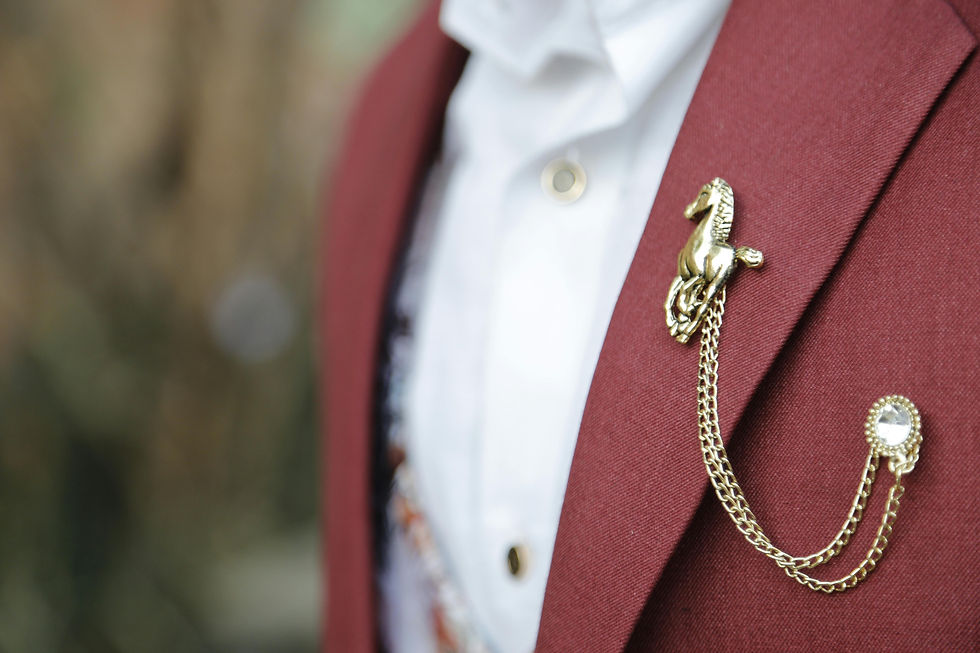
Key designers for 1940s brooches include Trifari, Mazer, Cartier and Alfred Philippe, whose 1950s Retro work emphasised yellow gold, sculptural forms and textured surfaces with diamond accents. Alfred Philippe, Trifari’s chief designer, was responsible for the iconic “jelly belly” brooches featuring Lucite cabochons shaped like animals. These are among the most recognisable and desirable pieces in the costume jewellery world.
Designer | Category | Known for |
Trifari | Costume | Jelly belly animals, crown motifs, rhodium florals |
Mazer | Costume | Bold rhinestone work, sophisticated settings |
Cartier | Fine | Platinum, diamonds, sculptural precious pieces |
Alfred Philippe | Costume/Fine | Jelly belly designs, Trifari’s head designer |
For collectors on a budget, unsigned pieces by unknown makers can still be exceptional. But when you can identify a maker’s mark, it adds provenance and often significant value. Here are some styles every collector should recognise:
Bow brooches: A perennial mid-century favourite, often set with diamanté stones. Our vintage diamante bow brooch is a perfect example of this classic form.
Bug and insect brooches: Wildly popular in the 1960s, often jewelled and highly detailed. The 1960s gold bug brooch in our collection shows just how intricate these pieces could be.
Basket brooches: Overflowing with coloured stones, these are joyful and eye-catching. Our coloured gem basket brooch is a wonderful example of 1960s exuberance.
Pro Tip: Look for pieces where the stones are individually hand-set in prong or bezel settings rather than glued. Glued stones are a sign of later reproduction or lower-quality manufacture, and they are far more prone to loss over time.
How to Authenticate Genuine Vintage Brooches
Authentication is the skill that separates confident collectors from cautious ones. The good news is that with a little practice, you can learn to read a brooch’s physical details like a language. Each element tells you something about when and how it was made.
Start with the clasp. Authentication mechanics tell us to examine clasps carefully: roll-over safety clasps were used from the 1910s through to the 1960s, while trombone clasps were common from the late 19th century into the 20th. A C-catch without a safety mechanism typically indicates a pre-1940s piece. If the clasp looks newer than the brooch itself, it may have been replaced, which can reduce value.
Here is a step-by-step authentication process:
Examine the clasp type and compare it to known period examples.
Check for hallmarks: look for 925 (sterling silver), 750 or 18k (gold), or maker’s marks stamped on the reverse.
Assess the pin stem: thicker, hand-filed stems suggest earlier, handmade construction.
Look for patina: genuine ageing produces a consistent, natural patina that is difficult to fake convincingly.
Inspect the stones: hand-set stones sit at slightly irregular angles; machine-set stones are perfectly uniform.
Check construction quality: casting bubbles or rough seams suggest lower-quality reproduction pieces.
“A brooch’s clasp is its birth certificate. Learn to read it and you will rarely be fooled by a reproduction.”,
Missing hallmarks are not automatically a red flag. Many American costume jewellery pieces were never hallmarked, particularly those made before the 1950s. Unsigned pieces can still be valuable via craftsmanship alone, as the quality of stone-setting, metalwork and overall design speaks for itself.
Pro Tip: Bring a small jeweller’s loupe (a magnifying glass used by jewellers, typically 10x magnification) when shopping at markets or fairs. It makes spotting hallmarks, stone settings and construction details dramatically easier.
Our favourite brooch picks are all carefully assessed for authenticity and period-appropriate construction, so you can buy with confidence.

Current Value, Investment Trends and Future Directions
Vintage brooches occupy a fascinating position in the collectables market. They are accessible enough for new collectors yet sophisticated enough to command serious auction prices at the top end. Understanding the pricing tiers helps you set realistic expectations and spot genuine bargains.
Market benchmarks show that 1940s brooches range from around $25 to $495 for typical examples, while fine pieces such as a 1950s Retro platinum and diamond brooch with 2 carats of stones can reach several thousand dollars. At the top of the market, Sotheby’s vintage signed brooches have sold for between $6,000 and $87,000, and quality pieces are known to appreciate 8 to 12% annually.
Here is a practical pricing overview for mid-century brooches in 2026:
Category | Typical price range | Key value drivers |
Unsigned costume | £20 to £150 | Design quality, condition, motif |
Signed costume (Trifari, Mazer) | £80 to £600 | Maker’s mark, completeness, rarity |
Fine vintage (Cartier, platinum) | £1,000 to £20,000+ | Materials, provenance, designer |
Costume jewellery remains accessible in the hundreds of pounds, while fine examples can exceed £10,000 and beyond. The brooch revival is being driven by several converging trends:
Sustainability: Buying vintage reduces demand for newly mined materials and fast-fashion accessories.
Personalisation: Collectors and stylists are layering multiple brooches for a curated, individual look.
Rejection of minimalism: After years of pared-back jewellery trends, maximalist styling is back in full force.
Social media influence: Platforms like Instagram and Pinterest have introduced younger audiences to the visual appeal of mid-century jewellery.
For practical wear, pin brooches only on sturdy fabrics such as wool, denim or structured jackets. Our enamel stocking brooch is a wonderful lightweight option for everyday wear, while the pearl drop brooch suits more formal occasions beautifully. For those drawn to geometric elegance, our Art Deco inspired brooch bridges the vintage and contemporary worlds with real style.
The Overlooked Advantages of Collecting Vintage Brooches
Here at My Vintage, we think brooches are genuinely one of the most underrated entry points into serious jewellery collecting. People often assume you need deep pockets or specialist knowledge to build a meaningful collection. Brooches quietly disprove that assumption.
Unlike rings or necklaces, brooches are largely size-independent. They fit everyone. They work on jackets, scarves, bags, hats and even shoes. That versatility is rare in vintage jewellery. And unlike passing fashion trends, a well-chosen mid-century brooch carries genuine emotional weight. Many pieces link directly to personal or family history, worn at weddings, dances or special occasions decades ago. That storytelling quality is something no new accessory can replicate.
We also believe brooches reward patient, curious collectors more than almost any other category. You can explore our curated brooch favourites to see the range of styles, eras and price points available. The joy lies in the hunt, the learning and the wearing. Start small, buy what genuinely moves you, and the collection will grow in ways that feel personal rather than purely financial.
Browse and Buy Authentic Vintage Brooches
If reading this has sparked the urge to add something special to your collection, we would love to help. At My Vintage, every brooch is carefully selected and described with the detail you need to buy confidently.
Beyond jewellery, we also stock a wonderful range of mid-century homeware to complement your vintage aesthetic. Our original 1950s magazine rack is a genuine period piece with real atomic-age charm, and the mid-century magazine rack offers an ornate alternative for lovers of that era’s decorative spirit. Browse the full collection and find pieces that speak to you.
Frequently Asked Questions
How do I identify if my brooch is truly vintage?
Check for period-appropriate clasps, hallmarks, maker’s marks and construction details like hand-set stones and thick pin stems. These physical clues together build a reliable picture of age and origin.
Are unsigned vintage brooches worth collecting?
Absolutely. Unsigned pieces can offer superb craftsmanship and genuine collectable value depending on their design quality, materials and condition. The absence of a maker’s mark simply means you are buying the piece on its own merits.
What makes a vintage brooch a good investment?
Vintage brooches by renowned designers with quality materials and original condition tend to appreciate 8 to 12% annually. Signed pieces with provenance and intact stones consistently outperform unsigned examples at auction.
How should I wear vintage brooches without damaging them?
Pin brooches only on sturdy fabrics and handle with dry, clean hands. Avoid replating or harsh cleaning products, as these can reduce both condition and value significantly.
Recommended


Comments