


Vintage Capes: A Fashion History

Few pieces of outerwear make an entrance quite like a cape. Without ordinary sleeves or the familiar structure of a conventional coat, the eye is drawn instead to that wonderful sweep of fabric and the silhouette it creates around the wearer. Even relatively simple vintage examples can have an extraordinary presence, whether they are made from beautifully woven wool, rich velvet or a dramatic patterned textile.
Perhaps that helps to explain why capes remain so appealing to vintage lovers. Over more than twenty years of buying and selling vintage clothing at My Vintage, we have found that a good cape rarely stays around for very long. There is something about them that continues to capture people's imagination, yet their appeal is not simply nostalgic. A cape can be practical, flattering, wonderfully easy to style and, when the occasion calls for it, gloriously theatrical.
Their history stretches back centuries, but rather than attempting to follow every cape-like garment ever worn, we are concentrating here on the cape as a fashionable piece of outerwear and, in particular, its place within twentieth-century vintage fashion.
What Is a Cape?
At its simplest, a cape is a sleeveless outer garment that hangs from the shoulders and covers some or all of the upper body. It may fasten at the neck or down the front, incorporate openings for the hands or arms, include a hood or collar, or simply fall freely around the wearer. The basic idea sounds straightforward until you encounter the enormous variety of garments described as capes, cloaks, cape coats and ponchos.
A cloak is generally longer and fuller, often providing considerably more coverage than a cape, although historical terminology is far from consistent and the two words have frequently overlapped. A poncho, by contrast, is traditionally constructed from a piece of fabric with an opening for the head and has its own distinct South American history. There are also cape coats, which combine elements of conventional coat construction with a cape-like layer or silhouette. As so often happens with vintage clothing, real garments do not always cooperate with tidy modern definitions, so these distinctions are useful rather than absolute.
From Practical Covering to Fashion Statement
The basic principle behind the cape is extraordinarily old. Draping fabric around the shoulders is one of the simplest ways of creating protection from cold, wind and rain, and cape-like garments have appeared in many cultures and historical periods. For the story of vintage fashion, however, things become particularly interesting when the cape develops beyond a purely practical covering and becomes an important part of fashionable dress.
By the nineteenth and early twentieth centuries, capes and cloaks could occupy very different places within a wardrobe. Some were substantial outdoor garments designed primarily for warmth and protection, while others were luxurious evening pieces intended to accompany formal clothing. This ability to move between practicality and spectacle would become one of the cape's defining characteristics, allowing essentially the same simple idea to be transformed according to fabric, length, cut and purpose.
The Drama of the Vintage Evening Cape
There is a very practical reason why capes and cloaks worked so beautifully with eveningwear. Formal dresses could be made from delicate fabrics and incorporate elaborate sleeves, trims and decoration that were not particularly compatible with being squeezed beneath a closely fitted coat. A generously cut outer garment could fall over the ensemble instead, protecting it while allowing the dress underneath to retain its shape.
The V&A notes that cloaks were popular with both men and women attending the opera because they could protect delicate evening clothes without crushing them, while luxurious examples were made using materials including silk, velvet and fur. A surviving Liberty & Co. opera cloak dating from 1928 demonstrates just how sumptuous this type of outerwear could become.
By the 1930s, fashionable evening capes could reach extraordinary levels of glamour. Museum collections preserve examples in silk, velvet, feathers and fur from some of the period's most important fashion houses. A Chanel evening ensemble dating from around 1933–35 includes a matching black silk crêpe cape embellished with ostrich feathers, while Fortuny, Madeleine Vionnet, Elsa Schiaparelli and the House of Worth all produced their own interpretations of cape and cloak forms.
There was also an element of theatre inherent in the design. A beautiful cape could conceal the evening dress beneath it on arrival before revealing the entire ensemble as it was removed. The outerwear therefore became part of the presentation rather than merely something practical to endure until reaching the cloakroom, and that sense of occasion remains one of the most seductive qualities of a vintage evening cape today.
Capes Through Mid-Century Fashion
The cape was never confined to the romantic world of opera cloaks and 1930s eveningwear. As women's fashion changed through the middle decades of the twentieth century, designers continued to explore outerwear that created volume around the body rather than following the conventional fitted-coat formula.
This was particularly effective during periods when silhouette was central to fashion. A cape could create a clean triangular, circular or sculptural outline while leaving the clothing underneath relatively unrestricted. Short capelets might sit around the shoulders almost like an exaggerated collar, while hip-length and longer versions became genuine alternatives to coats. Collars ranged from neat and tailored to dramatically oversized, while some styles incorporated hoods and others relied on the simplest of necklines. Fastenings could be discreet or become decorative features in their own right.
Fabric had an equally dramatic effect on the finished garment. Structured wool created a very different silhouette from softly falling velvet, while checks, stripes and woven patterns could transform the large uninterrupted surface of a cape into a showcase for the textile itself. This is one reason vintage capes can be so striking despite sometimes having deceptively simple construction: with fewer seams, sleeves and conventional tailoring details competing for attention, the cloth and silhouette are allowed to take centre stage.
Wool Capes and the Great Outdoors
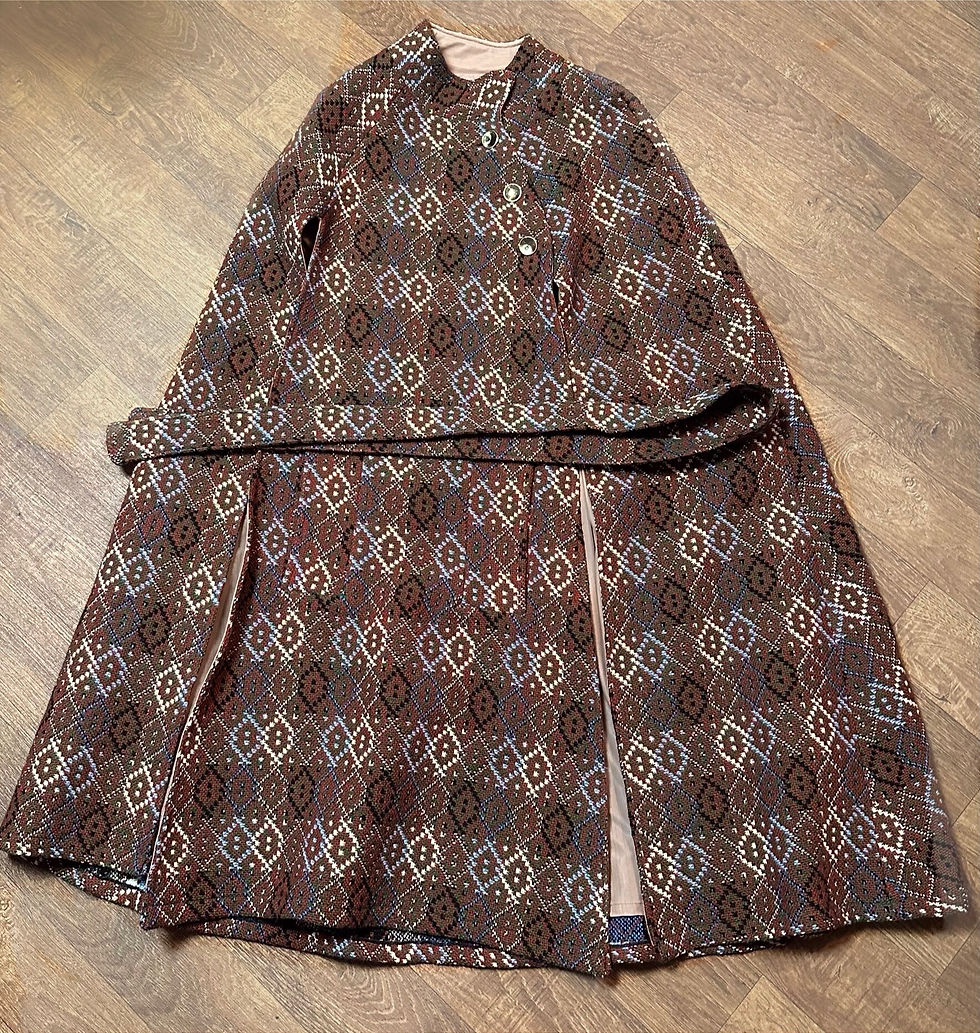
Not every vintage cape was intended for a glamorous arrival at the theatre. Wool made the silhouette particularly successful as practical outerwear, with its generous shape allowing warm clothing to be worn underneath while dense fabrics provided useful protection from cold weather.
Traditional and regional textiles were especially well suited to the form. Checks, stripes and strongly patterned wools could be displayed across broad areas without being broken up by conventional sleeves, giving many vintage wool capes their distinctive appearance. This also allowed the quality and character of the textile to become an important part of the garment's appeal rather than simply providing its background.

Loden provides a particularly interesting example. Traditionally associated with the Alpine regions, especially Austria and Tyrol, loden is a dense woollen cloth that is fulled and finished to create a warm, durable fabric. Those qualities made it particularly suitable for outdoor garments, including the classic loden cape. Such pieces occupy a very different fashion world from a feather-trimmed 1930s evening cape, yet both demonstrate how successfully the same fundamental silhouette could be adapted to completely different purposes.

The Cape Gets Fashionable Again
One of the fascinating things about capes is that fashion never really needs to reinvent them from scratch. Instead, each generation discovers another way of playing with the familiar silhouette, changing its length, volume, fabric or historical references to make it feel relevant again.
During the 1960s and 1970s, capes fitted particularly well with fashion's appetite for dramatic shapes, traditional textiles and increasingly eclectic influences. A short, sharply shaped cape could work alongside the graphic simplicity associated with parts of 1960s fashion, while longer woollen and hooded styles sat comfortably within the romantic, folkloric and historically inspired directions that became increasingly visible towards the 1970s.
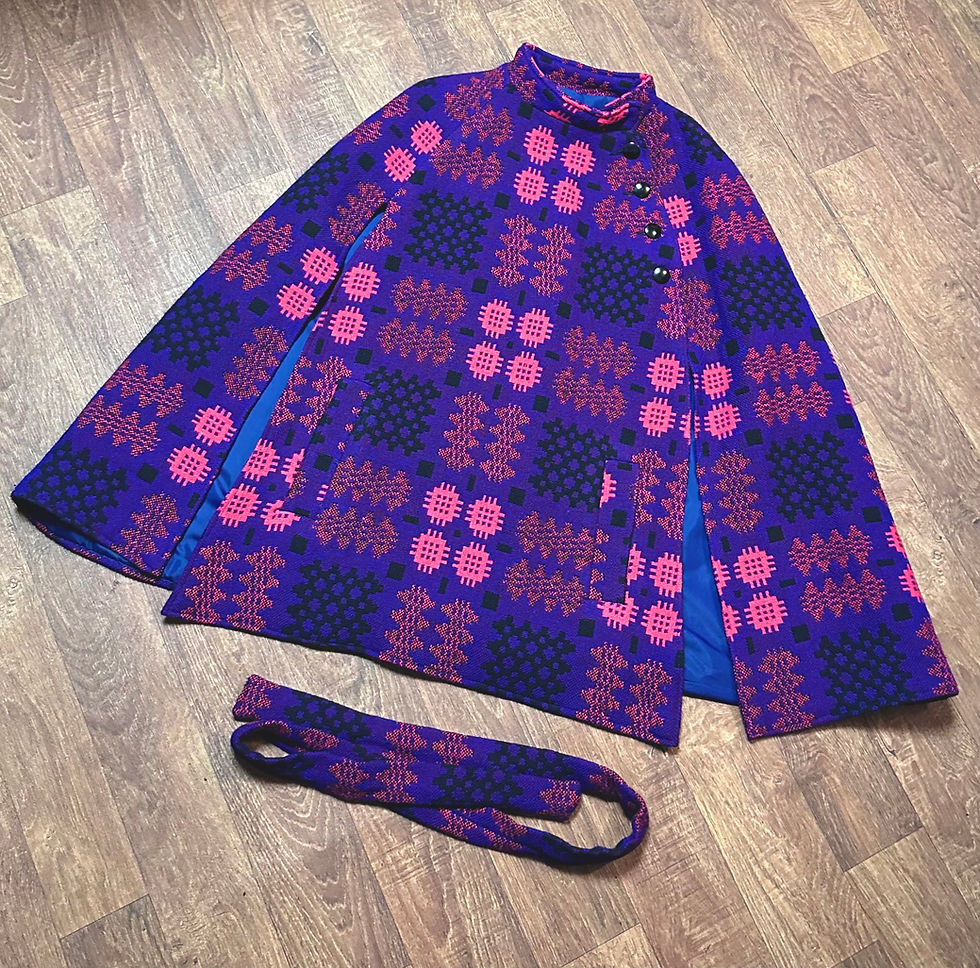
Fashion during these years was also looking enthusiastically backwards. Victorian and Edwardian references, 1930s nostalgia, folk dress and traditional craft could all be borrowed and reinterpreted without producing literal historical costume. The cape was particularly well suited to this approach because its long history gave it an immediate sense of romance, while contemporary fabrics and styling could make the finished garment unmistakably of its own time.
British designers were also exploring more individual approaches to outerwear as boutique fashion and designer ready-to-wear flourished. As a result, surviving vintage capes from these decades can vary enormously, which is part of the pleasure of finding them today. Two garments made within broadly the same period might share the basic cape silhouette while having almost nothing else in common.
Velvet, Hoods and the Darker Side of Cape Style
Then there is the black velvet cape, which seems almost incapable of being inconspicuous. Add a hood or generous collar and the associations begin to multiply: Victorian mourning, Gothic romance, theatre, mystery and the wonderfully dramatic image of the black-clad widow. Much of this is cultural baggage rather than something inherent in the garment itself, but those associations inevitably influence the way we see and wear vintage clothing.
Velvet is particularly effective for dramatic cape shapes because its pile interacts with light as the fabric moves, making deep colours appear richer and emphasising folds across the surface. A relatively simple construction can therefore look extraordinarily luxurious, particularly when there is enough fabric to create movement around the body.

A genuine vintage black velvet cape may simply have begun life as elegant evening outerwear, yet decades of historical imagery, stage costume, film and popular culture can give it an atmosphere that extends far beyond its original purpose. That emotional response is part of the pleasure of vintage fashion: clothing arrives carrying associations as well as fabric, and sometimes wearing it allows us to enjoy both.
Why Are Vintage Capes Still So Popular?
Having handled vintage clothing for more than twenty years, we have noticed that good capes tend not to linger for long. Part of their continuing appeal may be practical, because many designs offer more flexibility in fit than a closely tailored vintage coat. There may be no fitted sleeve to contend with, while the generous shape often leaves plenty of room for knitwear and other layers underneath.
That does not mean that every cape is genuinely one-size-fits-all. Shoulder width, neckline, fastening position, arm openings and overall length can still affect how a garment sits and feels, and the proportions of a very long cape can be quite different on different heights. Nevertheless, the relative freedom of the silhouette can make vintage capes approachable for people who sometimes struggle with the less forgiving sizing of older fitted outerwear.
There is also the question of sheer visual impact. A cape creates movement and shape without requiring complicated styling, and because the silhouette has been revisited so frequently it does not necessarily look tied to one particular decade. A good vintage cape can therefore feel distinctive without demanding that everything else in the outfit follows its historical lead.
How to Wear a Vintage Cape Today
The easiest way to style a vintage cape is usually to allow it to do most of the work. Trousers, jeans, simple knitwear or an uncomplicated dress can provide a quiet foundation while the outerwear supplies the shape and movement. This is particularly useful with strongly patterned wool, dramatic velvet or any cape with an unusual fastening, collar or hood.
Length naturally changes the effect. A cropped cape can behave almost like a jacket, while a longer version creates a much stronger silhouette and may work best when the rest of the outfit has relatively clean lines. Footwear can shift the mood just as easily: boots with a substantial wool cape create something practical and autumnal, while elegant shoes and velvet take the same basic garment into much more glamorous territory.
There is certainly no requirement to dress according to the cape's original decade. Mixing vintage outerwear with contemporary clothing often makes it easier to appreciate the garment itself without the overall outfit feeling like a recreation. A particularly dramatic black velvet example may, admittedly, have ideas of its own, but sometimes accepting a little theatricality is half the pleasure.
What to Look for When Buying a Vintage Cape
As with any vintage outerwear, condition deserves a proper inspection. Wool capes should be checked carefully for moth damage, particularly around folds, hems, collars and areas that may have remained undisturbed during storage. Holding the fabric towards a good light can help reveal tiny holes that are surprisingly difficult to spot against textured or dark wool.
Fastenings deserve particular attention because many capes rely on only one or two main fastening points. A damaged button, clasp or loop can therefore matter more than it might on a conventional coat with a full row of buttons. Linings should also be checked around the neckline and any arm openings, where friction can cause wear over time.
With velvet, look at the condition of the pile as well as the underlying fabric, paying attention to significant crushing, worn areas or permanent marks. Weight is another consideration that photographs cannot always communicate; a substantial wool cape may be considerably heavier than expected, while a very long style can feel quite different once it is actually being worn. None of these issues necessarily makes a vintage cape undesirable, but understanding them allows you to judge the garment realistically rather than expecting decades-old clothing to resemble something newly manufactured.
What Is the Difference Between a Cape and a Cloak?
Although the terms have overlapped considerably throughout fashion history, a cape is generally understood as a sleeveless garment falling from the shoulders, often ending somewhere between the shoulders and lower leg. A cloak tends to be longer and fuller, providing greater coverage of the body. Historical makers, retailers and wearers have not always observed that distinction, however, so terminology alone should not be treated as definitive when identifying a vintage garment.
When Were Capes Most Fashionable?
There is no single decade that can claim the cape. Cape-like garments have an extremely long history, while fashionable capes and cloaks appeared repeatedly throughout the nineteenth and twentieth centuries. The 1920s and 1930s produced some particularly glamorous evening examples, and designers continued to reinterpret the silhouette throughout post-war fashion and beyond. Those repeated revivals are also why a cape should never be dated from its shape alone.
Are Vintage Capes One Size?
Vintage capes can be more forgiving in fit than tailored coats and jackets because their sleeveless construction often provides greater freedom around the body. That does not make them universally one size, however. Neckline, shoulders, fastening position, length and the placement of any arm openings all influence fit, so the individual garment and its measurements should always be considered.
Are Vintage Capes Warm?
A substantial wool or loden cape can provide considerable warmth, particularly when its generous shape allows knitwear and other layers to be worn underneath. Fabric, length and construction make an enormous difference, though, and a lightweight evening cape intended to protect a formal dress serves a very different purpose from dense wool outerwear designed for cold weather.
Why the Cape Never Quite Disappears
Perhaps the secret of the cape's longevity is that such a simple idea leaves enormous room for reinvention. Fabric suspended from the shoulders can become practical country clothing, sumptuous eveningwear, traditional woollen outerwear, romantic 1970s fashion or an unapologetically dramatic sweep of black velvet, yet the fundamental shape remains instantly recognisable.
That versatility has allowed the cape to survive centuries of changing fashion without becoming permanently trapped in any one of them. A beautiful vintage example can still be worn with contemporary clothes without requiring much explanation, while retaining all the character, craftsmanship and history that made us choose vintage in the first place. For a garment with such ancient origins, the cape has proved remarkably good at never really looking finished with fashion.
And perhaps that is why, whenever a particularly good one arrives at My Vintage, experience tells us not to expect it to stay for very long.


Comments