


Vintage Fashion Eras Explained: Style Through Time

Finding truly authentic vintage fashion can feel like searching for hidden treasure. For women in the United Kingdom passionate about unique styles with historical significance, the difference between genuinely vintage pieces and mere retro copies lies in their time-bound nature. Vintage garments from the 1940s to 1990s carry rich cultural narratives, reflecting the world as it was when they were first worn. This guide reveals what defines each vintage fashion era, helping you discover sustainable, historical pieces that stand out from ordinary fast fashion.
Vintage Fashion Eras Explained:Table of Contents
Key Takeaways
Point | Details |
Understanding Vintage | Vintage fashion is defined by age, typically considered to be at least 20 years old, and is distinct from retro or secondhand pieces. |
Cultural Significance | Each vintage era reflects its unique historical, cultural, and economic contexts, shaping design choices that tell a story. |
Identifying Authenticity | Authentic vintage pieces possess unique construction techniques and materials that differ from modern reproductions; careful examination is essential. |
Sourcing Responsibly | Choose ethical sources for vintage clothing and prioritise high-quality items to reduce waste, ensuring longer lifecycles for garments. |
What Defines A Vintage Fashion Era?
Vintage fashion exists in a specific timeframe that separates it from other fashion categories. The defining characteristic is age. Garments and objects are typically considered vintage when they’re at least 20 years old, though most collectors focus on pieces from the 1920s through to the 1980s. This time-bound nature matters because it anchors vintage fashion to a genuine historical period rather than simply being old clothing.
Understanding vintage fashion authenticity helps clarify what makes a piece truly vintage versus merely retro or secondhand. The distinction is crucial. A vintage dress from 1952 carries the construction methods, materials, and design sensibilities of that exact era. A retro dress made in 2010 with 1950s styling is something entirely different, even if they look similar at first glance.
Each vintage era brings its own identity shaped by cultural, social, and economic contexts. The 1940s silhouette reflected post-war optimism and fabric rationing. The 1970s embrace of colour and pattern told a story of cultural rebellion and self-expression. These weren’t random design choices; they emerged directly from the specific moment in history when people actually wore them. This cultural richness is what separates vintage fashion from costume or reproduction pieces.
Vintage fashion also encompasses diverse interpretations across different countries and communities. A 1960s British mod dress looks strikingly different from a 1960s American bohemian piece, yet both are authentically vintage. Understanding how geography, tradition, and local influences shaped fashion choices adds depth to collecting and wearing vintage clothing.
The term “vintage” itself deserves respect. It’s not simply synonymous with old, antique, or secondhand. These are distinct categories with different characteristics, values, and meanings within the fashion world. Recognising these differences helps you appreciate what you’re wearing and why it matters.
When you choose a piece from a specific era, you’re not just selecting clothing. You’re connecting with a moment in history, the craftsmanship of a particular time, and the stories of the people who first wore these pieces.

Pro tip: When evaluating a piece, research the specific decade it comes from to understand the historical context, construction techniques, and design influences that make it genuinely vintage rather than just old.
Key Fashion Eras: 1940s To 1990s
The decades spanning the 1940s to 1990s represent some of vintage fashion’s most distinctive and collectible periods. Each era tells its own story through silhouettes, fabrics, and design choices that reflected the world around them. Understanding these key periods helps you recognise what you’re wearing and appreciate the craftsmanship behind each piece.
The 1940s marked a turning point in fashion history. Fabric rationing during World War II forced designers to create practical, streamlined clothing with minimal waste. Structured wool dresses with military influences dominated wardrobes, reflecting both necessity and resilience. When the war ended, Christian Dior’s revolutionary “New Look” emerged with cinched waists and gloriously full skirts, symbolising a return to femininity and optimism after years of austerity.
The 1950s brought colour, optimism, and the rise of the teenager as a distinct fashion demographic. Full circle skirts, petticoats, and polka dots became cultural icons. This was the decade of elegance; even casual pieces carried a sense of refinement that defined the era. The silhouette was quintessentially feminine, with emphasis on the waist and curves.

The 1960s split into two distinct movements. The early years maintained 1950s sensibilities, whilst the mid-to-late decade exploded with youth culture, mod styles, and bold geometric prints. The miniskirt revolutionised how people dressed. Alongside this, bohemian and hippie influences introduced flowing fabrics, earthy tones, and handmade aesthetics that challenged mainstream fashion.
The 1970s embraced maximalism in every form. Wide collars, platform shoes, bell-bottoms, and bold prints dominated. Disco culture introduced glamour and shine, whilst bohemian influences continued with suede, fringe, and earth tones. Colour became bold and unapologetic. This decade valued self-expression above all else.
The 1980s and 1990s shifted towards increasingly diverse aesthetics. Power dressing emerged in the 1980s with shoulder pads and structured silhouettes. Simultaneously, grunge, hip-hop fashion, and minimalism offered contrasting perspectives. The 1990s saw vintage fashion itself become fashionable again, creating a fascinating period where past styles were deliberately revived and reinterpreted.
Pro tip: Focus on collecting from one or two eras that genuinely speak to you rather than trying to own pieces from every decade; this helps you develop deeper knowledge and a more cohesive personal style.
Here is a summary of hallmark characteristics for vintage fashion eras to help you quickly distinguish style features:
Decade | Silhouette & Cut | Popular Fabrics | Notable Influence |
1940s | Streamlined, structured | Wool, rayon | Wartime rationing |
1950s | Cinched waists, full skirts | Cotton, silk | Post-war elegance |
1960s | Minis, mod, A-line | Jersey, synthetics | Youth & subcultures |
1970s | Bell bottoms, flowy maxis | Denim, suede | Bohemian, disco |
1980s | Power dressing, bold fit | Polyester, taffeta | Economic exuberance |
1990s | Minimalist, grunge | Flannel, stretchy knits | Style revival |
Signature Styles And Iconic Looks
Every vintage era produced signature looks that defined the moment and continue to influence fashion today. These aren’t random styles; they emerged from the specific cultural, social, and economic conditions of their time. Recognising these iconic pieces helps you understand fashion history and find your own vintage aesthetic.
The 1920s flapper dress symbolised women’s liberation and modernity. Dropped waistlines, loose silhouettes, and shorter hemlines shocked conservative society. These dresses weren’t just clothing; they represented a cultural revolution. The beading, fringe, and Art Deco patterns reflected the era’s optimism and jazz culture.
Christian Dior’s “New Look” in the 1950s introduced cinched waists, full skirts, and structured elegance that dominated the decade. This silhouette became the gold standard for femininity. The craftsmanship was exceptional, with multiple layers of tulle and petticoats creating that signature volume. It represented post-war optimism and a return to luxury after years of austerity.
Mary Quant revolutionised 1960s fashion with the mini skirt and innovative jersey dresses that made style affordable and accessible. Her designs democratised fashion, allowing young people to express themselves through clothing. The mini skirt became an icon of youth culture and female independence, challenging traditional notions of what women should wear.
The mod movement brought geometric prints, bold colours, and clean lines to 1960s Britain. A-line dresses, shift dresses, and go-go boots defined the aesthetic. This wasn’t about opulence; it was about youth, energy, and breaking with the past. Vintage fashion icons from this era continue to inspire contemporary designers and fashion enthusiasts.
The 1970s brought bohemian maxi dresses, wide-collared shirts, and platform shoes that celebrated individuality. Disco culture introduced metallic fabrics, sequins, and glamorous jumpsuits. This era valued self-expression through bold colour and texture. Whether bohemian, disco, or glam rock, the 1970s offered multiple ways to be fashionable.
Pro tip: Research the specific decade when you find a vintage piece you love, as understanding its cultural context will help you style it authentically and appreciate its historical significance.
Cultural Influence On Vintage Trends
Vintage fashion doesn’t exist in a vacuum. The styles we treasure today emerged from specific cultural moments, social movements, and historical events that shaped how people dressed. Understanding these cultural influences helps you appreciate the deeper meaning behind the pieces you wear and collect.
Fashion acts as a personal representation deeply intertwined with social and cultural identities. A 1960s miniskirt wasn’t just a hemline change; it symbolised women’s liberation and youth rebellion. A 1970s bohemian dress represented counterculture values and rejection of mainstream materialism. These pieces carried political and social meaning that extended far beyond their aesthetic appeal.
Cultural attitudes towards vintage fashion vary significantly across different countries and communities. What feels nostalgic and precious in one culture might hold entirely different significance in another. British mod fashion, for instance, emerged from working-class youth culture in London, whilst American hippie style drew from entirely different social currents. These distinctions matter when you’re building a vintage wardrobe that genuinely resonates with you.
Historical events directly shaped fashion choices. Post-war rationing created practical, streamlined 1940s designs. Economic prosperity in the 1950s allowed for luxurious fabrics and elaborate construction. The social upheaval of the 1960s and 1970s produced clothes that challenged traditional ideas about femininity and self-presentation. Each era’s fashions tell stories about what people valued and believed.
Understanding how vintage impacts your style choices connects you to broader cultural narratives. When you wear a piece from a particular era, you’re engaging with the historical moment that created it. This connection transforms vintage fashion from simple nostalgia into a meaningful dialogue with the past.
Cultural heritage runs through vintage pieces in ways that modern reproductions cannot replicate. The craftsmanship, fabric choices, and construction techniques all reflect the specific time and place where each garment was made. Recognising this cultural significance deepens your appreciation and helps you make more intentional collecting choices.
Pro tip: Research the cultural and historical context of the era when you acquire vintage pieces; this knowledge transforms your wardrobe into a curated collection of meaningful historical narratives rather than simply old clothing.
How To Identify Authentic Pieces
Identifying authentic vintage requires more than just checking the age of a garment. True vintage pieces possess distinctive characteristics that set them apart from modern reproductions and fast fashion imitations. Developing this skill transforms you from a casual shopper into a confident collector who understands exactly what you’re acquiring.
Construction and Craftsmanship Matter Most
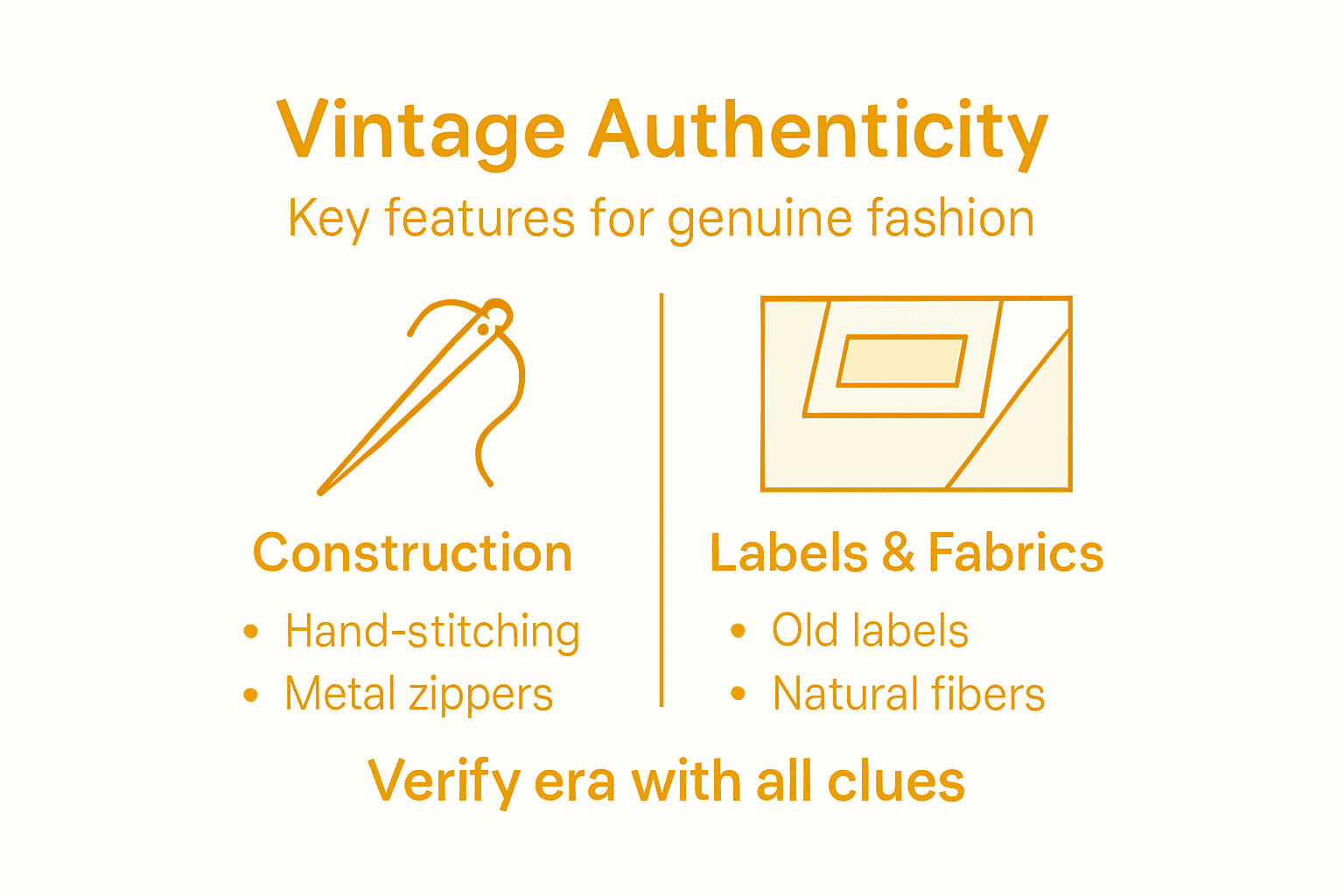
Authentic vintage garments showcase construction techniques specific to their era. Hand-stitched seams, bound buttonholes, and hand-finished hems indicate quality craftsmanship from decades past. Modern mass-produced clothing relies on efficient machine shortcuts that create uniform, perfectly straight seams. Vintage pieces often feature slight variations that reveal human hands at work. Examine the interior carefully; authentic pieces will show meticulous attention to detail that fast fashion manufacturers simply cannot justify economically.
Labels Tell Historical Stories
Labels provide crucial clues about authenticity. Genuine vintage garments carry labels reflecting the manufacturing standards, typography, and printing methods of their specific era. A 1950s dress should have a label that looks and feels consistent with that period. Modern reproductions attempt to mimic vintage labels but often get details wrong. Font styles, label placement, and fabric content descriptions evolved over time. Learning to read these details develops your expertise quickly.
Fabric and Fibre Content Reveals Age
Authentic vintage pieces differ from mainstream fast fashion through their distinctive fibres and fabric weight. Natural fibres like pure silk, wool, cotton, and linen dominated vintage production. Modern synthetic blends feel different and behave differently over time. Vintage fabrics often develop a specific patina and drape that cannot be artificially replicated. Touch is important; authentic vintage textiles have a quality and weight that speaks to their age and origin.
Wear Patterns and Aging
Authentic vintage garments show appropriate signs of wear for their age. Faded seams, worn cuffs, and colour changes in areas exposed to light all tell genuine stories. Reproductions sometimes artificially age clothing to look vintage, but this intentional distressing looks different from natural aging. The way fabric fades, how elastic deteriorates, and how dyes age cannot be perfectly manufactured.
Source and Provenance
Where you purchase vintage matters significantly. Reputable vintage retailers invest time and expertise in sourcing and verifying pieces. They understand how to distinguish genuine vintage from clever reproductions. Building relationships with trustworthy sellers protects you from counterfeits and ensures you’re investing in authentic, historically significant garments.
Pro tip: When evaluating a piece, examine the label, seams, fabric weight, and wear patterns together rather than relying on any single factor; this multi-point verification gives you confidence in your vintage acquisitions.
Sourcing And Wearing Vintage Responsibly

Sourcing vintage responsibly means making conscious choices about where you buy and how you care for pieces. Every vintage garment you acquire has already extended its lifecycle through previous owners. Your role is to continue that story thoughtfully, minimising waste and maximising longevity.
Where to Source Vintage Pieces
Reputable sources matter when building an ethical vintage wardrobe. Charity shops, independent vintage retailers, antique dealers, auction houses, and established online platforms all offer different advantages. Charity shops direct proceeds towards community programmes. Independent vintage retailers curate pieces with expertise and care. Online platforms provide access to global collections but require careful vetting of sellers. Research sellers thoroughly to ensure you’re supporting ethical practices and authentic vintage sourcing.
Quality Over Quantity Approach
Sourcing vintage responsibly involves selecting pieces with lasting quality that will genuinely become part of your wardrobe for years. Purchase fewer pieces that you truly love rather than accumulating items impulsively. This approach reduces environmental impact and supports sustainable consumption. When you buy intentionally, you’re less likely to discard pieces carelessly.
Caring for Vintage to Preserve Longevity
Vintage garments deserve mindful care that preserves their value and meaning. Hand-wash delicate pieces using gentle detergents specifically designed for natural fibres. Store clothing properly in breathable garment bags away from direct sunlight. Address stains and damage promptly with appropriate cleaning methods. Proper storage prevents moth damage and deterioration. Your careful stewardship ensures these pieces remain wearable for decades longer.
Understanding Your Impact
Vintage clothing reduces demand for new manufacturing and diverts waste from landfills, making every purchase an environmental choice. Fast fashion generates enormous textile waste annually. By choosing vintage, you’re actively participating in sustainable consumption. This alignment between your fashion choices and environmental values creates meaningful impact beyond personal style.
The Philosophy of Passing It Forward
Responsible vintage ownership includes considering what happens to pieces after you finish wearing them. Many collectors pass garments to younger friends, donate to costume departments, or sell through reputable vintage channels. This ensures pieces continue circulating rather than accumulating in wardrobes or ending up in waste streams. Your commitment to the full lifecycle of each piece amplifies your positive impact.
To guide responsible vintage sourcing and care, here is a concise overview of key considerations:
Step | What To Look For | Why It Matters |
Source Selection | Ethical sellers, provenance | Ensures authenticity, impact |
Garment Quality | Construction, natural fibres | Durability, historical value |
Care Approach | Hand-wash, proper storage | Extends garment lifespan |
Lifecycle Thinking | Pass forward, donate, resell | Reduces waste, preserves culture |
Pro tip: When acquiring a vintage piece, ask yourself whether you’ll wear it regularly and care for it properly; this mindful purchasing approach ensures you’re genuinely extending garments’ lifecycles rather than simply accumulating.
Discover Authentic Vintage Fashion Eras That Speak to Your Style
Understanding the rich history and defining characteristics of vintage fashion eras can be overwhelming, especially when aiming to find authentic pieces that truly reflect their cultural and historical significance. If you have wondered how to confidently select garments with genuine craftsmanship from the 1940s through the 1990s or want to build a wardrobe that honours timeless style and sustainable values, you are not alone. Many vintage enthusiasts face challenges distinguishing authentic vintage from mere reproductions or retro styles.
Explore a curated collection at My Vintage where every item is carefully vetted for authenticity and quality, allowing you to embrace distinctive eras like the streamlined 1940s or the vibrant 1970s with confidence. Our expert selection highlights iconic pieces that connect you directly to fashion history’s defining moments. Start discovering vintage fashion that tells a story while promoting eco-conscious consumption today by visiting My Vintage.
Unlock your personal vintage style and make meaningful additions to your wardrobe that blend individuality with heritage. Begin your journey by exploring our range and join a community committed to sustainable, authentic style at My Vintage.
Frequently Asked Questions
What defines a vintage fashion era?
Vintage fashion is defined by garments that are at least 20 years old, focusing mainly on pieces from the 1920s to the 1980s. This age distinction ties the clothing to specific historical periods, making it genuinely vintage rather than just old or secondhand.
How can I tell if a piece of clothing is truly vintage?
To identify authentic vintage clothing, check for unique construction methods, label styles from the correct era, fabric weight, appropriate signs of wear, and source provenance. Authentic vintage pieces often show meticulous craftsmanship and distinct characteristics compared to modern reproductions.
What are the hallmark characteristics of different vintage fashion eras?
Each vintage era has unique characteristics: 1940s (streamlined, structured styles), 1950s (cinched waists, full skirts), 1960s (minis and mod styles), 1970s (bell bottoms and bold prints), 1980s (power dressing with shoulder pads), and 1990s (minimalist and grunge aesthetics).
Why is understanding the cultural context of vintage fashion important?
Understanding the cultural context of vintage fashion helps you appreciate the deeper meanings behind the garments. Each era’s styles reflect the social, political, and economic conditions of the time, enriching your connection to the fashion you choose to wear.
Recommended


Comments