


Vintage Horrockses: Iconic British Fashion
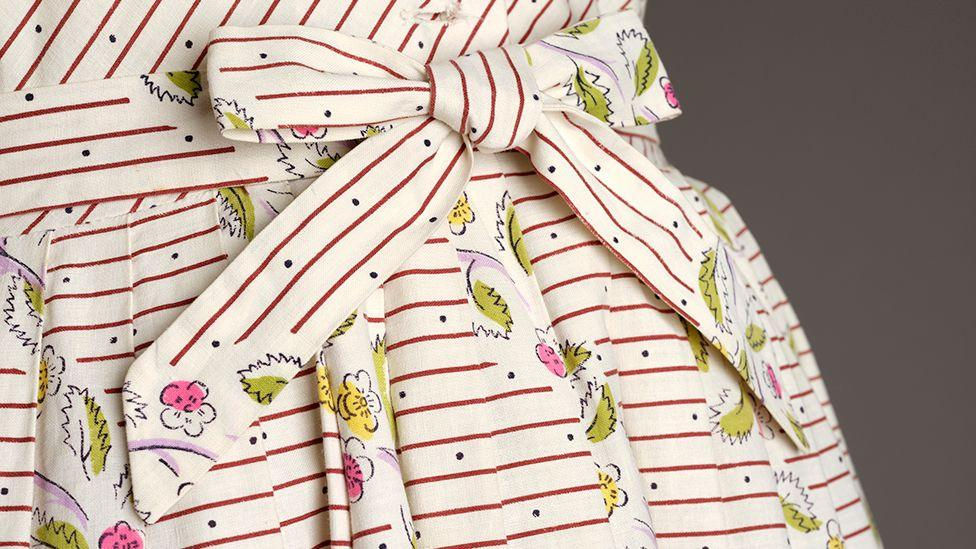
Vintage Horrockses is defined as the collectible ready-to-wear fashion produced by Horrockses Fashions, a label born from a Lancashire cotton mill founded in 1791 that launched its iconic clothing line in the mid-1940s. These dresses are celebrated for their vivid artistic prints, superb cotton quality, and the remarkable way they brought Parisian couture sensibilities to everyday British women. What makes them truly special is the breadth of their appeal. From factory workers to Queen Elizabeth II herself, Horrockses dresses crossed every social boundary with effortless style. If you love vintage clothing and British fashion history, understanding Horrockses is like finding the missing piece of a very beautiful puzzle.
What makes vintage Horrockses fabrics and prints unique?
Horrockses Fashions built its reputation on one deceptively simple idea: that a cotton dress could be both affordable and genuinely artistic. The brand achieved this by treating its fabrics as canvases rather than mere materials, and the results were extraordinary.
The textile quality was the foundation of everything. Horrockses used high-grade cotton that was crisp, breathable, and held colour beautifully. This mattered enormously in the post-war years when synthetic fabrics were beginning to flood the market. Horrockses held firm to cotton, and that commitment gave their dresses a longevity that cheaper alternatives simply could not match.
The artistic collaborations are what truly set the brand apart from its contemporaries. Horrockses worked with serious fine artists, including Eduardo Paolozzi and Graham Sutherland, to create textile prints that were genuinely avant-garde. Paolozzi, who would later become one of Britain’s most celebrated pop artists, brought bold geometric and abstract forms to cotton fabric. Sutherland contributed organic, almost surrealist motifs. These were not decorative patterns in the conventional sense. They were wearable art, and collectors today recognise them immediately.
The design philosophy drew directly from Paris. Horrockses sent its designers to study the Parisian couture collections each season, and they returned with ideas about nipped waists, full skirts, and structured bodices. These couture principles were then adapted for ready-to-wear production in cotton, making the silhouettes accessible without sacrificing elegance. The result was a dress that looked like it cost far more than it did.
Here is what distinguished a Horrockses dress from its competitors:
Artistic prints: Collaborations with fine artists produced geometric, floral, and abstract patterns that were genuinely original rather than commercially generic.
Couture-inspired silhouettes: Nipped waists and full skirts reflected Paris collections, adapted for everyday British life.
High-quality cotton: Consistent use of superior cotton gave the dresses durability and a beautiful drape.
Easy care: The cotton construction meant the dresses were practical as well as pretty, a combination that resonated deeply with post-war women.
Seasonal freshness: Two collections annually, each featuring 160 dresses, kept the range feeling current and exciting.
Pro Tip: When shopping for vintage fabric patterns in Horrockses pieces, look for prints with an almost painterly quality. The artist-designed textiles have a depth and irregularity that mass-produced patterns simply do not replicate.
How did Horrockses shape post-war British fashion culture?
The post-war ready-to-wear market was a world of genuine opportunity and genuine need. British women wanted to dress well after years of wartime austerity, but couture was financially out of reach for most. Horrockses stepped into that gap with remarkable precision.
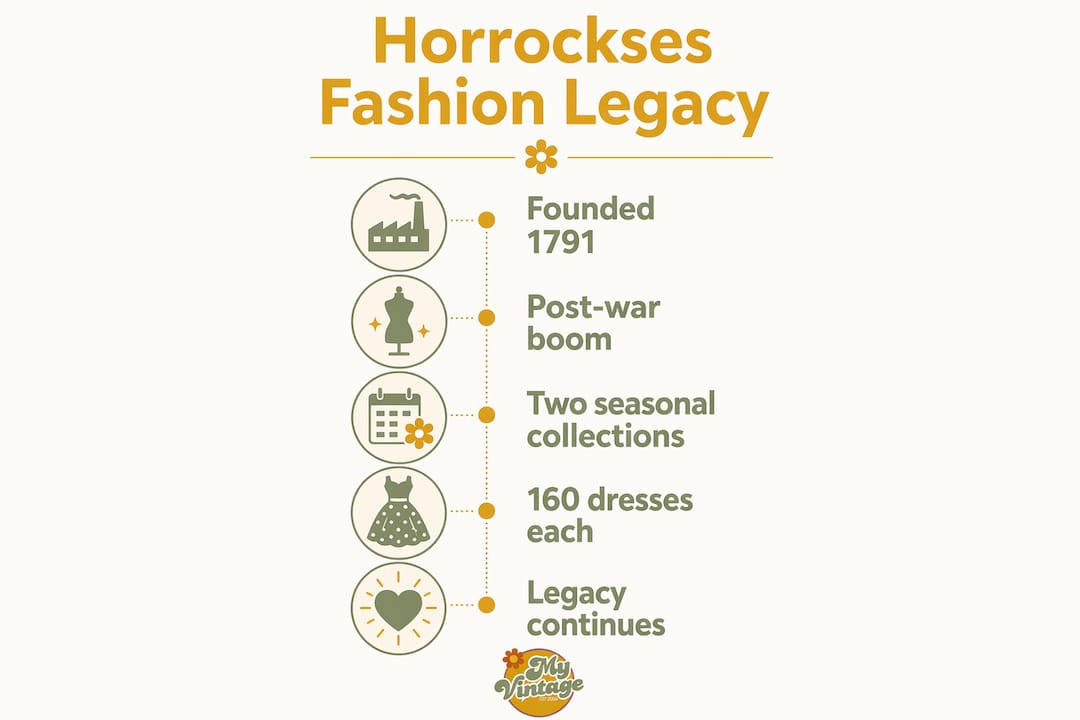
The brand’s production model was disciplined and deliberate. Two seasonal collections, each comprising 160 dresses, meant there was always something new to discover without overwhelming the market. This rhythm created anticipation and loyalty among customers who knew a fresh collection was always on the horizon.
Pricing was the masterstroke. Horrockses dresses cost roughly a week’s wages for an average worker, which placed them within reach of a genuinely broad audience. This was not cheap clothing. It was aspirational clothing priced at a level that felt achievable. The distinction matters enormously when understanding why the brand resonated so widely.
The cultural impact unfolded across several dimensions:
Royal endorsement: Queen Elizabeth II wore Horrockses dresses, lending the brand a prestige that no advertising campaign could have manufactured. When the same label appeared on a queen and a shop assistant, something genuinely democratic was happening in British fashion.
Women designers at the fore: Horrockses actively promoted women designers within its creative team, which was progressive for the era and contributed to the brand’s distinct aesthetic sensibility.
Wearable art as a concept: By commissioning fine artists to design prints, Horrockses elevated ready-to-wear into a category that had not previously existed in British retail fashion.
Accessible glamour: The brand proved that glamour did not require wealth, only good design and quality materials.
“Horrockses made the extraordinary ordinary, and the ordinary extraordinary. That is a rare achievement in any era of fashion.”
The legacy of this cultural positioning is still felt today. Vintage Horrockses dresses are sought after not just as garments but as artefacts of a moment when British fashion genuinely democratised style. The 60s vintage styles that followed owed a considerable debt to the groundwork Horrockses laid in the late 1940s and 1950s.
How to identify and authenticate vintage Horrockses dresses
Authenticating vintage Horrockses pieces is a skill that rewards careful attention. The good news is that the brand left behind enough consistent markers to make identification genuinely achievable, even for collectors who are relatively new to the field.

The most reliable starting point is the label itself. Authentic Horrockses garments carry a distinctive woven label, typically reading “Horrockses Fashions” with the word “Cotton” often included. The label style evolved over the decades, so studying examples from known authenticated pieces is worthwhile before making a purchase.
Internal construction details are equally telling. Authentic Horrockses garments show specific finishing techniques consistent with their era of production. Seam allowances, zip types, and lining choices all provide dating clues. The brand produced exactly two collections per year with 160 dresses each, and cross-referencing a garment’s construction with known seasonal outputs can help narrow down its date of manufacture.
Feature | What to look for |
Label | Woven “Horrockses Fashions” label, often with “Cotton” noted |
Fabric | High-quality, crisp cotton with excellent colour retention |
Artistic, painterly quality; geometric, floral, or abstract motifs | |
Silhouette | Nipped waist, full or pencil skirt, structured bodice |
Construction | Era-appropriate zip, seam finishing, and lining details |
One nuance worth knowing: finishing quality varies across Horrockses pieces because they were ready-to-wear rather than bespoke. Do not dismiss a dress simply because its hem or lining is less refined than expected. The consistent markers are the cotton quality and the print character, not the finishing details.
Pro Tip: The Harris museum in Preston holds sample sheets and design books from the original Horrockses archive. Studying these resources, either in person or through published exhibition materials, is the single best way to train your eye for authentic vintage fabric patterns.
What is the ongoing legacy of Horrockses in vintage collecting?
The story of Horrockses does not end in the 1960s. The brand’s influence on collectible textiles and retro fashion has only grown stronger as vintage clothing has moved from niche interest to mainstream passion.
The Harris museum in Preston holds the world’s largest known collection of Horrockses garments, with over 100 dresses in its archive. An exhibition running from September 2026 to January 2027 will showcase more than 60 of these pieces alongside original design materials, making it the most significant public display of Horrockses work ever mounted. For anyone serious about British fashion history, this exhibition is unmissable.

The brand has also inspired new vintage-style collections from contemporary designers who recognise the power of its aesthetic. The combination of artistic prints, quality cotton, and couture-influenced silhouettes remains as appealing now as it was in 1950. This is not nostalgia for its own sake. It is recognition of genuinely good design.
For collectors, caring for Horrockses pieces properly is part of honouring their history:
Wash gently: Hand wash in cool water with a mild detergent, or use a delicate machine cycle. Avoid hot water, which can cause cotton to shrink and colours to fade.
Store carefully: Hang dresses on padded hangers to preserve the shoulder shape, or fold loosely in acid-free tissue paper if storing long-term.
Avoid direct sunlight: Prolonged exposure will fade those beautiful artistic prints. Store away from windows and bright light sources.
Press with care: Use a cool iron on the reverse of the fabric to protect the print surface. Steam can be used cautiously on stubborn creases.
Repair thoughtfully: If a seam needs attention, use period-appropriate techniques and materials where possible to maintain authenticity.
The joy of owning a Horrockses dress lies in wearing it. These garments were designed for real life, and they remain entirely wearable today.
Why Horrockses still matters to me, decades on
There is something quietly radical about a fashion label that commissioned Eduardo Paolozzi to design cotton frocks for working women. That decision reflects a belief that good design belongs to everyone, not just those who can afford couture. It is a philosophy I find deeply compelling, and it is one that feels more relevant now than ever, given how disposable so much contemporary fashion has become.
What I find most fascinating when handling authentic pieces is the gap between their modest origins and their artistic ambition. These were mass-produced dresses made in a Lancashire mill, and yet the prints on them were created by artists who would go on to shape twentieth-century British art. That tension between the everyday and the extraordinary is what makes vintage Horrockses so endlessly interesting to study and to wear.
For collectors, I would say this: do not wait for the perfect piece. Buy the dress that speaks to you now, learn its history, and wear it. Horrockses dresses were never meant to sit in a wardrobe. They were made for living in, and that spirit is worth preserving.
Find your own piece of Horrockses history at My Vintage
If reading about Horrockses has sparked the urge to own a piece of this remarkable British fashion story, we would love to help you find it.
At My Vintage, we curate authentic vintage clothing with the same care and passion that Horrockses brought to its original designs. Our collection includes genuine Horrockses pieces such as this beautiful 1940s CC41 Horrockses shirt dress and a striking 1970s red striped Horrockses dress, each carefully selected for quality and authenticity. To keep your vintage finds looking their best for years to come, our guide on caring for vintage clothing covers everything you need to know.
Frequently Asked Question
What is Horrockses Fashions?
Horrockses Fashions is a British ready-to-wear label that grew from a Lancashire cotton mill founded in 1791 and launched its iconic clothing range in the mid-1940s. The brand became famous for high-quality cotton dresses featuring artistic prints by collaborators including Eduardo Paolozzi and Graham Sutherland.
Why are vintage Horrockses dresses so collectible?
Horrockses dresses combine genuine artistic merit, superior cotton quality, and a fascinating social history, having been worn by women across all classes including Queen Elizabeth II. That blend of glamour, practicality, and cultural significance makes them among the most sought-after pieces in British vintage fashion collecting.
How can I tell if a Horrockses dress is authentic?
Look for a woven “Horrockses Fashions” label, high-quality crisp cotton fabric, and prints with a painterly, artistic quality rather than a generic commercial pattern. Internal construction details and the style of zip used can also help date and authenticate a piece.
Where is the largest collection of Horrockses garments held?
The Harris museum in Preston holds the world’s largest known collection of Horrockses garments, with over 100 dresses in its archive. An exhibition featuring more than 60 of these pieces is scheduled to run from September 2026 to January 2027.
How should I care for a vintage Horrockses dress?
Hand wash in cool water with a mild detergent, store on a padded hanger away from direct sunlight, and press on the reverse of the fabric using a cool iron. Proper care preserves both the cotton quality and the distinctive artistic prints that make these dresses so special.
Recommended

Comments