


Vintage Jewellery Care: Cleaning, Storing and Reading the Marks
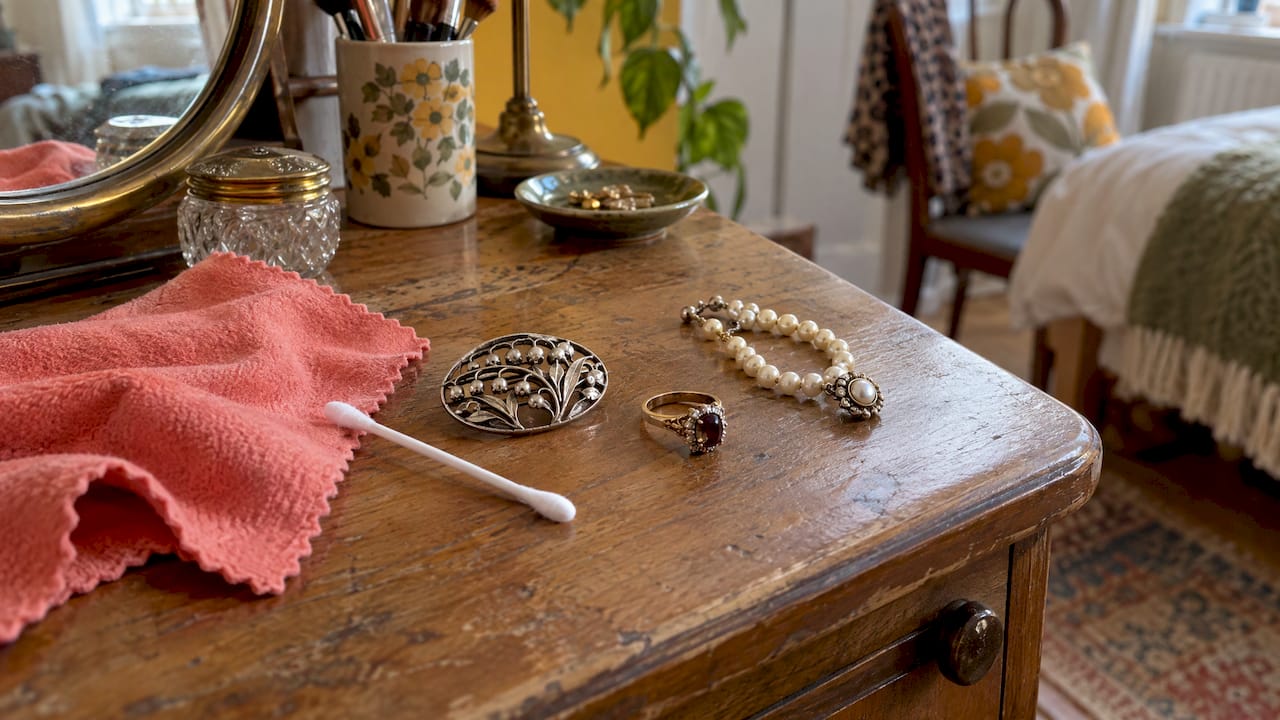
The best vintage jewellery care is to do less than you think you should: identify what the piece is made of, clean it gently with the mildest method that works, and store it so it never needs rescuing. That is the habit that keeps a 1950s brooch or a 1970s silver cuff wearable for another fifty years. At My Vintage we have been finding and describing vintage pieces since 2004, and the care routine below is the one we would hand to a friend the day they bring a new find home.
We begin with the marks on the back, because they tell you what you are dealing with, then move through cleaning by material, tarnish, storage and the moments when a specialist should take over.
Start with the marks: what hallmarks tell you before you clean
Turn a piece over before you reach for a cloth. A tiny stamp can change how you treat it entirely, because solid sterling silver, silver plate and gilt costume metal each need different handling.
A true hallmark is a mark struck by an official assay office (an independent testing body) to guarantee the fineness of the metal. A factory stamp reading 925 is a maker’s claim rather than a hallmark, as the Hallmark Society’s glossary explains. Three marks come up most often on British pieces:
Fineness mark: shows the purity of the metal. 925 means 92.5% silver, and a karat figure on gold tells you how many of 24 parts are gold, so 18k is 18/24.
Sponsor’s mark: the registered mark of whoever submitted the piece for assay. It is often, though not always, the maker.
Date letter: a letter struck by a British or Scandinavian assay office to show the year of assay. It has to be read with its typeface and the shape of its surround, so a reference book is your friend here.
A hallmark is a government stamp showing a standard was met, while a trademark identifies the manufacturer or retailer. The American Society of Appraisers article on collecting makes that distinction and recommends the reference work World Hallmarks for dating pieces. It also offers a lovely hands-on tip: authentic period jewellery is usually finished as carefully on the back as on the front.
A few things are worth knowing as you read marks:
Older gold may be unmarked or carry unusual karat marks. One collector’s guide notes that a 15 karat mark suggests a piece made before 1932 and outside the US, and that some antique gold is simply unstamped, so a jeweller’s test settles the question (Sublime Mercies).
Silver needs its marks checked first. The Canadian Conservation Institute advises examining hallmarks before cleaning silver to work out whether a piece is solid sterling or plated, because plating is thin and can be rubbed away.
No marks at all is normal for costume jewellery, which was rarely hallmarked. Treat unmarked pieces as the most delicate category, not the most robust.
If you want to go deeper on dating and recognising styles, our era guide to types of vintage jewellery walks through the decades one by one.
The Golden Rules of Vintage Jewellery Care
Whatever the piece, a few principles hold.
Start dry. A soft, lint-free cloth used after every wearing removes skin oils, moisture and dust before they become grime. LAPADA’s care guide recommends exactly this habit for antique pieces.
Then go gentle. For most antique jewellery, the British Antique Dealers’ Association advises warm water, a little soap and a soft brush. That is the strongest cleaning most pieces will ever need.
Never immerse closed-set pieces. If stones are set in a closed back, with metal behind them rather than open claws, water can become trapped and corrode precious metal. BADA is clear that these must not be soaked. Use a barely damp cotton bud around the edges and dry at once.
Skip the harsh stuff. Bleach, ammonia and abrasive cleaners are the classic culprits. They strip finishes, cloud soft stones and eat into old solder. Toothpaste, baking soda pastes and rough polishing cloths feel gentle but are gritty enough to scratch gold, soft stones and plating, so keep them away from anything you love.
Be wary of machines. Ultrasonic cleaners and steam cleaners vibrate and heat. On vintage pieces they can loosen glued-in stones and foil backs, and LAPADA specifically warns that ultrasonic cleaning damages the oil coating on emeralds.
A Simple Method for Sturdy Pieces
Fill a small bowl with lukewarm water and a drop of mild washing-up liquid.
Dip a soft toothbrush (a baby brush is ideal) and brush lightly, working behind stones and into crevices.
Rinse briefly under a gentle stream of clean water, with the plug in the sink so nothing small disappears.
Pat dry with a soft cloth, then leave to air-dry fully before putting it away.
LAPADA suggests this approach for gemstones rated 7 or above on the Mohs scale, the standard hardness scale where diamond sits at 10. Stones below 7 should only meet a soft cloth. That rule alone protects a great many opals, turquoise and pearls that would otherwise suffer.
Caring for each Material
Once you know what a piece is made of, the right approach follows.
Gold
Gold is the only precious metal that does not tarnish, but it is soft, so scratching is the real enemy. LAPADA notes that higher-carat gold is softer still, so it is wise to wear pieces of similar carat together rather than letting a 9ct chain rub against an 18ct bangle. Chlorine is a hazard too: take gold off before swimming. If you are wondering how to clean vintage gold jewellery, warm water, a drop of mild soap and a soft brush are all it needs, with the closed-set caution above for stone-set pieces.
Platinum
Platinum is cleaned the same way, with mild soapy water and a soft toothbrush. Its natural patina, a soft greyish bloom, can be polished off easily if you prefer a brighter finish, though many collectors like the lived-in look.
Silver
Silver gets its own section below, because tarnish needs a little more understanding.
Pearls
Pearls are organic and the most easily harmed of all. Keep them away from high heat and from anything containing ammonia or bleach, as LAPADA warns. Wipe them with a soft, slightly damp cloth after wearing, and put them on last when dressing, after perfume, hairspray and make-up.
Emeralds and other Treated Stones
Emeralds are often oiled to disguise natural flaws. Avoid ultrasonic cleaners and soaking, and stick to a soft cloth. If you are unsure whether a stone has been treated, treat it as if it has.
Costume Jewellery
The glittering rhinestone brooches and bakelite bangles of the 1950s and 60s were made to be worn, but not to be scrubbed. Stones are frequently glued, sometimes foil-backed, and the metal is often a thin plating over base metal. Use a soft dry cloth, then a barely damp cotton bud on metal only, drying straight away. Never soak. Plated pieces are particularly vulnerable to polishing, because the Canadian Conservation Institute points out that the thin plating can be removed. Once it has gone, it cannot be put back.
Tarnish and Oxidation:When to Act and When to Leave Alone
Tarnish is not dirt. On silver it is mostly black silver sulphide, which forms when the metal meets sulphur compounds in the air. The Institute of Conservation (ICON) adds that skin salts contribute too. Sterling silver is 92.5% silver and 7.5% copper, and the copper side can produce crusty green deposits.
The key insight from conservators is that every cleaning costs you a little metal. The Canadian Conservation Institute explains that each polish or chemical clean removes some underlying silver, so prevention should come first. Its guidance on metal objects also notes that a tarnished surface is stable and somewhat protective, while a freshly polished one is more reactive and re-tarnishes faster.
Light Tarnish
For plain, non-historic silver, ICON says a commercial silver cleaning cloth may remove light tarnish. Rub gently, and stop when the shine returns.
Heavier Tarnish
ICON says a liquid silver dip might be effective for heavy tarnish on plain pieces. If you use one, follow the instructions, wear rubber gloves, use fresh solution, and rinse and dry thoroughly. The Canadian Conservation Institute adds two important points: never use a chemical dip on an object with sealed hollow parts, and apply it locally with a cotton swab rather than dunking the piece, to avoid over-cleaning.
The Patina Argument
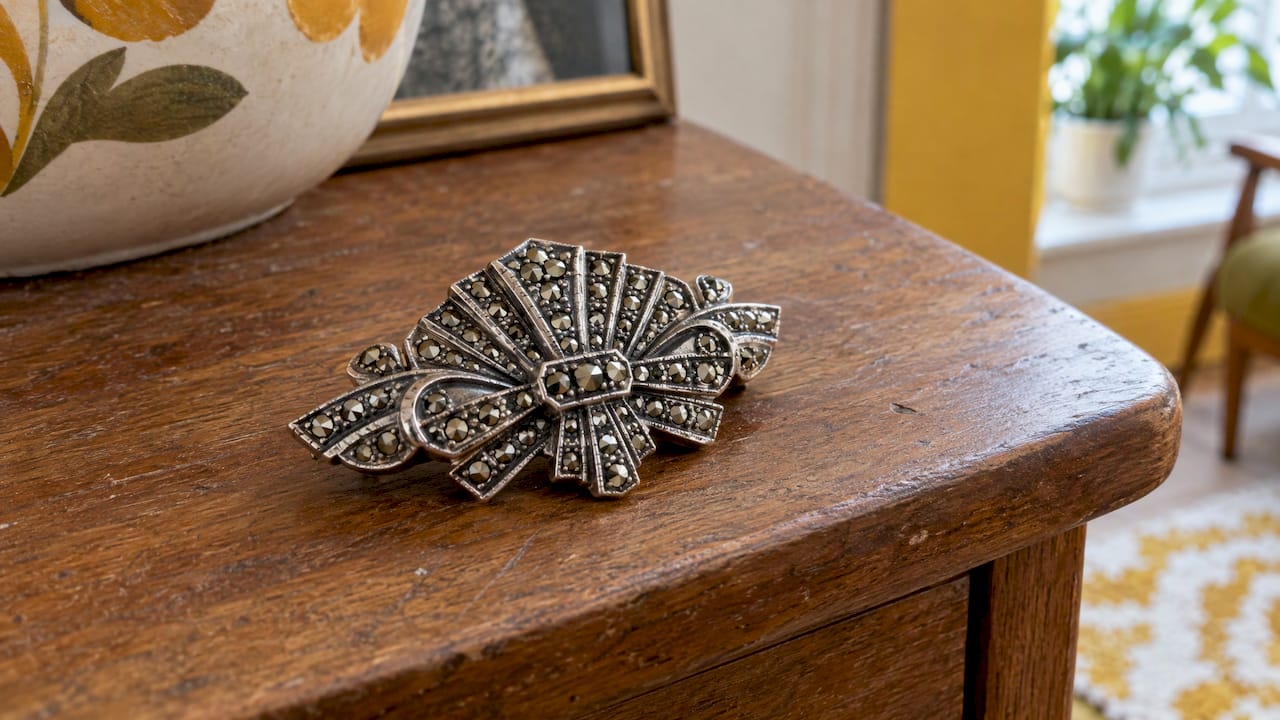
Sometimes the kindest option is no polish at all. Conservators at Winterthur Museum observe that tarnish can be aesthetically desirable, because it picks out the grooves and recesses of a design, and some silver was deliberately given a dark patina. A Victorian locket or an Art Deco marcasite piece often looks richer with its shadows intact. If the darkness sits in the detail, think twice before wiping it away.
Green Corrosion and Valuable Pieces
If you see extensive green crust, that is copper corrosion, and ICON advises treatment by a specialist conservator. The same guidance says owners should not remove even tarnish from items that are historically, personally or financially valuable. A family heirloom or a signed piece of real worth belongs with a metals conservator, whose approach is based on minimum intervention.
Drying, Storing and Wearing: The Habits that do Most of the Work
Good storage is where vintage jewellery is really looked after.
Dry thoroughly. Any lingering moisture in a hinge or behind a stone is how corrosion starts. Pat dry, then leave the piece on a clean cloth for a couple of hours before it goes anywhere near a box.
Keep pieces apart. BADA recommends individual boxes or wrapping in linen or pure cotton, and explains why: cut diamonds can scratch gold and silver. Soft pouches or a compartmented, lined box do the same job. Fasten chains and bracelets so they do not tangle and chafe.
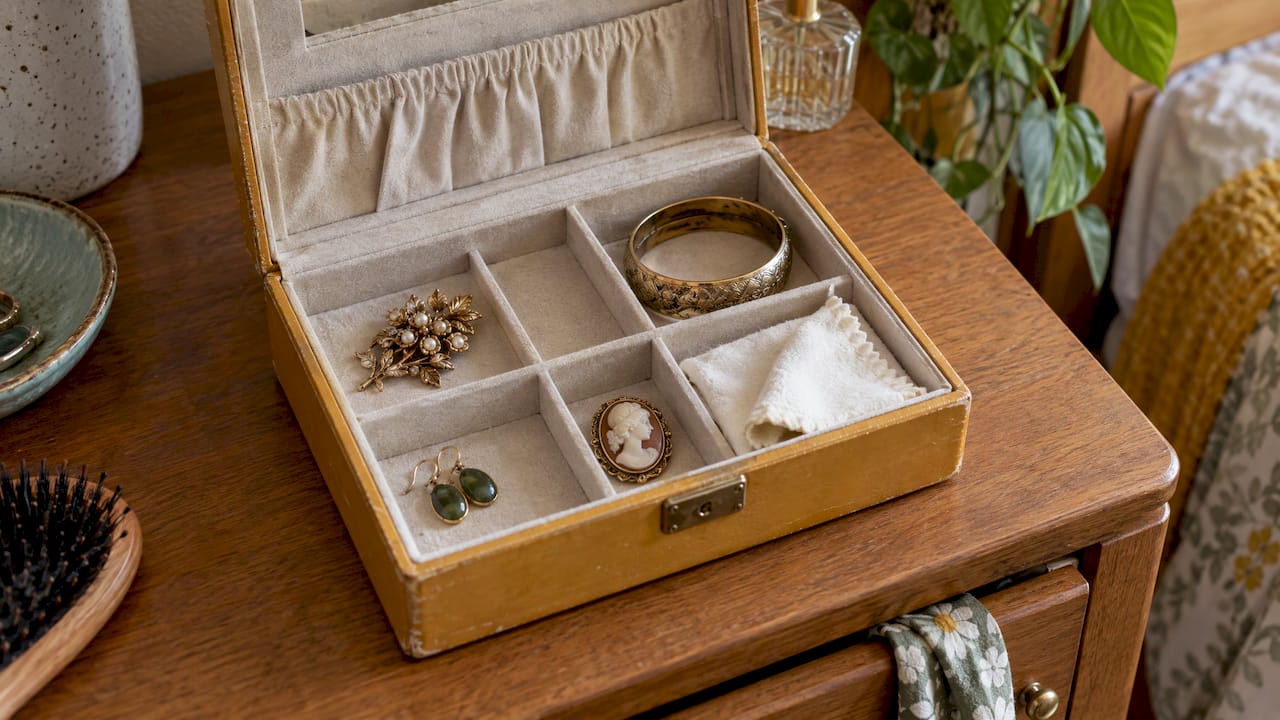
Protect silver from the air. For silver, the Canadian Conservation Institute recommends sealed enclosures with tarnish-preventing fabrics, such as Pacific Silvercloth, together with desiccant. A small zip bag or lidded box lined with tarnish-resistant cloth is a sensible home version.
Put jewellery on last, take it off first. Perfume, hairspray, lotions and chlorine are the everyday hazards. Take pieces off for swimming, washing up, gardening and sleeping.
Mind the display. Bright sunlight can fade some stones and dry out pearls, so a dressing-table display should sit away from the window.
Check what you wear. If a clasp feels loose or a stone rattles, stop wearing it and have it looked at. BADA suggests an annual check with a professional jeweller for antique pieces, which catches worn claws and weak catches before a stone is lost.
If your collection includes clothing as well, the same principles of airflow, dryness and no harsh chemicals apply. Our guides to caring for your vintage clothing and storing vintage garments for lasting preservation cover them.
Quick Reference: What to use and What to Avoid
Piece | Safe everyday care | Avoid |
Solid gold, plain | Warm water, mild soap, soft brush | Chlorine, rubbing against harder jewellery |
Gold with closed-set stones | Barely damp cotton bud, dry at once | Soaking |
Platinum | Mild soapy water, soft toothbrush | Worrying about patina; it polishes off if you wish |
Sterling silver | Dry cloth, silver cloth for light tarnish | Frequent polishing, dips on hollow or valuable pieces |
Silver plate | Soft dry cloth | Polishing, which can remove the plating |
Pearls | Soft damp cloth, put on last | Heat, ammonia, bleach |
Emeralds | Soft cloth only | Ultrasonic cleaners |
Costume jewellery | Dry cloth, damp cotton bud on metal | Soaking, ultrasonic cleaners, abrasive pastes |
Caring for Pieces You Wear for Work
Stylists and costume designers put jewellery through a different kind of life: quick changes, repeated fittings, handling by many hands. The same rules help. Keep each piece in its own pouch between fittings, clean costume pieces with a dry cloth rather than water, and label anything fragile so it is not tossed into a shared tray. Hold pieces by the metal, not the stones, and wipe them down after every shoot before they are stored. A little discipline here keeps period pieces camera-ready for the next production.
Finding Pieces Worth Caring For
Care is easier when you start with a piece in good condition. We handpick and carefully describe the vintage and retro items we sell, with a focus on authenticity and condition, so you know what you are bringing home before the first wipe of a cloth.
Our vintage jewellery collection is where to browse brooches, necklaces and more from across the decades, and our vintage accessories pair neatly with them.

If you are buying for someone else and are not sure of their taste, a My Vintage gift card lets them choose their own. For more on building a collection with confidence, our guide to collecting vintage jewellery and our seven essential collecting tips are good next reads.
When to Hand a Piece to a Specialist
Some pieces deserve a professional, and knowing which is part of caring for them well.
Valuable or sentimental pieces where tarnish, patina or wear tells part of the story. ICON’s advice is to know your collection and leave these to a metals conservator.
Extensive green corrosion on silver or copper alloys.
Loose stones, worn claws or weak clasps, which need a jeweller’s repair rather than home cleaning.
Unmarked gold you want tested, since older gold may carry no hallmark.
Pieces you cannot identify, such as a hallmark you cannot read or a stone whose hardness you do not know. Pause, and ask someone who can look at it in person.
When in doubt, do nothing irreversible. A piece that is merely a little dull can always be cleaned later, but a polished-off patina or a stripped plating cannot be restored.
Frequently Asked Questions
How do I clean vintage gold jewellery?
Use lukewarm water, a drop of mild soap and a soft brush, then rinse and dry thoroughly. Gold does not tarnish, but it is soft and scratches easily, so avoid abrasive pastes. Do not immerse closed-set pieces, because trapped water can corrode the metal behind the stones.
What should I do with tarnished vintage silver?
First check the hallmarks to see whether it is solid sterling or plate. For plain silver of no great value, a silver cleaning cloth handles light tarnish, applied gently. Remember each clean removes a little metal, so clean only when you need to, and store the piece in a sealed, tarnish-resistant enclosure afterwards.
Can I use an ultrasonic cleaner on vintage jewellery?
It is best avoided. Vibrations can loosen glued stones and foil backs on costume pieces, and ultrasonic cleaning damages the oil treatment on emeralds. A soft brush, mild soapy water and patience are kinder to vintage pieces.
Do all vintage jewellery pieces have hallmarks?
No. Precious metal pieces made in the UK are usually hallmarked, but older gold may be unmarked, and costume jewellery rarely carries a true hallmark. A stamp such as 925 added at the factory is a maker’s mark rather than an official guarantee, so for unmarked precious pieces a jeweller’s test is the reliable answer.
Sources
Recommended

Comments