


Vintage Novelty Brooches: Little Pieces of Personality

There is something wonderfully difficult to resist about a novelty brooch. While some jewellery is designed simply to sparkle, these little pieces often have something else in mind. A dog might peer from a lapel, a bunch of cherries might sit on a cardigan, a tiny bicycle could decorate a jacket and an elaborate bird might appear to have landed there entirely of its own accord.
For vintage collectors, that sense of fun is part of their charm. Novelty brooches can be beautifully made, gloriously kitsch, surprisingly sophisticated or downright peculiar — and sometimes all four at once.
They also offer a fascinating glimpse into the fashions and interests of the people who originally wore them. Animals, flowers, food, hobbies, travel, popular culture and everyday objects have all found their way into jewellery, turning something as small as a brooch into a miniature piece of social history.
What Is a Novelty Brooch?
“Novelty brooch” is a broad collecting term rather than a description of one particular construction or period. Generally, it refers to a brooch whose design represents a recognisable subject rather than being purely abstract or decorative.
Animals and birds are obvious favourites, but the category can become wonderfully eccentric. Vintage examples might depict musical instruments, vehicles, people, household objects, sporting equipment, fruit, insects, flowers, buildings or almost anything else a jewellery designer could transform into something wearable.

The boundaries are inevitably a little blurred. A realistic jewelled flower, for example, might simply be described as a floral brooch, while a brightly coloured bunch of googly-eyed daisies could feel unmistakably novelty. That ambiguity is part of the fun rather than something that needs a rigid rule.
What unites these pieces is personality. A novelty brooch is often as much a tiny illustration or conversation piece as it is an accessory.
Playful Jewellery Is Older Than You Might Think
It is tempting to associate novelty jewellery entirely with inexpensive twentieth-century costume pieces, but whimsical and figurative jewellery has a much longer history.
Jewellery makers had been taking inspiration from nature, animals and symbolic objects for generations. Nineteenth-century jewellery could incorporate elaborate naturalistic flowers, insects and other recognisable forms, while changing artistic movements brought their own interpretations of the natural and figurative world.
By the early twentieth century, even extremely luxurious jewellery could have a mischievous side. Around 1930, American jeweller Raymond C. Yard created extraordinarily detailed rabbit brooches for wealthy clients, including smartly dressed rabbit waiters carrying drinks. The humour is unmistakable, despite the decidedly serious materials of gold, diamonds, rubies and sapphires.
Novelty, then, did not necessarily mean cheap. What twentieth-century costume jewellery helped to do was make playful jewellery available in a much broader variety of materials, styles and price points.
When Costume Jewellery Got Creative
The growth of costume jewellery opened enormous possibilities for designers.
A brooch no longer needed precious gemstones to make an impact. Rhinestones, enamel, glass, imitation pearls, moulded plastics and base metals could provide colour, texture and sparkle, while manufacturing techniques made imaginative designs accessible to far more people.
This was particularly well suited to the novelty brooch. A tiny creature could have sparkling glass eyes; an enamelled flower could explode with colour; fruit could be rendered in brightly coloured plastic; and a simple metal shape could become recognisable through just a few cleverly placed details.

The results ranged from relatively realistic representations to unapologetic fantasy.
That variety is one reason novelty brooches remain such enjoyable vintage finds today. There is no single “novelty brooch look”. Two pieces made within a similar period might have almost nothing in common beyond the pin on the back.
Brooches in Wartime
The 1940s provide a particularly interesting example of jewellery responding to the world around it. During the Second World War, restrictions affected clothing and many materials, yet personal adornment certainly did not disappear. Brooches offered a relatively small way to add interest to otherwise practical clothing.
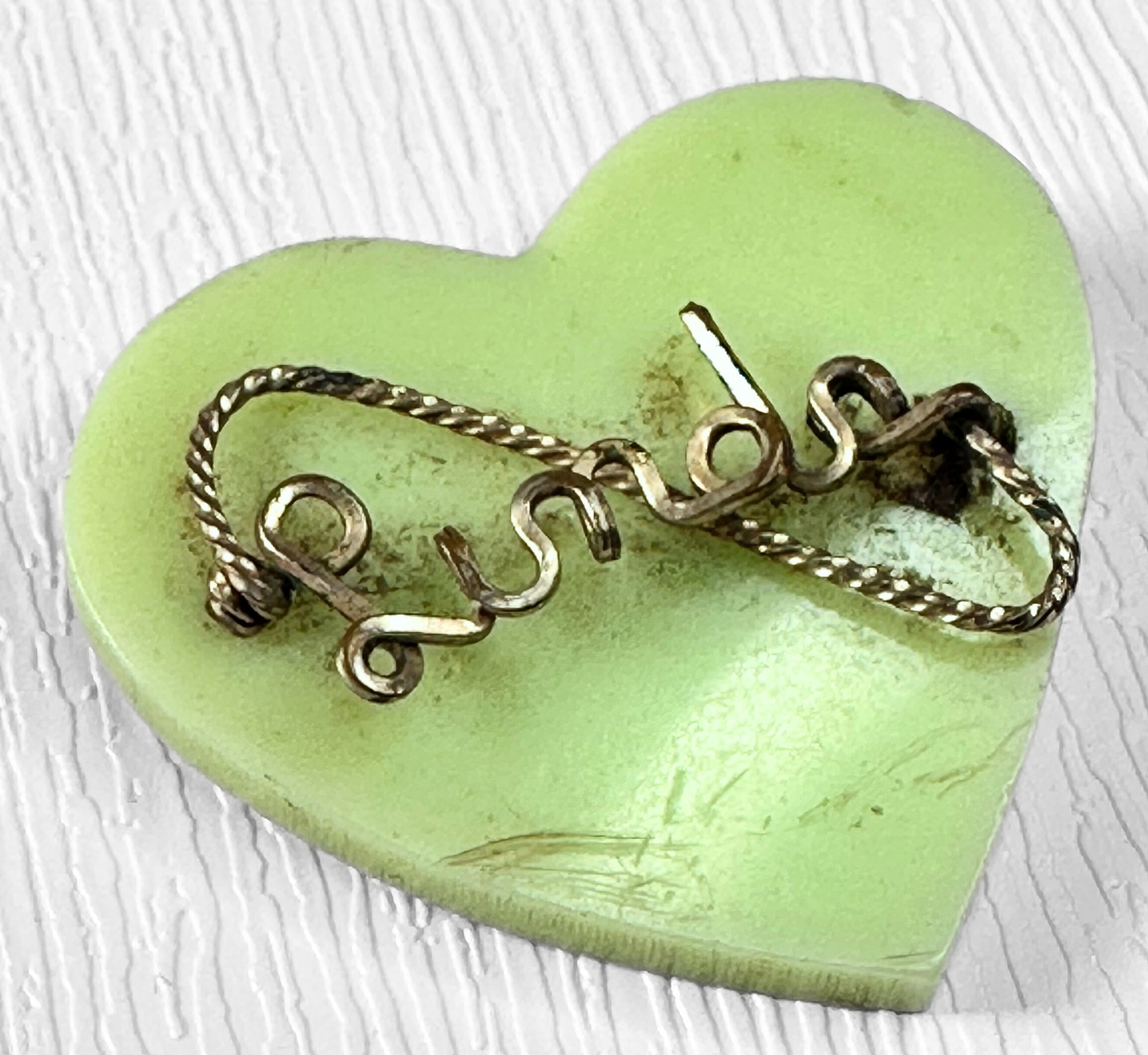
In the United States, patriotic and so-called sweetheart jewellery became especially popular. Flags, eagles, military insignia, stars and other patriotic motifs could express support for servicemen and women or commemorate personal connections to those serving. Costume jewellery companies including Coro and Trifari produced patriotic pieces.
Not every novelty brooch of the period carried such an obvious message, of course, but wartime jewellery demonstrates something important: these small accessories could communicate much more than fashion. A brooch might signal affection, allegiance, humour or identity — all without saying a word.
Animals, Birds and the Enduring Appeal of the Creature Brooch
If novelty brooches had a kingdom, animals would surely rule it.
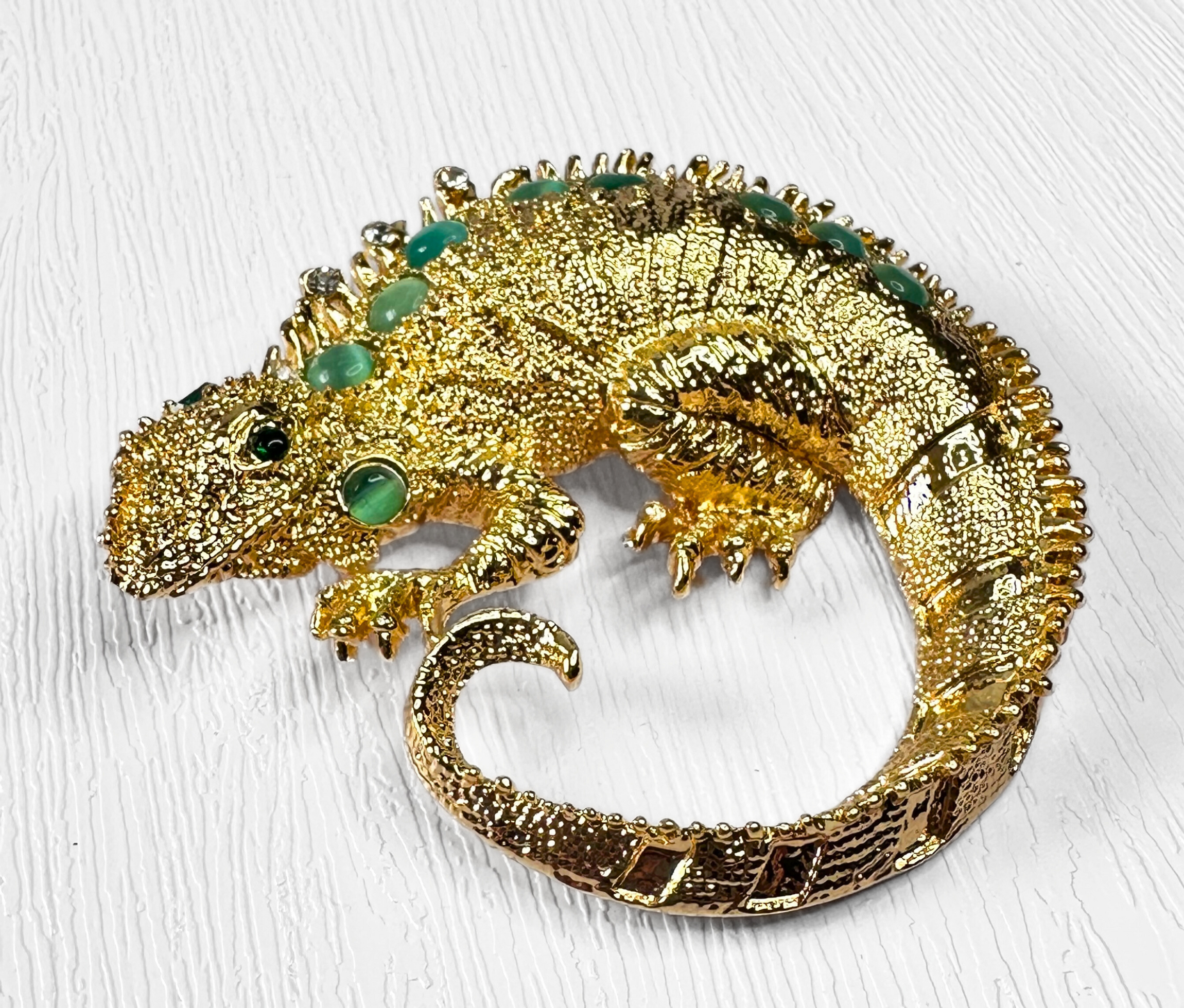
Dogs, cats, horses, elephants, fish, birds, butterflies and countless other creatures have been transformed into brooches, sometimes with remarkable realism and sometimes with very little concern for zoological accuracy.

Their popularity is easy to understand. Animal jewellery can be decorative while also feeling personal. A horse might appeal to a keen rider, a Scottie dog to somebody devoted to the breed, while a bird or butterfly can simply be chosen because it is beautiful.
Designers could also give animals expressions and character in a way that would be impossible with a purely geometric piece. An arched cat, startled owl or jaunty poodle immediately introduces humour.
Vintage examples can be found in everything from simple moulded plastic and carved wood to enamelled metal and elaborate rhinestone-set designs. As ever with vintage jewellery, material alone does not determine either age or quality.
Fruit, Flowers and Food You Can Wear
Food has always proved surprisingly wearable. Fruit in particular lends itself beautifully to novelty jewellery. Cherries, strawberries, grapes, apples and other colourful forms can be instantly recognisable even at a very small scale. Their rounded shapes and strong colours also translate particularly well into glass, plastic, enamel and beads.
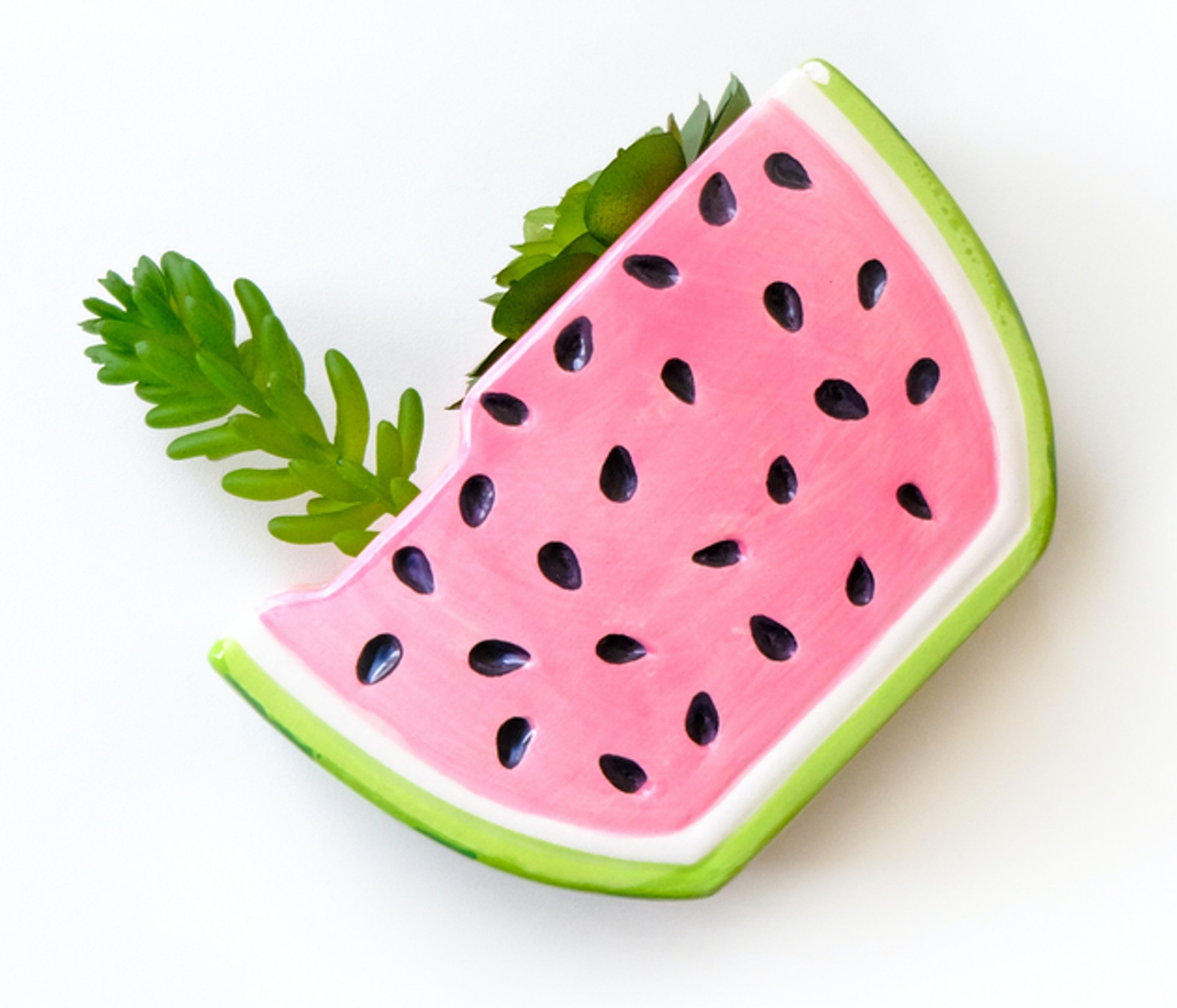
Flowers occupy slightly more complicated territory because floral jewellery can range from highly naturalistic fine jewellery to enormous, cheerful costume pieces. Yet some vintage flower brooches absolutely embrace the novelty spirit, particularly when colour, scale or movement is exaggerated.
And then there are the genuinely unexpected food designs. Once jewellery designers began treating the brooch as a miniature canvas, almost nothing was off limits.
That is perhaps one of the best things about collecting novelty pieces. Just when you think you have seen every possible subject turned into a brooch, another one appears to prove you wrong.
Hobbies, Holidays and Little Pieces of Personality
Novelty brooches could also say something about the wearer. A musical instrument might appeal to a musician. A tennis racquet, golf club or pair of skis could reference a favourite sport. Ships, aeroplanes, landmarks and other travel-related motifs could act as wearable reminders of holidays and places.
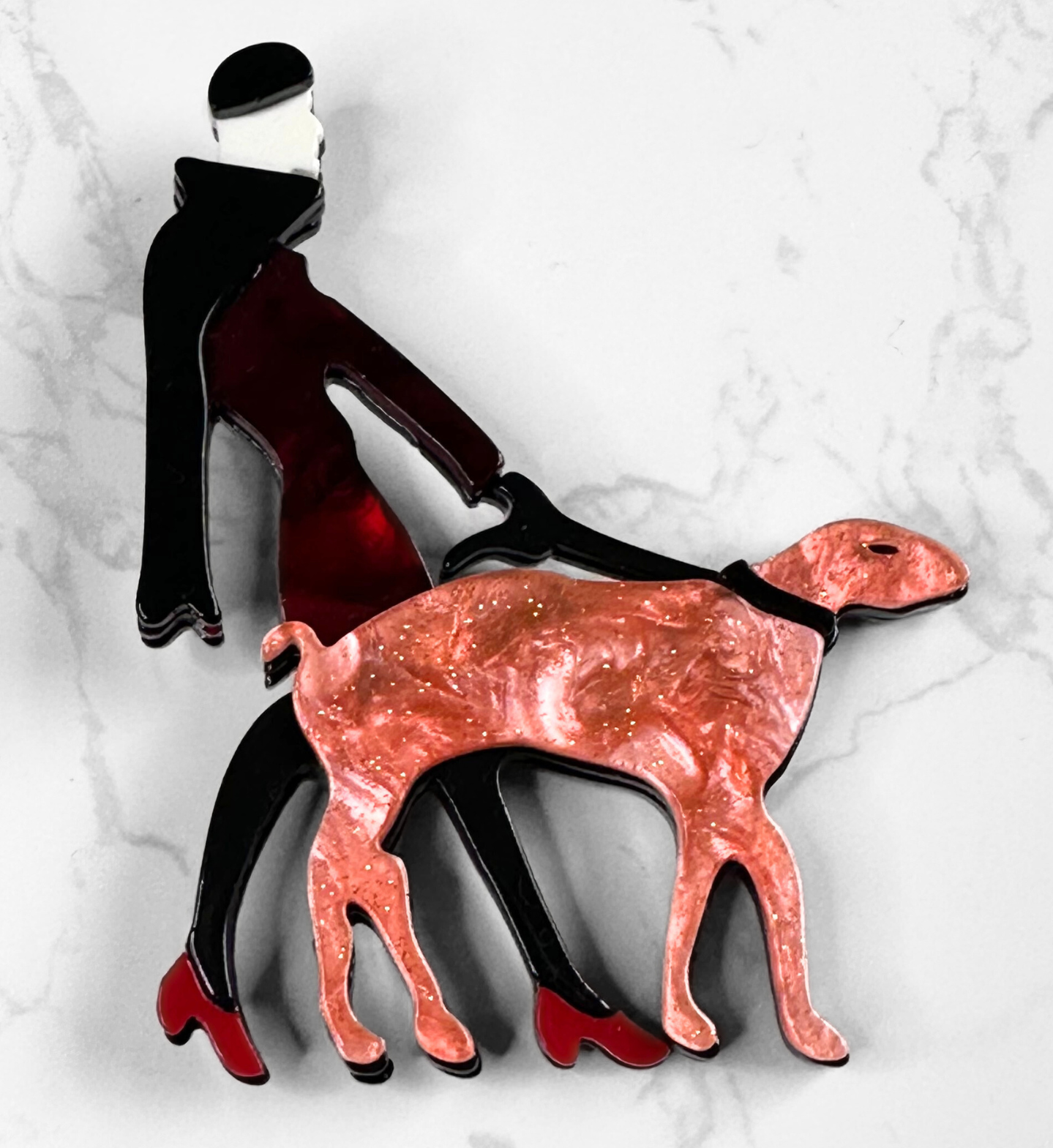
Some pieces were souvenirs; others simply borrowed the imagery of leisure and travel. Either way, they allowed jewellery to become more individual.
This is where novelty brooches differ rather wonderfully from many other accessories. Choosing one can feel almost like choosing a badge for your personality.
Someone selecting a tiny dachshund, glittering cocktail glass or miniature artist's palette is making a slightly different statement from someone choosing a conventional spray of rhinestones — even if both pieces are pinned to exactly the same jacket.
When Novelty Became Seriously Stylish
The line between novelty jewellery and serious design has never been particularly tidy.
Some of the most respected twentieth-century jewellers embraced humour and unusual subject matter. American modernist jeweller Sam Kramer, working in New York during the 1940s and 1950s, became known for playful, biomorphic jewellery and the use of unexpected found materials. His work demonstrates how humour in jewellery could coexist with genuine artistic experimentation.
At the other end of the fashion spectrum, novelty could also meet couture. A remarkable Christian Dior brooch made by Mitchel Maer in 1952–53 concealed a functioning music box within the jewellery. That is hardly an accessory content merely to sit quietly on a lapel.
These examples are useful reminders not to dismiss novelty jewellery as trivial. Humour, ingenuity and craftsmanship are perfectly capable of occupying the same tiny brooch.
How Can You Date a Vintage Novelty Brooch?
This is where a little caution is essential.
The subject of a brooch rarely provides a reliable date by itself. Cats have not belonged exclusively to one decade, nor have flowers, birds or strawberries. Even motifs that feel strongly associated with a particular era can be revived later.
Instead, look at the entire piece.
The fastening and hinge can provide clues, but as we discussed in our guide to vintage jewellery clasps, findings overlap across periods and may also have been repaired or replaced. Construction, materials, setting techniques, surface wear, soldering, maker's marks and overall design should all be considered together.
Materials require similar caution. Bakelite, for example, became enormously important in jewellery during the 1930s and could be moulded into imaginative forms, but not every colourful plastic brooch is Bakelite and not every plastic piece belongs to that decade.
Likewise, an old-looking pin fitting does not magically make a brooch old.
Experience comes from building up a picture from several clues rather than relying on one supposedly foolproof trick.
Signed and Unsigned Novelty Brooches
Turning a brooch over is always worthwhile.
A maker's name or mark can provide an excellent starting point for research, and numerous costume jewellery manufacturers produced imaginative figural and novelty designs during the twentieth century.
However, an unsigned brooch should not automatically be dismissed as inferior or uninteresting. Plenty of attractive vintage costume jewellery carries no obvious maker's mark, while marks themselves still need to be interpreted carefully.
Condition matters too, although expectations should be realistic. A vintage novelty brooch has usually had a life before reaching us. Minor surface wear or ageing may be entirely consistent with that history, while missing stones, damaged enamel, broken mechanisms or significant repairs deserve closer attention.
As with so much vintage jewellery, the aim is to understand what is in front of you rather than judge it solely by whether a famous name appears on the back.
Why Collect Vintage Novelty Brooches?
Perhaps the simplest answer is that they are fun.
Vintage collecting can occasionally become rather serious, with discussions of rarity, provenance, makers, materials and values. Novelty brooches cheerfully remind us that people have always worn things simply because they made them smile.
They are also wonderfully manageable collectables. A group can be built around a favourite animal, colour, material, subject or era without requiring an enormous amount of physical space.
For some collectors, the pleasure lies in finding increasingly unusual designs. For others, it is about wearing them. Brooches have the great advantage of being adaptable: they can decorate jackets, coats, dresses and knitwear, and a single small piece can completely alter the personality of an outfit. Most importantly, no two collections need look remotely alike.
How Should You Wear a Vintage Novelty Brooch?
There really is no need to make this complicated. A single novelty brooch can provide enough character on its own, particularly if the design is large, colourful or detailed. Pinning one to the lapel of a relatively simple jacket or coat allows it to become the focus.
Smaller pieces can also be grouped together, although it is worth considering the fabric beneath them. Vintage brooches can be surprisingly weighty, and delicate textiles may not appreciate having a substantial pin pushed through them.
Nor does a vintage brooch have to be styled with an entirely vintage outfit. In many cases the contrast is what makes it work. A quirky older brooch on a contemporary jacket, cardigan or denim piece can look far more natural than trying to recreate its original era from head to toe.
After all, novelty jewellery was made to attract attention. It seems rather a shame not to let it.
What Is Considered a Novelty Brooch?
A novelty brooch generally depicts a recognisable subject — perhaps an animal, person, object, food, vehicle or hobby — rather than being entirely abstract or purely ornamental. It is a broad collecting term, however, and there is no hard boundary separating novelty designs from other figural or decorative brooches.
Are Vintage Novelty Brooches Valuable?
Some certainly can be, but being old or amusing does not automatically make a brooch valuable.
Maker, rarity, design, materials, craftsmanship, condition, provenance and collector demand can all influence value. A signed example by a sought-after designer may command considerably more than a mass-produced unsigned piece, but unusual unsigned brooches can still be highly collectable. Value also changes with fashion and demand, so broad rules are rarely helpful.
How Can I Tell if a Novelty Brooch Is Really Vintage?
Start by examining the whole object rather than one feature. Look at the hinge and catch, how the components have been assembled, materials, signs of genuine wear, maker's marks and the overall style. Be particularly wary of claims that one fastening or material proves an exact decade. Vintage jewellery identification is usually about combining evidence.
What Are the Most Collectable Novelty Brooches?
There is no single category that every collector wants. Signed designer pieces, unusual figural designs, certain costume jewellery makers, scarce materials and particularly striking examples can all attract interest.
But novelty jewellery collecting is wonderfully subjective. For someone who has spent years searching for one particular breed of dog or an obscure musical instrument, the most desirable brooch in the world may be the one that finally fills that gap.
Tiny Jewellery with a Big Personality
Novelty brooches occupy a particularly joyful corner of vintage fashion. They show us that jewellery has never been solely about displaying wealth or following trends. It can commemorate, communicate, amuse and reveal something about the person wearing it.
A tiny bird, bunch of fruit or sparkling animal may seem insignificant beside the grander objects of fashion history, yet these are precisely the pieces that can make vintage feel human. Someone chose them. Someone pinned them carefully to a coat or dress. Perhaps somebody laughed when they saw them. Decades later, the best novelty brooches still have exactly the same effect.
And really, what more could you ask from a piece of jewellery?


Comments