


Vintage Platform Shoes: My Vintage Style Guide

Vintage platform shoes are defined by their thick, elevated soles and bold silhouettes, and they have shaped fashion from the 1940s straight through to the 1990s. Few styles carry quite the same visual authority. Whether you are drawn to the cork wedges of wartime Britain, the glittering disco boots of the 1970s, or the chunky retro platform heels that the Spice Girls made iconic, there is a richness to this footwear category that rewards proper exploration. At My Vintage, we have spent years sourcing and celebrating authentic pieces from every era, and platform shoes remain among the most sought-after finds in our collection.
How did vintage platform shoes evolve across the decades?
The story of classic platform footwear is one of reinvention. Each decade absorbed the platform silhouette and made it entirely its own, reflecting the social and cultural mood of the time.
The 1940s gave us the platform’s practical origins. Platform shoes surged in popularity from the 1930s onward, but the wartime decade shaped their construction in a very specific way. With leather and rubber rationed for military use, designers turned to cork, wood, and even painted canvas to build up the sole. The result was a wedge-heavy, solid-soled shoe that felt sturdy and purposeful. Salvatore Ferragamo’s famous cork wedges from this period are perhaps the most celebrated example, though similar styles appeared across British high streets as women sought height and style within wartime constraints. Cork and wood soles from this era are not merely stylistic choices. They are functional adaptations that now serve as reliable dating clues for collectors.

The 1950s saw platforms soften slightly, giving way to the kitten heel and stiletto as dominant forces. Platforms did not disappear, but they retreated into novelty and theatrical dressing rather than everyday wear. This is worth knowing if you are assessing a piece claimed to be from that decade.
Then came the 1960s and 1970s, and platforms returned with extraordinary confidence. Glam rock, disco, and the broader counterculture movement all embraced height and drama. Key shifts across these two decades include:
1960s mod platforms: Lower, geometric soles in patent leather and bold colours, popularised by designers like Mary Quant and the mod fashion movement centred on Carnaby Street in London.
1970s disco platforms: Taller, more theatrical constructions in suede, glitter fabric, and stacked wood. Biba and Terry de Havilland became synonymous with this era’s most extravagant designs.
1980s platform shoes: A more restrained but still present silhouette, often appearing in punk and new wave styling. Vivienne Westwood’s elevated creepers brought platforms into subcultural fashion with real force.
1990s revival: The most famous resurgence. The Spice Girls’ influence in the late 1990s brought chunky platform trainers and Buffalo boots into mainstream consciousness almost overnight. Yves Saint Laurent’s 1993 couture collection also reintroduced high platform heels to the luxury market, cementing the style’s return at both ends of the fashion spectrum.
Each of these periods left distinct material and aesthetic fingerprints on the shoes themselves, which makes the history genuinely useful rather than merely decorative knowledge.
What materials and construction define authentic vintage platforms?
Understanding how vintage platforms are built tells you as much about their era as any label or photograph. The construction is where authenticity lives.

The table below outlines the key materials and their associated decades:
Era | Sole material | Construction style | Typical heel type |
1940s | Cork, wood, painted canvas | Continuous wedge | Wedge, no separate heel |
1960s | Rubber, moulded plastic | Separate platform and heel | Block heel or low wedge |
1970s | Stacked wood, crepe, rubber | Separate platform with distinct heel | Stacked or sculpted heel |
1980s | Rubber, synthetic | Bonded platform | Chunky block or crepe |
1990s | Moulded plastic, rubber | Thick unit sole | Platform trainer or block |
The distinction between a continuous wedge and a separate platform with its own heel is one of the most reliable construction markers. 1940s pieces almost always use the continuous wedge because the materials available lent themselves to that form. By the 1970s, the separate platform and heel had become the dominant construction, allowing for more dramatic height combinations.
Comfort is also built into the geometry. The effective heel height of a platform shoe is calculated as the heel height minus the platform thickness at the forefoot. A shoe with a 100mm heel and a 50mm platform feels far less steep than a 100mm stiletto. This is why genuine 1970s disco platforms, despite their theatrical height, were worn for hours on dance floors. The platform does real ergonomic work.
Pro Tip: When assessing a potential vintage find, press your thumb firmly against the sole material. Genuine cork compresses very slightly and has a faintly grainy texture. Moulded foam or modern synthetic cork feels uniform and springy in a way that original cork does not.
Crepe soles, associated with 1950s and early 1960s styles, have a distinctive layered appearance and a slightly tacky surface when new. Aged crepe tends to harden and crack at the edges, which is actually a sign of authenticity rather than damage.
How to style vintage platform shoes for modern outfits
The joy of wearing vintage platforms today lies in knowing how to balance their visual weight. The sole is the statement. Everything above it should be chosen with that in mind.
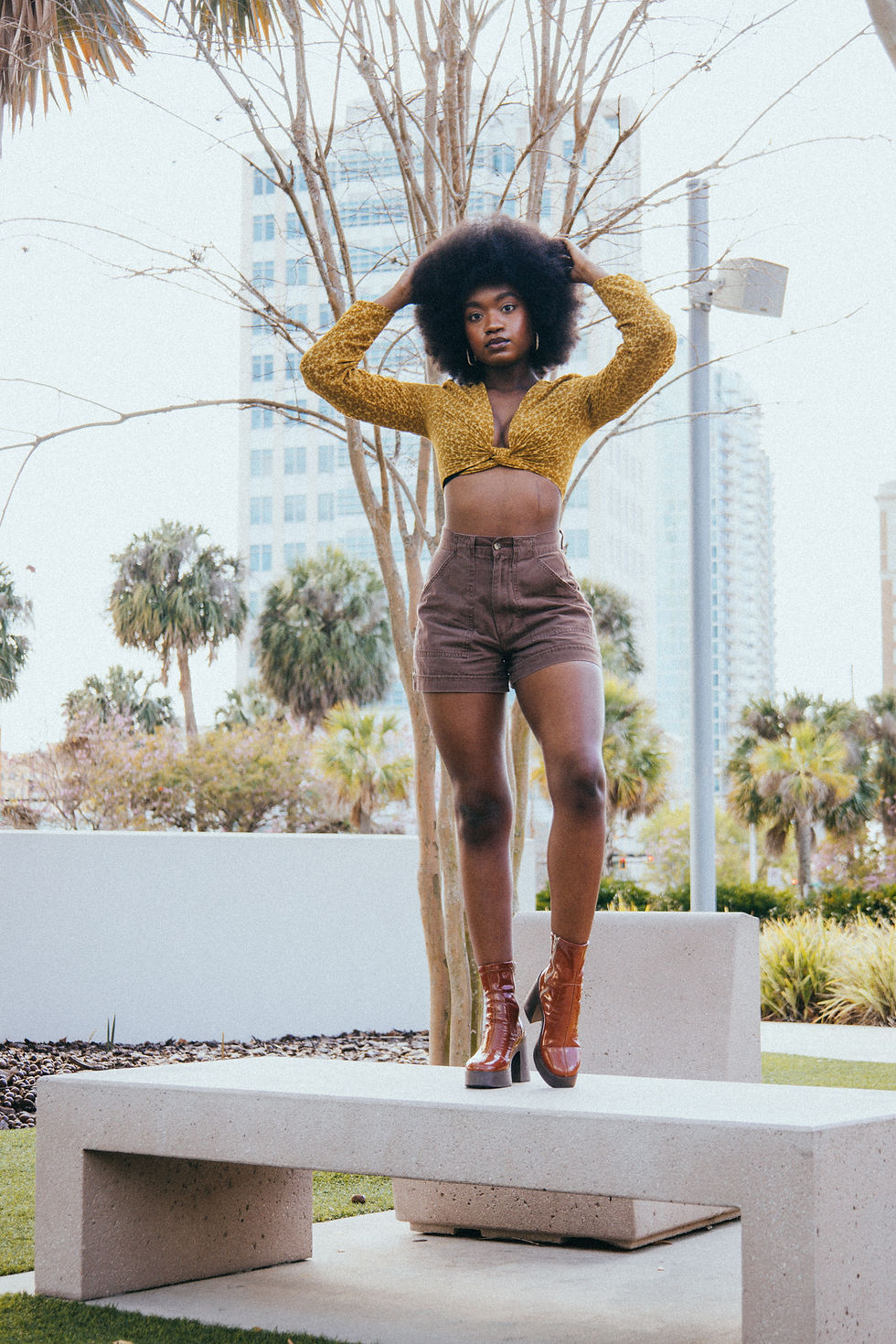
Follow these steps to build a confident, period-inspired look:
Start with proportion. Styling platform shoes requires balancing the visual volume at the ground with fitted or structured pieces above. A chunky 1970s platform boot worn with an oversized coat and wide trousers creates a silhouette where nothing reads clearly. Swap the coat for a fitted leather jacket and the look sharpens immediately.
Embrace wide-leg trousers for 1970s looks. 1970s disco platform boots pair authentically with wide-leg trousers or flared denim, which allows the platform to peek out at the hem rather than being swallowed by the fabric. This is the silhouette that defined the era, and it still works beautifully today.
Use denim cuts deliberately. For trendy platform sandals or lower retro platform heels, straight-leg or wide-leg jeans in a mid or high rise cut create the most flattering line. Skinny jeans with a heavy platform can look top-heavy unless the platform is relatively modest in height.
Match the decade’s aesthetic above the ankle. A pair of authentic 1970s rainbow platform heels calls for a wrap dress, a halter top, or a printed blouse. Wearing them with a minimalist contemporary outfit can work, but it reads as costume rather than style. The more you commit to the era’s language, the more cohesive the result.
Consider the occasion honestly. Platforms distribute weight more evenly than stilettos, making them genuinely more comfortable for extended wear. Even so, a 1970s platform with a 120mm heel and a 60mm platform is still a significant shoe. Reserve the most dramatic pieces for occasions where you will not be walking long distances on uneven ground.
Use accessories to anchor the era. 1940s wedges pair beautifully with tea dresses, victory rolls, and structured handbags. 1990s Buffalo-style platforms suit slip dresses, chokers, and oversized denim jackets. The accessories do as much work as the clothing in selling the period reference.
Pro Tip: For a modern take on stylish retro footwear that does not feel like fancy dress, pair one strong vintage piece with otherwise contemporary, neutral clothing. The platform becomes the focal point rather than part of a head-to-toe costume.
Our vintage shoe style guide covers additional pairing ideas across multiple footwear categories if you want to explore further.
How to authenticate and assess vintage platform shoes
Authenticating vintage platforms is a skill that develops with handling, but there are clear markers to look for from the outset.
Genuine vintage pieces carry the evidence of their era in their construction, materials, and wear patterns. Reproductions and modern reissues, however well made, tend to get the geometry slightly wrong. Checking sole thickness, platform height relative to heel height, and the curve from platform to heel are the most reliable verification tactics. Counterfeit or reproduction shoes often have incorrect proportions because the makers are working from photographs rather than original lasts.

Key authentication checks to carry out before purchasing:
Examine the sole material closely. Cork, wood, and crepe are period-specific. Uniform moulded rubber or EVA foam almost certainly indicates a modern piece, even if the upper looks convincingly vintage.
Check the stitching and lasting. Genuine vintage shoes from the 1940s to 1970s are almost always hand-lasted or cemented using period adhesives. The stitching on the welt, if present, should be slightly irregular rather than machine-perfect.
Look at the heel attachment. On authentic 1970s platforms, the heel is typically a separate component attached with a metal pin or screw through the insole. Modern reproductions often use a single moulded unit.
Assess the wear pattern honestly. Genuine vintage shoes show wear at the ball of the foot and the heel tip in patterns consistent with decades of use. Artificially distressed reproductions tend to show wear in the wrong places or with suspicious uniformity.
Research the label. British-made shoes from the 1960s and 1970s will carry maker’s marks from manufacturers such as Rayne, Dolcis, or Saxone. These names are worth cross-referencing against known production dates.
Our guide to authentic vintage clothing covers broader authentication principles that apply equally well to footwear.
Why vintage platforms still feel relevant
I have handled hundreds of vintage platform shoes over the years at My Vintage, and honestly no other footwear category tells such a vivid story through its construction alone. You can hold a 1940s cork wedge and feel the wartime ingenuity in its sole. You can slip on a pair of 1970s Terry de Havilland platforms and understand immediately why an entire generation danced in them all night.
What strikes me most is how wearable they remain. The geometry that made them comfortable in 1974 still works in 2026. Platforms reduce the effective ramp angle felt by the foot, which means a genuinely tall vintage platform can feel more comfortable than a much lower modern stiletto. That is not nostalgia talking. It is physics.

My advice to anyone new to collecting or wearing vintage platforms is to start with the 1970s. The range of styles from that decade is extraordinary, the construction quality is generally excellent, and the pieces are still findable at reasonable prices. Explore the 1970s disco fashion world alongside the shoes and you will quickly develop an eye for what belongs together. Wear them with confidence. These shoes were made to be seen.
Complete your vintage look with My Vintage
At My Vintage, we curate pieces that bring the whole vintage aesthetic to life, from clothing and footwear through to the rooms you live in. Our top ten vintage shoes and boots selection is a wonderful starting point for building a collection. And if you want to extend that vintage sensibility into your home, our original 1950s atomic magazine rack is a genuinely beautiful piece of mid-century design that sits perfectly alongside a well-curated vintage wardrobe. Authentic, considered, and full of character.
Frequently Asked Questions
What makes a platform shoe “vintage”?
A platform shoe is generally considered vintage when it dates from at least 20 to 30 years ago, placing current vintage pieces in the 1990s and earlier. Authentic vintage platforms carry era-specific construction materials such as cork, wood, or crepe soles that modern reproductions rarely replicate accurately.
Which decade produced the most iconic vintage platform styles?
The 1970s produced the most celebrated classic platform footwear, with designers like Terry de Havilland and Biba creating theatrical stacked-heel and wedge styles in suede, glitter fabric, and leather. The late 1990s runs a close second, largely due to the Spice Girls’ influence on chunky platform trainers and moon boots.
Are vintage platform shoes comfortable to wear?
Many vintage platforms are genuinely comfortable because the platform thickness reduces the effective heel angle felt by the foot. A shoe with a tall heel and a substantial platform can feel less steep than a much lower stiletto, making 1970s disco platforms surprisingly wearable for extended periods.
How do I spot a reproduction rather than an authentic vintage platform?
Check the sole material, heel attachment method, and wear patterns. Authentic vintage pieces use cork, wood, crepe, or period rubber, while reproductions typically use uniform moulded foam or EVA. Genuine vintage shoes also show natural wear at the ball of the foot and heel tip consistent with decades of use.
Where can I find authentic vintage platform shoes in the UK?
My Vintage is a trusted source for authenticated vintage footwear, with pieces sourced from the 1940s through to the 1990s. Specialist vintage fairs, reputable online vintage retailers, and estate sales remain the most reliable routes to genuine finds rather than modern reproductions.
Recommended


Comments