


Vintage Rollerskates: Your Guide to Retro Wheels

Vintage rollerskates are skate boots designed and manufactured during the 1970s, 1980s, and 1990s, prized today for their classic construction, nostalgic charm, and growing collectible status. Whether you are drawn to the gleaming chrome plates of a 1970s Riedell boot, the bold colourways of old school roller skates from the disco era, or the satisfying weight of a Hyde leather quad skate, these pieces carry a story that modern reproductions simply cannot replicate. At My Vintage, we have a deep love for anything that captures the spirit of a bygone era, and retro roller skates sit right at the heart of that passion. This guide covers everything you need to know, from spotting an authentic pair to styling them with confidence.
What makes vintage rollerskates genuinely authentic?
Authentic vintage rollerskates are defined by their original materials and construction methods, not merely their age or appearance. Genuine pairs from the 1970s and 1980s typically feature natural leather boots, cast iron or heavy aluminium plates, and nylon or early urethane wheels. Brands like Riedell, Hyde, and Labeda built skates with a solidity and craftsmanship that reflected the era’s manufacturing standards. That weight and quality is part of what makes them so appealing to collectors today.
The challenge is that authentic vintage materials deteriorate over decades. Leather becomes brittle, metal plates develop rust, and original bushings can crack or crumble. This means a pair that looks stunning in a photograph may need significant restoration before it is safe to skate in. Collectors should assess condition carefully before active use, and restoration often demands specialist skills.
Modern retro reproductions, by contrast, use synthetic leather or PVC uppers, lightweight aluminium or nylon plates, and ABEC 7 bearings with urethane wheels that deliver a vintage look with far greater durability. Many are also vegan-friendly. They are not authentic vintage, but they are a practical and stylish choice for skaters who want the aesthetic without the fragility.

Characteristic | Authentic vintage skates | Modern retro reproductions |
Boot material | Natural leather, often stiff with age | Synthetic leather or PVC, flexible |
Plate material | Cast iron or heavy aluminium | Lightweight aluminium or nylon |
Bearings | Original nylon or early ABEC grades | ABEC 7 bearings, consistent quality |
Wheels | Early urethane or nylon, often degraded | 78a–82a urethane, reliable grip |
Collector value | High, especially with original packaging | Low to moderate |
Typical price range | Variable, often higher for rare pairs | £60–£150 range, frequent discounts |
Best suited for | Display, collection, careful restored use | Active skating, everyday wear |
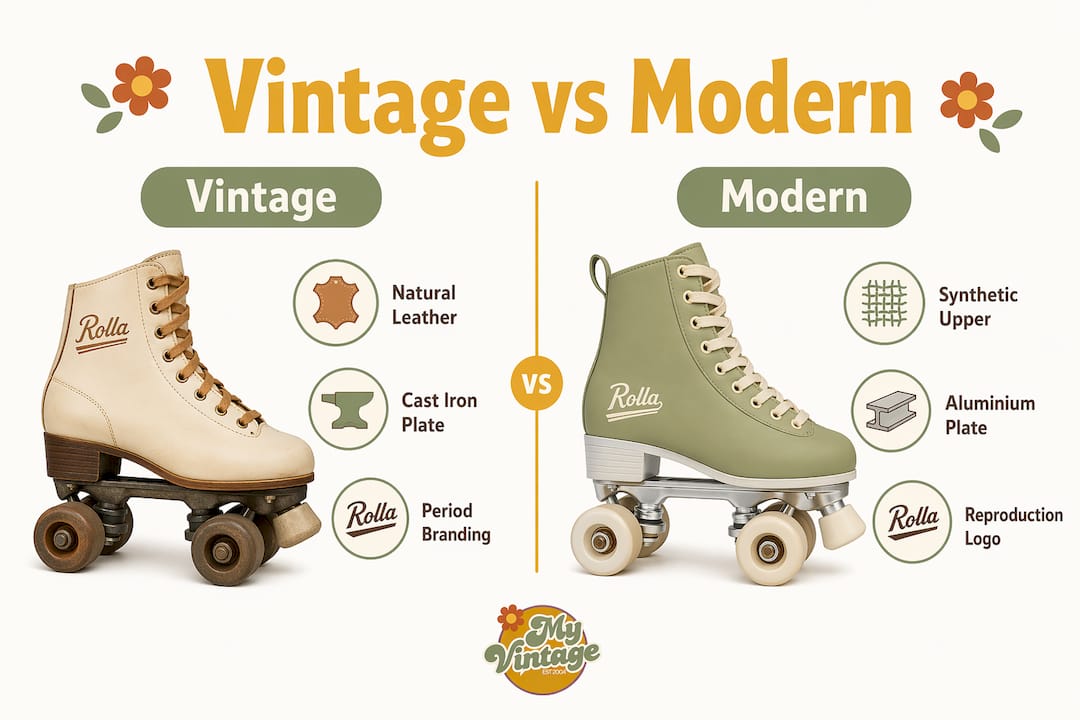
The price gap between the two categories is significant. A rare, well-preserved pair of 1970s Riedell skates with original documentation can command a premium that a modern reproduction will never approach. Original boxes or warranty cards can significantly increase collectible value, sometimes doubling the resale price. That single detail separates a good find from a great one.
How to buy vintage rollerskates: sizing, brands, and sourcing
Sizing is the first thing to get right when you buy vintage skates, and it is trickier than it sounds. Sizing varies greatly by manufacturer and region, making careful size conversion essential for comfort. A US size 7 in a 1980s Hyde boot will not match a modern UK size 7, and EU sizing adds another layer of complexity. Always use a brand-specific fit guide rather than assuming your usual shoe size will translate directly. My Vintage’s guide to vintage size conversion is a good starting point for getting this right.
When it comes to brands, a few names stand out across different eras and price points:
Riedell is the gold standard for authentic vintage quad skates, particularly from the 1970s and 1980s. Their leather boots were built for serious skaters and hold their value well.
Hyde produced classic skates with strong leather construction and are a favourite among collectors of old school roller skates.
Labeda is known for quality wheels and plates, often found on higher-end vintage setups.
Impala sits in the modern retro category, offering colourful classic roller skates with reliable ABEC bearings at an accessible price point.
Nike produced a limited run of rollerskates in the late 1970s and early 1980s that are now highly sought after as collectible roller skates.
For sourcing, your options split into three main channels. Specialist vintage marketplaces and auction houses like eBay and Etsy carry a wide range of authentic pairs, though quality varies enormously. Dedicated skate retailers stock modern retro reproductions with reliable sizing and returns policies. Charity shops, car boot sales, and estate sales remain the best places to find genuine bargains on classic roller skates, particularly outside major cities. My Vintage’s guide on how to buy vintage online covers the key steps for shopping safely across all these channels.
Pro Tip: When buying authentic vintage skates, always ask the seller for photographs of the plate underside, the boot lining, and any original packaging. Structural fatigue in old plates or bushings can compromise a skate’s safety entirely, and these areas reveal condition that exterior shots will not show.
How do you care for and maintain vintage rollerskates?
Caring for authentic vintage skates requires a different approach to caring for modern reproductions. Authentic vintage skates from the 1970s and 1980s need gentle handling to avoid permanent damage to aged leather or nylon. The materials are often 40 or more years old, and harsh chemical cleaners will strip natural oils from leather, accelerating cracking and decay.

For authentic leather boots, follow these principles:
Clean with a soft, barely damp cloth to remove surface dirt. Never soak the leather.
Condition dried leather with a specialist leather conditioner such as Leather Honey or Saphir Renovateur. Apply sparingly and allow it to absorb fully before storing.
Treat rust on metal plates with a fine wire brush and a light application of WD-40, then dry thoroughly. For significant rust, a professional restorer is the safer choice.
Store skates in a cool, dry place away from direct sunlight. Wrap them in acid-free tissue paper rather than plastic bags, which trap moisture.
Never store vintage skates in a damp garage or loft. Humidity is the fastest route to irreversible damage.
The principles here overlap closely with caring for vintage leather clothing and accessories. My Vintage’s advice on caring for vintage clothing applies directly to leather skate boots and is worth reading alongside this guide.
For modern retro reproductions, maintenance is more straightforward. Clean synthetic uppers with a mild soap solution and a soft brush. Check ABEC bearings periodically by spinning each wheel and listening for grinding or resistance. Replace urethane wheels when they show uneven wear, as worn wheels affect both performance and safety. Adjustable trucks on modern skates can be tightened or loosened with a standard skate tool to suit your skating style.
Pro Tip: For authentic vintage skates you plan to display rather than skate in, a light coat of Renaissance Wax applied to metal plates will protect against further oxidation without damaging original finishes. It is the same product used by museum conservators on metal artefacts.
How to style vintage rollerskates and connect with the retro skating community
Vintage rollerskates are as much a fashion statement as they are sporting equipment. The resurgence in vintage disco skates is culturally driven by nostalgia and the desire for self-expression, balanced with modern safety awareness. Roller rinks across the UK have seen a genuine revival, and the aesthetic that goes with them is wonderfully specific.
Outfit pairings that work brilliantly with classic roller skates include:
High-waisted flared trousers or wide-leg jeans in earthy 1970s tones, paired with a fitted satin blouse or a bold printed top.
Vintage athletic shorts with a striped polo shirt for a 1980s roller rink look.
A wrap dress in a geometric print with white or cream boot-style skates for a pure 1970s disco feel.
Tube socks pulled high over the boot cuff, which is both period-accurate and genuinely practical for ankle comfort.
The community around retro skating is warm and genuinely welcoming. Roller discos run regularly in cities including London, Manchester, and Bristol, and many attract a crowd that takes the vintage dress code seriously. Online, communities on Instagram and Reddit gather around hashtags like #rollerdisco and #vintageskates, sharing finds, restoration projects, and outfit inspiration.
Intermediate and advanced skaters often move beyond entry-level retro models as their skills develop. High-grade aluminium plates and reinforced boot structures offer the precision needed for artistic skating and dance moves. Blending the visual authenticity of a vintage-style skate with modern safety features like proper ankle support and quality bearings is the approach most experienced skaters recommend.

Key takeaways
Authentic vintage rollerskates and modern retro reproductions serve different purposes: originals reward collectors and careful restorers, while quality reproductions deliver the classic look with safe, durable performance for active skaters.
Point | Details |
Authenticity markers | Original leather, cast iron plates, and period branding distinguish genuine vintage skates from reproductions. |
Documentation adds value | Original boxes and warranty cards can significantly increase the resale value of collectible roller skates. |
Sizing needs care | Always use brand-specific size guides, as manufacturer sizing varies widely across eras and regions. |
Maintenance differs by type | Authentic vintage leather needs conditioning and dry storage; modern retro skates need bearing checks and wheel rotation. |
Style and community | Retro skating culture is thriving, with roller discos and online communities offering real connection for enthusiasts. |
Complete your retro world with My Vintage
If vintage rollerskates have sparked your love for the whole retro lifestyle, there is so much more to explore. My Vintage has been curating authentic vintage pieces since 2004, from clothing and accessories to the kind of homeware that makes a room feel genuinely of its era.
A pair of classic skates deserves a setting to match. My Vintage stocks original vintage homeware pieces, including this 1950s atomic magazine rack that captures the mid-century spirit perfectly. Whether you are building a collection or simply surrounding yourself with things that have real history, My Vintage is the place to find them. Browse the full range at myvintage.uk and find something that speaks to you.
Frequently Asked Questions
What are vintage rollerskates?
Vintage rollerskates are quad skate boots manufactured during the 1970s, 1980s, or 1990s, typically featuring natural leather construction, metal plates, and period-specific styling. They are valued by collectors and retro lifestyle enthusiasts for their craftsmanship and nostalgic appeal.
How do I tell authentic vintage skates from modern retro ones?
Authentic vintage skates use natural leather, cast iron or heavy aluminium plates, and show genuine age-related wear. Modern retro reproductions use synthetic materials and ABEC 7 bearings and are built for active skating rather than collecting.
Where can I find vintage rollerskates to buy?
Premium online vintage retailers eBay, Etsy, charity shops, and auctions are the most reliable sources for authentic pairs. Specialist skate retailers stock modern retro reproductions with consistent sizing and returns policies.
Do original boxes affect the value of collectible roller skates?
Original packaging and documentation can significantly increase value, sometimes doubling the resale price of a collectible pair. Always ask sellers about original accessories before purchasing.
What size should I buy for vintage rollerskates?
Never assume your standard shoe size will match a vintage skate size. Manufacturer sizing varies considerably across brands and regions, so always consult a brand-specific fit guide before buying.
Recommended


Comments