


Vintage Ties: A Timeless Style Guide
What Makes a Tie Vintage?

A vintage tie is far more than a practical accessory; it's a small piece of fashion history. From bold 1970s geometric prints to the slim, sophisticated silhouettes of the 1960s, vintage ties reflect the changing tastes, craftsmanship and personalities of the decades in which they were made. While fashions have evolved over the years, a well-made tie never really goes out of style.
Most collectors consider a tie to be vintage once it is at least 20 years old, although many of the most sought-after examples date from the 1940s through to the 1980s. These ties often feature high-quality fabrics such as silk, wool and rayon, along with distinctive patterns and colours that are rarely found in modern designs. Many were also made with exceptional attention to detail, resulting in beautifully finished pieces that have stood the test of time.
Whether you're a vintage enthusiast, a menswear collector or simply looking for something more distinctive than the average high street tie, vintage examples offer character and individuality that are difficult to replicate. They tell the story of changing fashions while remaining just as wearable today as when they were first tied around a collar decades ago.
The History of the Necktie
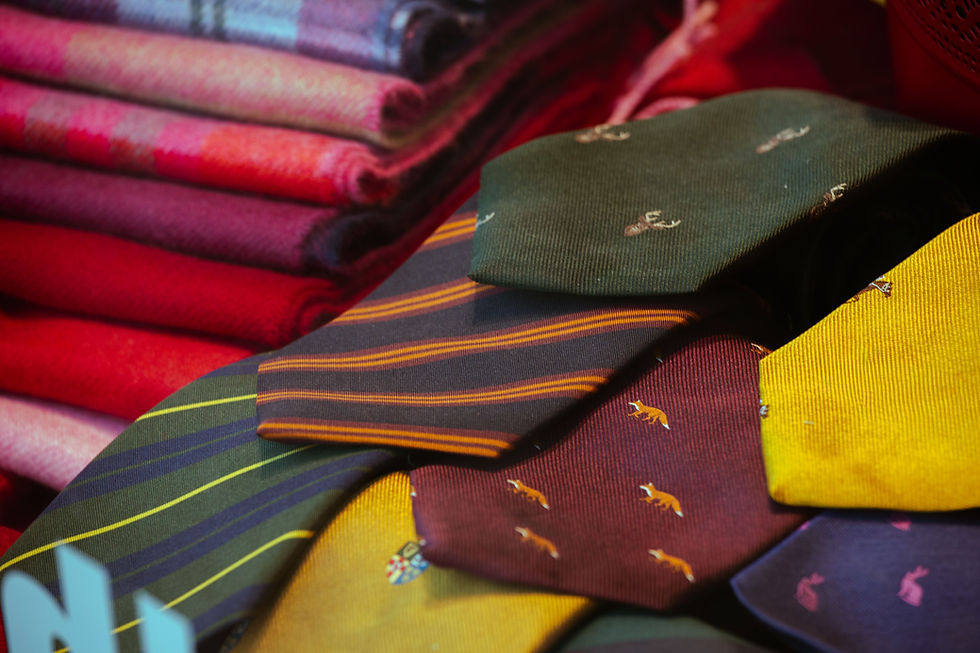
The modern necktie can trace its origins back to the seventeenth century, when Croatian soldiers wore knotted neckcloths as part of their military uniform. These decorative scarves caught the attention of the French court, where they evolved into the elegant cravat, quickly becoming a symbol of refinement and status across Europe.
During the nineteenth century, men's neckwear became increasingly practical and varied in style. As formal tailoring developed, simpler neckties gradually replaced the elaborate cravat, creating the foundation for the ties we recognise today. By the early twentieth century, improvements in cutting techniques allowed ties to drape more naturally, while new fabrics and manufacturing methods made them widely available.
Throughout the decades, changing fashions transformed the humble tie into a statement accessory. The wide, bold designs of the 1940s gave way to the sleek, narrow styles of the 1960s, before vibrant colours and oversized patterns defined the 1970s. By the 1980s, power dressing brought confident silk ties featuring striking stripes, geometric prints and rich colours into offices around the world.
Although dress codes have become more relaxed in recent years, the necktie remains an enduring symbol of classic style. Vintage ties continue to be appreciated not only for their quality and craftsmanship but also for their ability to add personality, colour and a touch of nostalgia to both formal and everyday outfits.
Vintage Tie Styles Through the Decades
One of the most enjoyable aspects of collecting vintage ties is seeing how dramatically fashions changed from decade to decade. While the basic purpose of the tie remained the same, its width, colours, fabrics and patterns evolved alongside wider trends in menswear.
The 1940s saw bold, expressive ties become increasingly popular. Wider blades, hand-painted designs and striking geometric patterns reflected a period of optimism and individuality following the Second World War. During the 1950s, ties became slightly more refined, with elegant silk prints, subtle motifs and classic stripes complementing the sharply tailored suits of the era.
By the 1960s, slimmer ties had become synonymous with Mod fashion. Clean lines, minimalist patterns and narrow silhouettes perfectly matched the decade's sleek tailoring, creating a look that remains effortlessly stylish today. The 1970s embraced colour and personality, with wide ties featuring oversized florals, abstract prints and rich earthy tones becoming a defining feature of the decade.
The 1980s introduced power dressing, and ties became bolder once again. Luxurious silk fabrics, confident stripes and vibrant patterns reflected the decade's love of statement style. Today, each of these distinctive looks offers collectors a fascinating glimpse into the changing tastes of twentieth-century fashion.
Why We Love Vintage Ties
At My Vintage, we believe that the smallest details often make the biggest difference, and vintage ties are a perfect example. While they may be a relatively modest accessory, they have the power to transform an outfit, adding colour, personality and individuality in a way that few other pieces can.

We also appreciate the exceptional quality found in many vintage ties. Beautiful silks, rich wool blends and carefully finished linings are a reminder of a time when accessories were made to last. Combined with distinctive patterns and timeless craftsmanship, they offer something that modern mass-produced ties often struggle to replicate.
Perhaps most importantly, vintage ties allow personal style to shine through. Whether paired with a classic tailored suit, a tweed jacket or even a more contemporary outfit, they offer an effortless way to introduce character without feeling overdone. From understated elegance to bold retro flair, there is a vintage tie to suit every taste.
For us, that's the enduring appeal of vintage menswear. It's not about following trends or dressing for a particular era—it's about celebrating quality, craftsmanship and the confidence that comes from wearing something truly unique.
Frequently Asked Questions
What makes a tie vintage?
Most vintage enthusiasts consider a tie to be vintage once it is at least 20 years old. However, the most collectible examples are often those dating from the 1940s to the 1980s, reflecting the distinctive styles and craftsmanship of those decades.
Are vintage ties still fashionable?
Absolutely. Vintage ties are a timeless accessory that can be worn with both classic tailoring and modern outfits. Whether you prefer understated elegance or bold retro patterns, a vintage tie adds individuality and character that never goes out of style.
Which vintage ties are the most collectible?
Collectors often look for ties made from high-quality silk or wool, unusual prints, designer labels and examples from iconic periods such as the 1940s, 1960s and 1970s. Condition and originality also play an important role in determining collectability.
How should vintage ties be stored?
Vintage ties should be stored flat or gently rolled in a cool, dry place away from direct sunlight. Avoid leaving them tightly knotted for long periods, as this can permanently crease the fabric and place unnecessary strain on the stitching.

Comments