


What is Ethical Fashion? Principles, Impacts and How to Choose
Ethical fashion and sustainable fashion are not the same thing, yet the two terms are used interchangeably so often that genuine confusion has taken root. Ethical fashion is not just about eco-friendly fabrics; it’s about respecting workers, communities, and the planet in equal measure. The fashion industry accounts for roughly 10% of global carbon emissions, and less than 2% of garment workers earn a living wage. Those are not abstract statistics. They represent real lives and real consequences. In this article, we will cut through the noise, define what ethical fashion truly means, explain how it works in practice, and give you genuinely useful steps to make better choices.
Table of Contents
How does ethical fashion work? Certifications, methods, and real-world impact
Why ethical fashion matters: The costs of fast fashion and benefits of conscious choices
Nuances and controversies: Greenwashing, affordability and other debates
How to make ethical choices: Practical steps for conscious fashion
Cutting through the noise: Why true ethical fashion requires system change and individual resolve
Key Takeaways
Point | Details |
Ethical fashion explained | Ethical fashion goes beyond green materials to include fair labour, transparent supply chains, and community respect. |
Certifications and proof | Look for globally recognised marks like GOTS and Fairtrade to verify ethical standards. |
Fast fashion’s true cost | Fast fashion drives social and environmental harm, but shifting behaviours and choosing well-made, vintage or ethical items reduce impact. |
Greenwashing is common | Misleading claims abound; demand clear data, third-party certification, and detailed company transparency. |
Small actions matter | Choosing secondhand, upcycling, and caring for your clothing helps propel real change across the industry. |
Defining Ethical Fashion: What does it actually mean?
Ethical fashion is a framework for producing and consuming clothing in a way that respects people, communities, and the natural world. It is broader than sustainability, though the two concepts overlap considerably. Where sustainability tends to focus on environmental outcomes, ethics reaches into the human dimension: who made your clothes, under what conditions, and for what pay.
At its core, ethical fashion prioritises human dignity, environmental sustainability, transparent supply chains, fair labour, and responsible materials. That is quite a list, and it is worth unpacking each element.
The key principles of ethical fashion include:
Fair trade and fair wages: Workers throughout the supply chain receive pay that reflects the true cost of living, not the minimum a brand can negotiate.
Safe working conditions: Factories and workshops meet health and safety standards, without excessive hours or unsafe environments.
Environmental stewardship: Brands minimise harm through low-impact dyeing, reduced water use, and responsible waste management.
Artisan and community support: Small-scale makers and traditional craft skills are valued and fairly compensated.
Transparent supply chains: Brands disclose where and how garments are made, making accountability possible.
Responsible materials: Fibres are chosen for their ethical sourcing components, from organic cotton to recycled textiles.
Fast fashion sits at the opposite end of this spectrum. It prioritises speed and low cost above all else, externalising the true costs onto workers and ecosystems. Understanding the benefits of sustainable fashion alongside ethical principles gives you a fuller picture of what conscious consumption can achieve.
“Ethical fashion is not a niche concern. It is a framework for ensuring that every hand involved in making a garment is treated with dignity, and that every material used leaves the smallest possible mark on our shared world.”
The distinction matters because a garment can be made from organic cotton yet still be sewn in a factory with exploitative labour practices. Equally, a brand can pay fair wages yet use heavily polluting synthetic dyes. True ethical fashion asks both questions at once.
How does Ethical Fashion Work? Certifications, Methods, and Real-World Impact
Knowing the definition is one thing. Seeing how ethical fashion is put into practice is where things get genuinely interesting.
Certifications are the most visible proof points. The Global Organic Textile Standard (GOTS) covers both ecological and social criteria across supply chains, requiring that 95% or more of fibres are certified organic and that labour standards are met throughout. Fairtrade certification ensures fair economic and labour practices at the producer level. OEKO-TEX checks for harmful chemical residues in finished textiles. B Corp certification, meanwhile, applies to the whole company rather than individual products.
Certification | Focus | Scope | Key requirement |
GOTS | Ecology and labour | Full supply chain | 95%+ organic fibre |
Fairtrade | Labour and economics | Producer level | Fair wages and premiums |
OEKO-TEX | Chemical safety | Finished product | No harmful substances |
B Corp | Company practices | Whole business | Social and environmental score |
GOTS alone covers over 4 million workers globally, which gives a sense of the scale these standards can reach when adopted widely. The fashion industry contributes around 10% of global CO2 emissions, making these certifications more than just marketing badges.
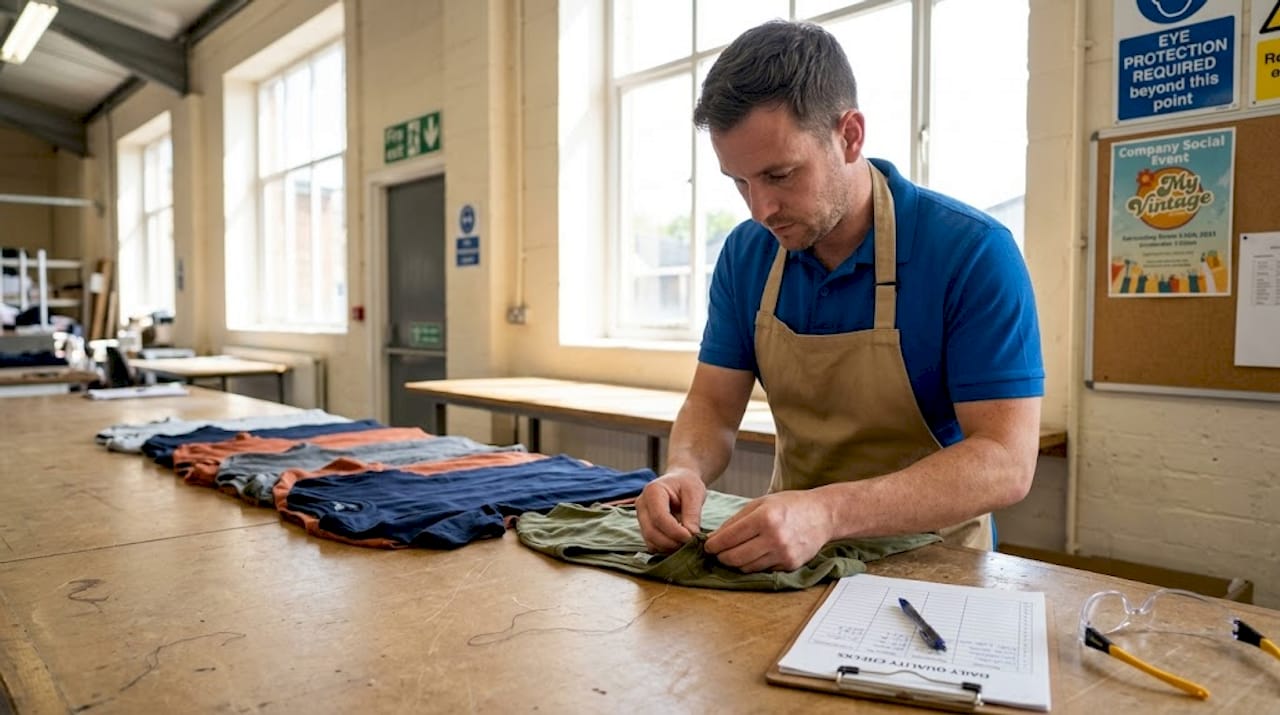
Beyond certifications, ethical fashion employs a range of practical methods. These include zero-waste pattern cutting, circular design (where garments are made to be repaired, resold, or recycled), low-impact dyeing processes, and extending garment life through quality construction. You can see how these ideas connect in the sustainable fashion workflow that underpins vintage retail.
Here is how a garment travels from fibre to ethical shop:
Raw fibre is grown or sourced using certified organic or low-impact methods.
Fibre is spun and woven in facilities audited for labour and environmental standards.
Fabric is dyed using low-impact or natural dyes with responsible water management.
Garments are cut and sewn in certified factories paying fair wages.
Finished pieces are transported with minimal packaging and carbon offsetting where possible.
Brands publish supply chain information so consumers can verify claims.
Garments are designed for longevity, repair, and eventual recycling.
Explore Textile Exchange standards for a deeper look at how fibre-level certification works across the industry.
Why Ethical Fashion Matters: The costs of fast fashion and benefits of conscious choices
Understanding implementation is only half the story. The ‘why’ makes it urgent and personal.
Fast fashion’s true costs are staggering. The industry generates 92 million tonnes of textile waste every year, and less than 2% of garment workers earn a living wage. These are not isolated problems. They are systemic outcomes of a model built on disposability.
Factor | Fast fashion | Ethical fashion |
Carbon emissions | High, 10% of global total | Reduced through certified processes |
Textile waste | 92M tonnes per year | Minimised via circularity and design |
Worker wages | Below living wage for most | Fair wages a core requirement |
Supply chain transparency | Rarely disclosed | Central to ethical brand practice |
The negative impacts of fast fashion include:
Enormous carbon emissions from manufacturing and global logistics
Toxic water pollution from synthetic dyes and chemical finishing
Exploitation of garment workers, predominantly women in the Global South
Mountains of unsold or discarded clothing ending up in landfill
Suppression of wages through relentless price pressure on suppliers
The benefits of choosing ethical fashion are just as clear:
Supporting fair pay and safer conditions for millions of workers
Reducing your personal environmental footprint meaningfully
Encouraging brands to invest in better materials and practices
Building a wardrobe of quality pieces that last longer and cost less over time
Connecting with the story and craft behind what you wear
Pro Tip: One of the highest-impact actions you can take right now is simply to keep your clothes longer. Extending garment life by just nine months reduces the environmental footprint of that garment by 20 to 30%. That is a remarkable return for something as simple as good care and occasional repair.
Vintage clothing is one of the most powerful expressions of this principle. Explore how vintage clothing helps the environment and the wider benefits of buying vintage to see why so many conscious shoppers are turning to pre-loved pieces. For further context, fashion industry statistics paint a vivid picture of what is at stake.
Nuances and Controversies: Greenwashing, Affordability and other debates
Not all that claims to be ethical is truly so. Ethical fashion has its pitfalls, and they are worth knowing about.
Greenwashing is perhaps the most pressing concern. Brands make sweeping environmental claims without the evidence to back them up. A striking example: 96% of H&M’s Conscious collection claims were found to be misleading or unsubstantiated. Recycled polyester is another grey area. It sounds virtuous, but it still sheds microplastics with every wash.
“There is no universal legal definition of ‘ethical fashion,’ which means brands can use the term freely. Without specific, verifiable evidence, a claim of being ethical is little more than a marketing choice.”
Key nuances to keep in mind:
Certifications vary widely in scope and rigour; not all carry equal weight
Recycled materials can still cause environmental harm during use
Supply chain gaps mean even well-intentioned brands may not know every tier of their production
B Corp certification applies at company level, not necessarily to every product
‘Sustainable’ and ‘ethical’ are not interchangeable; a brand can score well on one and poorly on the other
Affordability is a genuine debate. Ethically made goods often cost more, reflecting the true cost of fair wages and responsible materials. Critics rightly point out that not everyone can afford to shop this way. The counterargument is that buying fewer, better pieces and exploring vintage or secondhand options can make ethical fashion accessible at a range of price points.
Pro Tip: When evaluating a brand’s claims, look for specifics. Vague language like ‘eco-conscious’ or ‘responsibly sourced’ without supporting data is a warning sign. Ask for audit reports, certification numbers, and supplier lists. Credible brands welcome the questions. For a broader view of misleading claims, greenwashing in fashion is well documented and worth reading. The sustainability of vintage fashion sidesteps many of these concerns entirely, since pre-loved garments require no new production.
How to Make Ethical Choices: Practical Steps for Conscious Fashion
So, what practical things can you do, right now and over time, to dress more ethically?
Here are six steps to get started:
Check labels and certifications. Look for GOTS, Fairtrade, or OEKO-TEX marks. GOTS-certified goods are a reliable starting point for organic textiles with verified labour standards.
Buy secondhand and vintage first. Before purchasing new, search vintage shops, charity shops, and online resale platforms. This is circularity in action.
Extend garment life. Wash at lower temperatures, air dry, and repair rather than replace. Extending garment life by nine months saves 20 to 30% of resources per item.
Upcycle creatively. Transform tired pieces into something new rather than discarding them. The art of upcycling vintage clothing is both sustainable and deeply satisfying.
Demand transparency. Contact brands directly. Ask where your garment was made, who made it, and what they were paid. Brands that cannot answer are telling you something important.
Care and repair. Learn basic mending skills or find a local tailor. Good repair practice, supported by eco-design and repairability principles, is one of the most effective tools a conscious consumer has.
Vintage and upcycling deserve special mention as high-impact options:
No new resources are consumed in producing a pre-loved garment
Vintage pieces are often made to a higher standard of construction than modern fast fashion
Buying vintage supports small, independent retailers rather than global conglomerates
Each vintage purchase keeps a garment out of landfill, sometimes for decades
Collective small actions do drive systemic change. When enough consumers ask better questions and make different choices, brands respond. Explore how vintage contributes to a sustainable wardrobe for practical inspiration on building a wardrobe with genuine integrity.
Cutting Through the Noise: Why True Ethical Fashion Requires System Change and Individual Resolve
Having explored the practical side, it is worth stepping back for a wider perspective on what real change in fashion actually looks like.
Here is something that rarely gets said plainly: ethics is not achieved at the checkout. It is built over a wardrobe’s lifetime, through the decisions you make after you buy. How long you keep something. Whether you repair it. How you dispose of it when the time comes. The purchase is only the beginning.
We believe that vintage, upcycling, and repair are not simply options among many. They are the most honest expressions of what ethical fashion can be, because they require no new production at all. Every time you choose a pre-loved piece, you are voting for a different kind of industry. The value of vintage shopping goes far beyond nostalgia. It is a genuinely radical act in a culture built on disposability.
Meaningful change also requires wide demand for transparency. Individual resolve matters, but it must be paired with collective pressure on brands, retailers, and policymakers. Do not seek perfection. Seek real, repeatable actions that you can sustain over time.
Explore Ethical and Vintage Style with My Vintage
Ready to put these ideas into action? At My Vintage, we have been curating authentic vintage clothing and retro homeware since 2004, and every piece in our collection represents a garment that already exists, already has a story, and needs no new resources to reach your wardrobe.
Whether you are looking for a statement piece from the 1970s or something timeless for your home, our carefully selected collections make ethical shopping genuinely enjoyable. Browse our vintage homeware collection for beautifully curated retro finds, or explore our full range of vintage fashion and accessories. Shopping vintage is one of the most straightforward and satisfying ways to align your wardrobe with your values. We would love to help you find your next favourite piece.
Frequently Asked Questions
How can I tell if a brand is truly ethical or just greenwashing?
Look for transparent supply chain details, clear certifications like GOTS or Fairtrade, and demand specifics such as audit frequency and the percentage of certified materials. Greenwashing is common in fashion, so vague claims without verifiable evidence are a reliable warning sign.
Is ethical fashion always more expensive?
Not necessarily. While some ethically made goods carry a higher price tag, buying less, choosing vintage or upcycled pieces, and caring for garments can balance costs over time. Shifting to vintage or extending garment life is one of the most cost-effective approaches available.
Do certifications guarantee that all products are ethical?
Certifications improve credibility but vary considerably in scope. B Corp is company-level, not product-level, which means individual items from a certified company may not meet full ethical criteria across every dimension.
Can my individual choices really make a difference?
Yes. Collective consumer behaviour shifts industry standards over time, especially when enough people demand transparency, buy less frequently, and extend the life of what they already own.
What’s the difference between ethical and sustainable fashion?
Ethical fashion focuses on fair treatment of workers and communities, while sustainable fashion prioritises environmental impact. The terms overlap, but they are not identical. As this overview explains, the strongest approaches combine both dimensions.
Recommended


Comments