


What was Mod Fashion: A 1960s Style Guide
Updated: Apr 2

Many people assume mod fashion was simply a fleeting 1960s trend characterised by mini skirts and go-go boots. This misconception overlooks its profound cultural significance as a working-class youth movement that challenged post-war conservatism and redefined British style. Mod fashion began in London as a rebellion against tradition, blending sharp tailoring with bold patterns to create a look that symbolised modernity and social mobility. Understanding mod’s origins, distinctive style elements, and lasting cultural impact reveals why this movement continues to inspire fashion enthusiasts today.
Table of Contents
Key Takeaways
Point | Details |
Origins in London | Mod fashion began in London as a rebellion by working class youths against post war conservatism, symbolising modernity and social mobility. |
Core style elements | It blends sharp tailoring with bold patterns, slim fitting suits, cropped trousers and Chelsea boots. |
Cultural influence | The movement reshaped British fashion and youth culture, linking music, clubs and lifestyle choices to a visual language of aspiration. |
Accessories and identity | Distinctive items such as parkas and carefully styled hair completed the mod look, reinforcing its cosmopolitan and aspirational character. |
The Origins of Mod Fashion and its Cultural Roots

Mod fashion emerged from a specific social context that shaped its revolutionary character. Working-class youth in post-war Britain sought to distance themselves from their parents’ generation, embracing a ‘modernist’ lifestyle that celebrated new music, Italian scooters, and all-night dancing at jazz clubs. The name itself derived from ‘modernist’, reflecting their obsession with everything contemporary and forward-thinking.
This wasn’t merely about clothes. The mod movement represented a complete lifestyle shift. Young people working in offices and shops spent their wages on sharp Italian suits and French fashion, using style as a vehicle for social advancement. They rejected the drab, utilitarian clothing of the 1950s, instead adopting meticulously tailored garments that projected sophistication and confidence.
“Mod culture was about aspiration and self-creation. These young people were crafting new identities through fashion, music, and lifestyle choices that their parents couldn’t understand or control.”
Music played a crucial role in shaping mod identity. Bands like The Who, The Small Faces, and The Kinks became style icons, their sharp suits and distinctive haircuts influencing thousands of fans. The connection between sound and style was inseparable, with mods frequenting clubs like the Marquee and the Flamingo to hear rhythm and blues, soul, and ska.
Key factors that shaped mod fashion’s emergence:
Post-war economic prosperity gave working-class youth disposable income for the first time
Italian and French cinema introduced sleek Continental styles to British audiences
The rise of youth-focused retail spaces like Carnaby Street created dedicated fashion hubs
Increased social mobility encouraged aspirational dressing as a form of self-improvement
Rejection of traditional class markers through adoption of sophisticated, cosmopolitan aesthetics
The complete mod fashion style breakdown reveals how these cultural forces translated into specific garments and accessories. Mods weren’t simply following trends but actively creating a visual language that communicated their values and ambitions.
Key Style Elements: Clothing, Accessories and Hairstyles
The mod aesthetic was instantly recognisable through its precise attention to detail and distinctive silhouettes. Men’s fashion centred on slim-fitting suits with narrow lapels, often in mohair or sharkskin fabrics that caught the light. Trousers were tapered and cropped slightly above the ankle, worn with Chelsea boots or loafers. Button-down shirts, often in bold stripes or checks, completed the look.
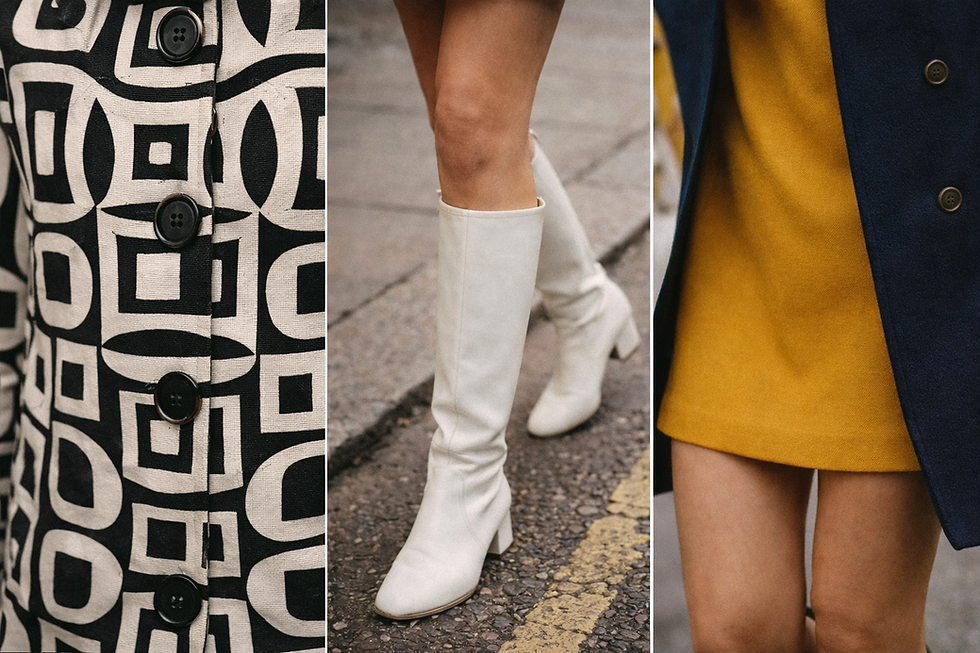
Women’s mod fashion embraced geometric simplicity and youthful energy. Mod fashion features sharp tailoring, with A-line mini dresses becoming the movement’s most iconic garment. These dresses often displayed bold op-art patterns, colour blocking, or graphic prints that reflected the era’s fascination with modern art and design. Mary Quant’s designs epitomised this aesthetic, combining playful patterns with sophisticated construction.
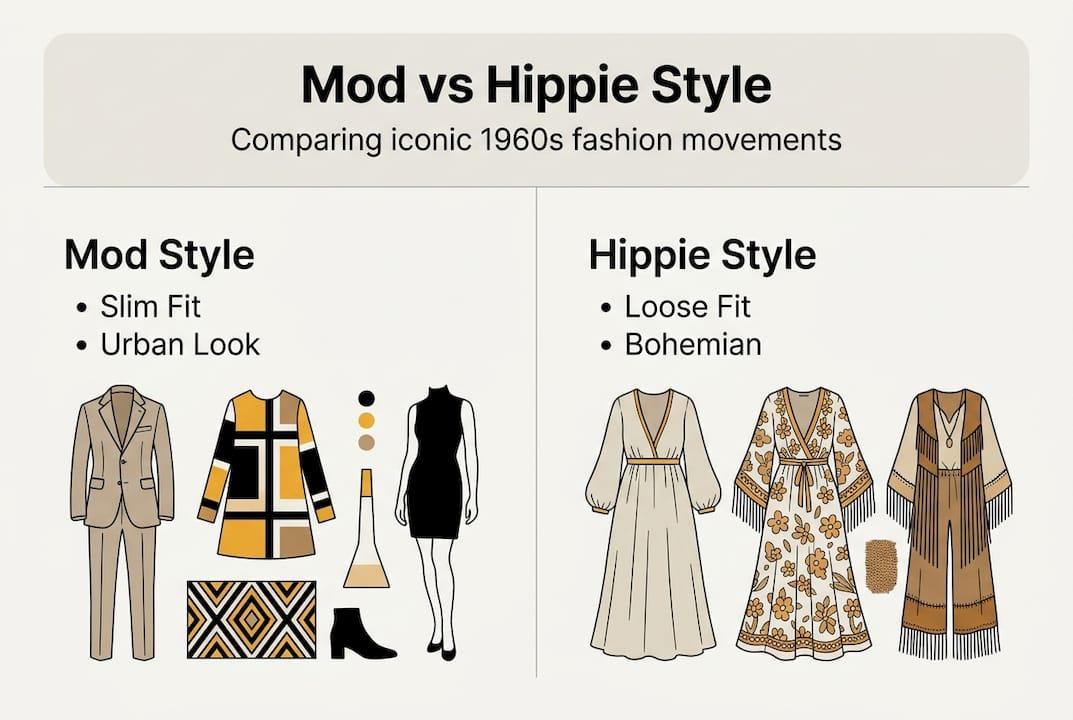
Element | Mod style | Hippie style |
Silhouette | Slim, tailored, structured | Loose, flowing, unstructured |
Patterns | Geometric, op-art, bold stripes | Paisley, floral, tie-dye |
Colours | Black, white, primary colours | Earth tones, rainbow hues |
Fabrics | Mohair, sharkskin, PVC | Cotton, denim, natural fibres |
Footwear | Chelsea boots, Mary Janes | Sandals, bare feet |
Accessories were crucial for achieving authentic mod style. The parka became an unexpected icon, originally adopted as practical protection for scooter riding but soon transformed into a fashion statement. These military-surplus jackets, often adorned with patches and badges, contrasted brilliantly with the sharp suits worn underneath.
Essential mod accessories included:
Round or rectangular sunglasses with dark lenses
Slim leather bags and briefcases
Silk scarves and thin ties
Lambretta or Vespa scooters with multiple mirrors and chrome details
Simple jewellery with clean lines and geometric shapes
Hairstyles completed the mod transformation. Women favoured the geometric bob cut, popularised by Vidal Sassoon, or the gamine pixie cut worn by Twiggy and Jean Shrimpton. These cuts required regular salon visits, reinforcing mod fashion’s emphasis on maintenance and precision. Men wore their hair short and neat, often with a side parting, rejecting the longer styles that would later define hippie culture.
Pro tip: When accessorising vintage outfits with mod influences, focus on one or two statement pieces rather than overwhelming the look. A pair of bold geometric earrings or distinctive sunglasses can capture the mod spirit without requiring a complete wardrobe overhaul.
The stark contrast between 1960s hippy vs mod fashion highlights mod’s unique position in the decade’s style landscape. Whilst hippies embraced natural fabrics and loose silhouettes, mods championed synthetic materials, structured tailoring, and urban sophistication.
The Impact and Legacy of Mod Fashion
Mod fashion’s influence extended far beyond its initial 1960s heyday, shaping subsequent youth movements and mainstream fashion trends for decades. The punk movement of the late 1970s borrowed mod’s rebellious spirit and sharp tailoring, with bands like The Jam explicitly referencing mod aesthetics in their music and style. Paul Weller became known as ‘The Modfather’, bridging the original movement with contemporary interpretations.
The mod revival of the late 1970s and early 1980s demonstrated the style’s enduring appeal. Young people rediscovered original mod music and fashion, creating a new generation of scooter-riding, parka-wearing enthusiasts. This revival influenced mainstream fashion, with high street retailers incorporating mod elements into their collections.
Mod fashion had a lasting impact on how youth culture expressed itself through clothing. The movement established several precedents that continue today:
Fashion as a form of tribal identity and subcultural membership
The importance of music and style as interconnected expressions of values
Youth-driven fashion trends that challenged mainstream conventions
The concept of ‘weekend warriors’ who adopted alternative identities through clothing
Meticulous attention to detail and authenticity within subcultures
Britpop’s emergence in the 1990s represented another mod revival, with bands like Blur, Oasis, and Pulp drawing heavily on 1960s British style. Liam Gallagher’s parka and Damon Albarn’s Fred Perry shirts directly referenced mod iconography, introducing the aesthetic to a new generation.
“The mod movement proved that working-class youth could create sophisticated, aspirational style on their own terms. This democratisation of fashion influence changed how the industry operated, forcing designers to pay attention to street-level trends.”
Contemporary fashion continues to reference mod elements. Minimalist designers draw on mod’s clean lines and geometric precision, whilst high street brands regularly feature A-line dresses, Chelsea boots, and tailored parkas in their collections. The 1960s and 1970s fashion trends established during the mod era remain relevant in 2026, demonstrating the movement’s fundamental impact on modern style.
Mod fashion also influenced how we think about vintage clothing. The movement’s emphasis on quality construction and timeless design helped establish the vintage market, with original 1960s pieces remaining highly sought after. This appreciation for well-made garments from previous eras directly connects to contemporary sustainability concerns and slow fashion principles.

Recreating Mod Fashion: Practical Tips and Styling Advice
Adopting mod style in 2026 requires balancing authenticity with contemporary wearability. You don’t need a complete wardrobe overhaul to capture the mod spirit. Start with foundational pieces that work within your existing style, then gradually incorporate more distinctive elements.
Begin with a quality tailored jacket or blazer in a slim fit. Look for narrow lapels and a structured silhouette that sits close to the body without restricting movement.
Invest in well-fitted trousers or a classic A-line mini dress. These versatile pieces form the foundation of mod style and work in multiple contexts.
Add one statement piece with bold geometric patterns. A printed shirt, patterned dress, or graphic accessory captures mod’s visual boldness without overwhelming your look.
Choose footwear carefully. Chelsea boots for men or Mary Jane shoes for women provide instant mod credibility whilst remaining practical for everyday wear.
Perfect your grooming and hair. Mod style demands neat, well-maintained hair and a polished overall appearance. Regular trims and attention to detail matter more than expensive products.
When accessorising vintage outfits, remember that mod style favours quality over quantity. One pair of distinctive sunglasses or a well-chosen bag makes more impact than multiple competing accessories. Keep jewellery simple and geometric, avoiding anything too ornate or bohemian.
Pro tip: Mix authentic vintage pieces with contemporary items to create a wearable interpretation of mod style. Pair a genuine 1960s dress with modern tights and shoes, or wear a vintage-inspired jacket with current-season trousers. This approach captures mod’s spirit whilst ensuring your outfit feels fresh rather than costume-like.

Colour choices significantly impact your mod aesthetic. Stick to a palette of black, white, and bold primary colours for maximum impact. Navy, red, and bright yellow work particularly well, either as solid blocks or in geometric patterns. Avoid earth tones, pastels, or anything too muted, as these lean towards hippie or other aesthetics.
Sourcing authentic mod pieces requires patience and knowledge. Check the march vintage arrivals and july vintage arrivals regularly to discover genuine 1960s garments and accessories. Look for quality construction, period-appropriate fabrics like mohair or PVC, and distinctive details such as metal zips or specific button styles.
Modern retailers also produce excellent mod-inspired pieces that capture the aesthetic whilst offering contemporary sizing and construction. These work brilliantly mixed with vintage finds, creating outfits that honour mod’s heritage whilst remaining practical for daily life.
Discover Vintage Items Inspired by Mod Fashion
Now that you understand mod fashion’s distinctive elements and cultural significance, you can explore authentic pieces that capture this iconic style. Whether you’re seeking a genuine 1960s A-line dress, a sharp tailored jacket, or accessories that complete your mod-inspired look, curated vintage collections offer carefully selected items that embody the movement’s spirit.
Browse the latest march vintage arrivals and july vintage arrivals to discover authentic 1960s fashion and accessories. Each piece has been selected for its quality, authenticity, and ability to bring mod style into contemporary wardrobes. For those interested in extending the mod aesthetic beyond clothing, the vintage mid century homeware collection features period-appropriate decor that complements the movement’s clean-lined, modernist sensibility.
Frequently Asked Questions about Mod Fashion
What exactly was mod fashion and when did it emerge?
Mod fashion was a youth cultural movement that originated in early 1960s London, characterised by sharp tailoring, clean lines, and bold geometric patterns. It represented working-class youth embracing modernity and sophistication, reaching its peak between 1963 and 1966 before evolving into other subcultures.
How did mod fashion differ from hippie style in the 1960s?
Mod fashion emphasised structured tailoring, slim silhouettes, and urban sophistication, whilst hippie style favoured loose, flowing garments and natural fabrics. Mods wore sharp suits and geometric patterns, whereas hippies preferred tie-dye, paisley, and earth tones. The two movements represented opposing philosophies about youth culture and social change.
Who were the key fashion icons of the mod movement?
Mary Quant revolutionised women’s mod fashion with her mini dresses and bold designs. Model Twiggy epitomised the mod look with her pixie cut and graphic eye makeup. For men, bands like The Who and The Small Faces, particularly Pete Townshend and Steve Marriott, defined mod style through their sharp suits and attention to detail.
Where can I find authentic mod fashion pieces today?
Authentic 1960s mod pieces appear in curated vintage collections, specialist vintage shops, and online vintage retailers. Look for quality indicators like metal zips, period-appropriate fabrics such as mohair or PVC, and distinctive construction details. Alternatively, several contemporary brands produce excellent mod-inspired pieces that capture the aesthetic with modern sizing.
Can I wear mod fashion in 2026 without looking dated?
Absolutely. Mix authentic vintage pieces with contemporary items to create fresh interpretations of mod style. A 1960s-inspired A-line dress works brilliantly with modern accessories, whilst a sharp tailored jacket pairs well with current-season trousers. Focus on mod’s core principles of clean lines, quality tailoring, and bold patterns rather than creating a complete period costume.
Recommended

Comments