


Complete Guide to 1970s Trends and Culture

Bold patterns, flamboyant fashion, and a surge of cultural shifts defined the british 1970s in ways few decades could rival. This era brought a vibrant wave of change, with over 60 percent of British youth embracing trends that broke the mould of previous generations. From music to homeware, the decade’s trends were not just stylish—they sparked movements that still echo in society today. Discover what made 1970s British style so distinctive and why its influence remains strong.
Table of Contents
Key Takeaways
Point | Details |
Transformative Influence of the 1970s | The decade fundamentally reshaped cultural landscapes in fashion, music, and social movements, prioritising individual expression and rebellion against conservative norms. |
Fashion as Social Commentary | 1970s fashion was marked by experimentation, with clothing styles reflecting broader societal changes, including the feminist and civil rights movements. |
Iconic Subcultures | Movements such as Punk, Disco, and Hippie were more than trends; they represented powerful social statements that challenged established societal norms. |
Enduring Legacy | The aesthetic principles of the 1970s continue to inspire modern fashion, emphasising sustainable practices and individual creativity in contemporary design. |
Defining 1970s Trends and Their Impact
The 1970s emerged as a transformative decade that fundamentally reshaped cultural landscapes across fashion, music, social movements, and artistic expression. According to the Cultural Turn research, this period marked a significant intellectual and creative shift, moving away from traditional positivist approaches and instead emphasising culture as a central framework for understanding societal dynamics.
In the realm of fashion and lifestyle, the decade was characterized by bold experimentation and unprecedented personal freedom. Disco culture, bell-bottom trousers, and platform shoes became iconic symbols of self-expression, challenging previous generations’ conservative dress codes. The era saw a remarkable blend of vibrant colours, unconventional silhouettes, and a rejection of rigid social norms. In the United Kingdom, this period has been particularly memorable, with bands like Fleetwood Mac and Queen not just creating music, but embodying entire cultural movements.
Socially, the 1970s represented a pivotal moment of transition. Feminist movements gained significant momentum, civil rights discussions expanded, and young people increasingly challenged established power structures. The decade’s trends reflected this revolutionary spirit through clothing that was simultaneously provocative and liberating. Unisex fashion emerged, gender boundaries blurred, and personal style became a powerful form of political and social commentary. You can explore more about this fascinating era in our 1970s Vintage Fashion - More than a Trend article, which delves deeper into the nuanced cultural significance of 1970s style.
Critically, the 1970s were not just about aesthetic changes, but represented a profound reimagining of social possibilities. From music and fashion to political activism, this decade laid groundwork for many progressive movements we recognize today. The trends were never merely superficial—they were revolutionary statements of individual and collective identity.
Iconic Fashion Styles of the 1970s
According to Bloomsbury’s Fashion research, the 1970s represented an extraordinary period of sartorial diversity and radical self-expression. This decade challenged conventional fashion norms with unprecedented boldness, featuring extraordinary style contrasts that ranged from ankle-length maxi skirts to super-short hot-pants, creating a visual landscape of extraordinary complexity and creativity.
The era’s fashion was fundamentally defined by its revolutionary approach to fabric and silhouette. Vibrant prints in synthetic materials coexisted seamlessly with subtly-coloured ensembles crafted from natural fabrics, reflecting a period of profound cultural transition. According to Hello Magazine, flared trousers became an iconic staple, worn by both women and men, offering a flattering silhouette that accentuated the waist and dramatically elongated the legs. These dramatic pants symbolised more than just a fashion trend—they represented a statement of personal liberation and rejection of previous decades’ restrictive clothing standards.
Street style movements like Punk further revolutionised fashion, using clothing as a powerful form of social and political commentary. Designer collections competed with grassroots fashion movements, creating a rich, complex tapestry of style that challenged established aesthetic norms. Key fashion archetypes emerged: the disco diva in glittering jumpsuits, the bohemian in flowing maxi dresses, the rebel in leather and safety pins. Learn more about these transformative styles in our What is 70s Style? Understanding a Retro Fashion Icon article, which delves deeper into the nuanced cultural significance of this remarkable fashion era.
Ultimately, 1970s fashion was never just about clothing—it was a radical form of personal expression, a visual language that spoke of social change, individual freedom, and the breaking down of traditional aesthetic boundaries. Each garment told a story of rebellion, creativity, and the ongoing evolution of personal and collective identity.
Popular 1970s Homeware and Decor Trends
According to Wikipedia’s nostalgia research, the 1970s in the UK were characterised by distinctive home decor elements that have since become iconic symbols of the era. Avocado-colored bathrooms and lava lamps epitomised the decade’s unique aesthetic, representing a bold departure from the more conservative design sensibilities of previous years. These distinctive design choices were not merely decorative—they were statements of personal style and cultural rebellion.
The era’s interior design philosophy embraced texture and earthy tones with remarkable enthusiasm. As Hello Magazine notes, the trend towards plush materials that began in fashion seamlessly translated into home decor. Sheepskin rugs, chunky knit throws, and deep-pile carpets in warm browns, burnt oranges, and mustard yellows transformed living spaces into cosy, tactile environments that celebrated sensory experiences. Macramé wall hangings, ceramic pottery, and wooden furniture with organic, curved lines further emphasised this connection to natural textures and materials.
Psychedelic patterns and bold geometric designs became another hallmark of 1970s interior design. Wallpapers featuring oversized floral prints, abstract shapes, and vibrant color combinations transformed mundane spaces into visual narratives of creativity and freedom. Furniture design reflected this experimental spirit, with iconic pieces like egg-shaped chairs, sunburst mirrors, and modular shelving systems that challenged traditional architectural norms. For those looking to explore more about these transformative design elements, our Top Ten Vintage Homeware article offers an in-depth exploration of the era’s most memorable decor trends.
Ultimately, 1970s homeware was more than just a design aesthetic—it was a revolutionary form of personal expression. Each carefully chosen piece told a story of cultural transformation, individual creativity, and the ongoing dialogue between personal space and broader societal changes. The decade’s decor was a visual symphony of texture, colour, and imagination, inviting people to reimagine their living environments as canvases of personal identity.

Influential Subcultures and Movements
According to the Swinging Sixties research, the cultural revolution that began in the 1960s continued to reshape societal dynamics throughout the early 1970s. This period was defined by a profound youth-driven transformation that challenged existing social structures, with London emerging as the epicentre of radical cultural innovation. Iconic groups like the Beatles and the mod subculture symbolised a new era of modernity and hedonistic self-expression that transcended traditional boundaries.
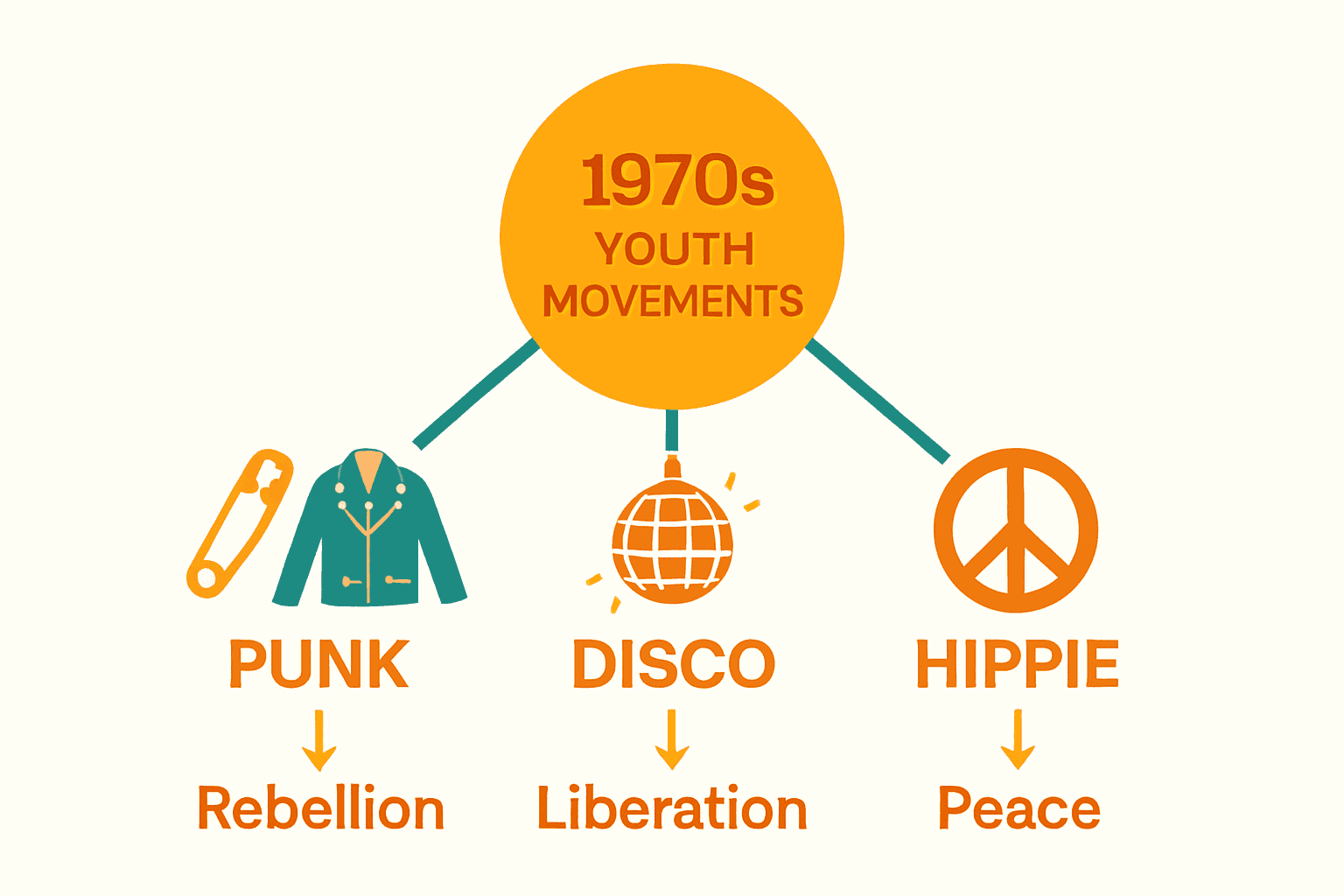
The Youthquake movement fundamentally reimagined cultural landscapes by prioritising youth-centric styles and perspectives. Punk, Disco, and Hippie subcultures represented more than fashion trends—they were powerful social statements that challenged established norms of political engagement, personal identity, and artistic expression. Each movement developed its distinctive aesthetic: Punk with its aggressive anti-establishment ethos, Disco celebrating liberation and collective joy, and the Hippie culture promoting peace, environmental consciousness, and spiritual exploration.
These subcultures were not isolated phenomena but interconnected movements that collectively redefined social expectations. The Feminist movement gained significant momentum, challenging patriarchal structures and demanding equal rights. Civil Rights activists continued their struggle for racial equality, while LGBTQ+ communities began more visibly advocating for recognition and acceptance. For those interested in exploring these transformative cultural movements, our The Timeless Influence of 1970s Fashion on Today’s Style Trends article provides deeper insights into how these subcultures shaped contemporary social dynamics.
Ultimately, the 1970s subcultures represented a profound moment of collective reimagination. They were not merely aesthetic choices but powerful expressions of social change, individual liberation, and collective resistance. Each movement contributed to a broader narrative of human diversity, challenging monolithic cultural narratives and creating space for multiple, intersecting identities to emerge and thrive.
Risks of Misidentifying 1970s Items
According to Wikipedia’s research on fashion trends, the 1970s featured unique design elements that can be easily misinterpreted by inexperienced collectors. The draped turban, popularized by London’s Biba boutique, exemplifies the nuanced fashion of the era—often paired with kaftans or diaphanous blouses, these items represent far more than simple accessories. Misidentifying such pieces can lead to significant historical and cultural misunderstandings, potentially undermining the rich narrative of 1970s design.
Shoulder pad research reveals another critical area of potential misidentification. These structural elements, reimagined by designers like Barbara Hulanicki, were distinctly different from shoulder pads in other decades. The 1970s iteration was more subtle, integrated organically into garment design, unlike the exaggerated shoulder structures of the 1980s. Collectors and fashion enthusiasts must develop a nuanced eye to distinguish these subtle variations, understanding that context and construction are key to accurate identification.
Authentication requires a holistic approach that goes beyond superficial visual assessment. Material composition, manufacturing techniques, design details, and provenance all play crucial roles in accurately identifying genuine 1970s items. Fabric blends, stitching patterns, zipper types, and label designs can provide critical forensic evidence of an item’s true origin. For those seeking deeper insights into vintage identification, our How to Identify Vintage Clothing with Confidence and Ease article offers comprehensive guidance for navigating these intricate authentication processes.
Ultimately, misidentification is more than a collector’s error—it represents a potential loss of cultural memory. Each misclassified piece obscures the rich narrative of design evolution, social transformation, and creative expression that the 1970s embodied. Careful, informed examination is not just a technical skill, but a form of historical preservation that respects the complexity and creativity of this extraordinary decade.
How 1970s Trends Shape Modern Vintage
According to Who What Wear, the enduring influence of 1970s fashion transcends mere nostalgia—it represents a profound dialogue between historical style and contemporary design. Iconic elements like flares and safari jackets continue to inspire modern designers, demonstrating the decade’s remarkable capacity for reinvention. These vintage silhouettes are not museum pieces, but living, breathing aesthetic languages that speak to each successive generation’s creative impulses.
Hello Magazine’s research highlights the remarkable flared silhouette as a quintessential example of 1970s trends reshaping modern vintage aesthetics. The universal appeal of these trousers lies in their ability to flatter diverse body types, bridging generational style preferences with their inherently democratic design. Contemporary fashion designers skillfully deconstruct and reimagine these classic shapes, creating hybrid styles that respect historical integrity while feeling thoroughly modern.
The translation of 1970s trends into contemporary fashion is a nuanced art of reinterpretation. Sustainable fashion movements have particularly embraced vintage aesthetic principles, recognising that these designs represent more than nostalgic references—they embody principles of timeless craftsmanship and individual expression. For fashion enthusiasts eager to master this delicate balance, our How to Style 1970s Fashion for Authentic Vintage Looks article offers expert guidance on incorporating vintage elements into modern wardrobes.
Ultimately, the 1970s represent more than a historical fashion moment—they symbolize a radical approach to personal style that continues to inspire. Each reinterpreted trend carries the DNA of cultural rebellion, individual creativity, and the ongoing conversation between past and present. Modern vintage is not about copying, but about understanding, reimagining, and breathing new life into design languages that remain profoundly relevant.
Discover Authentic 1970s Style with My Vintage
The “Complete Guide to 1970s Trends and Culture” highlights the challenge of accurately identifying and embracing the era’s unique fashion and homeware without losing the rich cultural narrative behind each piece. If you seek genuine 1970s garments or distinctive retro home décor that captures the decade’s spirit of liberation and expression, you understand how important it is to find authentic items with true historical value. The risk of misidentification and mass reproduction can leave you disconnected from the vibrant stories woven into every fabric and design.
Explore our carefully curated collections at My Vintage where sustainability meets style, and every item tells a story. Whether you want to embrace the iconic flared trousers that defined self-expression or bring the cosy textures of 1970s interiors into your living space, our authentic vintage apparel and retro homeware offer an unparalleled connection to this era. Start your journey today and experience vintage fashion and décor that speaks to your individuality with expert guidance found in our collection of insightful articles like 1970s Vintage Fashion - More than a Trend and How to Identify Vintage Clothing with Confidence and Ease.
Step into a world where authenticity, culture, and style unite by visiting My Vintage now. Find your perfect piece from the past and celebrate your own timeless look.
Frequently Asked Questions
What were the key fashion trends of the 1970s?
The 1970s were marked by bold fashion experimentation, including flared trousers, platform shoes, maxi skirts, and hot pants. This era also saw the rise of unisex clothing and vibrant prints, reflecting a cultural shift toward personal expression and liberation.
How did 1970s music influence fashion trends?
The music scenes of the 1970s, particularly Disco and Punk, greatly influenced fashion trends. Disco culture introduced glittering jumpsuits and glamorous outfits, while Punk fashion embraced edgy looks, including leather jackets and DIY aesthetics, both expressing the era’s cultural revolution.
What were the significant social movements of the 1970s?
The 1970s witnessed pivotal movements, including the feminist movement pushing for gender equality, civil rights advancements advocating racial equality, and the LGBTQ+ community starting to seek recognition. These social movements greatly impacted fashion and lifestyle choices of the decade.
How can I identify authentic 1970s fashion items?
To identify authentic 1970s fashion, examine material composition, manufacturing techniques, and design details, such as stitching patterns and labels. Understanding these elements can help avoid misidentifying pieces and preserve the cultural significance of the era.
Recommended


Comments