


50s Style Sunglasses: A Complete Guide

You spot oversized frames labelled vintage online, but are they truly authentic 1950s sunglasses or clever modern reproductions? Many enthusiasts mistakenly purchase contemporary inspired designs, missing genuine acetate construction and period-correct detailing. This guide equips you to identify authentic 50s sunglasses through materials, design markers and provenance, ensuring your vintage wardrobe reflects true era glamour and individuality.
Table of Contents
Key takeaways
Point | Details |
Signature frame shapes | Cat-eye and browline styles define authentic 1950s eyewear |
Material authenticity | Cellulose acetate frames with visible metal hinges signal genuine vintage construction |
Provenance matters | Seller reputation and documentation are crucial for verifying authenticity |
Styling integration | Pairing genuine 50s sunglasses with period clothing enhances overall vintage credibility |
Common myths | Oversized frames and high prices alone do not guarantee 1950s authenticity |
Introduction to 1950s Sunglasses Fashion
Post-war Britain and America witnessed remarkable socioeconomic shifts that transformed personal fashion expression. Increased prosperity and leisure time allowed individuals to invest in accessories beyond pure practicality. Sunglasses evolved from simple eye protection into essential glamour statements that signalled sophistication and style.
Hollywood icons cemented this transformation. Stars like Audrey Hepburn and Marilyn Monroe popularised distinctive frame styles that became synonymous with 1950s elegance, inspiring everyday fashion enthusiasts to adopt similar looks. Cinema closeups showcased these accessories, making specific shapes instantly recognisable and desirable.
The era’s design philosophy reflected broader cultural trends. Optimism permeated post-war society, encouraging bold shapes and vibrant colours. Key 1950s sunglasses characteristics included:
Upswept cat-eye frames with decorative embellishments
Strong browline styles mimicking bold eyebrows
Translucent and tortoiseshell acetate colours
Hand-finished details showing individual craftsmanship
This period established sunglasses as identity markers rather than mere functional items. Understanding this cultural context helps you appreciate why authentic pieces carry such significance in vintage fashion today.
Key Design Characteristics of 1950s Sunglasses

Recognising authentic 50s eyewear starts with knowing the era’s hallmark frame shapes and decorative features. Cat-eye frames stand out with their upswept outer edges, often featuring rhinestone or metal embellishments along the brow line. These feminine designs ranged from subtle upturns to dramatic wings, catering to various style preferences.
Browline frames offered a bolder aesthetic. The thick upper rim created a strong horizontal line across the face, mimicking prominent eyebrows while lighter lower rims balanced the look. This style became particularly popular among men but crossed gender boundaries as the decade progressed.
Colour palettes distinguished 50s frames from later decades. Tortoiseshell patterns dominated, alongside translucent amber, green and rose-tinted acetates. Black frames gained traction towards the decade’s end but remained secondary to these warmer tones. You can explore detailed retro sunglasses comparisons to see these colour variations side by side.
Frame Style | Key Features | Common Colours |
Cat-eye | Upswept edges, rhinestone details | Tortoiseshell, translucent amber |
Browline | Thick upper rim, thin lower rim | Black with clear, tortoiseshell |
Round | Circular lenses, uniform frames | Translucent colours, gold metal |
Oversized square | Large rectangular lenses, bold frames | Black, dark tortoiseshell |
Round and oversized square shapes also appeared but require careful authentication. Modern reproductions frequently exaggerate these proportions beyond period accuracy. Examining top vintage sunglasses examples helps calibrate your eye for genuine proportions.
Pro Tip: Compare suspected vintage frames against documented 1950s photographs to verify shape authenticity before purchasing.
Materials and Manufacturing Techniques in 1950s Eyewear

Authentic 1950s sunglasses feel distinctly different from modern reproductions. Cellulose acetate formed the primary frame material, a plant-based plastic heavier and warmer to touch than today’s petroleum-based alternatives. When you hold genuine vintage frames, they exhibit substantial weight and a slight warmth that synthetic plastics lack.
Metal hinges reveal manufacturing authenticity. Period frames featured visible screws securing hinges to temple arms, allowing adjustments and repairs. Modern mass production often uses moulded plastic hinges or concealed mechanisms. Inspect hinge construction closely:
Visible metal screws on both frame front and temple
Individual hinge plates rather than integrated moulding
Slight patina or tarnish on metal components
Evidence of hand-finishing around screw holes
Hand-finishing created charming imperfections absent in contemporary copies. Slight asymmetries in frame thickness, minor tool marks near hinges, and uneven colour saturation throughout acetate patterns signal authentic craftsmanship. These details separated quality eyewear from cheap alternatives even in the 1950s.
Natural ageing provides additional authenticity clues. Genuine acetate develops subtle discolouration, often yellowing slightly in translucent areas. Surface micro-scratches accumulate from decades of handling. Metal components show appropriate oxidation. Reproductions attempting to fake these signs typically overdo weathering or apply it inconsistently.
Pro Tip: Handle frames directly when possible, feeling for weight and examining hinge screws under good lighting to verify construction methods.
Authenticity Identification Markers

Verifying genuine 1950s sunglasses requires systematic evaluation beyond superficial appearance. Follow this authentication process:
Examine natural ageing signs like frame patina and tiny surface scratches
Inspect metal hinge construction for visible screws and individual plates
Request seller documentation or provenance details
Research seller reputation through reviews and history
Compare price against market ranges for similar authenticated pieces
Patina develops organically over decades. Authentic frames show graduated colour changes, particularly around nose pads and temple tips where skin oils interact with acetate. Edge wear appears naturally smooth rather than artificially distressed. Lens surfaces may exhibit fine scratching from cleaning and storage.
Metal components tell revealing stories. Hinges on genuine vintage pieces feature construction methods distinct from modern manufacturing. Look for:
Individual screw heads with period-appropriate slot or Phillips drives
Natural tarnish patterns on brass or steel hardware
Wear marks where metal contacts frame during opening and closing
Original spring mechanisms showing age-appropriate tension
Provenance documentation strengthens authenticity claims significantly. Reputable sellers provide purchase history, previous owner information, or manufacturer details when available. Original cases, cleaning cloths or receipts add valuable context.
Seller reputation matters enormously in vintage markets flooded with reproductions. Research thoroughly:
Customer reviews mentioning authentication accuracy
Return policies allowing expert verification
Specialist knowledge demonstrated in listings
Membership in recognised vintage dealer associations
Price alone misleads frequently. Low prices may indicate reproductions or damaged pieces, but high prices guarantee nothing without supporting evidence. Evaluate all factors together rather than relying on cost as an authenticity proxy.
Common Misconceptions about 50s Eyewear Styles
Several persistent myths confuse vintage fashion enthusiasts seeking authentic 1950s sunglasses. Understanding these misconceptions prevents disappointing purchases and styling errors.
Oversized sunglasses often get mislabelled as 1950s despite belonging primarily to later decades. The 1970s introduced truly large frames, whilst 50s proportions remained moderate by comparison. Modern oversized styles marketed as vintage-inspired rarely match period specifications accurately.
Cat-eye frames flood contemporary markets, but most represent modern reproductions rather than authentic vintage pieces. Manufacturers produce 50s-inspired designs using current materials and construction methods. These lack the acetate weight, metal hinge configuration and hand-finished details found in genuine articles.
Price misconceptions plague authentication efforts. Some assume expensive items must be authentic, whilst others believe bargains indicate reproductions. Reality proves more nuanced:
Damaged authentic pieces may sell cheaply despite genuine vintage status
Reproductions sometimes command high prices through misleading marketing
Condition, rarity and provenance affect value independently of authenticity
Market knowledge prevents overpaying for contemporary inspired designs
These misunderstandings lead to mismatched vintage wardrobes when reproductions clash with authentic period clothing. Educating yourself on actual 1950s characteristics ensures cohesive styling and genuine self-expression through vintage fashion.
Iconic Brands and Models from the 1950s

Several manufacturers defined 1950s sunglasses through innovative designs and quality construction. Ray-Ban’s Wayfarer model launched in 1952, introducing a bold acetate frame that became synonymous with cool sophistication. This design revolutionised eyewear by replacing fragile metal frames with durable plastic construction.
Other prominent brands contributed distinctive styles. American Optical produced cat-eye frames with intricate detailing, whilst British manufacturers developed browline variations suited to conservative tastes. Understanding these heritage brands aids identification:
Ray-Ban pioneered acetate Wayfarer and maintained metal aviator lines
American Optical specialised in decorative cat-eye and prescription sunglasses
Bausch & Lomb manufactured quality frames across multiple style categories
Shuron crafted distinctive browline frames through their Ronsir model
Brand | Model | Launch Year | Key Features |
Ray-Ban | Wayfarer | 1952 | Thick acetate frame, trapezoidal shape |
American Optical | Sirmont | 1955 | Cat-eye with metal detailing |
Shuron | Ronsir | 1947 | Browline with adjustable nose pads |
Bausch & Lomb | Vintage Aviator | 1950s | Metal frame, teardrop lenses |
Knowing these iconic models helps you recognise authentic pieces and avoid reproductions falsely claiming heritage connections. Original branding, when present, appears subtly engraved or printed rather than prominently displayed as modern fashion marketing dictates.
Styling 50s Sunglasses with Vintage Clothing
Integrating authentic 1950s sunglasses with period clothing elevates your entire vintage presentation. Cat-eye frames pair beautifully with full-skirted dresses, cropped cardigans and pearls, creating quintessentially feminine 50s silhouettes. The upswept frame shape echoes the era’s emphasis on graceful curves and polished femininity.
Browline glasses complement mid-century menswear authentically. Match them with slim-cut suits, narrow ties and Brylcreem-styled hair for complete period accuracy. Women adopted browline styles too, particularly for casual daywear with cigarette trousers and boat-neck tops.
Consider face shape when selecting frames. Round faces benefit from angular cat-eye or browline styles, whilst square faces soften with rounded frames. The goal combines historical accuracy with flattering proportions that enhance your natural features.
Research shows wearing genuine 1950s sunglasses can boost vintage outfit authenticity perception by 45% among vintage fashion communities. This significant credibility increase stems from accessories’ power to anchor entire ensembles in specific eras.
Colour coordination strengthens visual impact:
Match tortoiseshell frames with brown leather accessories and warm outfit tones
Pair black frames with monochrome ensembles or bold primary colours
Coordinate translucent frame tints with complementary clothing shades
Balance ornate frame embellishments against simpler clothing patterns
Explore how to rock vintage accessories for comprehensive styling guidance beyond sunglasses alone.
Pro Tip: Photograph your vintage outfits with different frame styles to identify which combinations photograph best for social sharing and personal archives.
Where to Buy Authentic 1950s Sunglasses in the UK
Locating genuine vintage eyewear requires shopping strategically through trusted channels. Specialist UK vintage retailers offering clear provenance details provide the safest purchasing route. These shops employ knowledgeable staff who authenticate pieces before listing and stand behind their attributions.
Online marketplaces demand careful vetting. Platforms with stringent seller requirements and buyer protection reduce counterfeit risks. Examine seller profiles thoroughly:
Years of trading history and transaction volume
Detailed item descriptions mentioning materials and construction
Multiple clear photographs showing hinges, frames and any markings
Return policies allowing authentication by independent experts
Customer reviews reveal authentication accuracy over time. Sellers consistently providing genuine articles earn reputations reflected in feedback. Negative reviews mentioning reproductions sold as authentic warrant serious caution.
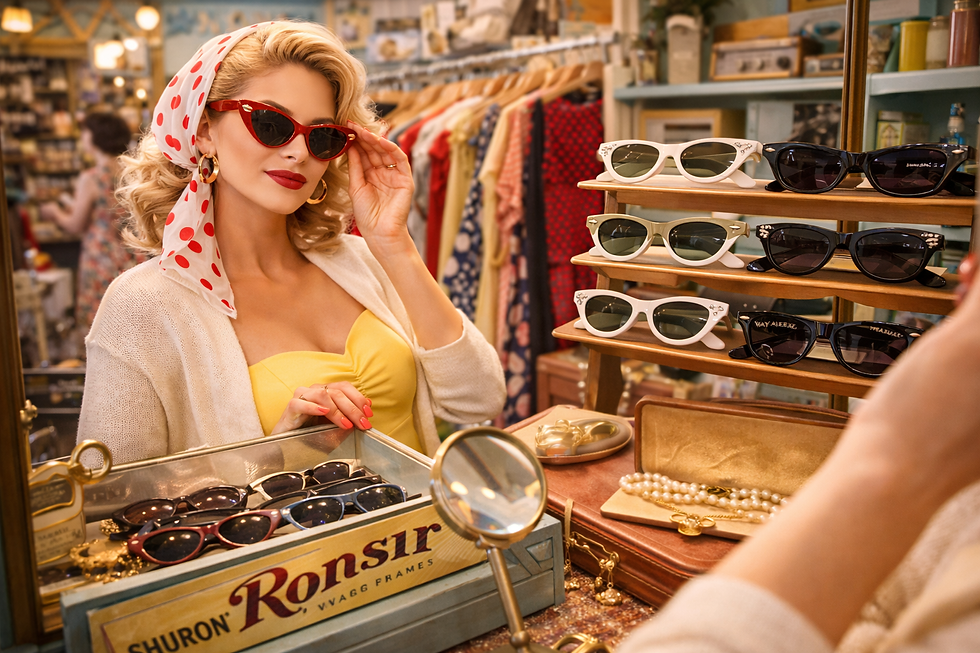
Physical vintage shops allow hands-on inspection before purchase. Visit establishments where staff demonstrate expertise answering specific questions about acetate composition, hinge construction and ageing patterns. Their willingness to discuss authenticity markers indicates professional standards.
Provenance and seller reputation prove crucial when navigating markets flooded with modern reproductions. Documentation linking pieces to previous owners, original retailers or specific time periods strengthens confidence in purchases. Certificates of authenticity from recognised vintage eyewear experts add valuable third-party verification.
Research authentication resources available through vintage fashion communities. Online forums and social media groups connect enthusiasts who share knowledge about reputable sellers and authentication techniques. Building these networks enhances your ability to source genuine pieces confidently.
Explore New Vintage Arrivals for Authentic 50s Style Sunglasses
Now that you understand authentic 1950s sunglasses characteristics, discovering verified vintage pieces becomes your next exciting step. My Vintage curates carefully authenticated eyewear and accessories, ensuring each item meets the quality standards and period accuracy you demand.
Our new vintage arrivals feature freshly sourced 1950s sunglasses verified through the authentication markers you’ve learned. Complete your vintage wardrobe with expert-selected accessories that complement your authentic style. Explore vintage accessories styling tips to maximise the impact of your carefully chosen pieces and express your individuality through genuine 50s glamour.
FAQ
Are cat-eye sunglasses always authentic 1950s originals?
No, most cat-eye sunglasses available today are modern reproductions or contemporary designs inspired by 1950s styles. Verify authenticity by examining acetate weight, metal hinge construction with visible screws, natural ageing signs and seller provenance documentation before assuming vintage origin.
How can I tell genuine 1950s sunglasses from modern copies?
Authentic pieces show natural ageing like subtle frame discolouration and micro-scratches, use heavier cellulose acetate, and feature metal hinges with visible screws. Check seller history, request provenance documentation, and compare construction details against known period manufacturing methods.
Where are the best places to buy authentic 1950s sunglasses in the UK?
Specialist vintage shops with knowledgeable staff and verified online marketplaces offering provenance guarantees provide the safest sources. Research seller reputations thoroughly, examine detailed photographs, and prioritise retailers with return policies allowing expert authentication. Discover trusted UK vintage retailers curating authenticated pieces.
Do all 1950s sunglasses have rhinestone decorations?
No, whilst decorative embellishments appeared frequently on cat-eye frames, many 1950s styles featured plain acetate or minimal metal accents. Browline frames, round shapes and early Wayfarer models typically lacked rhinestones, focusing instead on frame shape and colour for visual impact.
Can vintage 1950s sunglasses provide adequate UV protection?
Original 50s lenses often lack modern UV coatings, providing minimal protection against harmful rays. Many vintage enthusiasts replace original lenses with period-correct tinted glass featuring contemporary UV blocking whilst preserving authentic frames and overall vintage appearance.
Recommended


Comments