


Body Types Dressing: Your Guide to Perfect Proportions
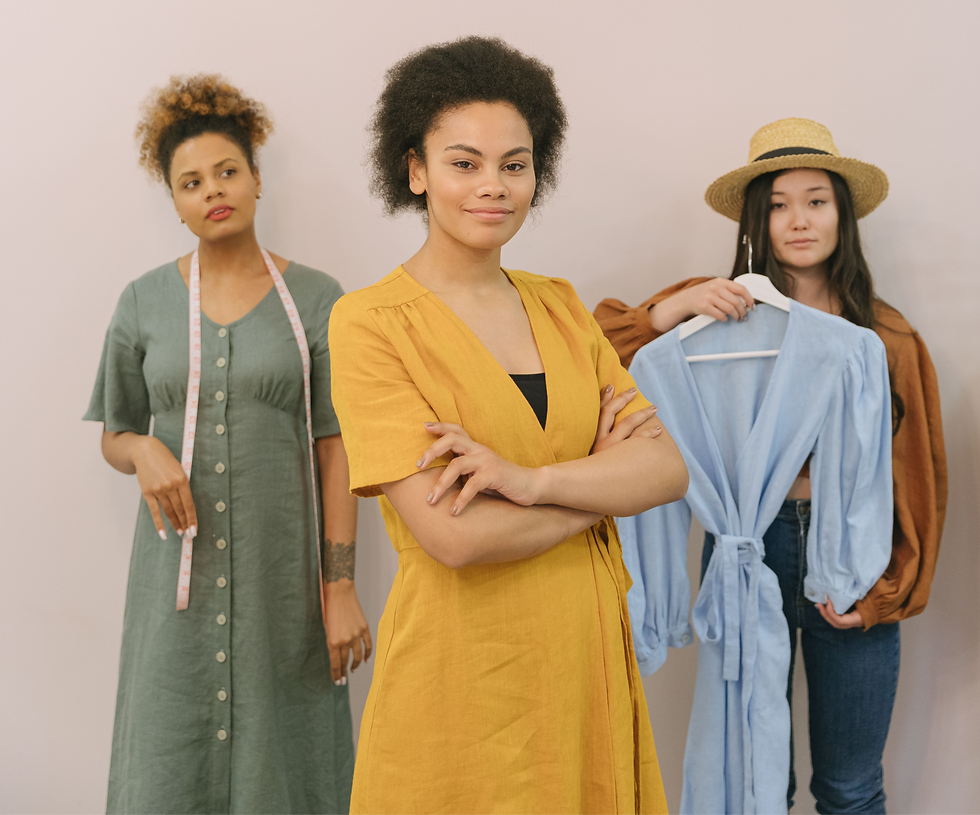
Getting dressed should feel good. Yet for so many of us, body types dressing has been tangled up with the idea of hiding things, minimising bits we dislike, or following rules that feel more punishing than helpful. The real purpose of dressing for your body type — or what stylists call dressing for your silhouette — is far more liberating than that. It is about creating visual balance, celebrating your proportions, and understanding how clothing lines and fabric can work with your shape rather than against it. Bodies change, and no single label defines you forever. This guide will give you the tools to dress with genuine intention.
Table of Contents
Understanding Body Types: The Five Main Categories
The fashion industry typically groups body shapes into five broad categories: hourglass, pear, apple, rectangle, and inverted triangle. These are defined largely by the relationship between your bust, waist, and hip measurements, alongside shoulder width. They are starting points, not identities carved in stone.
Here is a quick overview of each:
Body shape | Key characteristics |
Hourglass | Bust and hips roughly equal, with a clearly defined waist |
Pear | Hips wider than bust, narrower shoulders |
Apple | Fuller through the midsection, shoulders and hips of similar width |
Rectangle | Bust, waist, and hips in close proportion, straighter silhouette |
Inverted triangle | Broader shoulders relative to hips, narrow lower body |

What makes these categories genuinely useful is not their precision but their direction. They help you identify where your natural proportions sit, so you can decide where you want the eye to travel. That said, body shapes are fluid, and many people find they sit between categories or shift between them over time as their body changes with age, lifestyle, or pregnancy.
A few things worth keeping in mind:
Your shape is a framework, not a fixed verdict. Use it to guide choices, not limit them.
Measurements matter more than mirror impressions. Grab a tape measure and note your bust, waist, and hip circumference.
Most bodies are a blend. You might have pear tendencies with a fairly defined waist, for example.
Style goals matter too. Where you want visual emphasis is just as relevant as what the category suggests.
Treat the categories as a helpful compass. The real work begins when you understand the underlying principles they are built on.
The Principles Behind Body Type Dressing
At its heart, body type dressing is about one thing: visual proportion and balance. Not slimming. Not concealing. Balance. The goal is for your outfit to feel harmonious, with no single area drawing the eye in a way you have not chosen intentionally.
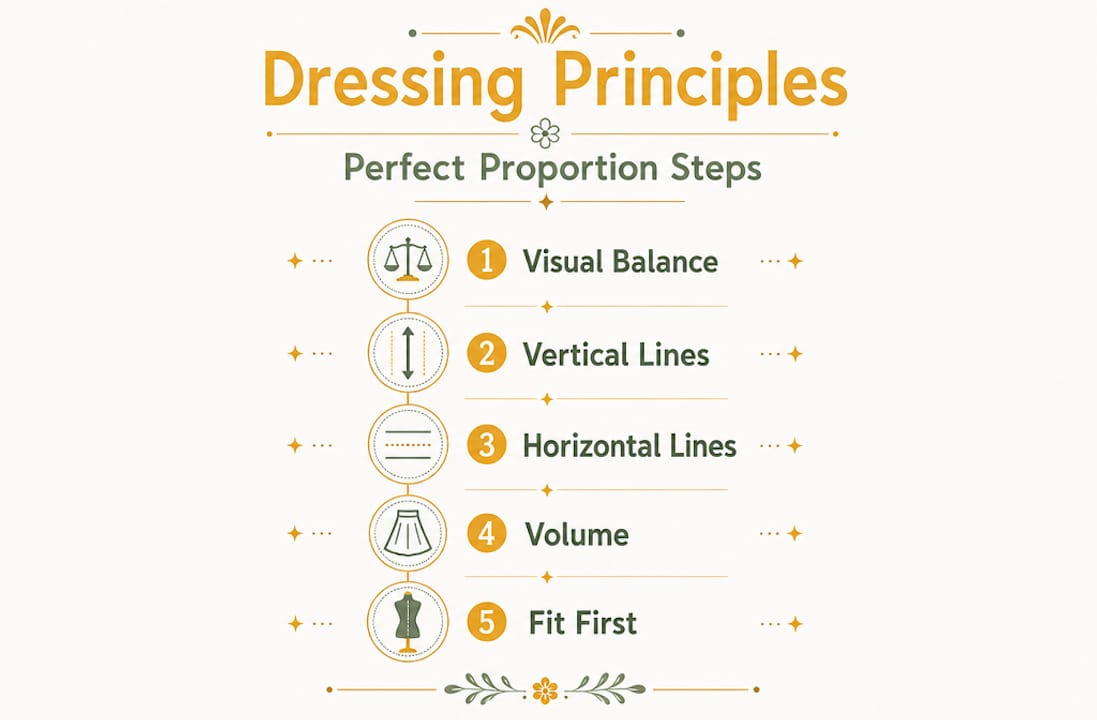
Clothing creates visual lines, and those lines direct attention. A wrap dress draws the eye inward to the waist. A wide-leg trouser adds visual weight below the hip. A bold neckline lifts the gaze upward. Once you start reading garments this way, getting dressed becomes far more interesting.
There are a few key principles worth understanding deeply.
Vertical lines lengthen. A long cardigan worn open, a column of buttons, or a monochromatic outfit all create a vertical line that reads as taller and leaner. This is useful for almost every shape when applied thoughtfully.
Horizontal lines add width. Boat necklines, wide belts, and horizontal colour blocking all expand the perceived width of wherever they sit. This is excellent for adding the impression of shoulders on a pear shape or hips on an inverted triangle.
Volume is a tool, not an enemy. Many people fear fabric volume near areas they are self-conscious about. In reality, adding volume strategically balances proportions rather than exaggerating them. A full skirt on a pear shape draws the eye down with intention, making broader hips feel like part of a complete picture rather than something to apologise for.
Fit is the most transformative variable of all. A well-fitting garment works with your body in a way that no amount of clever styling can compensate for if the fit is off. Clothes that pull, gap, or hang shapelessly undermine your silhouette regardless of how beautiful the cut is.
Common pitfalls include:
Wearing clothes too small in the hope they look more fitted (they do not)
Avoiding volume entirely out of habit rather than intention
Choosing patterns or textures without considering where they will land on your frame
Relying on colour blocking in a way that visually cuts your body at an unflattering horizontal point
Pro Tip: When trying on a new piece, step back and observe where your eye lands first. Then ask whether that is where you want attention to go. If not, the garment may need to be adjusted or reconsidered, no matter how much you love it on the hanger.

Practical Outfit Ideas by Body Type
This is where the principles become personal. Use these as starting points and feel free to mix, adapt, and ignore anything that does not resonate with your own sense of style.
Hourglass. Your proportions are already naturally balanced, so the focus is on celebrating that rather than fighting it. Fitted dresses, wrap styles, and anything that follows the waist work beautifully. Avoid very boxy or shapeless silhouettes that obscure the waist, as they can actually make your shape look bulkier rather than streamlined. Fabric with some structure or stretch that skims rather than clings is your sweet spot.
Pear. The styling goal here is to add visual weight to the upper body to balance broader hips. Boat necklines, off-the-shoulder tops, structured blazers, and statement sleeves all work wonderfully. For bottoms, look for skirts and trousers that skim the hips rather than pull or cling. A-line skirts are a perennial favourite for this shape. For pear-shaped styling, the upper body detail does not need to be loud. Even a slightly textured fabric or a lighter colour on top creates the visual weight needed to balance things out.
Apple. Creating a strong vertical line is the key consideration for an apple shape, drawing the eye upward and through the body rather than across the midsection. V-necks and open-collar shirts are particularly effective. Flowing, structured fabrics that skim the midsection rather than cling or puff outward keep the silhouette clean. Empire-line dresses and tunics over straight-leg trousers are both excellent options. Avoid anything that cinches tightly at the natural waist, as this tends to emphasise rather than balance.
Rectangle. The styling goal for a rectangular frame is to create the impression of curves and waist definition where nature has not provided them as prominently. Belts are your best friend. So is layering: a fitted top tucked into a high-waisted full skirt instantly creates the illusion of a more defined waist. Textured fabrics, ruffles, and patterns add visual interest and break up the straight silhouette. Peplum tops and wrap styles are also worth exploring, as they both add and define curves in one move.
Inverted triangle. The aim is to keep things simple and uncluttered on the upper body while adding lower-body volume to balance broader shoulders. Avoid cap sleeves, padded shoulders, and boat necks, as these all add horizontal visual weight where you least need it. Instead, opt for V-necks, halter necks, or scoop necks. Wide-leg trousers, A-line skirts, and fuller midi skirts are excellent below the waist. You can explore inverted triangle styling further to find specific cuts and prints that work beautifully for this shape.
Do not feel bound by these suggestions. The best outfit for any body type is one that makes you feel genuinely good, not one that ticks every box on a style checklist.
Fabric, Patterns, and Evolving Shapes
Once you have a handle on the basics, fabric becomes the next fascinating lever to explore. The same garment cut can behave very differently depending on whether it is made in a stiff brocade or a soft jersey. A bias-cut dress in silk crepe will drape and flow, clinging softly to the body. The same cut in a structured cotton will hold its shape further from the body, creating a more architectural silhouette.
Heavier fabrics tend to hold their shape away from the body, which can be useful for adding structure or concealing areas. Lighter, drapey fabrics follow the body’s contours more closely, which is wonderful for celebrating curves but less forgiving in areas where you want to skim rather than reveal.
On the subject of patterns, here is something genuinely surprising. We are often told that vertical stripes are slimming and horizontal ones are widening. In reality, horizontal stripes can create a taller, narrower impression through what is known as the Helmholtz illusion. The actual effect depends on stripe spacing, colour contrast, and the wearer’s frame. The takeaway is that pattern rules are far less reliable than they seem.
A few principles that do hold true:
Larger prints draw more attention to wherever they are placed on the body
All-over prints tend to be less visually disruptive than bold colour-blocked pieces
Dark colours recede visually; light colours advance. Use this to direct or soften attention
Texture adds visual weight, which can be useful or overwhelming depending on placement
Bodies also change. Shape categories that felt accurate in your twenties may shift considerably by your forties. Styling should be revisited and refreshed rather than treated as a one-time discovery. Think of it as an ongoing and rather enjoyable conversation with your wardrobe.
Pro Tip: Rather than memorising rules, practise reading garments on your body in motion. Walk, sit, and stand in front of a full-length mirror. Where does the eye go? Does the fabric move with you or against you? That observation tells you more than any category chart.
My Take on Dressing for Your Shape
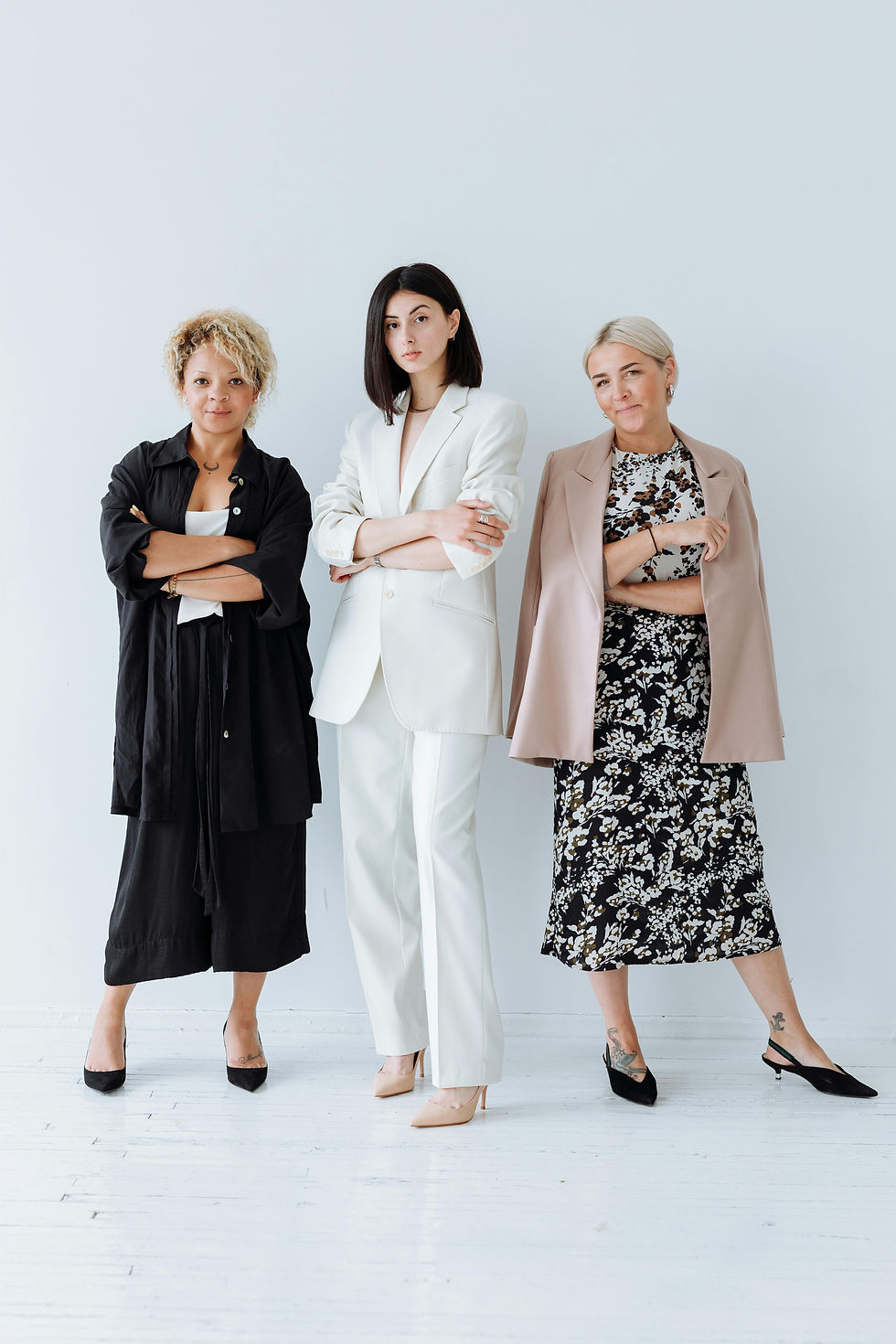
I have spent years helping people think about their wardrobes, and one thing I keep coming back to is this: when an outfit feels off, it is almost always a proportion issue, not a body issue. The body is not the problem. The garment is simply not yet working with it.
What genuinely shifts people’s relationship with getting dressed is understanding that fit transforms everything. Not the size on the label. Not the trend. The actual, physical fit of the garment on your frame. Once you stop blaming your shape and start reading your clothing lines with curiosity, something clicks.
The other thing I would challenge is the idea that these shape categories come with a list of forbidden items. They do not. They come with an invitation to understand your proportions and use that knowledge as a foundation. From there, experimentation is everything. I have seen people with so-called rectangle frames pull off bias-cut silk dresses that were supposedly “wrong” for them, because they styled them with confidence and intention.
Use this guide as a beginning, not a boundary.
Dress Your Shape with Vintage Style
If there is one thing we know at My Vintage, it is that vintage fashion was built around shape. The 1950s full-skirted silhouettes that cinch at the waist, the fluid 1970s wrap dresses that celebrate every curve, the structured 1940s tailoring that creates presence. These are not just beautiful garments. They are practical examples of body type dressing at its most intentional, made in an era when garment construction was considered an art form.
Our curated collection at My Vintage spans decades of styles designed with genuine structure and proportion in mind. Whether you are exploring vintage dresses for your silhouette or looking for detailed guidance on dressing for your specific shape, we have both the pieces and the inspiration to help. Vintage sizing can differ from modern measurements, so our vintage size conversion guide is a genuinely useful read before you shop. And while you are here, do take a look at our gorgeous 1950s atomic magazine rack. It is the kind of piece that brings the same considered, characterful energy to your home as vintage fashion brings to your wardrobe.
Frequently Asked Question
What does dressing for body types actually mean?
Dressing for body types means using clothing lines, volume, and fit to create visual proportion and balance that suits your natural shape. It is about intentional styling, not hiding or minimising.
Which body type is the easiest to dress?
No body type is inherently easier or harder to dress. Each shape has its own set of styling principles, and understanding visual balance makes any shape straightforward to work with.
Do the body shape rules apply to everyone?
Body shape guidelines are frameworks rather than rigid rules. Shapes overlap and change over time, so treat them as a helpful starting point rather than an absolute prescription.
Do horizontal stripes always make you look wider?
Not necessarily. Research shows that horizontal stripes can appear taller and narrower due to the Helmholtz illusion, so the effect depends heavily on stripe spacing and context.
What is the most important factor when dressing for your body type?
Fit. A well-fitting garment will always outperform a cleverly styled but poorly fitting piece, regardless of body shape or trend.
Recommended


Comments