


The Definitive Guide to 1980s Vintage Power Suits

The 1980s power suit is one of fashion history’s most fascinating contradictions. On the surface, it borrowed the rigid structure of traditional menswear, yet in women’s hands it became something far more dramatic, more daring, and frankly more fun. Exaggerated shoulder pads, structured tailoring, broad silhouettes, and bold colours defined the look, projecting authority and ambition in equal measure. Whether you’re a collector hunting authentic pieces, a stylist building a retro wardrobe, or a costume designer working on a period production, understanding what truly made the power suit iconic is the key to getting it right. Let’s dig in.
Point | Details |
Key features | Shoulder pads, bold fabrics, and structured silhouettes define the 1980s power suit. |
Designer influence | Armani, Saint Laurent, Versace, and Montana shaped the era with unique power suit designs. |
Cultural significance | These suits symbolised ambition, gender dynamics, and became icons thanks to media and politics. |
Practical styling tips | Combine tailored jackets with high-waisted skirts or trousers for an authentic retro look. |
Authentication advice | Check fabric weight, detachable shoulder pads, and vintage patterns to verify true 1980s pieces. |
Decoding the Essential Features of the 1980s Power Suit
When most people picture an 1980s power suit, they reach straight for the shoulder pads. Fair enough. But the silhouette was built from far more than just padding. Understanding the full anatomy of the look will sharpen your eye when you’re hunting for authentic vintage pieces.
The power dressing history of the era began in corporate boardrooms, where women sought to command the same visual authority as their male counterparts. The result was a carefully constructed uniform: boxy, bold, and utterly intentional. Exaggerated shoulder pads and structured tailoring were key attributes, with shoulder pads often reaching up to two inches in thickness and sometimes designed to be detachable for versatility.
Lapels were wide, typically measuring four to five inches across, lending a sense of gravitas to even the simplest jacket. Waists were often nipped in just enough to hint at a feminine silhouette beneath the armour. High-waisted trousers and pencil skirts completed the look, adding height and elongating the leg.

Here’s a quick breakdown of what to look for:
Shoulder pads: Heavy, structured, often detachable, up to two inches thick
Lapels: Wide and pronounced, four to five inches
Silhouette: Boxy jacket with nipped waist and high-waisted bottoms
Fabrics: Heavyweight wool, tweed, and linen in solid or bold patterns
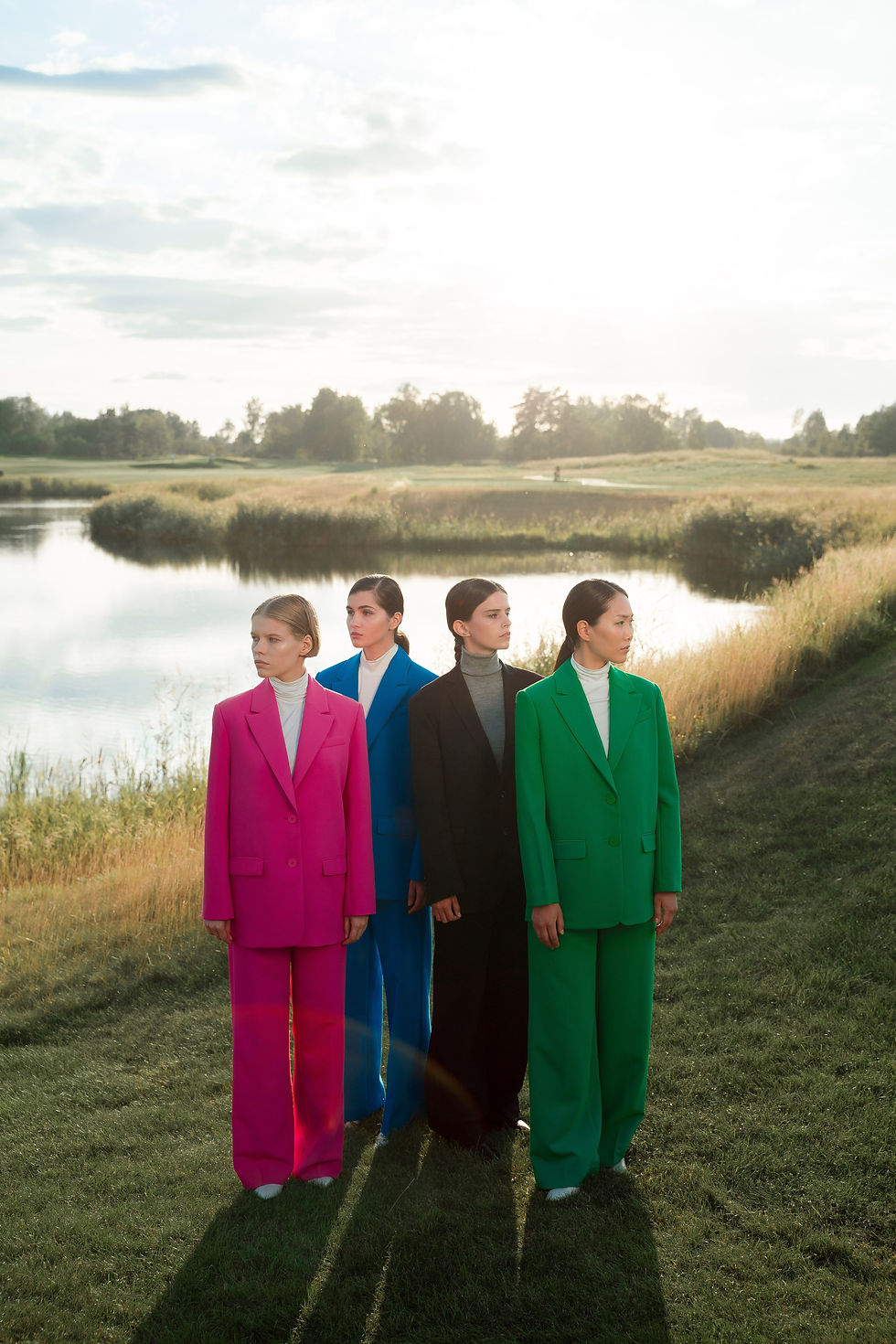
Colours: Neon pink, pillar-box red, cobalt blue, mint green, and rich neutrals
Statistic to note: At the peak of the power suit trend in the mid-1980s, shoulder pad inserts became a standalone retail category, sold separately so women could add structure to any jacket in their wardrobe.
Pro Tip: When browsing top 1980s looks for reference, pay close attention to the proportion between shoulder width and waist. An authentic 1980s jacket will have a noticeably exaggerated shoulder-to-waist ratio that modern tailoring simply doesn’t replicate.
The choice of fabric is equally telling. Lightweight, stretchy materials belong to a different era. Genuine 1980s power suiting feels substantial in the hand, with real weight and structure that holds its shape without a hanger.
Spotlight on Designers: Who Shaped the Power Suit Era?
The 1980s power suit was not born in a vacuum. It was shaped by a handful of visionary designers, each bringing a distinct personality to the genre. Knowing who made what, and why, is invaluable if you’re collecting or sourcing for production.
Designers like Giorgio Armani, Yves Saint Laurent, Ralph Lauren, Claude Montana, Hugo Boss, and Versace pioneered power suit designs, though each approached the brief very differently.
Designer | Signature style | Key characteristic |
Giorgio Armani | Relaxed tailoring | Muted tones, fluid structure |
Yves Saint Laurent | Women’s pantsuits | Androgynous authority |
Claude Montana | Extreme padding | High drama, theatrical shoulders |
Versace | Vibrant colours | Bold prints, gold detail |
Hugo Boss | Angular cuts | Double-breasted precision |
Giorgio Armani softened the power suit with relaxed, almost draped tailoring in warm neutrals and understated tones. His suits felt powerful without shouting. Yves Saint Laurent had already pioneered the women’s pantsuit in the late 1960s, and by the 1980s his influence on the genre was canonical. Claude Montana went to the opposite extreme, creating suits with theatrical shoulder structures that pushed the silhouette to its absolute limit.
Versace injected colour and detail, turning the power suit into a statement of personality rather than mere authority. Hugo Boss favoured angular, double-breasted cuts that referenced military precision.
“The power suit was not simply about looking professional. It was about looking unstoppable.” This was the creative energy driving designers in the 1980s, and you can feel it in every well-preserved piece today.
For collectors, designer labelled pieces command real attention. A beautifully preserved designer vintage power suit or a rare find like a Lanvin plaid suit represents both wearable fashion history and a genuinely collectible artefact.

The Cultural Impact: Power, Ambition, and Paradox
Fashion rarely exists in isolation. The 1980s power suit was a product of its moment, and that moment was electric. The decade brought economic expansion, corporate ambition, and a seismic shift in women’s professional lives. The suit became a uniform for a generation determined to be taken seriously.
Here’s how the power suit took hold culturally:
Political influence: Margaret Thatcher wore structured suits that projected authority with absolute consistency, making the silhouette synonymous with leadership.
Media amplification: TV shows like Dynasty and films like Working Girl made power suits iconic, dressing characters in increasingly dramatic versions of the look.
Workplace shift: As more women entered senior corporate roles, the suit offered a visual shorthand for professional credibility.
Celebrity adoption: Melanie Griffith’s portrayal of Tess McGill in Working Girl gave the power suit a specific cultural narrative about ambition and reinvention.
The paradox, and it is a genuine one, lay in the fact that women’s versions were consistently more exaggerated than men’s. Where men wore relatively restrained tailoring, women wore broader shoulders, brighter colours, and more theatrical proportions. The suit simultaneously borrowed from masculine tradition and transformed it into something distinctly feminine and powerful.
Feature | Men’s power suit | Women’s power suit |
Shoulder pads | Subtle, sewn-in | Pronounced, often detachable |
Colour palette | Navy, grey, charcoal | Brighter, bolder tones |
Silhouette | Boxy, straight | Structured with nipped waist |
Cultural message | Authority | Authority plus ambition |
These iconic 1980s pieces were not simply clothing. They were declarations. The further you study the power dressing history of this era, the clearer it becomes that the power suit was both product and producer of cultural change.

How to Style, Find, and Authenticate a Vintage Power Suit
Knowing your history is wonderful. Knowing how to apply it practically is what separates a good collection from a great one. Whether you’re styling a shoot, hunting for your next piece, or authenticating a potential purchase, here’s what matters most.
Heavy fabrics, bold patterns, and detachable shoulder pads are signatures of authenticity. Run your hand over the fabric first. Genuine 1980s suiting has real weight. If it feels lightweight or synthetic in a limp way, it’s likely a later reproduction.
Authenticating your find:
Check the shoulder pads: are they structured and, ideally, detachable?
Inspect the lapels: are they wide and sharply pressed?
Look at the lining: quality 1980s suits have fully lined jackets with care taken in every detail
Examine labels: original brand labels, union labels, and country of manufacture tags all help date a piece
Feel the weight: wool, tweed, and linen were the fabrics of the era
Pro Tip: Pair a structured 1980s jacket with a well-chosen vintage skirt to build an era-accurate look without needing a matching set. A high-waisted skirt in a bold colour can anchor a jacket beautifully, while a lilac pencil skirt or a jade green pencil skirt brings that unmistakable 1980s palette to life.

Worth knowing: The resale value of authenticated 1980s designer power suits has risen steadily, with collectors and costume departments competing for the best examples. Condition, provenance, and original labels all add significant value.
Styling advice is simple: let the jacket lead. A strong 1980s power jacket pairs with high-waisted tailored trousers, a pencil skirt, or even well-fitted straight-leg jeans for a contemporary twist. Keep accessories minimal. The suit does the talking.
The Real Power of the Suit: Beyond Vintage Nostalgia
Here’s an honest perspective from where we stand at My Vintage. The conversation around the 1980s power suit tends to settle into nostalgia, or worse, irony. People reach for the shoulder pads as a costume joke rather than a considered statement. We think that’s a missed opportunity.
The power suit paradox yielded attire that made wearers feel invincible and ambitious, and that psychological dimension hasn’t aged at all. In 2026, when so much fashion prioritises comfort and self-expression through casual-wear, there’s something genuinely radical about clothing that demands presence. The power suit still does that.
For collectors, we’d encourage looking beyond the obvious labels. Some of the most extraordinary examples came from lesser-known British and European manufacturers whose quality rivals the big names. For stylists, the power suit is not a period reference to be handled carefully. It’s a living tool that communicates confidence, ambition, and intentionality to any contemporary audience. Study the fashion history perspective of this era with that lens, and you’ll see it differently.
The real lesson from the 1980s power suit is this: clothes that are built with genuine intention, that say something specific about the person wearing them, never truly go out of style.
Find Your Authentic 1980s Power Suit
At My Vintage, we’ve been curating authentic vintage clothing since 2004, and our 1980s selection is something we’re genuinely proud of. You’ll find pieces with real provenance, proper labels, and the kind of quality construction that tells you immediately you’re holding something special. Browse an authentic designer vintage suit from our current collection, or explore the elegance of a Lanvin peach suit that captures the era’s sophisticated side. Every piece is selected by people who genuinely love this era of fashion.
Frequently Asked Questions
What defines an authentic 1980s power suit?
Authentic 1980s power suits feature exaggerated shoulder pads, structured tailoring, bold colours, and high-waisted elements, typically made from heavyweight fabrics with strong patterns or rich solid tones.
Which designers are most collectible for power suits?
Top collectible designers include Giorgio Armani, Yves Saint Laurent, Versace, Hugo Boss, and Claude Montana, each offering a distinct and highly recognisable interpretation of 1980s power dressing.
How do you authenticate the fabric and construction of a vintage power suit?
Look for heavy materials such as wool, tweed, and linen, detachable shoulder pads, wide lapels, and quality lining, all of which are reliable indicators of genuine 1980s construction.
Where can I buy authentic 1980s power suits in the UK?
Reputable vintage retailers like My Vintage offer curated selections of authentic 1980s power suits, including designer pieces with verified provenance and original labels.
Recommended

Comments