


Using Vintage Dress Patterns for Authentic Styles
- Mar 10
- 12 min read

Many people assume vintage dress patterns are fragile relics too complicated for modern sewists. The truth? These historic templates offer accessible pathways to authentic retro fashion that modern patterns simply cannot replicate. Whether you’re recreating a 1950s tea dress or exploring mid-century silhouettes, understanding vintage patterns transforms your sewing projects from generic reproductions into genuine period pieces with remarkable character and craftsmanship.
Table of Contents
Key Takeaways
Point | Details |
Authentic style replication | Vintage patterns preserve original construction methods and design details lost in modern pattern simplification. |
Historical brand influence | UK companies like Simplicity and Butterick established pattern standards still referenced by contemporary designers. |
Sizing requires adjustment | Vintage measurements typically run 2-4 inches smaller than modern equivalents, demanding careful modification. |
Original vs reproduction trade-offs | Original patterns offer authenticity but fragility, whilst reproductions provide durability with modern instructions. |
Skill development pathways | Period-appropriate techniques enhance garment quality and deepen appreciation for historical dressmaking craftsmanship. |
Introduction to Vintage Dress Patterns
Vintage dress patterns are historic sewing templates from the 19th and 20th centuries that preserve authentic fashion construction methods. These paper guides document everything from fabric requirements to precise cutting lines, offering modern sewists direct access to period-accurate garment creation. Unlike contemporary patterns that prioritise speed and simplification, vintage templates reflect the meticulous construction standards of their eras.
The appeal extends beyond nostalgia. Vintage patterns capture silhouettes, dart placements, and finishing techniques that define each decade’s aesthetic. A 1940s pattern features distinctive shoulder pads and nipped waists, whilst 1960s designs showcase mod shifts and geometric lines. These templates function as historical documents, preserving not just fashion trends but the technical evolution of dressmaking itself.
For enthusiasts seeking authentic retro style, vintage patterns provide unmatched accuracy. Modern “vintage-inspired” designs often miss subtle details that define period authenticity. Original patterns eliminate guesswork, offering proven construction methods tested by countless home sewists. This makes them invaluable for costume designers, historical re-enactors, and anyone committed to recreating genuine vintage aesthetics rather than approximations.
Understanding the history behind popular vintage patterns reveals how social changes influenced home dressmaking. Post-war fabric rationing shaped 1940s designs, whilst 1970s patterns reflected feminist movements towards practical, comfortable clothing. Each template tells a story about its era’s values, economics, and social dynamics.
Key characteristics that define vintage dress patterns include:
Detailed instruction sheets with hand-drawn illustrations rather than photographs
Tissue paper pieces requiring careful handling and often needing reinforcement
Sizing systems based on historical body measurement standards
Construction techniques emphasising hand-finishing and couture methods
Fabric suggestions specific to period-appropriate textiles and weights
Exploring vintage style dresses guide alongside actual patterns deepens appreciation for how garment construction shapes final silhouettes.
Historical Eras and Styles in UK Vintage Patterns

UK vintage patterns evolved dramatically across the 20th century, reflecting broader fashion movements and technological advances in pattern production. The interwar period saw simplified designs accommodating home sewists with limited skills, whilst post-war patterns grew increasingly sophisticated as dressmaking education expanded.
Simplicity Patterns established UK dominance by the 1940s, offering affordable templates that democratised fashion. Butterick, McCall’s, and Vogue Patterns followed, each developing distinctive style signatures. Vogue patterns targeted advanced sewists with couture-inspired designs, whilst Simplicity focused on practical everyday garments accessible to beginners.
Decade-specific characteristics define vintage pattern identification:
1930s-1940s: Bias-cut designs, modest necklines, defined waists, practical war-time simplicity, fabric economy features
1950s: Full skirts requiring petticoats, fitted bodices, sweetheart necklines, emphasis on feminine silhouettes, detailed construction
1960s: Shift dresses, mod aesthetics, geometric lines, shorter hemlines, youthful casual styles
1970s: Maxi lengths, folk influences, relaxed fits, natural fibres, bohemian details
1980s: Power shoulders, dramatic sleeves, bold prints, structured tailoring, excess fabric usage
Pattern envelope artwork provides immediate era identification. Early patterns featured illustrated covers, transitioning to photography in the 1960s. Envelope condition, printing quality, and price markings offer authentication clues. Original UK patterns often include pricing in shillings or early decimal currency, helping date pieces accurately.
Understanding history of popular vintage patterns contextualises why certain designs achieved enduring popularity. Claire McCardell’s American sportswear influenced UK casual patterns, whilst Christian Dior’s New Look shaped 1950s formal designs. These cross-Atlantic influences created hybrid styles unique to British home sewing.
Pro Tip: Check pattern company archives online before purchasing expensive vintage patterns. Many companies digitised their catalogues, allowing you to verify design details and compare condition against original specifications.
Regional variations within UK patterns reflected local fabric availability and manufacturing centres. Scottish patterns sometimes featured tartan adaptation notes, whilst London-centric designs emphasised cosmopolitan sophistication. These subtle differences add character to vintage pattern collections whilst complicating authenticity verification for novice collectors.
Exploring trend alert pleated skirts demonstrates how vintage construction techniques remain relevant to contemporary fashion trends.
Sourcing and Authenticity of Vintage Patterns in the UK

Finding authentic vintage patterns requires scrutinising paper quality and printing methods to avoid reproductions mislabelled as originals. UK sources range from charity shops and estate sales to specialised online dealers and pattern swap communities. Each source presents unique advantages and authenticity challenges.
Physical sourcing locations:
Charity shops and jumble sales offering bargain prices but inconsistent inventory
Antique markets and vintage fairs with curated selections at premium prices
Estate sales providing complete pattern collections from single owners
Haberdashery shop clearances occasionally yielding unopened vintage stock
Digital platforms expanded access dramatically but increased reproduction prevalence. eBay, Etsy, and specialist vintage pattern websites host thousands of listings. Successful online purchasing requires careful photograph analysis and seller communication. Request close-ups of pattern pieces, instruction sheets, and envelope details before committing to expensive purchases.
Authenticity verification focuses on specific material characteristics. Original patterns use distinctive tissue paper that yellows predictably with age. Printing methods changed over decades, with early patterns showing letterpress characteristics and later ones displaying offset printing. Modern reproductions often use brighter white paper with digital printing that lacks period-appropriate texture.
Authentication checklist:
Paper shows appropriate age-related yellowing without brittleness
Printing exhibits period-correct methods and ink characteristics
Instruction sheets match company’s historical format and illustration style
Pattern pieces show hand-drawn quality rather than digital precision
Envelope design aligns with verified examples from the stated era
Pro Tip: Join UK vintage sewing groups on social media before making significant pattern purchases. Experienced collectors willingly authenticate patterns from photographs, protecting newcomers from expensive mistakes whilst building community knowledge.
Reproduction patterns serve legitimate purposes when marketed honestly. Companies like Wearing History and Decades of Style create faithful reproductions with modern instructions and reinforced paper. These alternatives suit active use better than fragile originals, preserving vintage designs whilst accommodating contemporary sewing practices.
Understanding how to identify vintage clothing guide principles applies equally to pattern authentication, as both require similar attention to material characteristics and historical details.
Understanding and Adjusting Vintage Pattern Sizing
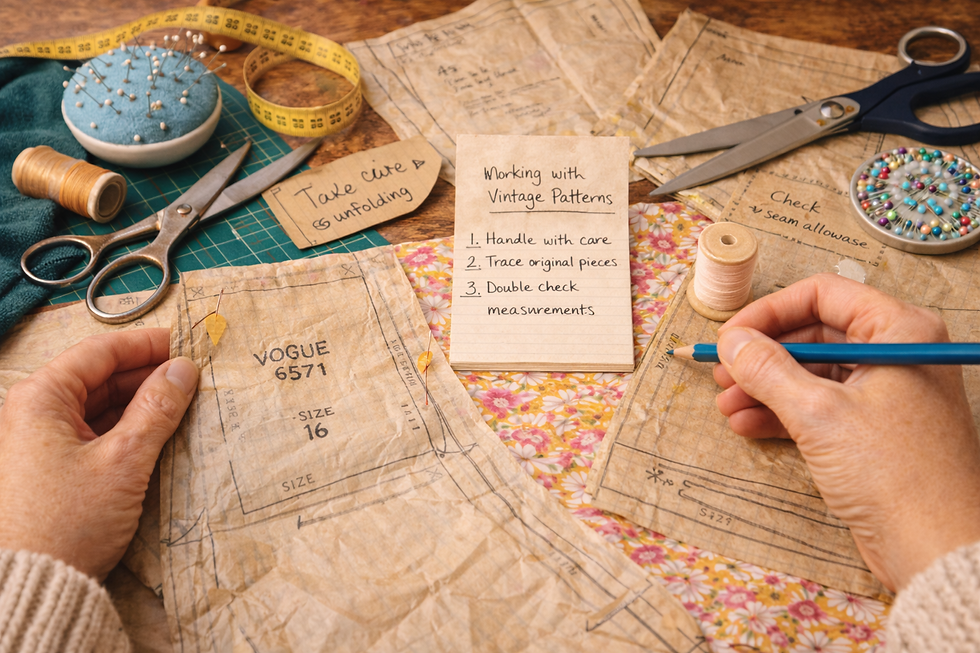
Vintage sizing systems bear little resemblance to modern standards, creating confusion that discourages many sewists from attempting period patterns. Adjustments typically require 2-4 inches resizing and pattern modification skills, though guided resources make the process manageable for determined learners.
Historical sizing reflected different body ideals and undergarment structures. A 1950s size 12 accommodated a 30-inch bust, whilst modern size 12 assumes 34-36 inches. Foundation garments shaped bodies to fit patterns rather than patterns adapting to natural figures. Understanding this philosophical difference prevents frustration when vintage patterns seem impossibly small.
Accurate measurement protocol:
Take measurements wearing appropriate undergarments for the era being recreated
Compare measurements against pattern envelope size charts, not modern sizing
Select pattern size based on bust measurement for dresses, waist for skirts and trousers
Purchase or trace one size larger than measurements suggest for ease of adjustment
Create muslin test garments before cutting expensive fashion fabric
Pattern grading techniques allow systematic size increases across all pattern pieces whilst maintaining design proportions. Basic grading adds consistent width at side seams and length at hem and shoulder. Advanced methods adjust dart positions, sleeve caps, and neckline curves to suit different body shapes whilst preserving the pattern’s essential character.
Pro Tip: Invest in pattern tracing paper rather than cutting original tissue pieces. This preserves vintage patterns for future use whilst allowing unlimited experimentation with sizing adjustments and design modifications without permanent consequences.
Modern fitting resources specifically address vintage pattern challenges. Books like “The Vintage Pattern Lending Library” and online tutorials from Gertie’s Blog for Better Sewing provide step-by-step guidance. These resources translate historical construction into contemporary terms whilst respecting period techniques.
Common fitting adjustments include:
Lengthening bodices to accommodate modern torso proportions
Widening shoulders for contemporary posture and build
Adjusting bust darts for different breast shapes and placements
Increasing sleeve circumference whilst maintaining period sleeve cap height
Adding wearing ease to patterns designed for structured foundations
Consulting vintage size conversion guide before purchasing patterns saves money and disappointment by clarifying realistic size expectations and necessary adjustments.
Original Vintage vs Reproduction Patterns: A Comparative Framework
Choosing between original vintage patterns and modern reproductions involves balancing authenticity desires against practical sewing considerations. Each option offers distinct advantages depending on project goals, skill level, and long-term collection intentions.
Aspect | Original Vintage | Reproduction |
Authenticity | Exact historical artefact with period materials | Faithful design copy with modern production |
Condition | Often fragile, incomplete, or damaged | Pristine with durable paper stock |
Instructions | Period language, illustrations, assumed knowledge | Contemporary terminology, detailed photographs |
Sizing | Historical standards requiring adjustment | Often includes multiple sizes and modern ranges |
Price | Variable, collectible pieces command premiums | Consistent, generally affordable |
Usability | May require reinforcement before use | Ready for immediate tracing and cutting |
Availability | Limited to existing stock, hunting required | Readily available through specialist retailers |
Original patterns provide unmatched historical connection. Handling tissue paper that home sewists used decades ago creates tangible links to dressmaking heritage. Pattern markings, margin notes, and fabric swatches tucked in envelopes tell stories about previous owners’ projects and style choices. This emotional resonance matters deeply to collectors and historical costume enthusiasts.
Reproduction advantages include:
Multiple size ranges within single envelope, reducing purchase costs
Reinforced paper withstanding repeated tracing and handling
Modern instruction clarity with step-by-step photographs
Guaranteed completeness without missing pattern pieces
Ethical considerations avoiding damage to finite historical resources
Hybrid approaches combine both options strategically. Serious collectors maintain original pattern archives whilst using reproductions for actual sewing projects. This preserves historical artefacts whilst enabling authentic garment creation without guilt about damaging irreplaceable patterns.
Serious dressmakers often maintain both original and reproduction pattern libraries, selecting appropriate options based on specific project requirements and historical accuracy needs.
Sewing Techniques and Skill Requirements for Vintage Patterns

Vintage dress patterns demand specific skills including hand-finishing, period construction understanding, and adaptation abilities for modern fabrics. These requirements need not intimidate beginners, as incremental skill development makes even complex vintage projects achievable with patience and proper resources.
Period-appropriate construction methods differ fundamentally from contemporary speed-sewing shortcuts. Vintage patterns assume hand-sewn hems, bound seams, and couture finishing techniques. Machine capabilities have expanded dramatically since mid-century, but replicating authentic vintage garments often requires deliberately choosing hand methods over faster alternatives.
Essential vintage sewing skills:
Hand-finishing techniques including slip-stitching and whip-stitching
Bound seam finishing methods predating serger use
Setting sleeves with traditional ease distribution
Installing invisible zips and period-appropriate closures
Understanding interfacing alternatives from pre-fusible eras
Pressing techniques that shape garments during construction
Fabric selection dramatically impacts vintage pattern success. Modern fabrics behave differently than period textiles, requiring technique adjustments. Contemporary cottons lack the body of mid-century varieties, whilst synthetic blends introduce stretch absent from original designs. Understanding these material differences prevents disappointing results from otherwise perfect pattern execution.
Pro Tip: Build vintage sewing skills progressively by starting with simple 1950s full skirts before attempting complex 1940s tailored suits. This allows technique mastery without overwhelming frustration, creating positive experiences that encourage continued skill development.
Common construction challenges include:
Adapting patterns designed for woven fabrics to modern knits
Achieving proper fit with period ease amounts that feel restrictive
Sourcing appropriate notions like metal zips and vintage buttons
Understanding instruction abbreviations and assumed knowledge
Balancing historical accuracy with modern comfort expectations
Online communities provide invaluable support for vintage sewing challenges. Forums like Pattern Review and dedicated Facebook groups offer troubleshooting advice, technique demonstrations, and moral support. Connecting with experienced sewists accelerates skill development whilst reducing costly mistakes.
Exploring vintage costume design essentials reveals how professional costumiers approach vintage pattern challenges, offering techniques applicable to home sewing projects.
Common Misconceptions about Vintage Dress Patterns
Several misconceptions discourage enthusiasts from exploring vintage patterns, despite modern adjustments and reproduction availability effectively addressing these perceived challenges. Dispelling these myths empowers sewists to confidently embrace vintage pattern sewing.
Myth: Vintage patterns cannot fit modern bodies without extensive alteration. Reality reveals that systematic grading techniques and fitting adjustments accommodate contemporary figures whilst preserving design integrity. The process requires patience rather than advanced skills, with numerous tutorials demystifying adjustment methods. Modern sewists successfully create vintage garments in sizes far beyond original pattern ranges.
Myth: Vintage patterns are too difficult for beginners. This assumption ignores pattern complexity variations across eras and companies. Simple 1950s skirt patterns require only basic skills, whilst 1940s tailored jackets challenge even experienced sewists. Reproductions with modern instructions further reduce difficulty, making vintage styles accessible to motivated beginners willing to work methodically.
Myth: All vintage patterns available today are authentic originals. The reproduction market has expanded dramatically, with companies producing faithful copies alongside entirely new designs claiming vintage inspiration. This necessitates authentication skills but actually benefits sewists by providing durable alternatives to fragile originals. Understanding distinctions allows informed purchasing decisions rather than feeling deceived.
Additional misconceptions:
That vintage patterns require specialised equipment beyond standard home sewing machines
That period-appropriate fabrics are impossible to source in contemporary markets
That wearing vintage-sewn garments appears costume-like rather than stylish
That vintage sewing techniques are obsolete rather than quality-enhancing
That pattern sizing inconsistencies indicate manufacturing defects rather than historical standards
Addressing these myths requires education and community support. Seeing other sewists successfully complete vintage projects provides motivation and proof that challenges are surmountable. Online galleries showcasing finished garments demonstrate how vintage patterns create wearable, flattering modern wardrobes rather than costume-only pieces.
Exploring myths and facts about vintage shopping parallels pattern misconceptions, revealing how education transforms perceived obstacles into manageable learning opportunities.
Practical Application and Next Steps for Vintage Dress Pattern Enthusiasts
Transitioning from vintage pattern knowledge to confident hands-on practice requires strategic project selection, proper preparation methods, and ongoing community support. These practical steps transform theoretical understanding into finished garments that showcase authentic vintage style.
Selecting appropriate first projects:
Choose patterns matching current skill level, prioritising simple silhouettes over complex construction
Start with reproductions featuring modern instructions before attempting fragile originals
Select designs requiring minimal fitting adjustments to build confidence
Focus on skirts or simple dresses rather than structured jackets or tailored trousers
Verify complete pattern piece inventory before purchasing to avoid incomplete patterns
Research online reviews and sew-along communities for specific pattern recommendations
Pattern preparation transforms fragile vintage tissue into workable templates. Tracing patterns onto Swedish tracing paper or medical examination paper creates durable copies that withstand repeated use whilst preserving originals. This extra preparation step proves invaluable for vintage patterns missing pieces or requiring extensive sizing adjustments.
Establishing systematic workflows prevents common mistakes. Reading instructions completely before cutting fabric, creating muslin test garments, and maintaining organised pattern piece storage all contribute to successful outcomes. These habits matter particularly for vintage patterns where instruction clarity may be limited or sizing unpredictable.
Recommended resources supporting vintage pattern sewing include online communities like the Vintage Pattern Lending Library, blogs such as Gertie’s Blog for Better Sewing, and YouTube channels demonstrating period construction techniques. These resources provide technique demonstrations, troubleshooting advice, and inspiration for maintaining momentum through challenging projects.
Engaging how to identify vintage clothing guide principles alongside pattern study creates comprehensive vintage style knowledge, enabling authentic period recreation from pattern selection through final styling.
Continued skill development happens through progressive project complexity. After mastering basic patterns, sewists can tackle set-in sleeves, bound buttonholes, and tailored elements. This incremental approach builds capabilities without overwhelming frustration, creating positive experiences that sustain long-term engagement with vintage sewing.
Connecting with UK vintage sewing communities through social media groups and in-person sewing circles provides accountability, inspiration, and practical support. Seeing others’ finished projects motivates continued effort whilst troubleshooting discussions prevent common mistakes. The metin.london blog offers additional vintage fashion insights that complement pattern sewing knowledge.
Explore Vintage Dress Patterns and More at My Vintage
Your vintage pattern sewing journey connects beautifully with authentic vintage pieces that inspire and complement your handmade wardrobe. My Vintage offers carefully curated vintage clothing from the 1940s through 1990s, providing style reference points for your sewing projects whilst supplying genuine vintage pieces for immediate wear.
FAQ
What are vintage dress patterns?
Vintage dress patterns are historic sewing templates from the 19th and 20th centuries that provide authentic construction methods for period garments. They preserve original design details, sizing standards, and techniques specific to their eras. These patterns function as both practical sewing tools and historical documents recording fashion evolution.
How can I tell if a vintage pattern is authentic?
Authentic vintage patterns display age-appropriate paper yellowing, period-correct printing methods, and original instruction sheet formats matching verified company examples. Examine pattern tissue texture, envelope design consistency, and printing characteristics against known originals. Consult how to identify vintage clothing guide principles for authentication techniques applicable to patterns.
Are vintage dress patterns suitable for beginners?
Reproduction vintage patterns with modern instructions and adjusted sizing provide accessible entry points for motivated beginners. Start with simple designs like 1950s gathered skirts before progressing to complex constructions. Patient learners successfully complete vintage projects by selecting appropriate patterns and utilising available resources. Review myths and facts about vintage shopping to understand how education overcomes perceived obstacles.
What are common sizing challenges with vintage patterns?
Vintage measurements typically run 2-4 inches smaller than modern equivalents, requiring systematic grading and fitting modifications. Patterns assumed foundation garment use that shaped bodies differently than contemporary undergarments. Consult vintage size conversion guide before purchasing to understand realistic size expectations and necessary adjustments for successful fitting.
Recommended


Comments