


Style Vintage Clothes with Confidence: Expert Tips
- May 1
- 8 min read

There is something genuinely thrilling about pulling on a 1970s suede jacket or a perfectly cut 1950s wiggle dress and knowing that no one else on the high street is wearing the same thing. Yet many fashion lovers find themselves stumped when it comes to actually styling vintage clothes rather than simply admiring them. The fear of looking like you have raided a costume box is real, and it holds a lot of people back from exploring one of fashion’s most rewarding territories. This guide will walk you through everything you need, from spotting authentically dated garments to building a wardrobe that feels personal, polished, and genuinely wearable every single day.
How to Identify Vintage: Era, Authenticity, and Construction Cues
Before you can style vintage with any real confidence, you need to know what you are actually working with. Identifying vintage clothing accurately is both a skill and a pleasure, and once you have trained your eye, it becomes almost instinctive.
Vogue defines vintage as clothing and accessories that are at least 20 years old but fewer than 100 years old, distinguishing it from antique. Anything older than a century moves into antique territory. Within that broad range, the practical dating clues lie in the construction details, and these are your best friends when shopping in person or scrolling through listings online.
Here is a quick reference for the most reliable era indicators:
Construction detail | Era indicator |
Metal zip, often with brand name stamped | Pre-1970s, often 1940s–1960s |
Plastic or nylon zip | 1970s onwards |
No fibre content label | Pre-1971 (UK labelling laws changed) |
Fibre content label present | Post-1971 |
Pinked seams, no overlocking | 1940s–1950s |
Overlock or serged seams | 1960s onwards |
Union labels (US) or specific UK maker labels | Helps narrow decade significantly |
Beyond the table above, look at the overall silhouette and fabric weight. Wartime 1940s garments tend to use less fabric due to rationing, so skirts are narrower and jackets are shorter. Late 1960s and 1970s pieces often feature bold synthetic fabrics like polyester and nylon in vivid prints. The authenticity checks you carry out at this stage will directly inform how you style the piece later.
Key things to look for at a glance:
Zip type: Metal almost always signals pre-1970s.
Label language: Older labels use imperial measurements; metric appeared later.
Seam finish: Pinked edges (zigzag cut, no stitching) point firmly to 1940s and 1950s.
Button material: Bakelite buttons are a strong 1940s indicator; plastic moulded buttons suggest 1960s onwards.
Lining: Fully lined garments were standard in tailored 1950s and 1960s pieces.
Pro Tip: Run your fingers along the inside seams. If you feel a clean pinked edge with no overlocking whatsoever, you are almost certainly holding a 1940s or 1950s piece. That detail alone can save you from misdating a garment by two decades.
Knowing the era is not just an academic exercise. It tells you which silhouettes, accessories, and styling approaches will work authentically with the piece, which is exactly what we will cover next.
Building your Vintage Wardrobe: Choose Eras and Statement Pieces
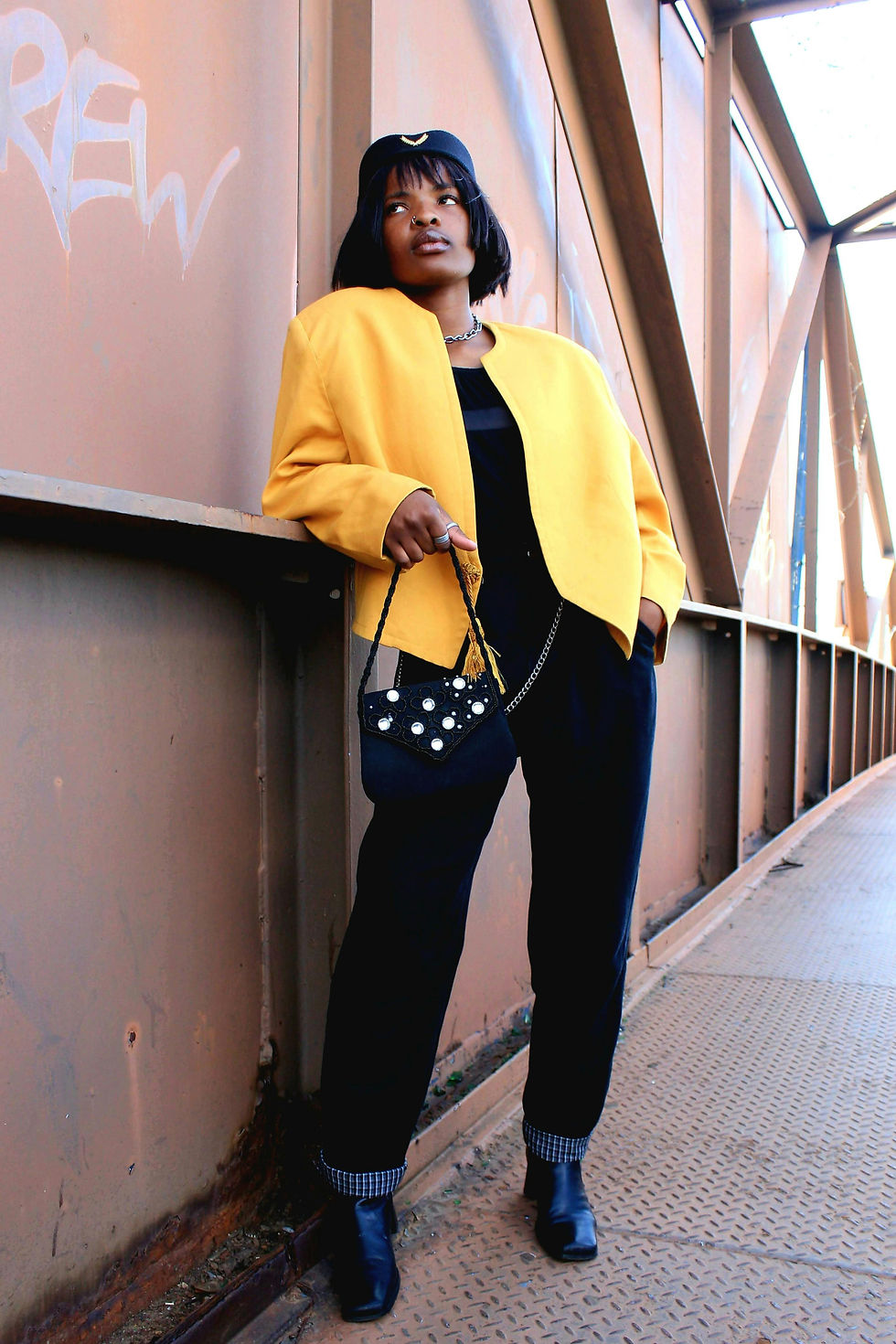
Once you can date a garment reliably, the real fun begins: deciding which decades speak to you and building a wardrobe around them. This is a deeply personal process, and there is no single right answer. Some people are drawn to the structured elegance of 1940s tailoring; others love the free-spirited energy of styling 1970s fashion with its wide lapels and earthy colour palettes.
A useful starting point is to compare statement pieces with staple pieces:
Type | Examples | Best for |
Statement | 1950s full-skirted party dress, 1980s power blazer | Special occasions, focal outfits |
Staple | 1970s high-waisted trousers, 1960s shift dress | Everyday wear, easy mixing |
Accessory | 1940s brooches, 1990s chunky trainers | Adding era flavour without commitment |
It is worth noting that runway revivals drive demand for specific vintage styles very quickly, which means prices and availability for original pieces can shift almost overnight. When a major house sends 1980s-inspired power shoulders down the catwalk, expect original 1980s blazers to become harder to find and more expensive within weeks.
Here is a step-by-step approach to building a capsule vintage wardrobe:
Audit your existing wardrobe. Identify gaps and note which modern pieces you wear most. This tells you which vintage era will integrate most naturally.
Choose one or two anchor decades. Focusing on 1950s and 1970s, for example, gives you a coherent visual language to work with.
Start with staples, not showstoppers. A 1970s wrap blouse or a 1960s A-line skirt is far more versatile than a full 1950s ballgown.
Add one statement piece per season. This keeps the wardrobe feeling fresh without overwhelming it.
Shop ahead of trend cycles. Use vintage shopping tips to source pieces before a runway revival pushes prices up.
The joy lies in building something that feels uniquely yours rather than a replica of a magazine editorial from 1962 (although we really dig that look too!)
Styling Vintage Clothes: Combine Eras and Achieve Authentic Looks
Having the right pieces is only half the picture. Knowing how to put them together is where real style confidence comes from. The construction and era cues you identified earlier are not just useful for dating; they actively inform your styling decisions.

Using dating and construction cues as part of the styling workflow, rather than an afterthought, gives you better results. A 1940s bias-cut blouse, for instance, calls for a high-waisted silhouette and simple, structured accessories. A 1990s slip dress, by contrast, works brilliantly with chunky trainers and a cropped knit layered over the top.
Effective styling strategies include:
Single-era focus: Wear head-to-toe pieces from one decade for a cohesive, editorial look. This works especially well for 1950s and 1970s.
Blending decades: Pair a 1980s oversized blazer with 1960s-inspired wide-leg trousers. The key is keeping the silhouette balanced.
Vintage with contemporary basics: This is arguably the most wearable approach. A 1970s printed shirt tucked into modern slim trousers looks current rather than costume-like.
Contrast intentionally: A delicate 1940s blouse with contemporary denim creates a deliberate tension that reads as stylish, not confused.
For styling vintage outfits that feel modern, the golden rule is to let the vintage piece lead and build around it. Think of it as the anchor of the outfit, with everything else playing a supporting role.
Pro Tip: Limit yourself to one statement vintage piece per outfit. If you are wearing a 1980s power blazer, keep the rest of the look simple. Two strong vintage statements in one outfit can tip the balance from stylish to theatrical (we are so here for theatrical but it's not for everyone!)
Incorporating vintage into a modern wardrobe is ultimately about proportion and intention. When you know why you are wearing something, it shows in how you carry it.
Accessorising and Finishing Touches: Making Vintage Yours

Accessories are where vintage styling either comes alive or falls flat. The right finishing touches can ground a look in a specific era without making it feel like a museum exhibit. The wrong ones can undermine even the most beautiful garment.
Provenance research using sourcing context, runway images, and contemporaneous coverage makes vintage styling more culturally grounded rather than purely aesthetic. In other words, knowing where a piece came from and how it was originally worn gives you a richer, more confident starting point for accessorising it.
“The most compelling vintage outfits are the ones that tell a story. When you know the cultural moment a garment comes from, you can honour it while making it entirely your own.”
Here is a breakdown of accessories that work beautifully across the key vintage decades:
1940s: Structured leather handbags, platform or T-bar shoes, silk scarves tied at the neck, simple pearl or Bakelite jewellery.
1950s: Cat-eye sunglasses, pointed-toe kitten heels, circle skirt petticoats, charm bracelets.
1960s: Block-heeled Mary Janes, geometric earrings, mod-style headbands, simple chain bags.
1970s: Wooden-heeled clogs or platform sandals, wide-brimmed hats, layered necklaces, suede shoulder bags.
1980s: Oversized hoop earrings, bold belts, ankle boots, statement brooches on lapels.
1990s: Chunky trainers, tiny shoulder bags, choker necklaces, square-framed sunglasses.
Small details matter enormously. The right pair of socks visible above a 1970s clog, or a perfectly chosen pair of cat-eye frames with a 1950s shirtwaist dress, can lift an entire look from good to genuinely memorable. Explore the full vintage accessories guide for deeper inspiration, and consider completing vintage looks from head to toe for the most polished results.
Pro Tip: Search vintage fashion archives and original editorial photography for the decade you are working with. Seeing how accessories were actually styled in period images is far more useful than any modern interpretation, and it gives your outfit a genuine sense of authenticity.
When accessorising with retro pieces, remember that restraint is your ally. One era-appropriate accessory can do more work than five mismatched ones.
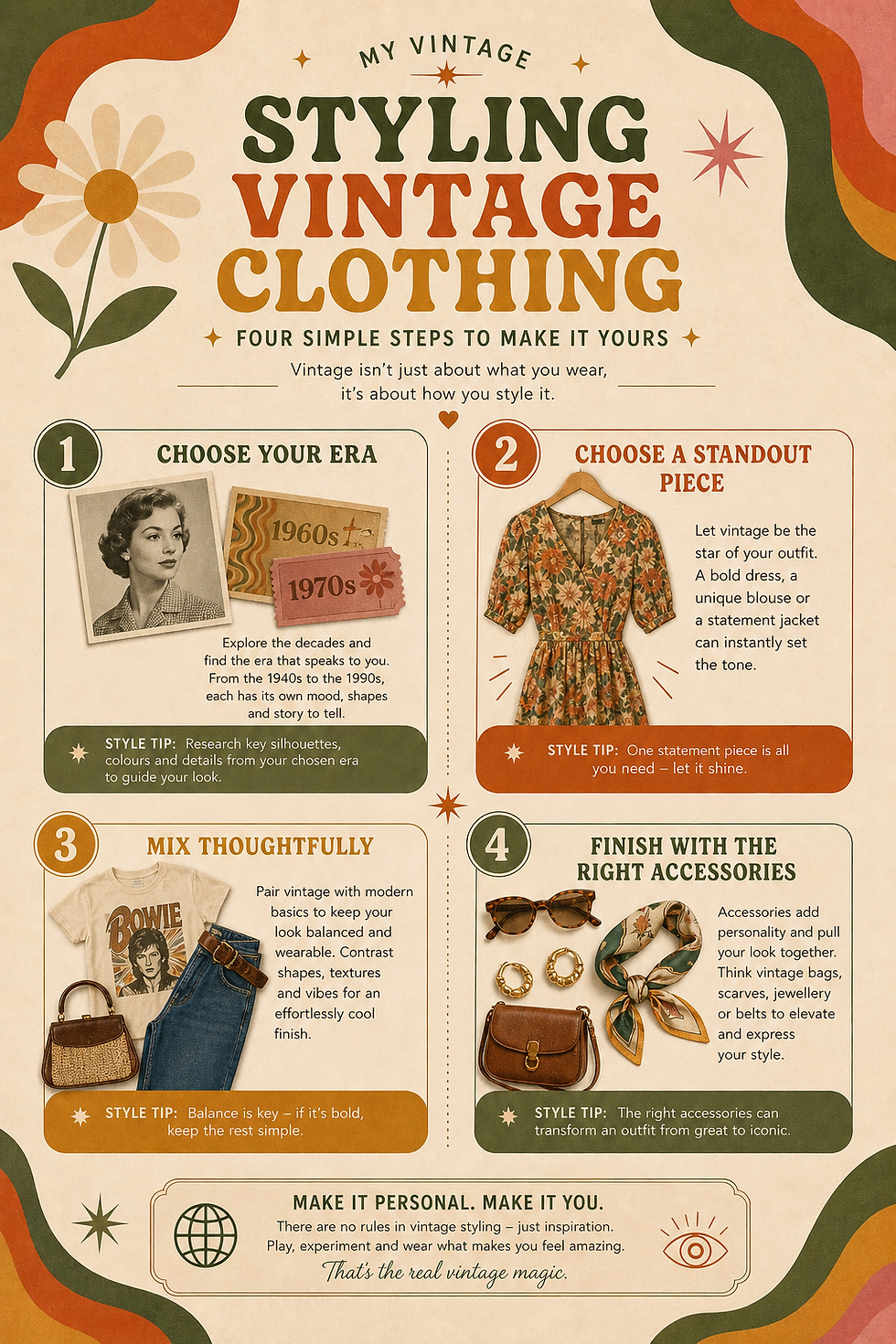
Why Vintage Styling is About Storytelling, Not Just Aesthetics
Here is something we feel strongly about at My Vintage, and it is a view that sets us apart from a lot of the generic advice out there: the most powerful thing about vintage clothing is not how it looks. It is what it means.
We see a lot of people approach vintage as a purely visual exercise, hunting for the right silhouette or the right colour palette to match a mood board. And while that is a perfectly valid starting point, it misses the deeper pleasure that vintage offers. When you know that a 1940s utility jacket was designed under wartime rationing constraints, or that a 1970s maxi dress reflects the era’s rejection of 1960s minimalism, you wear it differently. You carry it with more intention, and that shows.
The contrarian view we would offer is this: do not try to copy a vintage lookbook. Reinterpret it. The goal is not to look like you have stepped out of 1965; it is to bring the energy and craftsmanship of 1965 into 2026 on your own terms. That is a creative act, and it is far more interesting than mere imitation.
Incorporating vintage meaningfully means asking yourself what draws you to a particular piece and letting that answer guide how you wear it. A garment with a story, worn by someone who knows and shares that story, is always more compelling than the most technically perfect outfit assembled without context or feeling.
Vintage is living history. Wear it like you know that.
Explore unique vintage pieces with My Vintage
Ready to add vintage flair to your style? At My Vintage, we have been curating authentic, handpicked pieces from the 1940s through to the 1990s since 2004, and every item in our collection is chosen for quality, individuality, and genuine vintage character.
Whether you are building your first capsule vintage wardrobe or searching for that one extraordinary statement piece, our range spans fashion for women, men, and children, plus homeware, accessories, and jewellery. We even stock beautiful original pieces like this 1950s vintage atomic magazine rack for those who love to bring retro style into their home as well as their wardrobe. Come and shop vintage online and discover something genuinely one of a kind.
Frequently Asked Questions
How do I tell if vintage is real or reproduction?
Check construction cues like metal zips, fibre content labels, and seam finishes; authenticity is confirmed through materials, labelling conventions, and era-specific construction details rather than appearance alone.
Is it better to style vintage with all-era looks or mix with modern?
Both approaches work well: focusing on one era creates a cohesive, authentic feel, while blending vintage with modern pieces keeps outfits fresh, wearable, and less costume-like for everyday use.
Are certain vintage decades more valuable or fashionable?
Value and popularity shift constantly, and runway revivals drive demand for specific decades very quickly, so both current trends and the rarity of individual pieces influence pricing significantly.
What is provenance, and why does it matter for vintage?
Provenance is the background and history of a garment, and sourcing that context adds cultural meaning to your outfit, making your styling choices more grounded, more interesting, and ultimately more confident.
Recommended


Comments