


Transform your Space with Vintage Home Decor
- 3 days ago
- 9 min read

There is something deeply satisfying about walking into a room that feels curated rather than purchased wholesale from a catalogue. Vintage home decor offers exactly that: a sense of personality, history, and warmth that modern flat-pack furniture simply cannot replicate. Yet many people find the process daunting. Where do you start? How do you avoid ending up with a cluttered jumble of mismatched eras? Research suggests that 60% of millennials prefer vintage furniture over mass-produced alternatives, and it is easy to understand why. This guide walks you through every stage, from planning and sourcing to arranging and verifying quality, so your vintage home transformation feels intentional and genuinely beautiful.
Preparing for a Vintage Home Transformation
Before you buy a single piece, it pays to understand what you are actually drawn to. The term “vintage” spans six remarkable decades, each with its own distinct visual language, and knowing which era resonates with you will save both time and money.
Understanding the Eras
Each decade brought something genuinely different to interior design. American home design through the years shows how 1940s home design split into wartime functionality with muted, patriotic colours and post-war optimism expressed through cheerful pastels and streamlined forms. The 1950s introduced atomic-age optimism: boomerang shapes, Formica surfaces, and a love of anything that felt futuristic. The 1960s went bold with Op Art patterns, Pop Art colours, and the first wave of flat-pack furniture. The 1970s embraced earth tones, macramé, rattan, and a gloriously tactile approach to texture. The 1980s went maximalist with lacquered finishes and jewel tones, while the 1990s dialled back to minimalism and natural materials.
Era | Key colours | Signature materials | Iconic pieces |
1940s | Muted greens, dusty rose | Solid oak, utility fabrics | Utility furniture, blackout curtains |
1950s | Turquoise, coral, cream | Formica, chrome, vinyl | Kidney-shaped tables, rocket lamps |
1960s | Orange, lime, white | Fibreglass, plywood, plastic | Tulip chairs, lava lamps |
1970s | Burnt orange, avocado, brown | Rattan, macramé, teak | Hanging chairs, shag rugs |
1980s | Fuchsia, cobalt, black | Lacquer, glass, brass | Memphis-style shelving, neon art |
1990s | Taupe, sage, cream | Pine, wicker, natural linen | Slipcovered sofas, distressed wood |
Identifying your Personal Style
Take a moment to consider which era genuinely excites you rather than simply following current trends. Scroll through your saved images, notice what colours appear repeatedly, and think about how you actually live in your home. A busy family kitchen may suit the practical warmth of 1970s teak over the pristine white of 1960s modernism. A bedroom might lend itself beautifully to the soft pastels of the 1950s.
Explore our retro interior design tips for a deeper look at how different eras translate into real living spaces, and browse vintage homeware ideas to see what genuine pieces look like in situ.

Planning with Negative Space in Mind
One of the most common mistakes is treating every surface as an opportunity. Vintage decor works best when it has room to breathe. Before you shop, sketch a rough floor plan of each room and mark the areas you want to keep clear. Negative space, the deliberate absence of objects, is what allows your key pieces to sing.
Pro Tip: Choose one hero piece per room, such as a 1950s sideboard or a 1970s rattan chair, and build the rest of the space around it. This prevents visual chaos and gives your eye a satisfying focal point.
Sourcing Authentic Vintage Decor and Accessories
With your plan in hand, you will need to source items that fit. This is where the real adventure begins, and where the difference between a genuinely curated home and a charity shop jumble becomes apparent.
Where to Find Authentic Pieces
The best vintage finds come from a mix of sources. Estate sales and house clearances remain the richest hunting grounds because items have often stayed in one family for decades, meaning they have not been refinished or altered. Local antique shops offer the advantage of being able to inspect pieces in person, feeling the weight of a ceramic vase or testing the drawer action on a sideboard. Online platforms such as 1stDibs and Chairish provide vetted vintage pieces with detailed provenance information, which is particularly useful for higher-value purchases.

Auction houses, both local and national, are another excellent route. Many hold specialist sales focused on mid-century modern or Arts and Crafts pieces, and you can often find exceptional quality at prices well below retail. Car boot sales and flea markets reward patience and an early arrival.
How to Assess Quality
Learning to assess quality quickly is a skill that will serve you for years. Here is a simple process to follow when examining any piece:
Check the joinery. Dovetail joints in drawers indicate hand craftsmanship and solid construction. Machine-cut joints are a sign of later, mass-produced manufacture.
Examine the wood. Solid woods such as teak, oak, and walnut were standard in quality mid-century furniture. Tap the surface; a hollow sound suggests veneered chipboard rather than solid timber.
Look at the patina. Genuine age produces a warm, uneven surface quality that cannot be convincingly faked. Be wary of pieces that look suspiciously uniform.
Inspect the underside. Original maker’s marks, stamps, or labels on the underside of furniture confirm authenticity and can significantly increase value.
Check for repairs. Minor repairs are perfectly acceptable and often tell a story. Extensive restoration, however, can reduce both authenticity and value.
The sustainable style benefits of choosing vintage over new are considerable too. Every piece you rescue from a skip or estate sale is one fewer item manufactured from new resources.
The 70/30 Rule
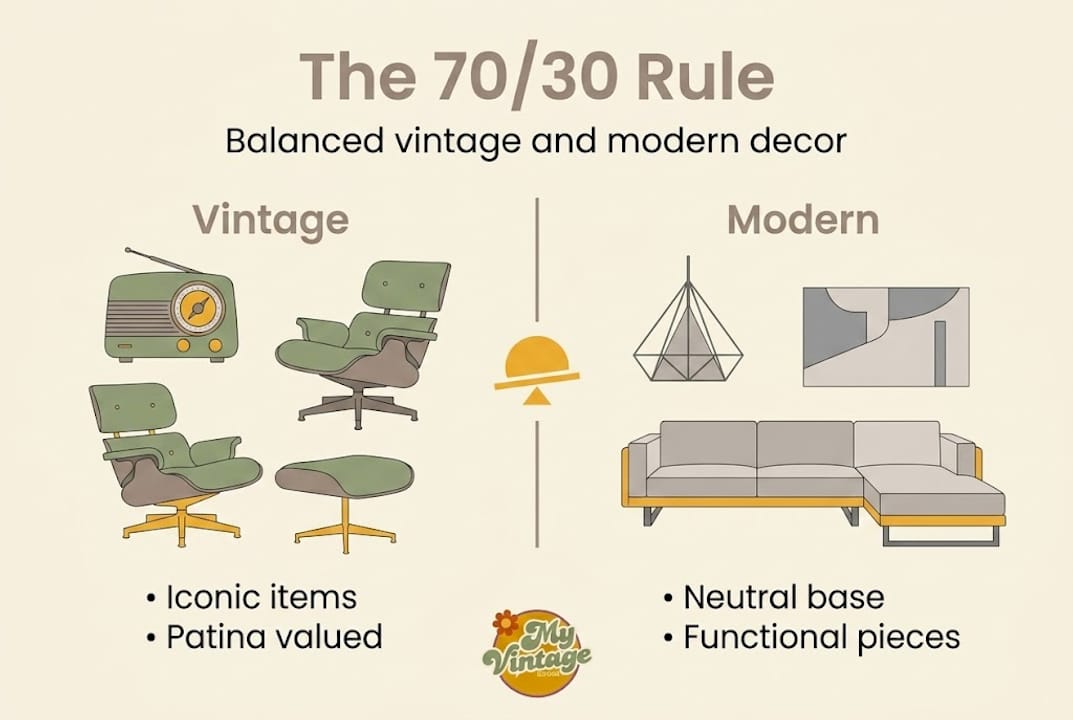
One of the most practical frameworks for vintage decorating is the 70/30 rule: aim for roughly 70% modern or neutral elements and 30% vintage pieces. This prevents your home from feeling like a museum and keeps the space liveable and fresh. Neutral backdrops, plain painted walls in warm whites or soft greys, allow vintage pieces to stand out without competing with each other.
Approach | Effect | Best for |
100% vintage | Immersive but potentially overwhelming | Dedicated collectors |
70/30 modern to vintage | Balanced, liveable, visually interesting | Most homes |
50/50 mix | Can feel eclectic or chaotic without strong curation | Experienced decorators |
The advantages of vintage shopping extend well beyond aesthetics. Quality vintage pieces are built to last, and their rarity means your home will look genuinely individual rather than identical to your neighbour’s.
Pro Tip: Avoid over-refinishing. Stripping and repainting a vintage piece may seem like an improvement, but it almost always reduces its character and value. A gentle clean and a light wax are usually all that is needed.
For room-specific inspiration, our guide to creative vintage living rooms is full of practical ideas.
Arranging and Styling your Vintage Home
Once you have gathered your vintage treasures, the real artistry lies in arranging and styling them for a coherent look. This is the stage where many people stumble, and it is entirely understandable. You have beautiful individual pieces, but somehow they do not quite come together. The solution almost always lies in three principles: layering, negative space, and lighting.
Layering Texture for Depth
Retro vintage thrives on curation, not accumulation. Layering texture is one of the most effective ways to create a room that feels rich without feeling busy. Think about combining a smooth ceramic lamp base with a rough linen shade, or placing a glossy 1960s side table against a matte plaster wall. The contrast creates visual interest and draws the eye naturally around the space.
Here are the key principles for successful layering:
Start with large, neutral textiles such as rugs and curtains, then layer smaller textiles like cushions and throws on top.
Mix matt and gloss finishes within the same colour family to add depth without introducing new colours.
Use plants, particularly those popular in your chosen era such as spider plants for the 1970s or rubber plants for the 1950s, to add organic texture.
Group small objects in odd numbers. Three ceramic pieces on a shelf feel more intentional than two or four.
Vary height deliberately. A tall floor lamp next to a low sideboard creates a pleasing rhythm.
Lighting as a Styling Tool
Lighting is perhaps the most underestimated element in vintage decorating. A genuine 1960s pendant lamp or a 1950s rocket-shaped table lamp does not just illuminate a room; it anchors the entire aesthetic. Warm bulbs with a colour temperature around 2700K complement the natural woods and earthy tones typical of mid-century and 1970s interiors beautifully.
“The most successful vintage rooms are not those with the most pieces, but those where every piece has been chosen with intention and given the space to be noticed.”
For bedroom-specific ideas, our vintage bedroom inspiration guide covers everything from headboard choices to period-appropriate textiles.

Respecting Patina and Avoiding Clutter
Patina is the natural ageing of a surface, and it is genuinely valuable. A teak sideboard with decades of warmth in its grain tells a story that a newly varnished reproduction simply cannot. Resist the urge to over-clean or restore. Instead, let patina do the work. Our collection of must-have vintage homewares shows how beautifully aged pieces look in real interiors.
Pro Tip: When in doubt, take something away. If a shelf or surface feels busy, remove one item and live with the space for a week before deciding whether to add anything back.
Verifying Quality and Maximising Long-Term Value
Arranging is only half the story. Ensuring your items are genuine and will retain value completes your vintage journey. This matters whether you are decorating purely for pleasure or with one eye on the investment potential of what you buy.
Checking Authenticity
Authenticity verification does not require expert knowledge, but it does require patience. Start with maker’s marks. Most quality furniture and ceramics manufacturers stamped or labelled their pieces, and a quick search of the mark will confirm the maker, the country of origin, and often the approximate date of manufacture. For ceramics, check the base for impressed or printed marks. For furniture, look underneath drawers and on the back panels.
Design durability factors include aesthetic continuity, standardisation, and versatility. The enduring appeal of mid-century modern design, built on the principle of “form follows function,” is a perfect example. Pieces designed to be both beautiful and useful tend to remain desirable across generations.
Recognising Investment Potential
Some vintage categories have shown particularly strong appreciation over time:
Signed studio ceramics from the 1950s and 1960s, particularly Scandinavian pieces.
Eames-era plywood and fibreglass furniture, especially pieces with original upholstery.
Atomic-age lighting, including Sputnik chandeliers and rocket lamps.
Teak furniture by named Scandinavian designers such as Finn Juhl or Hans Wegner.
Original Pop Art prints and lithographs from the 1960s.
Vintage category | Investment potential | Key quality indicators |
Mid-century teak furniture | High | Maker’s mark, solid teak, original finish |
Atomic-age lighting | High | Original wiring (rewired safely), manufacturer label |
1950s ceramics | Medium to high | Signed base, no chips or cracks, original glaze |
1970s rattan furniture | Medium | Tight weave, no breaks, original cushions |
1980s Memphis-style pieces | Growing | Designer attribution, original colourway |
Our vintage shopping value tips go into further detail on how to spot genuine investment pieces. For a specific example of a piece with real character and provenance, take a look at this atomic magazine rack, which illustrates exactly the kind of functional artistry that defines the best mid-century design.
Pro Tip: Always photograph maker’s marks and labels when you find a piece in the field. Build a personal reference library on your phone so you can compare marks quickly and avoid paying over the odds for reproductions.
A Unique Perspective on Vintage Home Transformation
Here is something we genuinely believe after years of curating vintage pieces: the biggest mistake people make is treating vintage decorating as a shopping exercise rather than a curation exercise. It is tempting to fill a room quickly, particularly when you start finding beautiful things. But a home filled with thirty mediocre vintage pieces will always feel less satisfying than one with eight exceptional ones.

Patina is not a flaw to be corrected. It is the evidence of a life lived. When you strip and repaint a 1950s sideboard, you are not improving it; you are erasing its history. The scratches, the faded veneer, the slightly uneven drawer pull, these are the things that make a piece genuinely interesting and genuinely irreplaceable.
We also think there is something quietly radical about choosing timeless retro interiors over fast furniture. Every vintage piece you bring into your home is a small act of resistance against disposability. Buy less. Choose better. Give pieces the space and respect they deserve. That approach will always produce a more beautiful, more meaningful home than any trend-chasing ever could.
Find your Perfect Vintage Home Accessory
Inspired to start or extend your own vintage home journey? We would love to help you find the pieces that make it truly yours.
At My Vintage, we have been carefully selecting authentic vintage homeware and accessories since 2004. Every piece in our collection is chosen for quality, character, and genuine era-appropriate design. Whether you are searching for a statement 1950s ceramic, a beautifully aged teak sideboard, or a perfectly patinated piece of atomic-age lighting, our curated range has something to delight you. Explore our vintage homeware collection and discover pieces that will bring warmth, individuality, and real history into your home.
Frequently Asked Questions
How can I identify genuine vintage furniture?
Look for solid wood construction, dovetail joints, original patina, maker’s marks on the underside, and era-appropriate design features that match the claimed period.
What is the 70/30 rule in vintage home decor?
It means blending 70% modern or neutral elements with 30% vintage pieces; this prevents clutter and keeps your space feeling balanced, liveable, and visually fresh rather than overwhelming.
Does vintage decor add investment value to my home?
Atomic and mid-century pieces often appreciate in value over time; Sputnik lights and Eames chairs in particular have shown strong investment potential, especially when original patina and finishes are preserved.
How do I avoid clutter when decorating with vintage?
Use neutral backdrops, layer texture carefully, and leave deliberate negative space around your key vintage items so each piece has room to be noticed and appreciated.
Recommended


Comments