


Retro Outfit Ideas: Authentic Looks from the 1940s–1990s
Dressing in a retro style is genuinely one of the most exciting things you can do with your wardrobe, but there is a fine line between looking authentically vintage and looking like you have raided a fancy dress box. The challenge is real, and it is one we hear about constantly from our community. The good news is that achieving a genuinely wearable, era-inspired look is far more about thoughtful selection than sheer quantity of period pieces. In this guide, we will walk you through practical retro outfit ideas spanning the 1940s to the 1990s, sharing the criteria, the capsule strategies, and the decade-specific inspiration you need to get it right every time.
et each one can be worn with contemporary basics and still feel like a considered, stylish outfit rather than a theatrical performance.
Decade-specific silhouettes are your most powerful shortcut. Rather than trying to recreate an entire look from a single era, identify the silhouette that defined that decade and use it as your anchor. The nipped waist and full skirt of the 1950s, the wide-leg trouser of the 1970s, the power shoulder of the 1980s: each of these shapes tells a story instantly. Pair one of these silhouettes with a plain white tee, simple trainers, or a neutral knit, and the result feels modern and intentional.
Here are the key principles to keep in mind when building an authentic retro outfit:
Choose one hero piece per outfit. Let it lead. Everything else should support it quietly.
Use modern basics as your foundation. A plain white shirt, straight-leg jeans, or simple loafers ground a vintage piece in the present.
Match the silhouette, not the era’s entire wardrobe. A 1940s A-line skirt works beautifully with a contemporary fitted top.
Avoid matching accessories from the same decade as your hero piece. Mixing eras in accessories keeps things feeling personal rather than theatrical.
Prioritise fit above all else. Vintage pieces that fit well always look intentional. Ill-fitting vintage pieces always look like costumes.
“The joy lies not in recreating a decade wholesale, but in borrowing its most eloquent gestures and making them your own.”
Pro Tip: When you are unsure whether a look has crossed into costume territory, ask yourself: would someone on the street notice the era first, or the outfit first? If the answer is the era, simplify.
Our retro costume outfit tips go deeper into this distinction, and if you are particularly drawn to recent decades, our guide on how to master 1990s style is well worth a read. For those who want to understand how vintage pieces sit alongside contemporary items, our piece on how to incorporate vintage pieces into a modern wardrobe covers the essentials beautifully.
Retro Outfit Ideas from the 1980s
The 1980s are arguably the most immediately recognisable decade in fashion history, which makes them both exciting and slightly perilous to style. Get it right, and you look bold, confident, and brilliantly individual. Get it wrong, and you look like you are on your way to a themed birthday party. The secret, as always, is restraint.

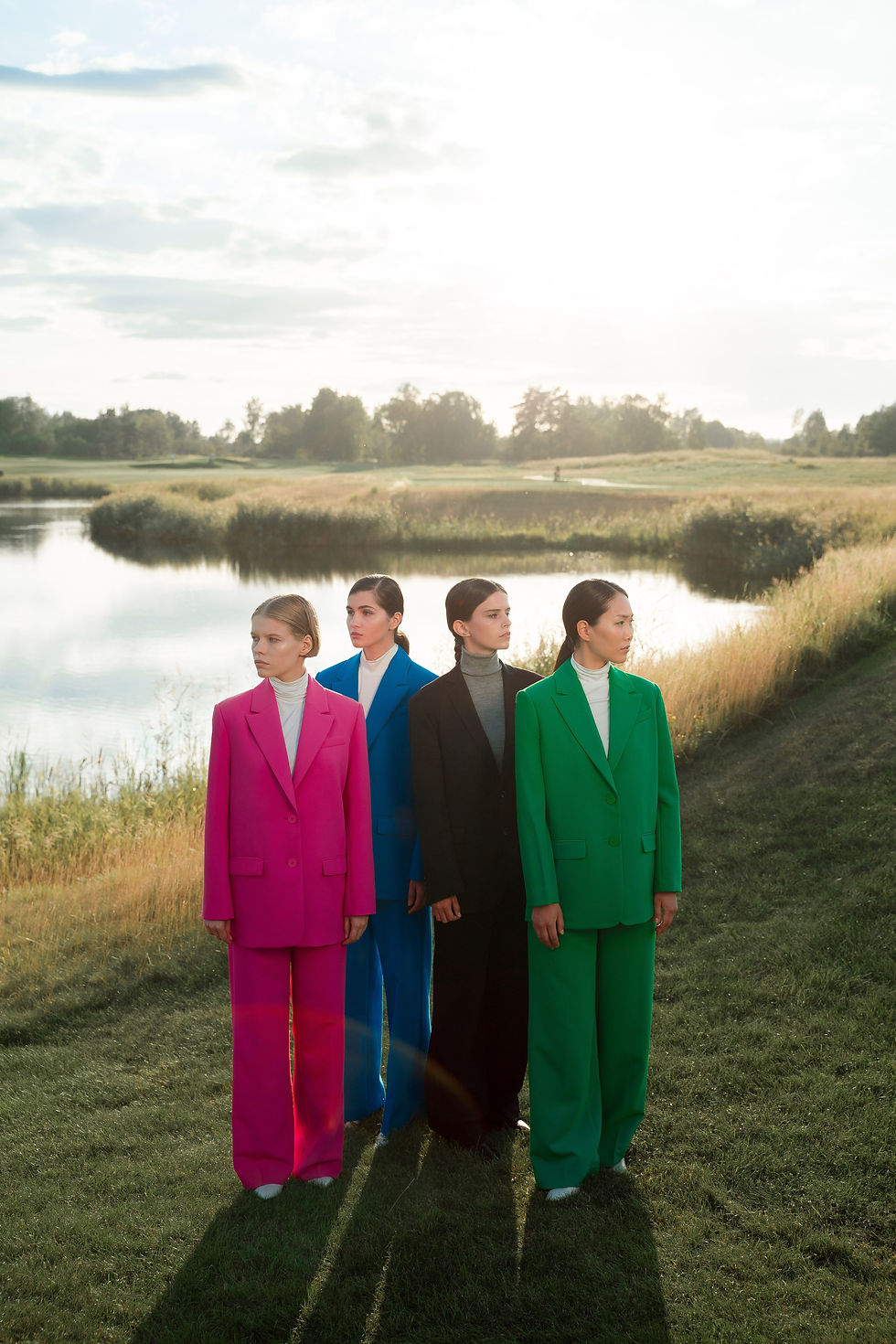
Choosing signature 1980s elements and balancing them with modern proportions is the key to avoiding costume effects. The power shoulder is the decade’s most iconic silhouette feature, and a single oversized blazer with strong shoulders worn over a simple slip dress or slim trousers is a genuinely stunning combination. The blazer does all the talking. Everything else stays quiet.
Bold colour is another 1980s hero element worth embracing. Electric blue, fuchsia, and emerald were everywhere in the decade, and they remain striking today. A single boldly coloured 80s blouse worn with neutral wide-leg trousers and minimal jewellery is a polished, confident look. You do not need the matching skirt, the statement belt, and the oversized earrings all at once.
Here are some specific 1980s outfit ideas to inspire you:
Power blazer and slim trousers. Choose a vintage oversized blazer in a neutral or bold colour, pair with slim-fit contemporary trousers and simple loafers. The blazer’s shoulders carry the decade’s energy without overwhelming.
Printed blouse and high-waisted jeans. A boldly printed 80s blouse tucked into high-waisted straight jeans is effortlessly wearable and unmistakably of its era.
Bodycon dress with flat shoes. An 80s bodycon dress worn with flat contemporary sandals or trainers modernises the silhouette immediately.
Statement accessories as the hero. A single pair of oversized 80s earrings or a chunky resin bangle worn with an otherwise understated outfit is a brilliant way to nod to the decade without committing fully.
“The 1980s gave fashion its most theatrical vocabulary. The art is in speaking it quietly.”
Pro Tip: If you are exploring 1980s style for the first time, start with accessories rather than clothing. A pair of oversized earrings or a wide patent belt introduces the decade’s energy at low risk.
Balancing oversize and fitted elements is particularly important with 80s pieces. If your hero piece is voluminous, such as a batwing top or a full-skirted dress, keep everything else close-fitting. If your hero piece is a structured blazer, wear it with something slim underneath. This push and pull between volume and structure is what makes 80s-inspired dressing feel contemporary rather than theatrical. Our retro accessories guide covers this balance in excellent detail.
Building a 1990s-Inspired Capsule W ardrobe
The 1990s are having a prolonged and deeply satisfying cultural moment right now, and it is easy to understand why. The decade’s aesthetic is simultaneously relaxed and considered, grunge and glamour sitting comfortably side by side. The capsule approach works particularly well for 90s dressing because the decade’s staples are inherently mix-and-match.

A focused set of 90s-coded staples, including slip dresses, tank tops, light-wash high-waisted loose jeans, and tube tops styled in modern proportions, forms the foundation of a genuinely versatile retro capsule. The beauty of this approach is that each piece works with multiple others, giving you a wide range of outfits from a small number of items.
Here is how to build your 1990s capsule wardrobe step by step:
Start with a slip dress. Choose a bias-cut satin or silk slip dress in a neutral or muted tone. This is your most versatile 90s piece, working as a dress alone, layered over a fitted tee, or worn with a chunky knit on top.
Add light-wash high-waisted jeans. The silhouette is unmistakably 90s and works with almost every other item in the capsule.
Include a fitted ribbed tank top. This is your workhorse layering piece, worn under the slip dress, tucked into the jeans, or paired with a tailored blazer.
Choose a tube top in a bold print or solid colour. Worn with high-waisted jeans or a midi skirt, this piece carries enormous 90s energy with minimal effort.
Add a waistcoat. The 90s waistcoat, whether denim, velvet, or tailored, is currently one of the most wearable retro pieces available and transitions beautifully across seasons.
Capsule wardrobes constrain the search space to a small set of mix-and-match items, which significantly reduces fit-and-style errors across occasions. This is genuinely useful advice. When every item in your retro capsule works with every other item, you eliminate the risk of making a single poor combination.
90s capsule piece | Best paired with | Occasion |
Slip dress | Chunky knit, ankle boots | Weekend, evening |
High-waisted loose jeans | Ribbed tank, loafers | Everyday, casual |
Ribbed tank top | Blazer, slip dress, jeans | Layering, all occasions |
Tube top | Midi skirt, high-waisted jeans | Evening, weekend |
Waistcoat | Straight jeans, fitted tee | Work, smart casual |
Pro Tip: Our retro capsule wardrobe guide is a brilliant companion to this section, and our vintage essentials article covers the broader principles of building a wardrobe that lasts.
Comparing Retro Outfit Ideas Across the Decades
With detailed frameworks for the 1980s and 1990s in hand, it is worth stepping back to see how all the decades from the 1940s to the 1990s compare. Each era has its own visual language, its own silhouette logic, and its own set of hero pieces. Understanding these differences helps you choose the right era for your personality, your occasion, and your existing wardrobe.

Building around decade-specific silhouettes rather than head-to-toe costumes is the principle that holds across all eras. The table below summarises the key features of each decade to help you navigate your options.
Decade | Signature silhouette | Hero pieces | Best for |
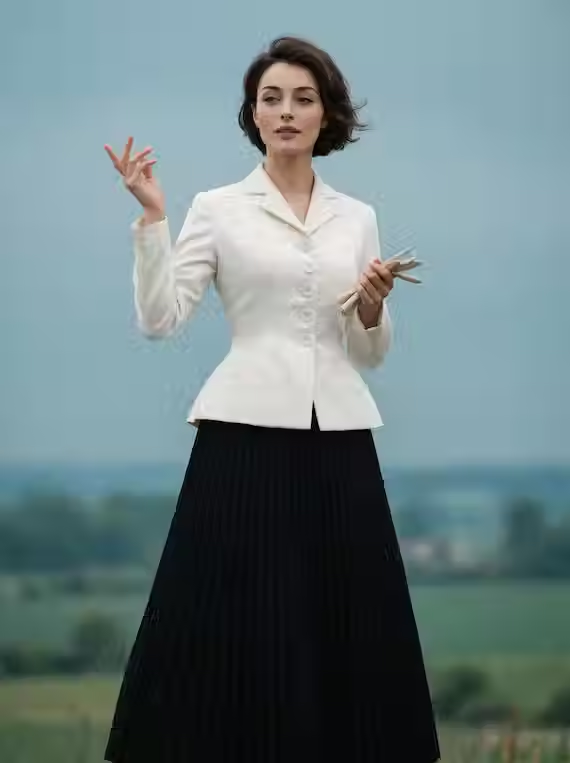
1940s | Structured, A-line, nipped waist | Tailored suits, midi skirts, structured blouses | Work, smart occasions |
1950s | Full skirt, fitted bodice, hourglass | Swing skirts, tea dresses, pencil skirts | Parties, weekend dressing |
1960s | Shift dress, geometric, mod | Mini dresses, shift dresses, go-go boots | Evenings, creative occasions |
1970s | Wide-leg, wrap, flowing | Wrap dresses, flared trousers, printed blouses | Weekend, bohemian occasions |
1980s | Power shoulder, oversized, bold | Blazers, bodycon dresses, statement accessories | Work, evenings, parties |
1990s | Relaxed, slip, grunge-glamour | Slip dresses, high-waisted jeans, waistcoats | Everyday, evenings |
Mixing decades in a single outfit is absolutely possible and can produce genuinely beautiful results. The key is to keep the overall silhouette coherent. A 1950s full skirt paired with a 1970s printed blouse works because both pieces share a feminine, slightly romantic quality. A 1980s blazer worn over a 1990s slip dress works because the structured top half balances the relaxed bottom half. What does not work is combining two competing silhouettes, such as a voluminous 80s batwing top with a full 50s skirt.
For situational guidance, consider the following:
Work occasions suit the structured tailoring of the 1940s and 1950s, or the power dressing of the 1980s.
Parties and evenings are perfect for the boldness of the 1960s and 1980s, or the slip-dress glamour of the 1990s.
Weekend and casual dressing works beautifully with the relaxed ease of the 1970s and 1990s.
Explore vintage dress inspiration for era-specific dress ideas, and keep an eye on our current vintage trends feature to see which decades are resonating most strongly in 2026.
Why Capsule-Thinking Trumps Trend-Following for Retro Style
Here is something we feel strongly about at My Vintage, and it is worth saying plainly: chasing seasonal trends in retro fashion is a losing game. Trends come and go, but a well-chosen capsule of vintage hero pieces remains endlessly wearable. The reason is simple. Trends are designed to expire. Capsules are designed to last.
Capsule-wardrobe logic effectively constrains your choices to a small set of mix-and-match items, which reduces style errors and increases the number of occasions each piece serves. This is not just practical wisdom. It is a fundamentally different relationship with clothing, one based on quality, intention, and personal expression rather than novelty.

When you build your retro wardrobe around a small number of hero pieces that genuinely suit you, you are investing in a style identity rather than a seasonal look. That identity is far more resilient than any trend. Our piece on vintage wardrobe evolution explores how the most enduring vintage pieces have outlasted every trend cycle they have lived through. That is the kind of staying power worth building towards.
Find your Perfect Retro Hero Piece
Feeling inspired to start building your own retro capsule? At My Vintage, we have been curating authentic vintage clothing and accessories since 2004, and we genuinely love helping our customers find the pieces that make their wardrobes sing. Whether you are hunting for a 1950s swing skirt, a 1980s power blazer, or a 1990s slip dress, our carefully selected collection has something to spark your imagination.
Browse our full range of authentic vintage clothing to discover hero pieces from every decade, all hand-picked for quality and wearability. If you are just starting out, our vintage essentials guide is a brilliant place to begin. We are here to help you find the pieces that feel like they were made for you, because the very best vintage always does.
Frequently Asked Questions
What is the best way to avoid looking like you’re wearing a costume when styling retro?
Focus on one vintage hero piece and use modern basics to anchor your look, as decade-specific silhouettes work best when combined with contemporary items rather than full head-to-toe period dressing.
Which 1990s staples should I prioritise for a capsule wardrobe?
Slip dresses, tank tops, light-wash high-waisted loose jeans, tube tops, and waistcoats are the key 90s essentials, as these 90s-coded staples offer the greatest mix-and-match versatility.
Can I successfully mix elements from different retro decades in one outfit?
Yes, mixing hero pieces from different decades works beautifully as long as the overall silhouette remains cohesive, since building around silhouettes rather than matching eras keeps the result feeling intentional rather than confused.
What’s the advantage of capsule wardrobes for retro style?
Capsule wardrobes restrict you to a small set of mix-and-match essentials, and capsule-wardrobe lists effectively minimise fit-and-style errors while giving you far greater flexibility across different occasions.
Recommended

Comments