


Vintage Costume Design Explained: Essential Insights

Defining vintage costume design often means confronting the challenge of balancing accurate history with creative expression. For British designers working in film and theatre, the journey spans decades of evolving style and social meaning. This article explores how British vintage costume design blends meticulous research, storytelling, and craftsmanship, offering practical insights for designers committed to authenticity from the 1940s to 1990s.
Table of Contents
Defining vintage costume design in Britain
Vintage costume design in Britain represents a rich cultural practice that transcends mere clothing, embodying historical narratives, social expressions, and artistic creativity. The Costume Society’s scholarly approach frames this discipline as a nuanced exploration of dress history and material culture, extending far beyond simple fabric and form.
The roots of British vintage costume design can be traced through several distinct historical movements, each reflecting the social dynamics of its era. From the elaborate Victorian Fancy Dress Balls to mid-20th century theatrical productions, costume design has served as a powerful medium of communication and self-expression.
Key characteristics of British vintage costume design include:
Meticulous historical authenticity
Profound attention to cultural and social context
Emphasis on craftsmanship and detailed construction
Exploration of identity through sartorial representation
Historical Performance played a crucial role in developing vintage costume design practices. Victorian masquerade traditions demonstrated how costumes could be used to challenge social norms, with participants using elaborate dress as a tool for personal and collective storytelling.
Professional Preservation remains central to the discipline, with institutions like the Costume Society dedicating significant resources to documenting and protecting Britain’s rich textile heritage. Costume designers must balance historical accuracy with creative interpretation, making each vintage costume a nuanced narrative of its time.
Pro tip: When studying vintage costume design, always examine the social and cultural context alongside the physical garment to understand its deeper significance.
Key historical eras and style distinctions
British costume history reveals a fascinating journey through multiple distinctive periods, each characterised by unique sartorial expressions that reflect the social, cultural, and economic landscapes of their time. From medieval traditions to modern interpretations, vintage costume design in Britain represents a complex narrative of artistic and social evolution.
The primary historical eras of British costume design can be categorised into several key periods:
Medieval (1050-1490): Characterised by simplistic, functional clothing
Tudor and Stuart (16th-17th centuries): Elaborate court dress and intricate textile designs
Georgian/Regency (1730-1830): Refined, neoclassical silhouettes
Victorian and Edwardian (19th-early 20th centuries): Structured, ornate fashion
Mid-20th Century: Radical style transformations reflecting social changes
Historical Context played a pivotal role in shaping costume design. The English Heritage collections demonstrate how court masques and pageantry significantly influenced costume development, with fashion serving as a powerful tool for expressing social status, cultural identity, and personal creativity.
Each era brought distinctive elements to costume design. The Tudor period introduced elaborate ruffs and bodices, while the Victorian era saw complex layering and strict social dress codes. The early 20th century witnessed revolutionary changes, with costume design becoming increasingly democratic and reflective of broader social movements.

The following table summarises the defining features across major historical eras of British vintage costume design:
Era | Typical Silhouettes | Key Materials | Social Influence |
Medieval | Draped, loose garments | Wool, linen, simple dyes | Feudal hierarchy, practicality |
Tudor & Stuart | Structured, ornate layers | Silk, brocade, fine lace | Court etiquette, display wealth |
Georgian/Regency | High waistlines, elegance | Muslin, cotton, lightweight | Neoclassicism, social reforms |
Victorian/Edwardian | Corsetry, heavy decoration | Taffeta, velvet, intricate trims | Industrial growth, strict codes |
Mid-20th Century | Modern, expressive shapes | Synthetic blends, bold prints | Post-war change, individuality |
Costume design is not merely about clothing, but about capturing the spirit of an entire historical moment.
Professional Interpretation requires costume designers to balance historical accuracy with creative expression, understanding that each garment tells a complex story about its cultural context. Designers must research meticulously, examining not just the physical garments but the social dynamics that produced them.
Pro tip: When studying vintage costume design, always examine multiple sources and consider the broader cultural context behind each historical fashion period.
Authenticity, research methods and sourcing
Historical research methodologies represent the cornerstone of authentic vintage costume design, requiring designers to delve deeply into comprehensive investigations that extend far beyond surface-level visual examination. Authenticity demands a meticulous approach that combines academic rigour with creative interpretation, ensuring each costume piece tells a genuine historical narrative.
Key research strategies for achieving costume authenticity include:
Examining primary source materials like historical photographs
Analysing original garment construction techniques
Studying social and cultural contexts of specific periods
Consulting historical fashion archives and museum collections
Understanding textile production methods of different eras
Collaborative Research emerges as a critical component in creating historically accurate costumes. Designers must engage with multiple disciplines, including:
Fashion historians
Textile experts
Period performance specialists
Cultural anthropologists
Authentic costume design is not about perfect reproduction, but about capturing the essence of a historical moment.
The research process involves intricate detective work. Designers must cross-reference visual documentation, written accounts, and physical artefacts to reconstruct accurate representations of clothing from specific historical periods. This approach requires both scholarly precision and creative imagination.
Material Authenticity demands extensive investigation into historical textile production, understanding how fabrics were manufactured, dyed, and constructed during specific time periods. This means examining everything from weaving techniques to colour-dying processes that defined each historical era.
Pro tip: Always collect multiple reference sources and cross-validate historical costume details before beginning your design process.

Role of costume designers in media productions
UK costume design professionals play a pivotal role in transforming narrative storytelling through visual representation of character and period. Their work extends far beyond simply selecting clothing, involving deep research, creative interpretation, and meticulous collaboration with production teams across theatre, film, and television media.
Key responsibilities of costume designers include:
Researching historical and cultural fashion contexts
Developing character-specific costume narratives
Collaborating with directors and production designers
Managing costume budgets and procurement
Supervising costume construction and maintenance
Ensuring period authenticity and visual consistency
Production Dynamics require costume designers to adapt their approach across different media platforms. Theatre productions demand robust, performance-ready costumes that can withstand multiple performances, while screen productions require precise visual accuracy that translates effectively on camera.
A costume designer does not merely dress actors, but creates visual language that speaks volumes about character and context.
Technical Expertise involves understanding fabric properties, historical construction techniques, and the nuanced relationship between costume and performance. Designers must balance artistic vision with practical considerations like actor comfort, movement requirements, and budget constraints.
The professional journey often involves working across multiple disciplines, with designers developing specialist knowledge in period-specific fashion, textile technologies, and storytelling through visual design. Success requires a combination of artistic creativity, historical knowledge, and practical technical skills.
Pro tip: Build a comprehensive reference library of historical fashion resources and maintain strong relationships with costume makers and textile specialists.
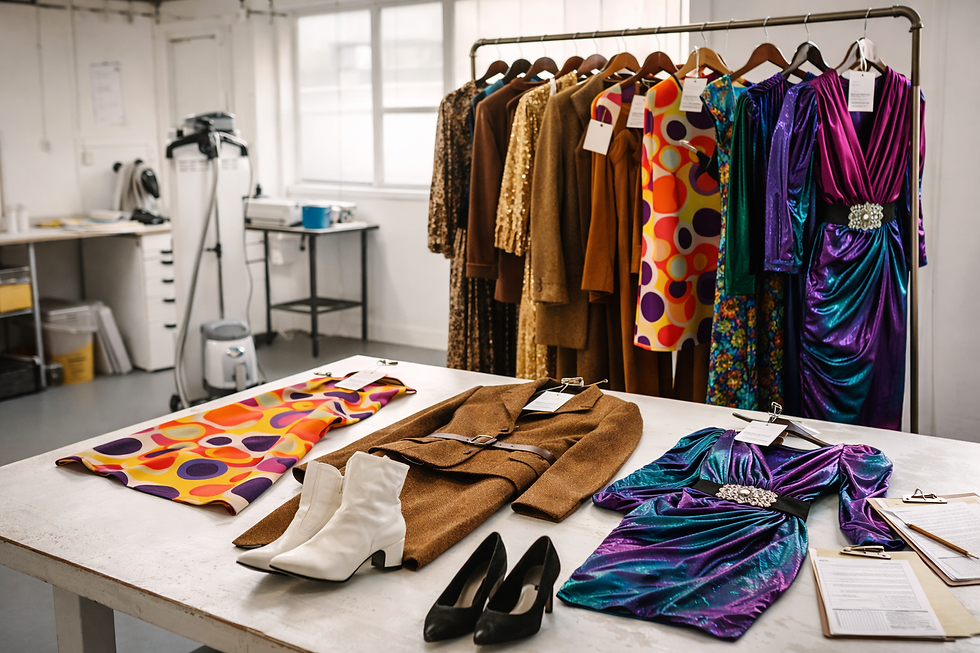
Risks, legalities and common pitfalls
Costume design liability represents a complex legal landscape where designers must navigate multiple potential risks and professional challenges. Understanding the legal frameworks that govern costume creation is crucial for protecting both creative integrity and professional reputation.
Key legal considerations in costume design include:
Ensuring costume safety and material compliance
Protecting intellectual property rights
Managing potential health and performance risks
Addressing potential allergic reactions
Maintaining strict quality control standards
Intellectual Property Challenges are particularly nuanced in the costume design world. Designers must be vigilant about:
Documenting original design concepts
Registering copyright protections
Establishing clear licensing agreements
Preventing unauthorized design reproduction
Legal protection is not just about preventing theft, but about valuing creative innovation.
Material Safety demands rigorous testing and documentation. Costume designers must consider potential risks such as:
Here is a quick reference to common legal risks and their implications in vintage costume design:
Legal Risk | Common Scenario | Impact on Design Practice |
Intellectual property | Unauthorised design copying | Requires documentation, licensing |
Safety compliance | Flammable or toxic materials used | Demands material sourcing checks |
Health liabilities | Allergic reactions to costume elements | Necessitates thorough testing |
Contractual obligations | Breach of agreed production terms | Calls for clear agreements |
Fabric flammability
Potential allergenic materials
Chemical treatments and toxicity
Performance-related physical constraints
Professional liability extends beyond immediate design considerations. Designers must maintain comprehensive documentation, understand contractual obligations, and develop robust risk management strategies that protect both creative vision and professional standing.
Pro tip: Always consult with legal professionals specialising in creative industries to develop comprehensive protection strategies for your costume designs.
Bring Historic Character to Life with Authentic Vintage Costume Pieces
Vintage costume design requires meticulous attention to historical detail and cultural context as outlined in the article. Whether you are a costume designer for theatre, film, or TV, or a vintage fashion enthusiast, sourcing garments that offer authenticity, craftsmanship, and unique character can be a challenging task. Pain points like preserving historical accuracy while balancing modern comfort and visual impact are crucial for successful costume storytelling.
Experience the perfect fusion of period authenticity and timeless style at My Vintage. Since 2004, we have specialised in offering high-quality vintage clothing and costume pieces from the 1940s through the 1990s, ideal for your media production needs or personal vintage wardrobe. Explore our curated collection where every item embodies the spirit of its era, allowing you to create captivating visual narratives with confidence. Discover how detailed craftsmanship and careful sourcing can elevate your costume designs by visiting My Vintage today and bring your vintage costume vision to life.
Frequently Asked Questions
What defines vintage costume design in Britain?
Vintage costume design in Britain is characterised by historical authenticity, attention to cultural and social context, meticulous craftsmanship, and exploration of identity through clothing.
How do historical movements influence vintage costume design?
Historical movements shape costume design by reflecting the social dynamics and artistic expressions of their time, from elaborate Victorian fashions to modern interpretations influenced by social changes.
What are the key research methods used in vintage costume design?
Key research methods include examining primary source materials, analysing garment construction techniques, and studying the cultural contexts of specific periods to ensure authenticity in the costumes.
What roles do costume designers play in media productions?
Costume designers are responsible for researching fashion contexts, developing character-specific costumes, collaborating with production teams, and ensuring period authenticity while managing budgets and logistics.
Recommended

Comments