


Vintage Soda Siphon: A Collector's Guide

A vintage soda siphon is a pressurised glass or metal bottle designed to dispense carbonated water on demand, combining elegant period design with genuine mechanical ingenuity. The correct industry term is soda siphon (also spelt soda syphon in older British usage), and authentic examples range from ornate 19th century French gasogenes to the chromed Sparklets models that graced British and American bars throughout the 1920s and 1930s. Whether you are hunting for a showpiece for your drinks cabinet or a fully restored piece you can actually use, understanding the history and mechanics of these objects makes all the difference. We at My Vintage have a deep affection for pieces that are as beautiful as they are functional, and the soda siphon is one of the finest examples of that combination.
How does a vintage soda siphon work?
A vintage soda siphon carbonates water through a simple but clever pressurisation process. You fill the glass body with ice-cold water, secure the metal head, then release a standard 8g CO2 charger into the cartridge holder. The gas dissolves into the water under pressure. Shaking the siphon at least five times helps the CO2 absorb fully and produces a consistently fizzy result.
The dispensing mechanism is what separates a true siphon from a decorative bottle. A patented hollow corkscrew valve, first developed in 1829, allows carbonated liquid to flow out through the siphon tube while the internal pressure is maintained. Press the lever, and the water travels up the tube and out of the nozzle without losing its fizz. Release the lever, and the pressure seals the contents again.
C-type cartridge holders: a key identifying feature
One detail that separates 1920s originals from later designs is the cartridge holder. C-type models from the 1920s keep the cartridge holder attached to the bottle during the entire dispensing process. Later models remove the charger after carbonation is complete. This distinction is one of the most reliable ways to date a siphon at a glance, and it matters enormously when you are assessing a piece for restoration.
Modern electric soda makers like the SodaStream use a different approach entirely, relying on large refillable CO2 cylinders and plastic bottles. The vintage siphon, by contrast, is self-contained, beautifully made, and produces sparkling water in a single elegant gesture. The joy lies in that simplicity.
Pro Tip: Always use food-grade 8g CO2 chargers with a vintage siphon. Cream chargers contain nitrous oxide and will not carbonate water correctly. They can also damage original seals.
What types of vintage soda siphon do collectors find?
The range of antique soda siphon designs is genuinely wide, and each era produced something distinctive. Knowing the key types helps you identify what you are looking at and assess its value.
Early French gasogenes
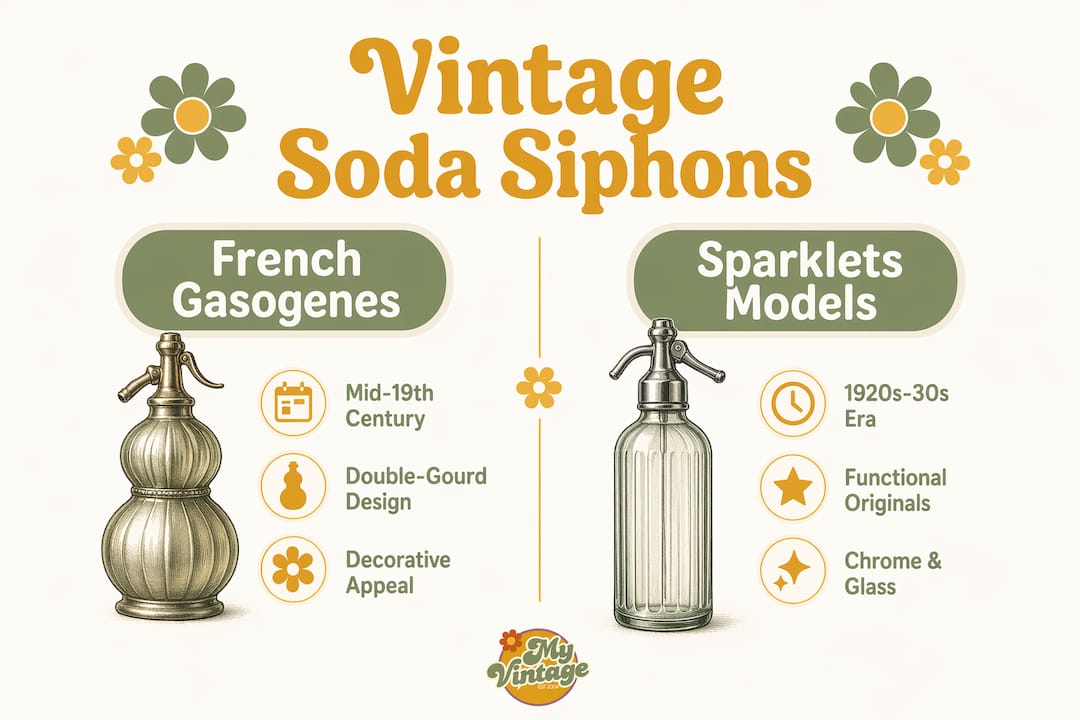
The oldest siphons collectors encounter are the French gasogenes, typically dating from the mid to late 19th century. These have a striking double-gourd shape, with two glass globes stacked vertically and often encased in a wicker or wire cage. The cage was not merely decorative. It protected the glass from shattering if the internal pressure became too great. Antique French gasogenes, such as those made by Briet, are now highly sought after as display pieces. Many have been converted into decorative lamps, so collectors should verify whether a piece remains in its original condition before pursuing functional restoration.
1920s and 1930s Sparklets models
The most commonly restored functional siphons are the Sparklets models produced in New York and London during the 1920s and 1930s. These are built to a noticeably higher standard than later reproductions. 1920s siphons were constructed for heavy, repeated use, with thick glass bodies, chromed mesh covers, and substantial metal heads. A fully restored Sparklets New York 1920 model weighs around 3.5 kg unfilled, stands approximately 34 cm tall, and holds about 1 litre of water. That weight tells you something important: these were made to last.

Decorative reproductions vs functional originals
The vintage market contains a significant number of decorative reproductions, and they are not always easy to spot. The table below outlines the key differences.
Feature | Authentic vintage original | Decorative reproduction |
Weight (unfilled) | Approximately 3.5 kg | Noticeably lighter |
Glass thickness | Heavy, pressure-rated | Thin, ornamental |
Metal head construction | Solid brass or chromed steel | Lightweight alloy or plastic |
Cartridge holder | Original C-type or period-correct | Often absent or non-functional |
Siphon tube | Internal, full-length metal tube | May be absent or cosmetic |
Reproductions are perfectly fine as display pieces, but they cannot be safely pressurised. Attempting to use one as a functional siphon is genuinely dangerous. The glass is not rated for the internal pressure a CO2 charger generates.
Key characteristics of authentic vintage siphons worth knowing:
Original mesh covers are chromed steel or silver-plated, not painted
The lever mechanism should move smoothly and spring back cleanly
Authentic pieces carry manufacturer stamps, often on the metal head or base
The glass body is noticeably heavy and free of seams typical of moulded reproductions
Period-correct siphons have a distinct, satisfying heft when lifted
How to restore and safely use a vintage soda siphon
Restoration is one of the most rewarding aspects of collecting these pieces, but it requires patience and a clear understanding of what you are working with. Manufacturing quality differences between functional originals and decorative reproductions are the first thing to assess before spending money on restoration work.

Checking authenticity before you begin
Start by examining the cartridge holder. On a genuine C-type 1920s model, it screws directly onto the head and stays in place during use. Check the siphon tube inside the bottle. It should run almost the full length of the glass body. Look for a manufacturer’s mark on the metal head or pressed into the base of the glass. Sparklets, Briet, and similar period makers almost always marked their work.
Restoration Steps
Common restoration work on vintage siphons includes:
Re-chroming or re-silvering the metal mesh cover, which is best handled by a specialist plating workshop
Replacing rubber seals and gaskets, which degrade over time and are critical for safe pressurisation
Cleaning the glass body with a mild solution of white vinegar and warm water, avoiding abrasive cloths that scratch the surface
Inspecting the lever valve for corrosion or damage, and having it professionally serviced if the action feels stiff or uneven
Sourcing replacement parts, which often requires custom manufacturing to match original specifications safely
Pro Tip: Never pressurise a restored siphon for the first time indoors without first wrapping it in a thick towel. If a seal has failed, the pressure release is sudden. The towel contains any glass or liquid safely.
Safety Considerations
Pressure safety is non-negotiable. Only use standard 8g CO2 chargers, never modified or oversized cartridges. Do not use a siphon with a cracked glass body, even a hairline crack. If a piece has been converted for decorative use (lamp wiring through the base, for example), the structural integrity may be compromised. Treat any converted piece as display-only.
What role do vintage soda siphons play in modern settings?
The appeal of an old-fashioned soda syphon today goes well beyond nostalgia. These pieces earn their place in contemporary homes and bars for several practical and aesthetic reasons.
Collectors and home bartenders value vintage siphons for electricity-free carbonation, which fits neatly into a more sustainable approach to everyday life. No power socket required, no plastic bottles to replace, and no bulky machine on the worktop. A single CO2 charger carbonates one litre of water cleanly and efficiently.
In the world of speciality coffee and cocktail culture, sparkling water serves a specific purpose. Baristas use it between tastings to cleanse the palate, and bartenders use it to add effervescence to drinks without diluting flavour. A beautifully restored Sparklets siphon on a bar top does both jobs while looking extraordinary. Pair it with a vintage ice bucket and you have a drinks station that genuinely turns heads.
Beyond function, these pieces are exceptional conversation starters. The double-gourd gasogene on a shelf, the chromed mesh of a 1930s Sparklets on a sideboard. These are objects with stories. They carried the fizz at dinner parties a century ago, and they can do the same today. Some collectors display them alongside other period barware, such as a retro hip flask or period glassware, to create a cohesive vintage bar aesthetic.
The one caveat worth repeating: antique French gasogenes that have been converted into lamps are best left as decorative pieces. The joy of a functional restoration is real, but only when the piece is structurally sound and all original components are intact or correctly replaced.
Key Takeaways
A vintage soda siphon is both a working piece of engineering history and a genuinely beautiful object, worth collecting, restoring, and using.
Point | Details |
Identify the type first | Distinguish C-type 1920s originals from reproductions by weight, glass thickness, and cartridge holder design. |
Check before restoring | Verify manufacturer marks, siphon tube integrity, and original parts before investing in restoration work. |
Use correct CO2 chargers | Standard 8g food-grade CO2 chargers are the only safe option for pressurising a vintage siphon. |
Respect converted pieces | Antique siphons modified into lamps or décor items should not be restored for pressurised use. |
Modern uses are genuine | Vintage siphons work brilliantly for sustainable, electricity-free sparkling water in home bars and coffee settings. |
Authentic vintage homeware at My Vintage
My Vintage has been sourcing and curating original vintage pieces since 2004, and the appeal of functional retro homeware has never been stronger. If you love the idea of a beautifully made object that earns its place on display and in daily use, you are in the right place.

Our homeware collection includes original pieces from the 1950s through to the 1980s, selected for quality, character, and authenticity. From kitchenalia to barware, every piece tells a story. Browse our vintage homeware collection to find pieces that complement a restored soda siphon beautifully, or simply stand alone as a statement of genuine vintage style. We also have a wonderful selection of 1960s kitchen tins and retro accessories that sit perfectly alongside period barware.
Frequently Asked Questions
What is a vintage soda siphon?
A vintage soda siphon is a pressurised glass bottle with a metal dispensing head, designed to carbonate and dispense water using a CO2 charger. Authentic examples date from the early 19th century through to the mid 20th century.
How do I know if my soda siphon is an original or a reproduction?
Authentic originals are noticeably heavy, carry manufacturer stamps, and have a full-length internal siphon tube. Reproductions are lighter, often lack markings, and are not safe to pressurise.
Can I use a vintage soda siphon today?
Yes, provided the piece is structurally sound and all seals have been replaced. Use standard 8g food-grade CO2 chargers and shake the siphon at least five times after charging for proper carbonation.
What are the most collectable vintage soda siphon models?
The 1920s Sparklets New York and London models are among the most sought-after functional originals. Antique French Briet gasogenes with original wicker cages are highly prized as display pieces.
Where can I buy a vintage soda siphon in the UK?
Authentic pieces appear regularly on specialist vintage platforms such as Vinterior, at antique fairs, and through curated vintage homeware retailers. Always confirm the piece is original and not a decorative reproduction before purchasing for functional use.
Recommended


Comments