


What is Fashion Sustainability in 2026?
Fashion sustainability is the practice of creating and consuming clothing with minimal environmental harm, fair labour standards, and a commitment to keeping garments in use for as long as possible. The industry term you will encounter most often is sustainable fashion, though related phrases like eco-friendly fashion, ethical clothing, and conscious fashion all orbit the same core idea. What sets fashion sustainability apart from a simple recycling pledge is its scope. It covers the full lifecycle of a garment, from the field where cotton grows to the landfill where a discarded fast fashion piece eventually lands. Understanding this helps you cut through the marketing noise and make choices that genuinely matter.
What is fashion sustainability and why does it matter?
Fashion sustainability is defined as a multifaceted spectrum encompassing environmental impact, ethical labour, circularity, and longevity, with no single legal definition or universal standard. That breadth is precisely what makes it both powerful and confusing. A brand can tick one box and ignore the rest, which is why a clear understanding of the concept protects you as a consumer.
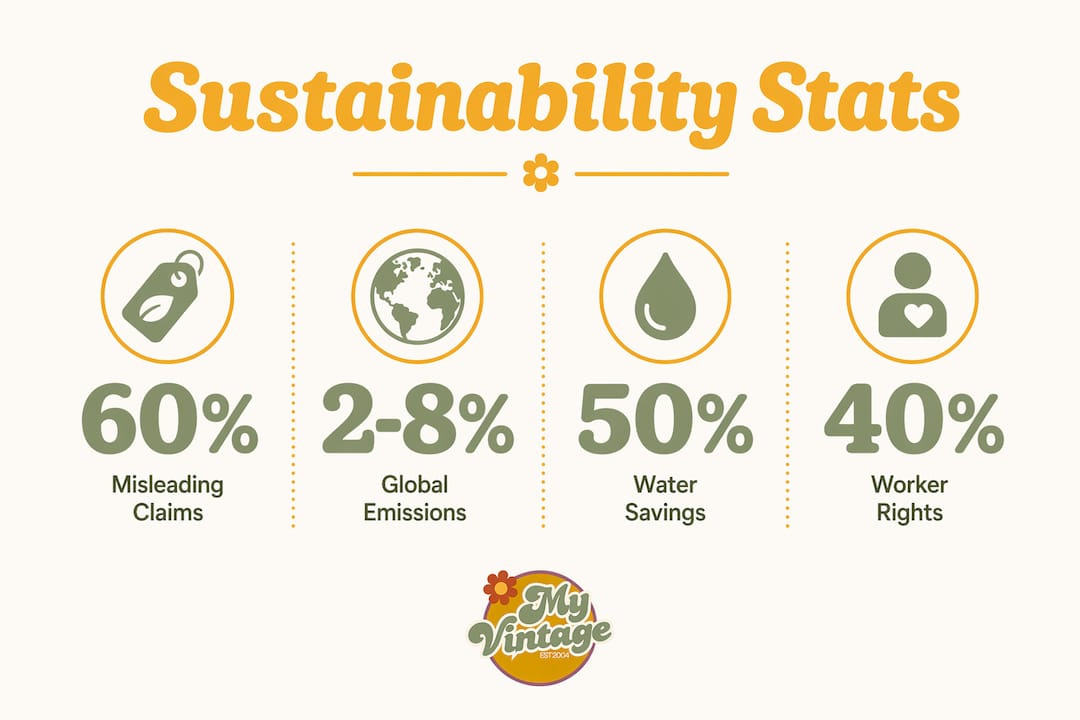
The fashion industry accounts for 2–8% of global carbon emissions and ranks among the world’s largest consumers of fresh water. Those figures place fashion alongside aviation and shipping as a significant driver of climate change. The industry also generates staggering textile waste, with 85% of textiles ending up in landfills each year. That is not a recycling problem. It is a production and consumption problem.
Sustainable fashion addresses this by asking a different question at every stage of a garment’s life. Instead of “how cheaply can we make this?”, the question becomes “how responsibly can we make, use, and recover this?” That shift in thinking is what separates genuine sustainability from a green logo on a swing tag.

What environmental and social impacts does fashion address?
The environmental case for sustainable clothing is well documented, but the social dimension receives far less attention. Both are inseparable from a credible sustainability claim.
Environmental challenges
The fashion industry is the second-largest water consumer globally, with dyeing and finishing processes releasing toxic chemicals into waterways.
Less than 1% of clothing material is recycled into new garments, exposing the severe limits of circularity in the current system.
Synthetic fibres such as polyester shed microplastics with every wash, entering oceans and food chains in quantities that are still being measured.
Textile waste fills landfills at a rate that outpaces most other consumer goods categories.
Social challenges
Labour conditions sit at the heart of what sustainable clothing means in practice. Garment workers in major producing countries, including Bangladesh, Cambodia, and Ethiopia, frequently face poverty wages, unsafe factories, and suppressed union rights. True sustainability requires addressing both environmental footprint and human rights. Ignoring one risks a superficial or incomplete claim.
Sustainable fashion mirrors the farm-to-table food movement in philosophy. It demands transparency, ecological integrity, and social justice throughout the supply chain, rejecting the linear take-make-waste model that has dominated the industry for decades. When you buy a garment from a brand that publishes its factory list and pays living wages, you are participating in that shift.
How does sustainable fashion differ from ethical, circular, and slow fashion?
These terms overlap, but they are not interchangeable. Knowing the difference helps you evaluate brand claims with confidence.
Term | Primary focus | What it measures |
Sustainable fashion | Environmental impact | Emissions, water use, waste, material sourcing |
Ethical fashion | Labour and human rights | Wages, working conditions, worker welfare |
Circular fashion | Product lifespan | Recyclability, repairability, take-back schemes |
Slow fashion | Consumption pace | Quality over quantity, reduced buying frequency |
Sustainability addresses the environment while ethics primarily concerns labour rights and the fair treatment of workers. A brand can be ethical without being sustainable, sustainable without being circular, and slow without either. Each attribute measures a different facet of responsible fashion. The most credible brands address all four, but that combination remains rare.
Greenwashing complicates matters further. Approximately 60% of fashion brands’ sustainability claims are misleading or unsubstantiated. The European Union is responding with regulatory bans on generic green claims effective from september 2026, requiring brands to back up labels like “eco-friendly” or “green” with verified evidence. Terms such as “conscious” and “eco” lack legal definitions and often function as marketing language rather than verified certifications.
Pro Tip: When a brand uses the word “eco-friendly” without linking to a third-party certification such as GOTS (Global Organic Textile Standard) or Bluesign, treat the claim with scepticism. Genuine sustainability is documented, not just declared.
What materials and production choices define sustainable clothing?
Fabric choice is one of the most visible aspects of sustainable fashion, but it is also one of the most misunderstood. The reality is that no perfect fabric exists. Every fibre carries trade-offs.
Organic cotton uses far less pesticide than conventional cotton but still requires significant water.
Linen and hemp are low-impact crops that need little water and no pesticides, making them among the most planet-friendly natural fibres available.
Recycled polyester reduces virgin plastic use but still sheds microplastics during washing.
Tencel (Lyocell) is produced in a closed-loop process that recaptures solvents, making it one of the cleaner synthetic options.
Wool is renewable and biodegradable but raises animal welfare questions depending on sourcing.
The Good On You material guide makes a point that cuts through the fabric debate: prioritising durability and longevity is more effective than chasing material ideals. A well-made linen dress worn for fifteen years outperforms a GOTS-certified cotton blouse replaced every two seasons.
Production processes matter as much as raw materials. Low-impact dyeing, waterless finishing techniques, and chemical management programmes all reduce the environmental footprint of manufacturing. Certified labels such as GOTS validate specific aspects of sustainability and rely on supply chain transparency and compliance documentation. For 2026, the trend towards natural fibre blends and artisan textiles reflects growing consumer demand for traceability and craft over mass production. You can read more about fabric types and sustainability in the context of vintage retail to see how these principles apply in practice.
What can consumers do to support fashion sustainability?
The most powerful thing you can do is also the simplest. The most sustainable garment is often one you already own. Extending the life of clothing through repair and mindful use reduces environmental damage more than buying new sustainable items.
Here are practical steps that make a real difference:
Buy less, choose well. Invest in fewer, higher-quality garments that last years rather than seasons. Quality over quantity is the foundation of sustainable style.
Repair before replacing. A broken zip or worn seam is not a reason to discard a garment. Basic mending skills extend clothing life significantly.
Shop secondhand and vintage. Buying pre-loved clothing keeps garments in circulation and removes the environmental cost of new production entirely.
Wash less and wash cold. Frequent hot washing degrades fibres faster and uses more energy. Spot-cleaning and airing garments between wears extends their life.
Check certifications. Look for GOTS, Fair Trade, or Bluesign labels when buying new. These certifications involve third-party audits rather than self-reported claims.
Swap and share. Clothing swaps with friends or community groups are a zero-cost way to refresh your wardrobe without new production.
Pro Tip: Before buying anything new, ask yourself whether you could find the same item secondhand. Platforms like Vinted, Depop, and actual vintage shops often stock exactly what you are looking for at a fraction of the environmental cost.
Mindful consumption is not about perfection. It is about making more considered choices more often. Consumers who focus on buying less, investing in quality, and extending product life achieve far more meaningful sustainability than those who simply swap one type of new garment for another. The advantages of sustainable fashion go beyond the environment too, including better quality, greater individuality, and a wardrobe that holds its character over time.
Key takeaways
Fashion sustainability is most effective when it addresses environmental impact, fair labour, and garment longevity together rather than treating any one of these as sufficient on its own.
Point | Details |
Full lifecycle thinking | Sustainable fashion covers sourcing, production, use, and end-of-life recovery, not just materials. |
Greenwashing is widespread | Around 60% of brand sustainability claims are misleading; seek third-party certifications like GOTS. |
No perfect fabric exists | Every fibre has trade-offs; prioritise garment durability and longevity over material ideals. |
Longevity beats new purchases | Extending the life of clothes you already own reduces environmental impact more than buying new eco items. |
Vintage is circular by nature | Buying secondhand keeps garments in use, removes new production costs, and supports circular fashion. |
Vintage fashion and sustainability at My Vintage
Vintage clothing is one of the most genuinely sustainable choices you can make. Every pre-loved piece you wear is a garment that skips new production entirely, saving water, energy, and raw materials.
At My Vintage, we have been curating authentic vintage clothing and retro homeware since 2004, selecting pieces from the 1940s through to the 1990s that are built to last and full of character. Whether you are after a beautifully crafted 1960s dress or a piece of original 1950s vintage homeware, every item in our collection represents the circular economy in action. Shopping vintage is not a compromise. It is one of the most stylish and responsible decisions a wardrobe can hold. Browse the full My Vintage collection at myvintage.uk and find something with a story worth wearing.
Frequently Asked Questions
What does sustainable fashion mean in simple terms?
Sustainable fashion means producing and wearing clothing in ways that reduce environmental harm, support fair labour, and keep garments in use for as long as possible. It covers the full lifecycle of a garment from raw material to end of life.
What is the difference between sustainable and ethical clothing?
Sustainable fashion focuses on environmental impact such as emissions, water use, and waste, while ethical fashion focuses on labour rights and fair treatment of workers. Both matter, and the most responsible brands address both.
Are eco-friendly fashion labels trustworthy?
Not always. Terms like “eco-friendly” and “green” have no legal definition and are frequently used without verification. Look for certified labels such as GOTS or Fair Trade, which involve independent audits rather than self-reported claims.
What are the most sustainable clothes to buy?
The most sustainable clothes are those you already own and continue to wear. When buying new, prioritise durability, seek certified materials, and consider secondhand or vintage options to avoid the environmental cost of new production.
How does vintage fashion support sustainability?
Buying vintage keeps existing garments in circulation, removing the need for new production and its associated water use, emissions, and waste. It is one of the most direct ways to participate in circular fashion.
Recommended


Comments