


70s Retro Sunglasses: Find Your Vintage Style
- May 16
- 10 min read

Few accessories carry the cultural weight of a great pair of 70s retro sunglasses. These were not simply eye protection or a seasonal trend. They were declarations of identity, born from a decade that prized self-expression above almost everything else. The 1970s produced some of the most architecturally bold, visually striking eyewear in history, and today’s fashion landscape keeps coming back to them for good reason. Whether you are drawn to the glamour of oversized oval frames, th;e rebellious cool of double-bridge aviators, or the earthy warmth of tortoiseshell acetate, this guide will help you understand the styles, choose the right fit, and wear them with genuine confidence.
Table of Contents
Key Takeaways
Point | Details |
Iconic 70s styles | Oversized angular, oval, round, and aviator shapes define authentic 70s retro sunglasses styles. |
Face shape fit | Choosing sunglasses that match your face shape enhances comfort and accentuates your look. |
Material matters | High-quality acetate and layering ensure durability and authentic aesthetics in 70s frames. |
Styling balance | Let bold 70s sunglasses be your focal accessory paired with simple outfits for modern vintage style. |
Smart buying | Understand the vintage versus retro distinction and verify quality when purchasing authentic sunglasses. |
Understanding signature 70s retro sunglasses styles
The 1970s were a genuinely exciting decade for eyewear design. Advances in lightweight acetate, a plant-based plastic that allowed for richer colours and larger shapes, meant that frames could suddenly be bolder, bigger, and more expressive than anything seen before. This was the technology that made the disco era’s visual language possible, and understanding 70s style fully means appreciating just how radical those shapes felt at the time.
The top 70s retro sunglasses styles include oversized angular frames, oval and butterfly shapes, round frames, and double-bridge aviators, each with its own cultural story. Oversized angular frames were the uniform of the disco set, all sharp geometry and attitude. Oval and butterfly frames, by contrast, brought a softer glamour, popularised by icons like Elizabeth Taylor, who understood instinctively that a frame could frame far more than just the eyes. Round frames carry the intellectual cool of John Lennon and Andy Warhol, both of whom turned small circular lenses into a kind of personal philosophy. And then there are aviators, the double-bridge design with a spirit of rock ‘n’ roll rebellion that has never really gone out of fashion.

70s retro eyewear features oversized aviators, geometric acetate frames, and warm amber tortoiseshells as its signature trio, and each of these remains just as wearable today as it was fifty years ago. The tortoiseshell finish in particular, with its warm amber, brown, and caramel tones layered through the acetate, is something uniquely associated with this decade.
Here is a quick reference for the most iconic 70s shapes:
Oversized angular frames: Bold, geometric, and theatrical. Perfect for making an entrance.
Oval and butterfly frames: Wide at the top, tapering softly. The glamour option.
Round frames: Small to medium, often metal or acetate. Intellectual and quietly cool.
Double-bridge aviators: Two bars across the nose, metal construction. Effortlessly rebellious.
Tortoiseshell acetate: Less a shape, more a signature material and colour palette that works across all styles.
“The 1970s were perhaps the first decade in which sunglasses became a genuine personality statement rather than a practical accessory. The frames you chose told people exactly who you were, or who you wanted to be.”
Choosing the right frame for your face shape
With styles clarified, understanding how to choose based on your face shape ensures your 70s glasses enhance your natural features rather than work against them. The principle is straightforward: contrasting shapes create balance. Matching frame shape to face shape enhances natural appearance and comfort, and it is the single most useful piece of guidance we can offer before you buy.

Start by identifying your face shape. The five main categories are round, square, oval, heart, and diamond. Once you know yours, the rest follows logically:
Round faces benefit from angular or rectangular frames, which add definition and length to softer features. Oversized square or angular 70s frames work beautifully here.
Square faces are softened by round or oval sunglasses. The curved lines contrast with a strong jaw, creating a more relaxed, balanced look.
Oval faces are genuinely versatile and suit most 70s shapes. Medium-width proportionate frames maintain the natural harmony of oval features without overwhelming them.
Heart-shaped faces have a wider forehead and narrower chin. Rounded frames draw attention upward and add visual weight lower on the face, which creates balance.
Diamond faces share a similar principle with heart shapes. Rounded or oval frames with gentle width at the brow work well to soften the angular cheekbone area.
Beyond shape, fit matters enormously, especially with the generous proportions of authentic retro sunglasses. Frame width should align with your temples rather than extending significantly beyond them. The bridge should sit snugly on your nose without pressing into the cheeks or leaving red marks after an hour of wear. Temple arms should hold the frame securely without gripping tightly at the sides of your head.
Pro Tip: If you are buying online, measure the width of a pair of sunglasses you already own and know to be comfortable, then compare against the product’s listed measurements. Most quality vintage and retro sellers will list lens width, bridge width, and temple length on their product pages.
Material quality and authenticity in 70s retro sunglasses
Once you know your perfect style and size, material quality and authenticity ensure longevity and genuine vintage flair. This is where the difference between a memorable purchase and a disappointing one is usually decided.

Acetate was the revolutionary material of 1970s eyewear. Unlike the thin, brittle injected plastics used in mass-produced budget frames, acetate is denser, richer in colour, and far more durable. It is also more comfortable against the skin, as it warms slightly to body temperature. High-quality acetate offers better lustre, layered colours, and lightweight comfort compared to cheap injected plastics, and you will feel that difference the moment you pick up a well-made pair.
What to look for when assessing quality:
Layered tortoiseshell tones: Genuine acetate shows depth and variation in colour. Cheap injected plastic tends to look flat and uniform.
Hinge quality: Authentic 70s originals had superior acetate durability and hinges versus modern fast-fashion alternatives. Look for barrel hinges with multiple barrels and a smooth, firm action.
Lens clarity: Check for optical distortion by holding lenses at arm’s length and looking through them at a straight line. Any waviness suggests lower quality.
UV protection: Any sunglasses you actually wear outdoors should carry UV400 certification. Polarised lenses are a worthwhile upgrade for driving or water settings, and photochromic lenses adapt to light conditions throughout the day.
On price, the spectrum is wide. Accessible retro recreations typically sit between £20 and £70. Mid-range quality reproductions using good acetate land between £70 and £150. Authentic vintage originals and 70s vintage acetate sunglasses from recognised makers can reach well over £200, reflecting both material quality and provenance.
“A well-made pair of acetate sunglasses from the 1970s, properly cared for, will outlast three or four generations of cheaper alternatives. That is not nostalgia talking. That is material science.”
Styling your 70s sunglasses for modern looks
Beyond choosing styles and materials, effectively styling your sunglasses completes your authentic 70s vintage look. The key instinct to develop is restraint. These frames carry considerable visual presence, and they work best when the rest of your outfit lets them lead.
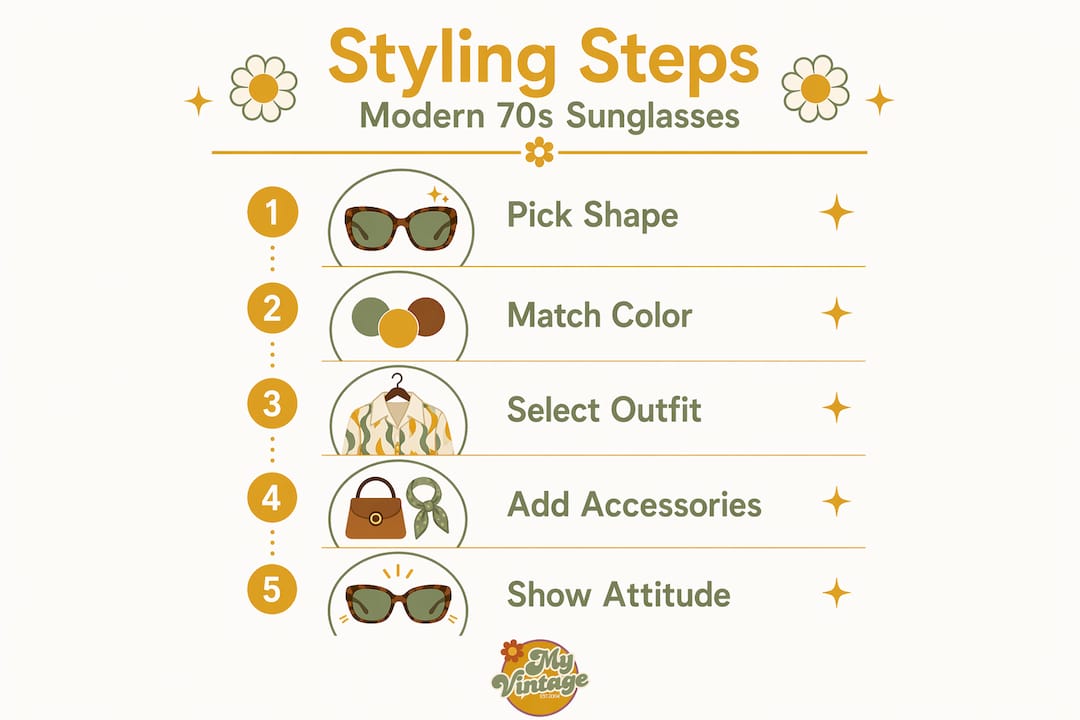
70s sunglasses are bold personality statements best paired with simple outfits to avoid over-accessorising. A pair of oversized amber tortoiseshell frames on a white linen shirt and straight-leg jeans is a complete look. Add a statement necklace, bold earrings, and a printed scarf and suddenly the sunglasses are competing with everything else, and nothing wins.
Some practical styling principles:
Let the frames lead. Treat your sunglasses as the focal accessory, then build a simple, considered outfit around them.
Use lens tint to set the mood. Amber and brown tints amplify nostalgia and pair naturally with earth tones. Grey or green tints feel slightly cooler and suit more contemporary outfits.
Tortoiseshell over solid colour, usually. Layered tortoiseshell adds depth and authenticity without demanding a specific colour palette to work with.
Match the era, not just the shape. Pairing round John Lennon-style frames with a floral midi dress and platform sandals reads as coherent vintage. The same frames with a technical jacket can feel disconnected.
Think about context. Oversized butterfly frames are wonderful at a festival or a sunny afternoon in the city. They may feel overwhelming in more contained settings.
Pro Tip: Consult our 70s retro colour palette guide if you want to build an entire outfit around the warm, earthy tones that define the decade. Burnt orange, mustard, chocolate brown, and olive green all pair naturally with the amber and tortoiseshell tones of 1970s eyewear.

Price and purchasing tips for authentic 70s retro sunglasses
With styling covered, practical buying advice ensures your sunglasses deliver authentic style without costly mistakes. The first thing to understand is the distinction between vintage and retro, since these words are often used interchangeably but mean quite different things.
Vintage refers to genuine 1970s originals. These may show signs of age, sometimes require minor restoration, and carry the weight of real provenance. Retro refers to new frames inspired by 70s aesthetics but made with modern materials and contemporary safety standards, including reliable UV protection. Both have their merits, and neither is inherently superior. It depends on what you value.
Category | Price range | What you get |
Budget recreations | £20 to £50 | Basic 70s shapes, injected plastic, limited durability |
Quality retro | £50 to £150 | Good acetate, reliable UV400, authentic styling |
Designer retro | £150 to £300 | Premium materials, brand heritage, modern standards |
Authentic vintage | £200 and above | True originals, real provenance, collector value |
Current pricing for 70s retro sunglasses ranges from affordable budget recreations through to luxury vintage pieces, reflecting the breadth of the market. For most buyers, the quality retro bracket offers the best balance of authenticity, wearability, and value.
When buying, follow these steps:
Research the seller. Reputable vintage specialists photograph pieces carefully and describe condition honestly, including any scratches, marks, or replaced components.
Check for UV certification. Any pair you intend to wear outdoors should explicitly offer UV400 protection. This is not optional.
Use size guides. Frame width, bridge width, and temple length measurements should be listed. Use them.
Confirm return policies. Fit is personal. Any credible seller should offer returns if a piece simply does not work for your face.
Consider it an investment. A quality pair of vintage luxury sunglasses holds its value and improves any outfit it touches for years to come.
Pro Tip: If you are buying a genuine vintage piece, ask the seller whether the lenses have been replaced. Many vintage frames have had modern UV-protective lenses fitted, which is actually a positive: you get the authentic frame with the safety of contemporary optics.
Why 70s retro sunglasses remain a fashion statement beyond nostalgia

Something interesting happens when you look closely at why 70s sunglasses captured the disco and bohemian spirit as confidence symbols rather than mere accessories. The decade was defined by two seemingly contradictory impulses: a collective hunger for liberation and an intensely personal desire to be seen. Sunglasses became the perfect expression of both at once. They obscured the eyes while amplifying the face. They made a statement while maintaining an air of mystery.
What we find genuinely compelling, working with vintage pieces here at My Vintage, is that the 70s cultural impact was not accidental. The bold, oversized shapes were enabled by a specific moment in materials technology. Before acetate, frames this large simply were not possible in a comfortable, lightweight form. When the technology arrived, designers and wearers seized it immediately and pushed it to its limits. That combination of creative ambition and technical possibility is rare in fashion history, and it explains why these frames still feel so considered and purposeful rather than merely dated.
We think people who wear 70s retro sunglasses today understand this instinctively, even if they cannot articulate it. There is something in the proportions and the warmth of the materials that communicates genuine confidence rather than fancy dress. The frames were designed for people who wanted to own a room, not apologise for being in it. That energy translates across fifty years without any loss.
Pro Tip: Treat your sunglasses as an extension of your attitude, not just your outfit. The most compelling wearers of 70s frames carry them with the same ease their original owners did. That ease cannot be bought. It comes from choosing a pair that genuinely feels like you.
Explore authentic vintage sunglasses at My Vintage
Ready to find your perfect pair? At My Vintage, we have been curating authentic vintage clothing and accessories since 2004, and our sunglasses collection reflects the same care and passion we bring to every piece on the site.
Whether you are after the angular drama of 1970s Jean Patou square frames, the sweeping glamour of vintage YSL oversized rectangulars, or the commanding presence of vintage Guy Laroche oversized frames, each piece in our collection is photographed in detail, described honestly, and accompanied by measurements to help you find the right fit. Shopping vintage is also one of the most satisfying ways to support sustainable fashion. You are not buying into fast fashion cycles. You are rescuing and celebrating a piece of design history.
Frequently Asked Questions
What are the main 70s retro sunglasses shapes to consider?
The key 70s retro styles are oversized angular frames, oval and butterfly shapes, round frames, and double-bridge aviators, each capturing a distinct strand of 1970s style culture, from disco glamour to bohemian cool.
How can I find the best 70s sunglasses for my face shape?
Identify your face shape first, then choose a contrasting frame: angular frames flatter round faces and round frames soften square faces, using contrast to create visual balance and enhance your natural features.
Are vintage 70s sunglasses better than retro recreations?
Vintage originals carry authentic provenance and often superior craftsmanship, but may need restoration; retro recreations offer modern UV standards and comfort while maintaining the 70s aesthetic, making them a practical and stylish choice.
What should I look for to ensure 70s sunglasses fit well and stay comfortable?
Check that frame width aligns with your temples, the bridge sits snugly without pressing into the cheeks, and temples hold firmly without gripping; proper frame fit is particularly important with the generous proportions of oversized 70s designs.
_Where can I buy authentic 70s retro sunglasses?
Specialist vintage retailers like My Vintage offer curated collections with detailed sizing information, honest condition descriptions, and customer support, making them a reliable source for both authentic originals and quality retro recreations.
Recommended


Comments