


Definition of Retro: Understanding Style from 1940s to 1990s

Many people confuse retro with vintage, assuming both terms describe old items from bygone eras. In reality, retro represents something entirely different: a contemporary style that draws inspiration from past decades without being genuinely old. This distinction matters whether you’re curating a home filled with mid-century charm or building a wardrobe that channels 1970s flair. Understanding what retro truly means, how it evolved across the decades from the 1940s to the 1990s, and why it differs from vintage will transform how you approach styling your spaces and outfits with confidence and authenticity.
Table of Contents
Key takeaways
Point | Details |
Retro is modern reinterpretation | Retro items are newly made pieces designed to reflect styles from roughly the 1940s to 1990s, not genuinely old artefacts. |
Distinct from vintage | Vintage refers to authentic period pieces over 20 years old, whilst retro imitates those aesthetics with contemporary production. |
Decade-specific characteristics | Each era from the 1940s through 1990s has unique colour palettes, patterns, and materials that define its retro appeal. |
Cultural nostalgia drives appeal | Retro’s cyclical popularity stems from nostalgia, which psychologically fosters optimism and social connection across generations. |
Balance prevents kitsch | Successful retro styling mixes nostalgic elements with modern pieces to achieve timeless charm without appearing dated. |
What is retro? breaking down the definition and origins

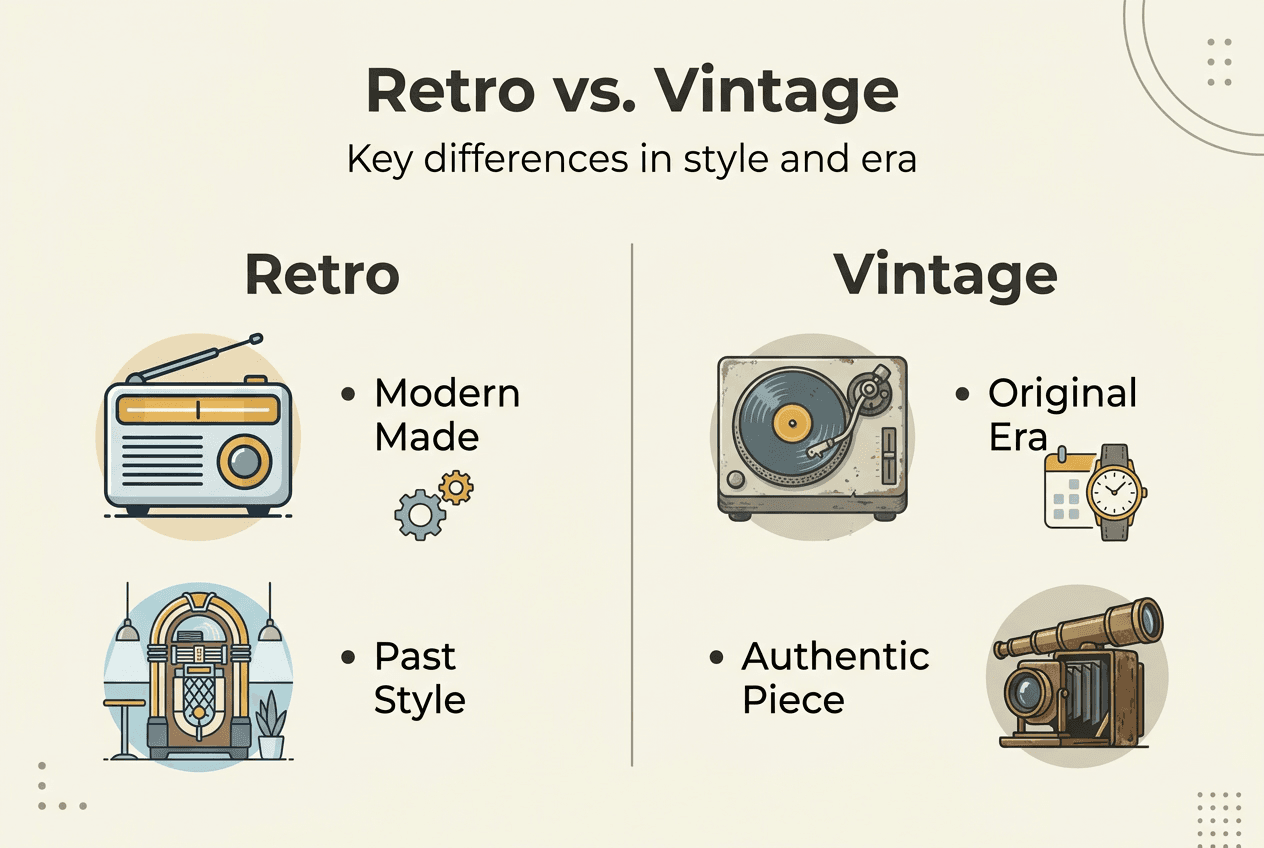
The word retro carries specific meaning that often gets muddled in casual conversation. Retro design is a contemporary interpretation of a historical style, not an artefact of the past. This distinction forms the foundation of understanding what is retro style and how it functions in fashion and home décor today. When you purchase a retro lamp or dress, you’re buying something manufactured recently that deliberately echoes the aesthetic sensibilities of an earlier decade.
The etymology reveals this imitative nature clearly. The term retro comes from the prefix meaning backwards or in past times, reflecting its fundamental purpose of looking back whilst remaining firmly rooted in the present. This backwards glance doesn’t involve time travel or archaeological discovery. Instead, it represents a creative choice by designers and manufacturers to revive visual elements, materials, and forms that defined previous eras.
Retro items share several defining characteristics that separate them from related categories:
Manufactured recently but styled after past decades
Deliberately incorporates period-specific design elements like colours, patterns, and shapes
Available at accessible price points compared to genuine vintage
Often uses modern materials and construction methods despite nostalgic appearance
Understanding where retro sits in the spectrum of historical items clarifies its unique position. Vintage pieces are original items genuinely created during their respective eras, typically over 20 years old. Antiques push this timeline further, requiring items to exceed 100 years of age before earning that designation. Archival pieces occupy yet another category, representing curated selections from designer past collections that may or may not qualify as vintage based on age alone.
Pro Tip: When shopping for retro pieces, examine construction details and materials. Modern zips, synthetic fabrics, or contemporary manufacturing techniques signal retro reproduction rather than authentic vintage, which helps you make informed purchasing decisions aligned with your budget and style goals.
This framework matters because it shapes expectations around quality, value, and authenticity. A retro 1960s-inspired dress won’t carry the same collectible value as a genuine 1960s garment, but it offers the aesthetic appeal at a fraction of the cost whilst accommodating modern sizing and comfort standards. The definition of retro design centres on this intentional homage rather than accidental preservation.
The evolution of retro style: fashions and home décor from the 1940s to the 1990s
Retro style doesn’t exist as a monolithic aesthetic. Each decade from the 1940s through the 1990s contributed distinct visual languages that continue influencing contemporary design. Retro style in interior design reflects elements from the 1940s to 1970s with resurgences in contemporary settings, though the scope often extends into the 1980s and 1990s depending on cultural context.

The cyclical nature of style explains why certain aesthetics resurface with remarkable regularity. The 30-year trend cycle shows fashion patterns repeat every three decades, meaning styles from the 1990s are experiencing renewed popularity in 2026. This phenomenon isn’t random but reflects generational nostalgia and the natural rhythm of cultural memory.
Decade | Fashion characteristics | Home décor characteristics |
1940s | Structured silhouettes, utility styling, bold shoulders, knee-length skirts | Floral patterns, functional furniture, warm wood tones, modest ornamentation |
1950s | Full skirts, fitted bodices, pastel colours, polka dots, rockabilly influences | Bright colours, clean lines, atomic age motifs, chrome accents, formica surfaces |
1960s | Mod styles, mini skirts, bold geometric patterns, shift dresses, psychedelic prints | Space age designs, plastic furniture, orange and avocado tones, abstract art |
1970s | Bell bottoms, earthy tones, maxi dresses, bohemian influences, wide collars | Shag carpets, wood panelling, geometric wallpaper, macramé, burnt orange and harvest gold |
1980s | Power shoulders, neon colours, athletic wear, bold prints, oversized silhouettes | Pastel palettes, glass block, brass fixtures, geometric shapes, Memphis design movement |
1990s | Grunge aesthetics, minimalism, slip dresses, denim everything, chokers | Neutral tones, streamlined furniture, industrial elements, exposed brick, loft living |
Retro home décor includes 1950s to 1980s styles with distinctive colours, materials and shapes that immediately signal their inspirational decade. Understanding these markers helps you identify and authentically recreate period aesthetics without guesswork.
Fashion mirrors these home décor evolutions with parallel shifts in silhouette, fabric, and ornamentation. The 1950s celebrated hyper-feminine shapes with cinched waists and full skirts, reflecting post-war optimism and domestic ideals. By contrast, the 1960s embraced youthful rebellion through shorter hemlines and geometric patterns that challenged conservative norms. The 1970s introduced relaxed bohemian influences alongside disco glamour, whilst the 1980s amplified everything with power dressing and excess.
Pro Tip: When creating a retro-inspired space or wardrobe, research colour palettes specific to your chosen decade. Authentic period colours create immediate visual recognition, whilst incorrect hues can make even perfectly styled pieces feel off. For example, the avocado green and harvest gold of the 1970s won’t work in a 1950s-themed kitchen that demands turquoise and coral.
Exploring types of retro décor reveals how these decade-specific characteristics translate into tangible design choices for UK homes today. The key lies in understanding not just what these eras looked like, but why they developed those particular aesthetics in response to cultural, technological, and social forces shaping each period.
Retro versus vintage: key differences and cultural significance
The confusion between retro and vintage persists because both terms reference the past, yet they occupy fundamentally different positions in the timeline of material culture. The key difference between retro and vintage is that retro is about imitation, not age. This simple distinction carries profound implications for collectors, decorators, and fashion enthusiasts navigating these overlapping worlds.
Vintage items earned their status through survival and authenticity. These pieces were manufactured during their respective periods and have endured decades of use, storage, and changing hands. A genuine 1960s dress was sewn in the 1960s, worn by someone living through that era, and carries the patina of age. Vintage items are more expensive and generally older with higher quality than retro, reflecting both their scarcity and historical authenticity.
Aspect | Retro | Vintage |
Age | Recently manufactured | Typically 20-100 years old |
Authenticity | Modern reproduction | Original period piece |
Price | Generally affordable | Often premium pricing |
Availability | Widely available | Limited by surviving stock |
Condition | New or excellent | Varies, may show wear |
Value trajectory | Stable | May appreciate |
Retro pieces serve different purposes than vintage counterparts. They make historical aesthetics accessible to broader audiences without the investment, care requirements, or ethical concerns surrounding genuinely old garments and furnishings. You can machine wash a retro 1950s-style dress without anxiety, whilst a true vintage piece demands hand washing and careful storage.
The cultural psychology driving retro’s appeal extends beyond mere aesthetics. Nostalgia promotes optimism and fosters future-oriented thinking, creating emotional connections that transcend visual preferences. When you surround yourself with retro items echoing your childhood or a romanticised past, you’re tapping into psychological comfort that feels increasingly valuable in uncertain times.
This nostalgia operates on multiple levels:
Personal nostalgia connects individuals to their own memories and experiences
Historical nostalgia romanticises eras before one’s birth
Collective nostalgia builds community through shared cultural references
Anticipatory nostalgia recognises present moments as future memories
Understanding the vintage vs retro difference helps you make intentional choices aligned with your values and goals. Collectors seeking investment pieces and historical authenticity gravitate towards vintage. Style enthusiasts wanting period aesthetics without the fragility or expense choose retro. Many people blend both approaches, anchoring spaces with key vintage pieces whilst filling gaps with retro items that complete the look.
Pro Tip: When building a retro-inspired collection, invest in one or two genuine vintage statement pieces as focal points, then surround them with retro accessories and furnishings. This strategy delivers authentic character whilst maintaining practicality and budget consciousness. The vintage pieces provide soul and credibility, whilst retro items offer flexibility and everyday usability.
The cultural significance of retro extends beyond individual purchasing decisions. It reflects broader societal patterns of memory, identity, and meaning-making. Each generation rediscovers and reinterprets the aesthetics of previous eras, creating dialogue between past and present that enriches both. Exploring retro vs vintage explained reveals how these distinctions shape markets, preservation efforts, and cultural conversations about value and authenticity.
How to embrace retro style in fashion and home décor today

Knowing what retro means and how it differs from vintage provides foundation, but practical application requires strategic thinking. Successfully incorporating retro elements into contemporary life demands balance, restraint, and understanding of how historical aesthetics translate into modern contexts. Successful retro décor balances nostalgia with modernity to avoid overwhelming a space.
The most common mistake involves treating retro as costume rather than style. Filling every corner with period pieces creates museum displays rather than liveable spaces or wearable wardrobes. Instead, approach retro as accent and inspiration, letting carefully chosen elements punctuate contemporary foundations.
Start by selecting one or two decades as your primary inspiration. Mixing too many eras creates visual confusion and dilutes impact. A 1950s-inspired kitchen works beautifully with its pastel appliances, chrome fixtures, and checkerboard flooring. Adding 1970s macramé and 1980s neon disrupts cohesion. Knowing decade-specific characteristics is key to stylish retro looks that feel intentional rather than haphazard.
Practical strategies for incorporating retro style include:
Choose a signature decade and commit to its colour palette and key design elements
Mix retro statement pieces with neutral contemporary furnishings or basics
Use retro accessories and accents to add personality without overwhelming spaces
Ensure modern comfort and functionality remain priorities beneath aesthetic choices
Edit ruthlessly to prevent clutter and maintain visual breathing room
In fashion, this translates to pairing a retro 1960s shift dress with contemporary shoes and minimal jewellery rather than full period costume. The dress provides retro flavour whilst modern accessories keep the look current and wearable. Similarly, incorporate retro in wardrobe choices by treating period pieces as statement items rather than complete outfits.
Home décor follows parallel principles. A mid-century modern sofa becomes a room’s focal point when surrounded by neutral walls and contemporary lighting. The retro piece shines without competing for attention. Layering too many period items creates sensory overload and dates spaces in unflattering ways.
Pro Tip: Photograph your retro-styled spaces or outfits before committing fully. Distance and camera perspective reveal whether your choices read as stylishly retro or inadvertently costumey. If something feels off in photos, it likely needs editing. Remove one or two elements and reassess until the balance feels right.
Lighting plays crucial roles in retro styling success. Period-appropriate fixtures immediately establish era and mood, but ensure they provide adequate illumination for modern needs. A gorgeous 1970s pendant lamp loses appeal if it leaves your kitchen dim and unusable.
Texture and material choices reinforce retro authenticity. The 1950s favoured smooth surfaces like formica and vinyl. The 1970s embraced tactile variety through shag, velvet, and natural fibres. The 1980s introduced high gloss and metallic finishes. Matching materials to your chosen decade enhances believability and cohesion.
Exploring retro interior design tips provides specific guidance for translating these principles into UK homes where period architecture and contemporary lifestyles intersect. The goal remains consistent: honour the past whilst living comfortably in the present, creating spaces and wardrobes that feel both nostalgic and fresh.
Explore vintage and retro treasures at My Vintage
Now that you understand what defines retro style and how to incorporate it authentically, finding quality pieces becomes your next step. My Vintage offers carefully curated selections of both genuine vintage items and retro-inspired homeware that bring decades of style into your home with confidence. Whether you’re drawn to mid-century modern aesthetics or later 20th-century charm, you’ll discover pieces that embody the eras you love.
Browse authentic vintage finds like this vintage mid-century magazine rack that captures the atomic age’s distinctive flair, or explore vintage mid-century homeware that adds character to contemporary spaces. Each piece at My Vintage reflects the quality, individuality, and timeless appeal that makes retro styling so rewarding. Start building your collection today with items that tell stories and elevate your personal style.
Frequently asked questions
What is the difference between retro and vintage?
Retro refers to newly manufactured items designed to imitate styles from past decades, whilst vintage describes genuinely old pieces created during their respective historical periods. Retro items are contemporary reproductions that capture period aesthetics, whereas vintage items are authentic artefacts typically over 20 years old. The key distinction lies in age and authenticity rather than appearance alone.
Which decades does retro style cover?
Retro style typically encompasses aesthetics from the 1940s through the 1990s, with particular emphasis on mid-century modern designs from the 1950s and 1960s. Each decade within this range offers distinct visual characteristics, colour palettes, and design philosophies. The specific decades considered retro shift over time as newer periods gain historical distance and nostalgic appeal.
How can I avoid making my home décor look outdated when going retro?
Balance nostalgic retro pieces with contemporary furnishings and neutral backgrounds to prevent spaces feeling like period museums. Focus on one or two decades for cohesion rather than mixing multiple eras randomly. Avoid overcrowding rooms with too many vintage or retro items, which creates visual clutter and emphasises age rather than style. Strategic editing and modern accents keep retro décor feeling intentional and fresh.
Can I mix retro and vintage items together?
Mixing retro and vintage pieces creates layered, authentic spaces when done thoughtfully. Use genuine vintage items as statement focal points for character and credibility, then fill supporting roles with retro pieces that complete the aesthetic. This approach delivers period charm whilst maintaining practicality and budget flexibility. Ensure all pieces share similar era inspiration for visual cohesion regardless of their actual age.
Recommended


Comments