


Dresses for a Retro Theme Party: Your Guide
- 6 hours ago
- 9 min read

Dresses for a retro theme party are best chosen by matching the specific vintage era of your event to iconic silhouettes, era-appropriate fabrics, and finishing accessories that feel authentic without sacrificing comfort. Whether you are planning the party or attending one, knowing your decades makes all the difference. A 1950s swing dress tells a completely different story to a 1970s wrap maxi, and getting that distinction right is what separates a genuinely atmospheric event from a vague fancy dress night. This guide walks you through everything you need to select vintage party outfits that look the part, feel wonderful to wear, and make the whole occasion sing.
What are the best dresses for a retro theme party?
The single most effective thing you can do when planning or attending a retro-themed event is to specify the era. “Vintage” covers nearly a century of fashion, and without a clear decade in mind, guests arrive in a bewildering mix of flapper fringe, disco sequins, and shoulder pads. Dress codes are effectively half the atmosphere of a retro-themed party, delivering more impact than decorations alone. That is a bold claim, but anyone who has hosted a well-dressed themed event will recognise the truth in it.
The most popular decades for retro parties each carry their own signature looks:
1920s: Drop-waist flapper dresses, beaded fringe, silk charmeuse, and long pearl ropes
1950s: Full-skirted swing dresses, fit-and-flare silhouettes, cotton sateen, and nipped waists
1960s: Shift dresses, geometric prints, bold colour blocking, and mod fashion ideas like go-go boots
1970s: Wrap dresses, floaty maxi skirts, halter-necks, and earthy or psychedelic prints
1980s: Power-shouldered dresses, bold metallics, and oversized silhouettes
Once you have settled on a decade, the dress code on your invitation becomes a genuine style guide for guests. Specifying the era and listing 2–3 iconic garment types on invitations helps guests dress authentically and arrive with confidence rather than guesswork.

Pro Tip: Write something like “1960s mod: shift dresses, boots, and geometric prints” directly on your invitation. This removes ambiguity and gives guests a clear shopping brief, which dramatically improves the overall look of the room.
Which vintage silhouettes work best for retro style dresses?
Silhou ette is the backbone of any retro look. Get the shape right and even a budget dress reads as authentically vintage. Get it wrong and no amount of accessories will save you. The key vintage silhouettes include the 1950s full swing skirt, the 1960s shift dress, and the 1970s wrap or floaty maxi dress, each made originally from fabrics like silk satin, taffeta, chiffon, and brocade.
Here is a quick reference for matching silhouette to decade:
Decade | Signature silhouette | Key features |
1920s | Drop-waist flapper | Low waist, fringe or beading, straight cut |
1950s | Swing or fit-and-flare | Full skirt, nipped waist, midi length |
1960s | Shift dress | Straight cut, above knee, bold print |
1970s | Wrap or maxi | Fluid drape, V-neck, floor-length option |
1980s | Power dress | Structured shoulders, bold colour |
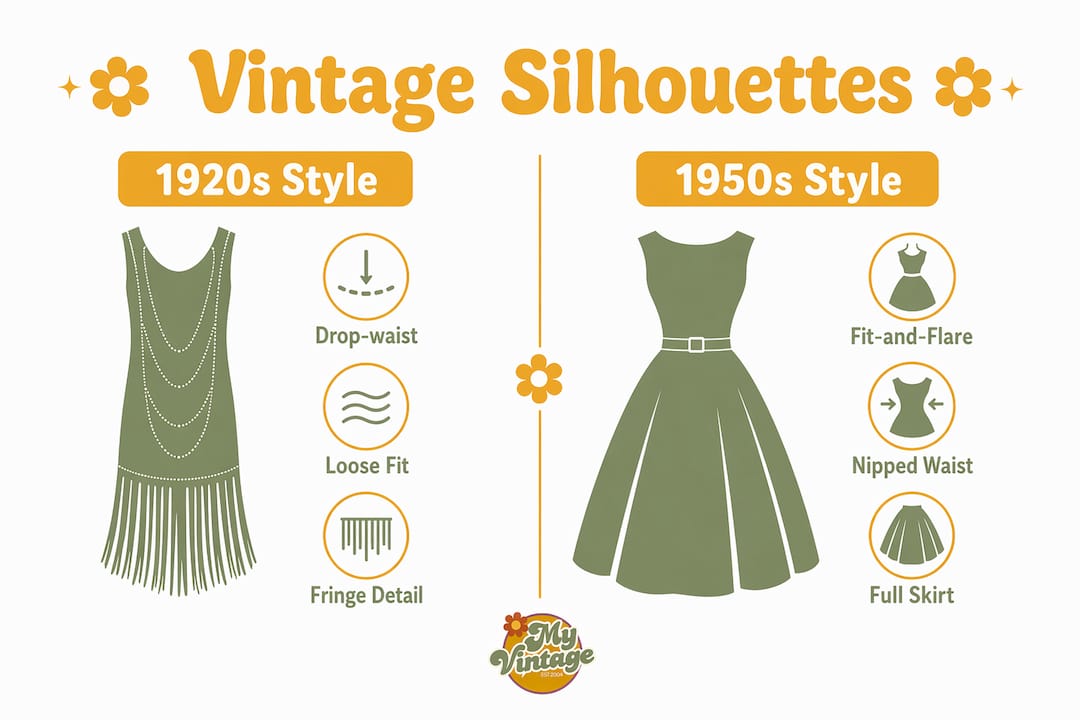
The 1950s fit-and-flare is arguably the most universally flattering of all retro silhouettes. The nipped waist and full skirt work beautifully across a wide range of body types, which is one reason it remains the most requested style for 1950s theme attire. A well-made 1950s swing dress typically includes practical features such as hidden side pockets, a back zipper, and cotton or cotton-sateen fabric, all of which make it genuinely wearable for a long evening rather than just a quick photo opportunity.
The styling principle that works across every decade is the anchor piece approach. Focus on one authentic vintage anchor piece per outfit, whether that is the silhouette itself or a statement jewellery piece, and build everything else around it. This keeps the look chic rather than costume-like.
Pro Tip: Choose your dress as the anchor and keep accessories to two or three complementary pieces. A 1960s shift dress paired with white block-heeled boots and a single geometric brooch is far more stylish than the same dress loaded with every mod accessory you can find.

How do fabrics affect the look and comfort of vintage party outfits?
Fabric choice is where authenticity and practicality meet, and it is worth understanding both sides. Original vintage garments from the 1950s and 1960s were often made from cotton, cotton sateen, silk, taffeta, or brocade. These fabrics look stunning but can be unforgiving in terms of care, fit, and movement, particularly on a dance floor.
Modern vintage-inspired dresses solve this by using fabric adaptations that replicate the look and feel of period textiles while adding stretch, washability, and durability. Stretch crepe, washable satin, and elasticated waistbands are now common in quality vintage-inspired pieces, making them far more dance-friendly than their original counterparts. This matters enormously for a party environment where you will be on your feet for hours.
Consider the event setting when choosing fabric:
Indoor evening events: Velvet, satin, and chiffon all work beautifully under warm lighting and create that glamorous period feel
Outdoor or summer parties: Lightweight cotton, cotton lawn, or cotton sateen keep you cool and move well in a breeze
Dancing-focused events: Look for stretch blends, elasticated waists, and fuller skirts that allow free movement
Formal retro occasions: Brocade, silk charmeuse, or structured taffeta add gravitas and period accuracy
One fabric cue worth knowing: if a vintage-inspired dress uses engineered sequins or stretch crepe rather than rigid woven fabric, it will almost certainly be more comfortable for a full evening. Modern fabric adaptations improve comfort and flexibility without sacrificing the retro aesthetic, which is why vintage-inspired pieces from specialist retailers often outperform authentic vintage finds for event wear.
What accessories complete a classic retro clothing look?

The right accessories transform a good retro dress into a complete period look. Each decade has its own accessory vocabulary, and knowing it means you can dress with genuine intention rather than reaching for the nearest sparkly thing.
For a 1950s look, think pearl necklaces, white cotton gloves, cat-eye sunglasses, and kitten heels or saddle shoes. A silk headscarf tied at the nape of the neck adds an effortlessly authentic touch. For 1960s mod fashion ideas, white go-go boots, geometric earrings, and a structured box bag are the defining pieces. The 1970s calls for platform sandals, hoop earrings, a fringed bag, and perhaps a wide-brimmed felt hat for a Stevie Nicks-adjacent moment.
Hairstyle and makeup are just as important as the accessories themselves. A 1950s look is incomplete without a victory roll or a neat bouffant. The 1960s demands a sleek blowout or a geometric fringe. The 1970s is all about loose waves, centre partings, and sun-kissed skin with a warm bronzed makeup palette.
Footwear deserves particular thought for a party setting. Kitten heels are far more manageable for a long evening than stilettos, and a pair of block-heeled boots offers both period accuracy and genuine support. Supportive undergarments are worth planning ahead for, particularly with 1950s satin-strap dresses, where inadequate support can cause discomfort and fit issues by the end of the night.
Pro Tip: Pack a small emergency kit for long events: fashion tape, a spare pair of comfortable flats, a compact mirror, and a safety pin or two. Vintage-inspired dresses are generally well-made, but a long evening of dancing tests every seam.
How to shop for vintage and vintage-inspired dresses for retro parties
Shopping for costumes for a retro party involves a choice between authentic vintage garments and vintage-inspired reproductions, and both have genuine merit. Vintage-inspired partywear offers practical sizing, consistent fit, and modern comfort compared to authentic vintage pieces, which can be harder to size and more fragile in wear. Authentic vintage, on the other hand, carries a unique character and provenance that no reproduction can fully replicate.
Here is a practical approach to shopping for either:
Define your era first. Know whether you need a 1950s swing dress or a 1970s halterneck maxi before you start browsing. This saves hours of scrolling and keeps your budget focused.
Check garment details carefully. Look for hidden zippers, lining quality, seam allowances, and fabric composition. These details separate a well-made piece from a flimsy costume.
Understand vintage sizing. Authentic vintage garments run significantly smaller than modern sizing. A vintage size 14 from the 1960s often corresponds to a modern size 10. Always check the actual measurements rather than the label.
Shop specialist retailers. Curated vintage retailers like My Vintage carry authenticated pieces with detailed descriptions, which removes much of the guesswork involved in buying vintage online. Browsing by era is particularly useful when you have a specific decade in mind.
Balance style, quality, and budget. A well-chosen vintage-inspired dress from a quality retailer will often serve you better than a cheap costume version. The iconic vintage silhouettes worth investing in are the ones you will reach for again and again, not just for themed parties.
Consider the full outfit cost. Factor in accessories, shoes, and any undergarments when budgeting. A beautiful dress paired with the wrong shoes can undermine the whole look.
For 1970s-specific shopping, the top vintage maxi dresses available through specialist retailers offer an excellent starting point, with detailed sizing and fabric information that makes online shopping far less of a gamble.
My take on dressing retro for a themed event
I have been immersed in vintage fashion for long enough to have a few strong opinions, and the most important one is this: the anchor piece approach genuinely works. Every time I see someone arrive at a retro event looking effortlessly stylish, it is because they chose one exceptional piece and let it lead. The guests who look overdressed or costume-like are almost always the ones who tried to wear every era reference at once.
Modern fabric adaptations have genuinely changed what is possible with vintage-inspired dressing. A stretch crepe 1960s shift dress that you can dance in all night, wash at home, and wear again to a summer wedding is a far better investment than a fragile original that needs dry cleaning and careful handling. I am not suggesting you abandon authentic vintage. Far from it. But for a party where you want to look wonderful and actually enjoy yourself, a quality vintage-inspired piece often wins.
The mistake I see most often is underestimating footwear. A stunning 1950s swing dress paired with uncomfortable shoes is a recipe for a miserable evening. Choose your shoes with the same care you give the dress, and your whole night will be better for it. Retro dressing at its best is joyful, expressive, and deeply personal. Wear what makes you feel like the best version of yourself from that era, and you will always get it right.
Find your perfect retro look at My Vintage
If you are ready to start building your retro party wardrobe, My Vintage is the place to begin. Founded in 2004, My Vintage is one of the UK’s most trusted curated vintage clothing retailers, offering authentic pieces from the 1940s through to the 1990s alongside vintage-inspired accessories and homeware. Whether you are searching for a vintage party dress for a 1950s soirée or a flowing 1970s maxi for a disco night, the collection is carefully selected for quality and authenticity.
For those who love to dress the whole scene, the My Vintage homeware collection even includes original 1950s pieces like this vintage atomic magazine rack that bring genuine period character to your party setting. Explore the full collection at My Vintage and find the retro look that is entirely, wonderfully yours.
Frequency Asked Questions
What is the best dress style for a 1950s theme party?
The 1950s fit-and-flare swing dress is the defining choice for 1950s theme attire, offering a nipped waist and full skirt that flatters a wide range of body types. Look for cotton or cotton-sateen fabric with practical features like hidden pockets and a back zipper for a comfortable, authentic look.
Should I buy authentic vintage or vintage-inspired dresses for a retro party?
Vintage-inspired dresses offer consistent modern sizing, stretch fabrics, and easier care, making them the more practical choice for a party where you plan to dance and socialise all evening. Authentic vintage pieces carry unique character and provenance, but require more careful sizing and handling.
How do I write a retro dress code for party invitations?
Specify the exact decade and list two or three iconic garment types directly on the invitation, for example “1970s: wrap dresses, maxi skirts, and platform shoes.” This approach significantly increases the number of guests who arrive in genuinely authentic retro style.
What accessories complete a 1960s mod party look?
A 1960s mod look is built around a shift dress, white block-heeled go-go boots, geometric earrings, and a structured box bag. Keep the palette bold and graphic, with colour blocking or black and white contrasts for maximum period impact.
How do I get the right fit when buying vintage dresses online?
Always check the actual garment measurements rather than the vintage size label, as vintage sizing runs significantly smaller than modern equivalents. A vintage size 14 from the 1960s often corresponds to a modern UK size 10, so measuring your bust, waist, and hips before purchasing is the most reliable approach.
Recommended


Comments