


Men's Vintage Suits: A Guide to Timeless Style
Men’s vintage suits are tailored garments inspired by or authentically crafted in past decades, defined by distinctive cuts, fabrics, and details that modern suiting simply cannot replicate. Whether you are drawn to the sharp peak lapels of a 1920s Great Gatsby ensemble, the structured double-breasted silhouette of the 1930s, or the clean, slim lines of a 1950s classic, vintage suiting offers a depth of character that off-the-rack contemporary suits rarely achieve. These pieces work beautifully for weddings, themed events, and even professional wear. The joy lies in finding a suit that tells a story while making you look genuinely extraordinary.
What are the key features of mens vintage suits by era?
Vintage suiting is not a single aesthetic. Each decade produced its own silhouette, fabric palette, and construction philosophy, and understanding these differences is what separates a well-dressed man from someone who simply put on an old suit.
The 1920s and early 1930s gave us some of the most recognisable looks in menswear history. Think of the Great Gatsby and Peaky Blinders aesthetic: bold peak lapels, high-rise pleated trousers, and matching waistcoats that create a commanding three-piece silhouette. Fabrics such as herringbone tweed, pinstriped wool, and chalk-stripe flannel were the materials of choice, giving these suits a tactile richness that synthetic blends cannot match. A navy herringbone tweed suit set from this era, complete with blazer, waistcoat, trousers, and overcoat, represents the full period look at its most polished.
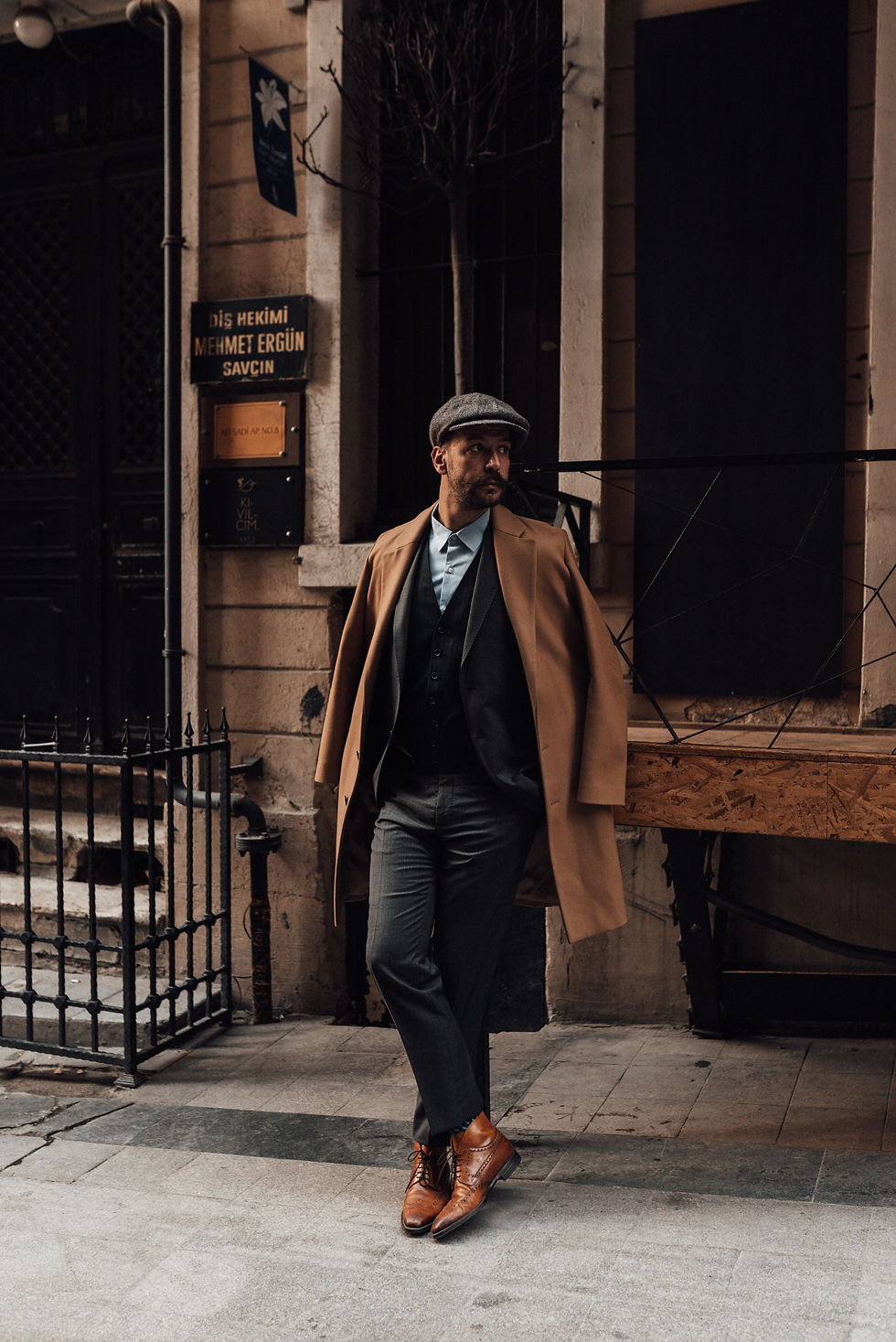
The 1930s leaned into structure and formality. Double-breasted jackets with wide peak lapels became the dominant silhouette, projecting authority and elegance. Shoulders were broad and padded, waists were suppressed, and the overall effect was one of deliberate, architectural tailoring. This is the era that gave us the “drop” measurement, the difference between jacket chest and trouser waist, as a defining characteristic of a well-proportioned suit.
By the 1950s, the silhouette softened and refined. Suits became cleaner and more streamlined, with narrower lapels, natural shoulders, and a closer fit through the body. This is the era of the tailored clean lines that still influence contemporary suiting today. Fabrics included fine worsted wool, hopsack, and subtle windowpane checks. The 1950s suit is arguably the most wearable vintage style for everyday use because it sits closest to modern proportions.
Key features to look for across all these eras include:
Peak lapels on jackets and waistcoats, which create a wider, more formal chest line
Pleated trousers with a higher rise, which improve drape and allow freedom of movement
Matching waistcoats that add versatility and allow the jacket to be removed without losing the vintage aesthetic
Textured fabrics such as tweed, herringbone, and pinstripe wool that give the suit visual depth
Structured shoulders and a suppressed waist that create the characteristic hourglass silhouette
Pro Tip: When shopping for retro men’s suits, always check the lapel width first. It is the single fastest indicator of era and will tell you immediately whether a suit is genuinely period-accurate or simply vintage-inspired.
Authentic vintage suits vs. modern reproductions: which is right for you?
This is the question most men wrestle with when they first explore vintage mens clothing, and the honest answer depends entirely on your priorities.
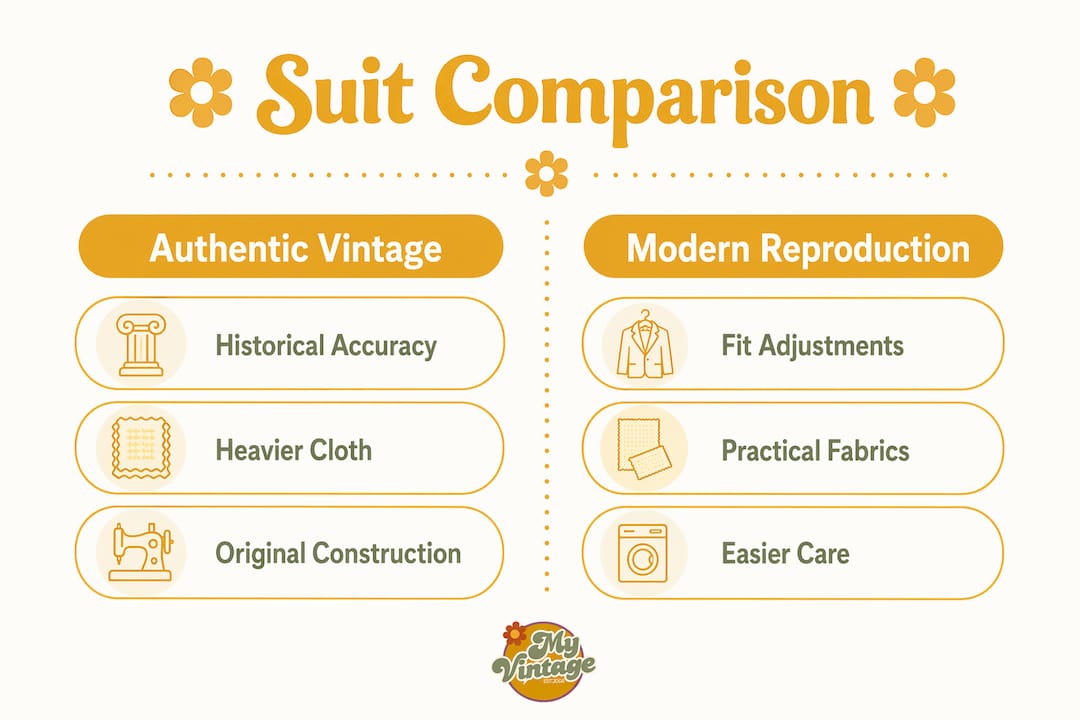
Authentic vintage suits carry undeniable charm. They were made in an era when suiting cloth was heavier, construction was more labour-intensive, and details like hand-stitched buttonholes and working sleeve buttons were standard rather than premium upgrades. However, authentic vintage suits often require tailoring and alterations for an optimal fit, because original sizing conventions bear little resemblance to modern measurements. A suit labelled as a “40 regular” in 1935 may fit more like a contemporary 38 short. Fabric ageing also means that seams, linings, and interlinings may have weakened over time, requiring careful assessment before purchase.

Modern vintage-inspired reproductions solve many of these practical problems. Fit adjustments for today’s proportions are built into the pattern from the outset, so you get the historical silhouette without the guesswork of alterations. Reproduction suits in the £150 to £200 price range offer historically accurate styling with the reliability of new construction.
Feature | Authentic vintage suit | Modern reproduction |
Historical accuracy | Very high | High to very high |
Fit consistency | Variable, often requires alteration | Consistent, modern sizing |
Fabric quality | Exceptional if well-preserved | Good to very good |
Condition risk | Moderate to high | None |
Price range | Varies widely | Predictable, often £150 to £250 |
Occasion suitability | Themed events, collections | Weddings, events, everyday wear |
Longevity | Dependent on condition | Reliable with normal care |
Pro Tip: If you are buying an authentic vintage suit online, always request detailed measurements of the shoulder width, chest, sleeve length, and trouser rise before committing. Tagged sizes are almost meaningless for pre-1970s garments.
The renewed interest in vintage menswear is partly driven by popular culture portrayals of early 20th century elegance, from Peaky Blinders to Downton Abbey, which have made structured, formal suiting feel aspirational rather than antiquated. This cultural moment has made both authentic pieces and quality reproductions more accessible than ever.
How to select the right vintage suit for your style and occasion
Choosing a classic men’s suit from the vintage world requires a slightly different approach to buying a modern suit. Here is a practical framework to guide you.
Measure yourself accurately before anything else. Shoulder width is the most critical measurement in any suit jacket because it cannot be altered without significant expense. Take your chest, waist, seat, and inseam measurements and compare them against the seller’s listed dimensions, not the label size.
Identify the silhouette that suits your body type. The broad-shouldered 1930s double-breasted style works brilliantly on slimmer frames, adding visual width. The 1950s single-breasted silhouette flatters most body types. The high-waisted 1920s three-piece creates a longer, leaner line for men with shorter torsos.
Match the fabric and colour to your occasion. A herringbone tweed three-piece in charcoal or navy reads as formal and is ideal for weddings or vintage fashion events. A lighter tan or cream linen suit in a 1950s cut works beautifully for summer garden parties. Pinstripe wool in grey or navy crosses comfortably into professional settings.
Consider the accessories from the outset. Vintage suiting rewards a complete look. A 1920s three-piece without the right collar bar, tie, and pocket square feels incomplete. Plan your accessories alongside the suit rather than as an afterthought. Our guide to men’s vintage accessories is a genuinely useful starting point here.
Budget for tailoring if buying authentic. Even a well-preserved authentic suit will likely need the trousers taken in or the jacket sleeves shortened. Factor in an additional £50 to £100 for a skilled tailor who has experience with vintage garments, as the construction differs from modern suits.
Buy from sellers who provide condition reports and detailed photographs. Condition assessment of vintage suits requires checking lining, seams, and fabric health. A reputable seller will photograph the underarm lining, the seat of the trousers, and any areas of wear. If these images are absent, ask for them.
How to maintain and style vintage suits for everyday wear
Caring for a vintage suit is not complicated, but it does require more attention than throwing a modern suit in a steam press and calling it done.
Storage is the first consideration. Vintage suits should be hung on wide, shaped wooden hangers that support the shoulder structure. Avoid wire hangers entirely, as they distort the shoulder line over time. Store suits in breathable cotton garment bags rather than plastic, which traps moisture and accelerates fabric deterioration. Cedar blocks or lavender sachets placed nearby will deter moths without the harsh chemical smell of mothballs.
For cleaning, dry cleaning is the safest option for authentic vintage wool suits, but use it sparingly. Over-cleaning strips natural lanolin from wool fibres and weakens the fabric. Between wears, a good brush with a natural bristle clothes brush removes surface dust and keeps the nap of tweed and herringbone looking fresh. Air the suit on a hanger after each wear rather than returning it immediately to the wardrobe.
When it comes to styling, the goal is to look like a well-dressed man rather than a man in a costume. The distinction matters. A few principles help:
Pair a 1920s three-piece with a spread-collar shirt and a silk tie in a period-appropriate pattern such as a club stripe or small geometric print
Wear a 1950s single-breasted suit with a slim knit tie and Oxford shoes in tan or burgundy for a look that reads as contemporary without losing its vintage character
Use a matching overcoat and hat to complete a full period ensemble for themed events or weddings, where committing to the look fully is always more impressive than hedging
Keep shirt collars and cuffs immaculate. Vintage suiting draws the eye to details, and a frayed collar undermines the entire effect
For men exploring affordable vintage menswear, the vintage menswear style spotlight at My Vintage offers excellent inspiration for building a complete look around a single suit.
Why vintage suits deserve a permanent place in your wardrobe
I have been surrounded by vintage clothing for a long time, and the question I hear most often about men’s vintage suits is some version of: “Will I look like I’m in fancy dress?” The honest answer is no, provided you approach the suit with the same intention you would bring to any well-considered outfit.
The misconception that vintage suiting is inherently theatrical comes from seeing it worn badly, usually with too many period-accurate accessories at once, or in a fabric and colour that is too loud for the occasion. A beautifully cut 1950s charcoal worsted suit, worn with a white shirt and a plain silk tie, looks more sophisticated than almost anything you will find on the high street today. It signals that you have thought about what you are wearing, which is increasingly rare and genuinely noticed.
What I find most compelling about classic men’s suits from earlier decades is the quality of construction. The canvas interlinings, the hand-finishing, the weight of the cloth. These are garments built to last decades, not seasons. Wearing one is a small act of resistance against the disposability of contemporary fashion, and that feels meaningful.
My advice is to start with a reproduction if you are new to vintage suiting. Find a silhouette that flatters you, wear it a few times, and notice how differently people respond to a man in a well-cut vintage-inspired suit. Once you have that confidence, the world of authentic vintage opens up in a much more rewarding way.
Discover vintage menswear at My Vintage
If this has sparked your interest in building a vintage-inspired wardrobe, My Vintage is a wonderful place to start exploring. Founded in 2004, My Vintage has been curating authentic vintage apparel and retro pieces for over two decades, with a genuine passion for quality and individuality.
Browse the latest vintage arrivals to discover newly sourced pieces that complement any vintage suit beautifully. And if you are decorating a space to match your sartorial sensibility, the 1950s atomic magazine rack is a genuinely special piece of period homeware. At My Vintage, the vintage world extends well beyond the wardrobe.
Frequently Asked Questions
What eras do mens vintage suits typically come from?
Men’s vintage suits most commonly represent styles from the 1920s, 1930s, and 1950s, with key design features including peak lapels, pleated trousers, and textured fabrics such as tweed and herringbone wool.
How do I know if a vintage suit will fit me?
Always prioritise actual measurements over the labelled size, focusing on shoulder width, chest, and trouser rise, as vintage sizing conventions differ significantly from modern standards.
Are vintage-inspired reproduction suits worth buying?
Yes. Modern reproductions offer historically accurate silhouettes with contemporary fit adjustments, making them suitable for everyday wear and formal occasions without the condition risks of authentic vintage pieces.
How should I care for an authentic vintage wool suit?
Hang it on a wide wooden hanger, store it in a breathable cotton garment bag, brush it after each wear, and dry clean sparingly. Checking lining and seams regularly for signs of moth damage or wear will extend the suit’s life considerably.
Can vintage suits be worn for modern professional settings?
Absolutely. A well-tailored 1950s single-breasted suit in charcoal or navy reads as polished and professional, and proper tailoring ensures the vintage silhouette looks considered rather than costume-like in a contemporary workplace.
Recommended


Comments