


Vintage Genie Bottles: Collector's Guide to Styles and Value
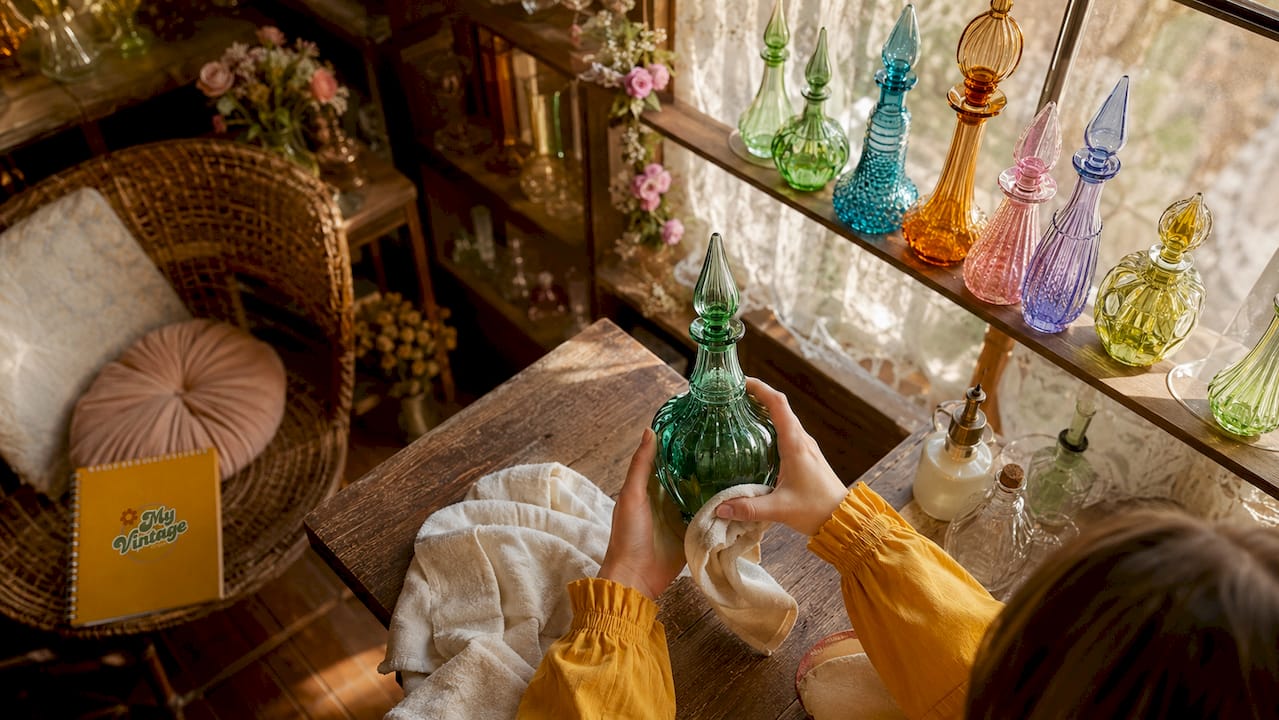
Vintage genie bottles are iconic mid-century Italian glass vessels, prized for their distinctive elongated silhouette, rich mineral colours, and extraordinary craftsmanship. Produced predominantly by Empoli glassmakers in Tuscany from the 1950s through to the 1970s, these collectible genie decanters sit at the crossroads of functional art and decorative beauty. Whether you are a seasoned collector or just beginning to explore antique glass bottles, understanding what makes these pieces special will sharpen your eye and deepen your appreciation. At My Vintage, we have a genuine passion for objects that carry history in their very form, and genie bottles are among the most captivating vintage glass collectibles you can own.
1. What are vintage genie bottles?
Vintage genie bottles are tall, narrow-necked glass decanters with a swelling body and a distinctive stopper, designed to evoke the legendary vessels of Arabian folklore. The term “genie bottle” is a popular collector phrase rather than a formal industry term. The recognised trade description is Empoli glass decanter, named after the Tuscan town of Empoli where the majority were produced. Both terms are used freely in collector circles, and knowing both helps you search more effectively when you want to buy genie bottles online.
Authentic examples typically measure between 50cm and 60cm in height, making them commanding centrepieces in any room. That generous scale is part of their visual drama. The glass itself is thick, weighty, and often deeply saturated with colour, a quality that separates genuine mid-century pieces from later reproductions.

2. What are the most iconic styles and designs?
Empoli genie bottles came in a remarkable range of surface treatments and silhouettes. Knowing the key styles helps you identify what you are looking at and understand why certain examples command more attention than others.
Hobnail pattern: Rows of raised glass bumps cover the body, creating a tactile, jewel-like surface. Hobnail bottles in cobalt blue or teal are among the most photographed and collected.
Twisted glass: The body features a spiral or barley-twist effect, achieved by rotating the molten glass during blowing. This technique requires considerable skill and produces a bottle that catches light from every angle.
Bubble motifs: Controlled air bubbles are trapped within the glass walls, giving a dreamy, almost underwater quality. These are rarer and tend to attract collectors who appreciate technical complexity.
Smooth form: The simplest silhouette, relying entirely on colour and proportion for impact. A flawless smooth bottle in a rare hue can outperform a patterned example in poor condition.
Colour is where the real drama lies. Rare colours like amberina red, deep cobalt, teal, and unique patterns are particularly prized among collectors. Amberina, which shifts from amber at the base to ruby red at the neck, is especially sought after because the colour gradient is difficult to replicate. Cobalt blue and forest green are more commonly found but remain highly desirable in pristine condition.
Style | Defining feature | Collector appeal |
Hobnail | Raised glass bumps across body | High, especially in cobalt or teal |
Twisted glass | Spiral body from rotational blowing | High, valued for craftsmanship |
Bubble motif | Trapped air bubbles in glass walls | Very high, rarity adds premium |
Smooth form | Clean silhouette, colour-led | Dependent on colour rarity |
Amberina | Amber-to-red colour gradient | Exceptional, commands top prices |
Pro Tip: When viewing a bottle in person, hold it up to natural light rather than artificial light. The true depth and saturation of the colour only reveals itself in daylight, and this is the best way to spot fading or uneven colouring that photographs often conceal.
3. How to assess the authenticity and condition of vintage genie bottles
Authenticity assessment is the skill that separates confident collectors from those who overpay for reproductions. Genuine Empoli bottles share several consistent manufacturing characteristics that you can check methodically.
Pontil marks: Turn the bottle upside down and examine the base. A genuine hand-blown example will show a pontil mark, a rough or polished scar where the glassblower’s rod was attached. A perfectly smooth, machine-finished base is a strong indicator of a later reproduction.
Makers’ marks: Not all Empoli bottles were marked, but some carry paper labels or embossed marks. The absence of a mark does not disqualify a bottle, but the presence of a genuine Empoli label adds provenance.
Stopper condition: The stopper is critical. The plastic seal at the base of vintage genie bottle stoppers often deteriorates and becomes brittle, leading to stopper loss and a decrease in value. Original stoppers with intact plastic seals are increasingly rare. Always check that the stopper fits snugly and that the seal has not crumbled or been replaced with a modern substitute.
Mold seam height: A persistent myth suggests you can date a bottle by how high the side mold seam runs up the neck. Side mold seam height is a common but unreliable method for dating vintage glass. Collectors rely on pontil marks and manufacturing techniques instead. Do not let seam height alone guide your decision.
Check for these condition issues before purchasing:
Chips along the rim or stopper edge
Hairline cracks visible when held to light
Heavy internal cloudiness or white mineral deposits
Stopper that wobbles, does not fit, or shows signs of replacement
Surface scratches from improper storage or cleaning
Pro Tip: Carry a small UV torch when shopping at fairs or markets. Repairs and filled chips often fluoresce under ultraviolet light, revealing restoration work that is invisible to the naked eye.

4. What factors most influence the value of vintage genie bottles?
Value in vintage glass collectibles is never determined by age alone. Collectors value the balance of condition, colour vibrancy, and intact features more than mere age when judging these pieces. An unmarked but pristine bottle can surpass an older, damaged example in desirability. This is a liberating insight for newer collectors, because it means condition and colour are within your ability to assess without specialist equipment.
Colour rarity sits at the top of the value hierarchy. Vibrant colours from distinctive mineral additives in mid-20th century glass are irreplaceable and sought after by collectors. Modern manufacturing cannot replicate these mineral compositions, which means the colour itself is a form of authentication. A bottle in a vivid, unusual hue carries its own proof of era.
“Condition, colour, and completeness are the three pillars of vintage glass value. Age is a supporting character, not the lead.” This principle guides experienced collectors across every category of antique glass bottles.
The following factors determine value, ranked by their typical impact:
Value factor | Impact on price | Notes |
Colour rarity | Very high | Amberina and unusual tints command premiums |
Original stopper intact | High | Missing or replaced stoppers reduce value significantly |
Condition (no chips or cracks) | High | Chips and cracks are major negative factors |
Pattern complexity | Medium to high | Hobnail and bubble motifs add collector interest |
Provenance or maker’s mark | Medium | Adds confidence but not always present |
Size | Medium | Taller examples in the 50cm–60cm range are preferred |
Prices for Empoli bottles with original stoppers range widely based on colour, rarity, and condition, with well-preserved examples in desirable colours attracting the strongest interest at auction and in specialist listings. The market rewards patience. Waiting for a bottle in exceptional condition will always serve you better than settling for a damaged piece at a lower price.
5. How can collectors effectively display and care for vintage genie bottles?
Display is where collecting becomes personal. The right setting transforms a genie bottle from a stored object into a living piece of art. Proper display brings out colour and preserves condition effectively, and a few considered choices make a significant difference.
Lighting: Position bottles where they receive indirect natural light, such as a windowsill that gets morning sun but not harsh afternoon glare. Direct, sustained sunlight can bleach colour over decades. For evening display, warm LED spotlights placed behind or beneath the bottle will illuminate the glass from within, creating a glowing effect that shows off the colour beautifully.
Placement and safety: Tall bottles are top-heavy by design. Place them on stable, level surfaces away from high-traffic areas. If you display them on open shelving, use museum putty or a small rubber ring beneath the base to prevent tipping. Keep stoppers in place when the bottle is not in use, as this protects the neck from dust and accidental chips.
Cleaning and maintenance: Clean genie bottles with warm water and a soft cloth only. Avoid dishwashers, abrasive cleaners, and soaking, all of which can cloud the glass or damage any remaining labels. For internal cloudiness caused by mineral deposits, a solution of white vinegar and warm water left to soak for several hours often clears the haze without scratching.
Never use metal brushes or abrasive pads inside the bottle
Store stoppers separately if the plastic seal is already degraded, to prevent further crumbling
Rotate bottles occasionally so that light exposure is even across the surface
Photograph your collection regularly for insurance and provenance records
Pro Tip: Group bottles in odd numbers of three or five at varying heights for the most visually satisfying display. Mixing a tall hobnail cobalt piece with a shorter smooth amberina bottle and a mid-height twisted green example creates depth and draws the eye across the whole arrangement.
For more ideas on showcasing glass pieces in your home, the vintage glass display guide at My Vintage offers practical inspiration for collectors who want their pieces to shine.
Key takeaways
The most important truth in collecting vintage genie bottles is that colour vibrancy, original stoppers, and flawless condition matter far more than age alone.
Point | Details |
Colour drives value | Amberina, cobalt, and teal in vibrant condition command the highest collector prices. |
Stoppers are critical | Original intact stoppers significantly increase value; replacements reduce it. |
Condition over age | A pristine unmarked bottle outperforms an older damaged example every time. |
Authentication takes skill | Rely on pontil marks and manufacturing details, not mold seam height myths. |
Display preserves value | Indirect light, stable placement, and gentle cleaning protect your investment long-term. |
Vintage homeware and collectibles at My Vintage
My Vintage has been curating authentic vintage pieces since 2004, and our homeware collection reflects the same passion for quality and individuality that drives serious collectors. Whether you are searching for a statement piece for your display or adding to an existing collection of vintage glass collectibles, our carefully selected range brings together original items with genuine character.

From mid-century decorative pieces to retro homeware with real provenance, My Vintage stocks the kind of objects that tell a story the moment you set eyes on them. Browse our vintage homeware collection to find pieces that complement your genie bottles and bring warmth and personality to your home. Each item is chosen with the collector’s eye in mind.
FAQ
What are vintage genie bottles made from?
Vintage genie bottles are made from hand-blown glass, predominantly produced by Empoli glassmakers in Tuscany, Italy, during the 1950s, 1960s, and 1970s. The glass contains mineral additives that create the distinctive, vibrant colours collectors prize.
How can I tell if a genie bottle is genuinely vintage?
Check the base for a pontil mark, which indicates hand-blowing, and examine the stopper for an original plastic seal. Authentic examples typically show slight irregularities in the glass consistent with hand production rather than machine manufacture.
Does a missing stopper significantly affect value?
A missing or replaced stopper reduces value considerably. Original stoppers with intact plastic seals are increasingly rare, and a complete bottle with its original stopper will always attract stronger collector interest and higher prices.
Which colours are the most valuable in vintage genie bottles?
Amberina red, deep cobalt blue, and teal are among the most sought-after colours. Vibrant, unusual hues created by mid-century mineral additives cannot be replicated by modern manufacturing, which makes these colours both an authentication signal and a value driver.
How should I clean a vintage genie bottle safely?
Use warm water and a soft cloth for exterior cleaning. For internal mineral cloudiness, soak with a diluted white vinegar solution for several hours. Never use abrasive cleaners, metal brushes, or a dishwasher, as these can permanently damage the glass or remove surface patina.
Recommended


Comments