


70s Disco Shirts: The Definitive Style Guide

Few pieces of clothing carry as much cultural weight as 70s disco shirts. They are not, as many assume, mere fancy dress props pulled out once a year for a themed party. These shirts were genuine expressions of identity, crafted from luxurious fabrics, cut with theatrical precision, and worn by men who understood exactly what they were doing. Whether you are a vintage collector hunting for an authentic piece, a fashion enthusiast looking to build a retro wardrobe, or someone planning a seriously stylish disco-themed event, this guide covers everything: the history, the fabrics, the best disco shirt styles, how to source them, and how to wear them with real confidence.
Table of Contents
The cultural roots of 70s disco shirts
To truly appreciate a 70s disco shirt, you need to understand the world it came from. The disco era did not emerge from nowhere. It grew out of a specific cultural moment in the mid-1970s, centred on New York’s underground club scene, where self-expression through fashion was practically a political act.
Clubs like Studio 54 became theatres of personal style. Dressing up was the point. For men in particular, disco fashion offered something genuinely liberating: permission to be bold, colourful, and unashamedly glamorous at a time when mainstream menswear was still fairly conservative. The shirt became the centrepiece of this expression.
The key design elements that defined the look were unmistakable:
Wide “butterfly” collars that framed the face theatrically, often extending several inches across the chest
Shiny, lightweight fabrics that caught the light on the dance floor and moved fluidly with the body, because wide collars and slippery fabrics were deliberately chosen to allow shirt flow with dance movements
Bold prints including paisleys, abstract geometrics, tropical florals, and Op Art patterns in vivid colour palettes
Ruffled or pleated fronts inspired by Edwardian dandyism, brought firmly into the 1970s with synthetic fabrics and lurid colours
Several buttons left undone as a deliberate style choice, not carelessness, to display chains, medallions, and chest hair as part of the overall aesthetic
The film Saturday Night Fever (1977) crystallised this look for global audiences. John Travolta’s open-collar shirt became one of the most recognisable fashion images of the entire decade, and it sparked enormous mainstream interest in 70s disco fashion well beyond the New York club circuit.

Disco shirts were also deeply tied to questions of identity and masculinity. They allowed men to experiment with colour, texture, and ornamentation in ways that had not been socially acceptable for much of the twentieth century. That historical significance is precisely what makes these pieces so compelling to collectors today.
Fabrics, patterns, and design features
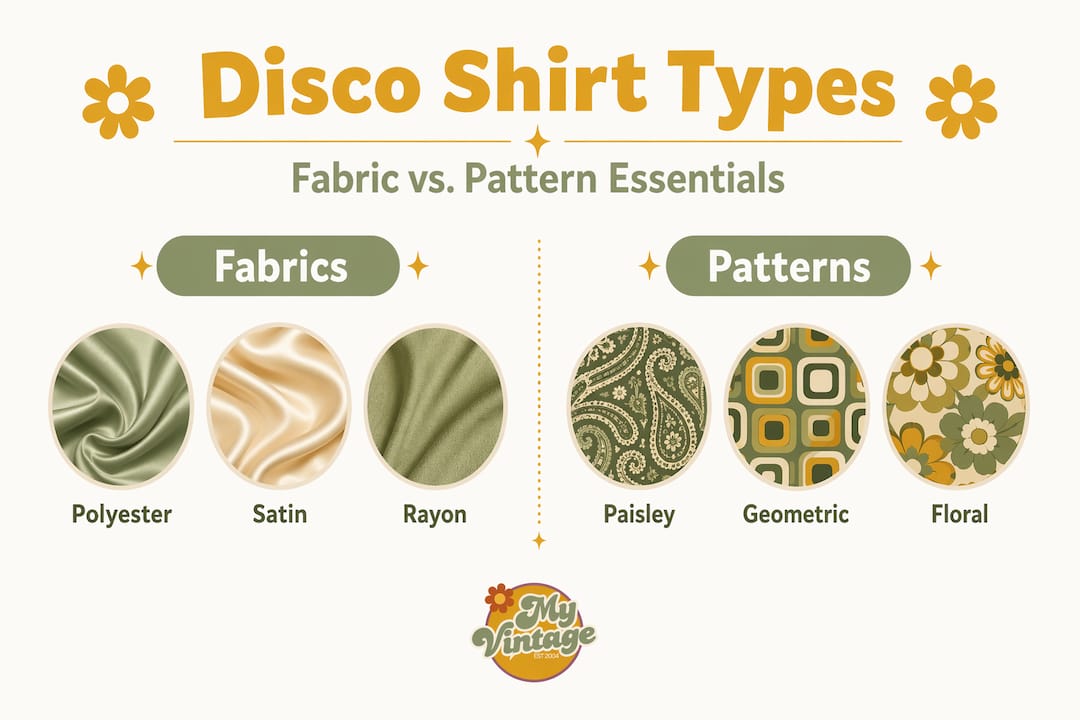
Understanding what a genuine 70s disco shirt looks and feels like is the foundation of smart collecting. Common 70s disco shirt fabrics include polyester, satin, silk, and rayon blends, each chosen for its distinctive sheen and comfort on the dance floor.

Polyester was by far the most widely used fabric of the era. Its reputation has been somewhat unfairly maligned. In the 1970s, polyester blends were genuinely exciting: they were easy to care for, held colour brilliantly, and had a smooth, slightly glossy finish that suited the disco aesthetic perfectly. Satin and silk versions were considered more luxurious and are particularly prized by collectors today, especially in good condition. Rayon blends offered a softer drape, closer to natural fibre, with the added benefit of a subtle sheen.
Patterns ranged from the exuberant to the truly outrageous. Paisley prints in burnt orange and brown were a staple of early-to-mid 1970s shirts, while by the late 1970s, bold geometric patterns and abstract prints in electric blues, greens, and golds had taken over. Floral designs were popular across the whole decade, particularly in tropical or oversized botanical prints.
The table below gives a clear overview of the key disco shirt styles you are likely to encounter:
Style | Key features | Fabric typically used | Rarity today |
Butterfly collar shirt | Enormous pointed collar, bold print | Polyester blend | Common |
Ruffled front shirt | Pleated or ruffled bib front, often white or cream | Satin or polyester | Moderate |
Tunic-length shirt | Longer cut, worn loose or belted | Rayon or polyester | Less common |
Sequinned or embellished | Decorative detailing, sequins or embroidery | Satin or silk | Rare and collectible |
Printed satin shirt | Vibrant all-over print in glossy fabric | Satin or polyester satin | Moderate |
Pro Tip: When examining collars on potential purchases, the wider and more dramatic the collar, the closer to peak disco the shirt typically dates. Collars that extend four or more inches across the chest were most fashionable between approximately 1974 and 1979.
Colourful disco tops and printed satin styles tend to be the easiest authentic pieces to find. Sequinned and embellished versions are rarer and command higher prices, but they are the most visually striking items in any collection.
Finding authentic vintage disco shirts
Sourcing genuine 70s style clothing requires a little patience and a sharp eye. The good news is that disco shirts were produced in enormous quantities, so the supply of authentic pieces is still reasonably healthy. The challenge is knowing what you are looking at.
Vintage 70s shirt sizes run significantly smaller than modern sizing labels suggest. A shirt labelled “large” from 1975 will frequently fit more like a modern small or medium. This trips up a lot of buyers shopping online. Always ask for flat measurements across the chest and shoulders before purchasing, and compare these against your own measurements rather than trusting the label.
Here are the key things to look for and watch out for:
Check labels for era-specific clues. Brands, care label typography, and fibre content labelling changed significantly across decades. Labels listing “Dacron” or “Terylene” (period brand names for polyester) are a strong indicator of genuine 1970s manufacture.
Inspect the construction. Vintage shirts tend to have narrower seam allowances and a different feel to the stitching compared with modern reproductions. Buttons on authentic pieces are often a harder, slightly thicker plastic with a distinct look.
Do not limit your search to the men’s section. Women’s evening wear and oversized blazer sections in charity shops and vintage stores often contain disco shirts that have been mislabelled or miscategorised. These sections are genuinely worth exploring.
Be realistic about pricing. Common polyester shirts in good condition can be found for £15 to £40 in the UK. Rarer satin or sequinned pieces in excellent condition will typically cost considerably more, and collector-grade items can reach £100 or above.
Avoid modern reproductions. These are often sold alongside genuine vintage pieces and can look similar at a glance. The giveaways are usually the fabric weight, the quality of the print (digital rather than screen-printed), and the label.
Pro Tip: When buying online, always request detailed photographs of the collar underside and the label. These two areas reveal more about a shirt’s authenticity and condition than almost anything else.
For broader advice on tracking down excellent pieces, our guide to finding and styling men’s vintage clothing is packed with useful practical tips.
How to wear disco shirts today
Knowing how to wear disco shirts well is what separates a stylish retro look from something that reads as dressing up. The distinction lies in intentionality. Modern 70s looks succeed when they combine iconic disco silhouettes with sharp tailoring, avoiding the sloppy, thrown-together costume appearance.
Here is how to build a look that works:
Start with the shirt as the focal point. If your shirt is bold and printed, keep everything else relatively restrained in terms of colour and pattern. The shirt is doing the talking.
Pair with high-waisted flared trousers or bell-bottoms. This is the classic silhouette. Tucking the shirt in is important for a polished finish rather than an afterthought costume look. Flared trousers paired with stacked-heel boots create the most authentic 1970s silhouette.
Leave two or three buttons undone. This is historically accurate and deliberately stylish. If you want to lean into the full disco aesthetic, add a gold chain or medallion at the open neckline.
Choose the right footwear. Platform boots or stacked-heel Chelsea boots are the most authentic choice. For a more modern wearable interpretation, a pointed-toe leather boot in tan or black works well without tipping into costume territory.
Accessorise thoughtfully. A slim belt in tan leather, a patterned pocket square, or a pair of tinted aviator frames all complement vintage disco outfits without overwhelming the look.
For casual daytime wear, a plainer colourful disco top in a tonal print, worn loose over straight-cut trousers with clean white trainers, is a genuinely wearable modern interpretation that nods to the era without full commitment to the theme.
Pro Tip: If you are styling a disco shirt for a party or event rather than everyday wear, a fitted blazer in a complementary solid colour worn over the shirt adds structure and stops the look from feeling too theatrical.
The My Vintage guide to party looks has some brilliant ideas for building complete vintage disco outfits that hold together from head to toe.

Caring for your vintage disco shirts
Authentic 70s shirts deserve proper care. These garments have already lasted five decades, and with the right attention, they will last for many more.
Satin and silk shirts should always be hand washed in cool water with a gentle detergent, or dry cleaned. High heat and agitation are the enemies of these fabrics.
Polyester blend shirts are more forgiving, but satin, rayon, and delicate fabrics still require a gentle machine cycle at low temperatures. Avoid tumble drying wherever possible.
Sequinned or embellished shirts should be hand washed only, turned inside out, and never wrung. The threads holding decorative elements are often fragile after decades of storage.
Store shirts hanging on padded hangers rather than folded, to maintain collar and cuff shape. If storage space is limited, fold loosely in acid-free tissue paper.
Address repairs promptly. Loose buttons, fraying collar edges, and small seam splits are the most common issues on vintage shirts. Catching these early prevents them from worsening and preserves the shirt’s value.
A gentle steam rather than direct ironing will refresh the fabric without risk of heat damage, particularly on satin and polyester blends.
My take on the disco shirt’s enduring appeal
I have spent a long time working with vintage clothing, and 70s disco shirts consistently remain some of the most joyful pieces to handle. There is a genuine pleasure in holding a well-made satin shirt from 1976 and appreciating the craft that went into it, the quality of the print, the cut of that extraordinary collar.
What strikes me most, though, is how often people get the styling wrong by overcorrecting in one of two directions. Either they go full costume and lose all the elegance the original wearers intended, or they dial it back so much that the shirt’s personality disappears entirely. The sweet spot is treating the shirt as the serious fashion piece it was. When I style a disco shirt for modern wear, I approach it with the same respect I would give any other quality vintage garment.

The collectors who truly value these shirts are not looking for the loudest piece in the room. They are looking for the most beautifully made one. Rarity, fabric quality, and construction matter enormously to serious buyers, and rightly so. A genuine satin shirt with a striking all-over print, in excellent condition, is a collectible object. Treat it accordingly.
Explore vintage 70s fashion at My Vintage
At My Vintage, we have been curating authentic vintage clothing since 2004, and our love for 1970s fashion runs deep. If you are building your own disco-era wardrobe or hunting for that perfect authentic shirt, our collection of carefully selected vintage menswear is well worth exploring. We source pieces for their quality, individuality, and genuine period character, not just their novelty value. And if you are putting together a complete retro look, do not overlook our vintage homeware collection for pieces that bring the same era’s aesthetic into your living space. Sustainable, individual, and always with a story to tell. That is what vintage shopping should feel like.
FAQ
What fabrics were used in authentic 70s disco shirts?
Authentic 70s disco shirts were most commonly made from polyester blends, satin, silk, and rayon, all chosen for their sheen and lightweight feel. Polyester was the most widely used, while satin and silk versions are the most sought-after by collectors today.
How do vintage 70s shirt sizes compare to modern sizing?
Vintage 70s shirt sizes run considerably smaller than modern equivalents. A vintage shirt labelled “large” will often fit more like a modern small or medium, so always check flat measurements before buying rather than relying on the label.
What are the best disco shirt styles to look for?
The most iconic styles include butterfly-collar printed polyester shirts, ruffled-front satin shirts, and sequinned or embellished pieces. Sequinned versions are the rarest and most collectible, while butterfly-collar shirts are the easiest to find in good condition.
How should I style a disco shirt for a modern occasion?
Pair your disco shirt with high-waisted flared trousers, leave two or three buttons undone, and add stacked-heel boots for the most authentic silhouette. For a more everyday interpretation, wear a simpler colourful disco top with straight-cut trousers and let the shirt do the work.
How do I care for a vintage satin or polyester disco shirt?
Satin and silk shirts should be hand washed in cool water or dry cleaned, while polyester blends can be machine washed on a gentle, low-temperature cycle. Always avoid high heat, tumble drying, and direct ironing on delicate vintage fabrics.
Recommended


Comments