


What are Vintage Dresses? A Fashion Lover's Guide
- May 18
- 9 min read

If you’ve ever admired a beautifully structured 1950s swing dress or a sleek 1960s shift and wondered exactly what makes it vintage, you’re not alone. The word gets used so loosely today that it’s easy to assume vintage dresses are simply old clothes with a good story. But that’s a misconception worth challenging. What are vintage dresses, really? The answer involves age, yes, but also craftsmanship, cultural significance, and an unmistakable connection to a specific era in fashion history. Understanding this distinction changes how you shop, collect, and appreciate these extraordinary garments.
Table of Contents
Defining Vintage Dresses: More Than Just Age
Having introduced the concept broadly, let’s get into the specifics, because the definition matters enormously when you’re building a collection or investing in a piece.
Vintage generally refers to clothing that is between 20 and 99 years old, making it distinct from antique clothing, which crosses the 100-year threshold. So a 1940s tea dress, a 1960s mod shift, and even a sharp 1980s power-shoulder gown all qualify as vintage today. What is considered antique clothing sits in its own category entirely, reserved for pre-1920s garments and handled more like museum pieces than wearable fashion.
But age alone tells only part of the story. Craftsmanship and cultural cachet are equally important in determining whether a dress earns the vintage label. A poorly made, mass-produced dress from 30 years ago is technically old enough to qualify, yet it lacks the hallmarks that make vintage fashion genuinely special. True vintage attire reflects the aesthetic values, construction techniques, and social context of its era.
Here’s what genuinely defines vintage clothing beyond the calendar:
Era representation: The dress visually and structurally belongs to a recognisable period in fashion history
Craftsmanship: Hand-stitching, quality linings, boning, and tailored darts signal garments made with care
Cultural resonance: The piece connects to a specific social or fashion movement, from post-war austerity dressing to the youthquake of the 1960s
Rarity: True vintage is not in current production and cannot simply be bought new
Understanding these nuances helps you explore vintage fashion definitions with real confidence, and it protects you from paying vintage prices for something that simply isn’t.
Vintage Dresses Versus Retro: Understanding the Difference
With a solid definition in hand, we can address one of the most common points of confusion in the vintage world. The terms vintage and retro get used interchangeably, but they mean very different things.
Retro items are newly made to imitate past styles, while vintage items are original garments from the era they represent. A retro 1950s-style dress bought from a high-street brand this year is a charming reproduction. A genuine 1955 swing dress is a piece of living fashion history. For collectors, that distinction is everything.

Feature | Vintage dress | Retro dress |
Age | 20 to 99 years old | Newly produced |
Authenticity | Original garment from its era | Modern reproduction |
Fabrics | Era-specific: rayon, wool, cotton sateen | Modern synthetics or blends |
Labels and tags | Period-appropriate brand markings | Contemporary labels |
Value | Appreciates with rarity and condition | Generally lower collector value |
Construction | Hand-stitching, boning, waist stays | Machine-sewn, modern techniques |
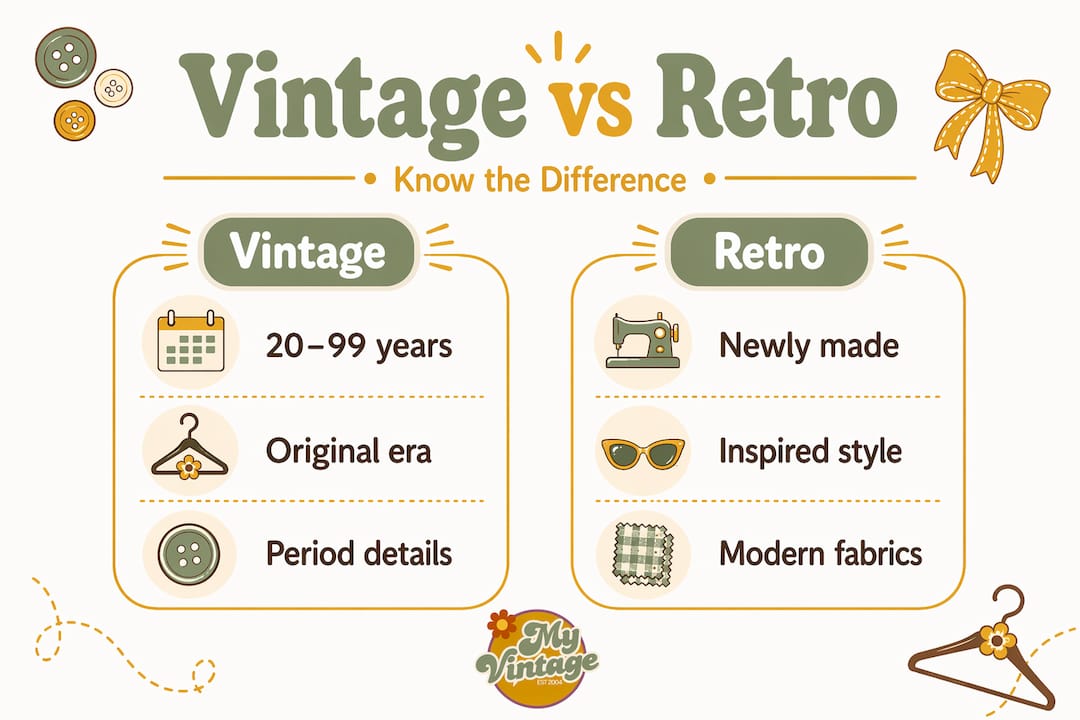
What are retro clothes, then? Think of them as fashion’s love letter to the past, beautifully designed but without the original provenance. Retro is a stylistic homage; vintage is the real thing. Many people happily wear both, and there’s nothing wrong with that. But if you’re collecting or investing, knowing the difference protects your money and your collection’s integrity.
Key signs you’re looking at genuine vintage rather than retro:
Union labels or era-specific country-of-origin markings inside the garment
Fabrics with a distinct hand-feel: real rayon drapes differently from modern polyester
Metal zips rather than nylon or plastic, particularly in pre-1960s pieces
Stitching density and finishing techniques consistent with handmade or early machine construction
Pro Tip: Run a quick online search for the label name inside any dress you’re considering. Many vintage brand labels have been documented by collectors and can help you date a piece accurately.
You can learn more about how to tell vintage from retro in our dedicated guide, which goes into even more detail on authentication.
Key Mid-20th Century Vintage Dress Styles and Their Features
Understanding what vintage means and how to distinguish it from retro leads naturally to the exciting part: the actual styles. The mid-20th century is the heart of vintage dress collecting, and for good reason. Each decade produced silhouettes so distinctive that an experienced eye can date a dress within a few years simply by its shape.
The 1940s: Wartime restrictions shaped fashion profoundly. Dresses featured structured, military-influenced lines with padded shoulders, straight skirts, and minimal fabric usage. The A-line silhouette was practical and polished. Utility clothing regulations in Britain meant that even everyday dresses were engineered with precision.
The 1950s: This is where vintage dress collecting becomes genuinely thrilling for many enthusiasts. 1950s fashion is defined by the hourglass silhouette, with three dominant styles: the swing dress (full, gathered skirt), the shirtwaist dress (tailored bodice with a button-through front), and the wiggle dress (figure-hugging pencil cut popularised by Marilyn Monroe). These silhouettes celebrated femininity after years of wartime austerity and remain among the most collected vintage pieces today.
The 1960s: Fashion became political. The shift dress, popularised by designers like Courreges and Yves Saint Laurent, stripped away the structured corsetry of the previous decade in favour of a relaxed, graphic silhouette. Mod geometric prints, bold colour blocking, and shorter hemlines defined the youthquake movement. These dresses are immediately recognisable and hold enormous cultural significance.
Decade | Key silhouette | Defining features | Iconic fabrics |
1940s | Straight A-line | Padded shoulders, utility cuts | Wool crepe, cotton, rayon |
1950s | Hourglass | Full skirt, nipped waist, boning | Cotton sateen, taffeta, nylon net |
1960s | Shift and mod | Geometric prints, short hems | Polyester, jersey, wool knit |
Pro Tip: If you’re new to collecting, the 1950s swing dress is an excellent starting point. Reproductions are common but so are authentic pieces, making it a great era to practise your authentication skills.
We love exploring the decades and the stories each one tells through its clothes. Once you start seeing fashion through an era lens, you won’t be able to stop.

How to Identify a True Vintage Dress: Craftsmanship and Era Cues
With knowledge of mid-century styles firmly in place, let’s turn to the practical side of collecting. Identifying authentic vintage dresses is a skill, and like any skill, it improves with practice and the right knowledge.
Craftsmanship and cultural relevance are your best guides, not just the year printed inside a tag. Here’s a step-by-step approach we use and recommend:
Check the label first. Pre-1971 American garments won’t have fibre content labels (a legal requirement introduced that year). UK labels often reference “Made in England” or carry union marks. Era-specific brand names, typography, and label construction all help date a piece.
Examine the zip. Metal zips indicate pre-1960s garments. Nylon zips became common through the 1960s. Plastic zips are more modern.
Feel the fabric. Wool gabardine, silk charmeuse, cotton sateen, and true rayon have tactile qualities that modern synthetics don’t replicate. If it feels unusually smooth or lightweight for its apparent era, investigate further.
Inspect the stitching and construction. Hand-finishing, horsehair boning in the bodice, waist stays (an interior tape sewn to hold the waist in place), and French seams all signal quality construction from the mid-century period.
Assess the condition honestly. Genuine vintage will often show minor signs of age: slight fading, minor repairs, or a delicate scent of age. This is normal. What you’re looking for is structural integrity, not perfection.
Pro Tip: Bring a small magnet when shopping in person. Metal zip pulls are attracted to magnets; plastic and nylon are not. A useful, quick test when you can’t read the zip clearly.
For more guidance on spotting the real thing, our articles on how to identify authentic vintage and the essentials of buying vintage online are well worth a read before your next purchase.
Why Vintage Dresses Remain Relevant and Coveted Today
Having covered identification and eras, it’s worth asking a broader question: why do vintage dresses continue to captivate so many people? The answer goes well beyond nostalgia.
Vintage garments offer unique style expressions and contribute to sustainable fashion by extending garment life cycles. In a world saturated by fast fashion, wearing a 1950s shirtwaist dress is a quiet act of resistance. You own something that was made to last, designed with intention, and impossible to find on the high street today.
The appeal for collectors and enthusiasts breaks down like this:
Individuality: No two vintage pieces are identical. Even dresses from the same year and maker carry small differences from handmade construction
Quality that endures: A well-made 1940s wool dress has often outlasted dozens of cheaper modern alternatives
Cultural connection: Wearing vintage attire is a way of engaging with fashion history in a personal, tangible way
Sustainability: Choosing vintage over new reduces demand for fast fashion and keeps beautiful garments out of landfill
Investment potential: Rare, well-preserved pieces from key decades appreciate in value over time
“Vintage dresses are not relics. They are wearable history. Every seam, dart, and label tells a story about the woman who wore it and the world she lived in.”
Collecting vintage is also deeply personal. You’re not just acquiring clothes; you’re curating a wardrobe with a narrative. Our guide on buying vintage clothing offers practical advice for both newcomers and seasoned collectors on building a collection you’ll treasure.
Rethinking Vintage: Why Age isn’t Everything
Here’s a view we hold firmly at My Vintage, one that sometimes surprises people new to the world of collecting. The word vintage has become one of fashion’s most overused labels. Walk through any market or scroll through any resale site and you’ll find the word attached to garments that are neither old enough, well-made enough, nor culturally significant enough to justify it.
Vintage is a flexible label that is not strictly defined by age alone, but by how well an item stands the test of time. And that is a crucial distinction. A beautifully constructed 1952 wool crepe dress with its original label, hand-stitched lining, and original waist stay tells a story that a shapeless early 2000s dress simply cannot, regardless of how many years have passed.
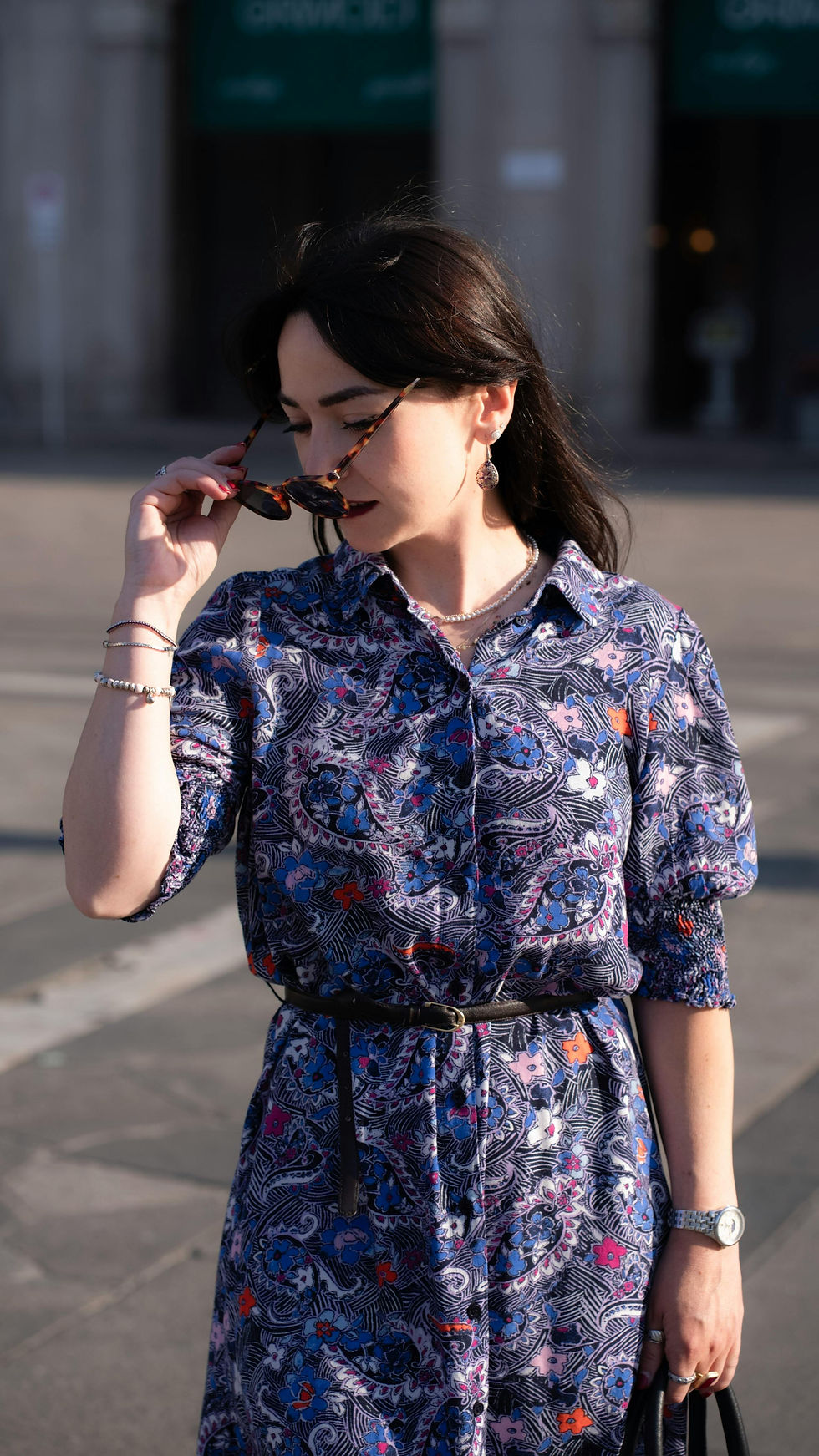
What defines vintage clothing, at its core, is the integrity of its connection to a past era. The craftsmanship, the silhouette, the fabric, the cultural context. These elements together create what we might call the vintage voice of a garment. Age provides the backdrop, but it’s these qualities that determine whether a dress truly earns the title.
For collectors, this perspective is liberating rather than limiting. It means you’re not simply hunting for old things; you’re searching for pieces with genuine substance and story. It also means you can look at a 1980s power-suit dress and recognise its vintage credentials just as readily as a 1940s utility frock, if the construction and cultural significance are there.
Explore more on the nuances of vintage fashion definitions to sharpen your eye for what truly counts.
Explore Original Vintage Style with My Vintage
If reading this has sparked a desire to find those extraordinary pieces for yourself, we’d love to help. At My Vintage, we’ve been curating authentic vintage fashion and homeware since 2004, selecting pieces that genuinely reflect the era, craftsmanship, and individuality that make vintage dressing so rewarding.
Our collection spans the 1940s through to the 1990s, and every piece is chosen with a collector’s eye. Whether you’re looking for a statement 1950s swing dress, a sleek 1960s shift, or something completely unexpected, we source items that tell a real story. We also have a wonderful range of original 1950s vintage pieces that bring mid-century character to your home as well as your wardrobe. Explore the collection and find the piece that speaks to you.
Frequently Asked Questions
What defines a dress as vintage?
A vintage dress is typically at least 20 years old, made during a recognisable past era, and reflects the craftsmanship and style of that period. A dress is generally considered vintage when it is no longer in current production and represents an earlier style, commonly between 20 and 99 years old.
How can I tell the difference between vintage and retro dresses?
Vintage dresses are original garments made during their era, while retro dresses are modern reproductions inspired by past styles. The key difference is authenticity: vintage items were produced in their original period, while retro items mimic those styles using modern materials and construction.
Are all dresses over 20 years old considered vintage?
Not necessarily. While age is the starting point, a dress also needs to demonstrate era-specific craftsmanship, style, and cultural significance to be truly vintage. Age alone isn’t sufficient; quality and cultural relevance are equally important factors.
Why are 1940s and 1950s dresses so popular among collectors?
Their distinctive silhouettes, quality construction, and cultural significance make them particularly sought after. 1940s and 1950s fashion features structured tailoring and defining styles like swing, shirtwaist, and wiggle dresses that remain genuinely beautiful and wearable today.
How can I start collecting vintage dresses safely?
Begin by educating yourself on era-specific markers such as labels, fabrics, and construction techniques, then buy from trusted, knowledgeable sellers who provide accurate dating and provenance. Inspecting garments closely for craftsmanship and condition before purchasing will protect both your investment and your growing collection.
Recommended


Comments