


Vintage Swimwear Guide for Mid-Century Fashion Fans
- May 17
- 10 min read

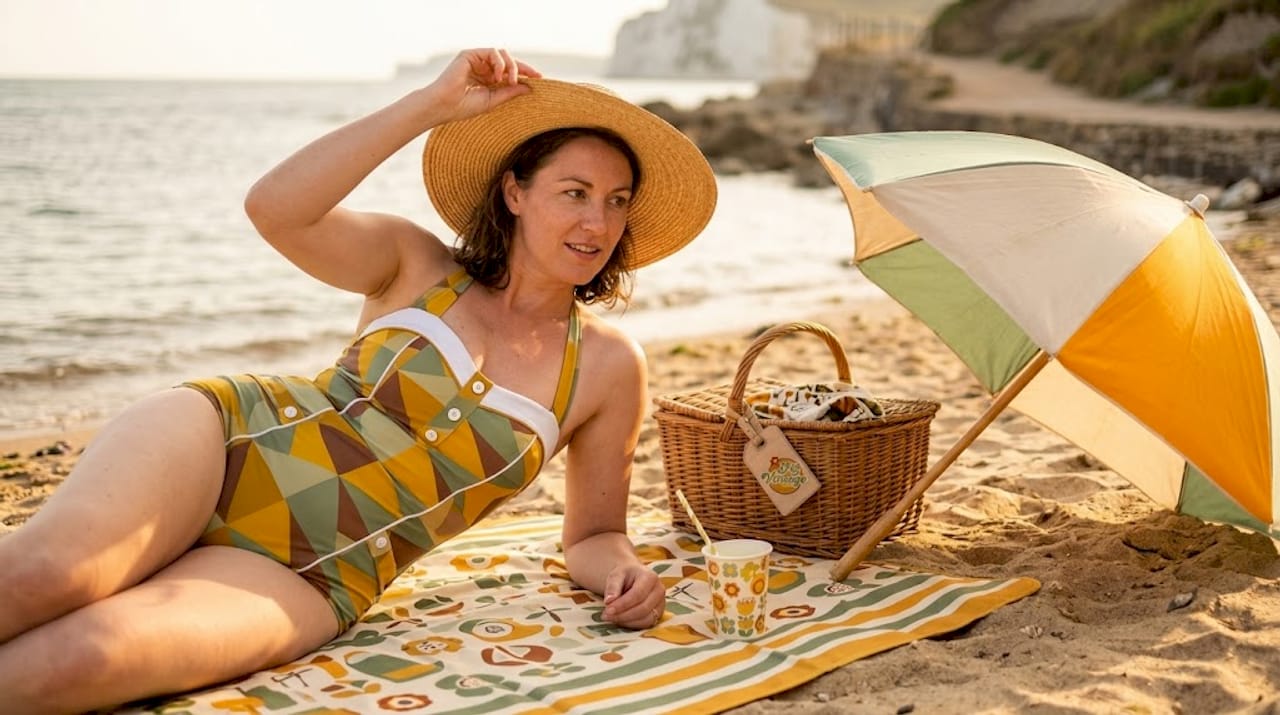
There is a quiet secret hidden inside a well-made 1950s swimsuit: it is not just a costume. Vintage swimwear represents one of fashion’s most impressive engineering achievements, combining foundation garment technology, revolutionary stretch fibres, and sculpted tailoring into a single garment designed to flatter, support, and endure. Modern swimwear often sacrifices structure for stretch, but the retro bathing suits of the mid-century did both at once. Whether you are hunting for an authentic piece or seeking vintage swim styles to inspire your wardrobe, this guide covers history, care, sourcing, and styling, everything you need to wear the past with real confidence.
Table of Contents
Key Takeaways
Point | Details |
Technical innovation | Mid-century vintage swimwear used unique fibres like Lastex for superior shape retention and support. |
Care is crucial | Immediate rinsing and flat air-drying protect elastic fibres, extending the life of vintage swimsuits. |
Source wisely | Authentic vintage swimwear is found through specialised UK vintage shops, trusted online marketplaces, and community tips. |
Decade styles differ | Each mid-century decade offered distinctive swimwear designs reflecting cultural and material advances. |
Sustainable charm | Vintage swimwear combines nostalgic style with durability, offering a sustainable fashion choice. |

The evolution and design of mid-century vintage swimwear
The story of vintage swimwear is really a story about engineering as much as aesthetics. Before the 1950s, swimsuits were largely functional garments made from wool or heavy cotton. They sagged when wet, lost their shape quickly, and offered little in the way of silhouette. The 1950s changed everything.
What made 1950s swim fashion genuinely revolutionary was the widespread adoption of Lastex, a rubber-core yarn wrapped in natural or synthetic fibres such as cotton, silk, or rayon. Lastex became the gold standard for swimwear in the 1950s, providing shape retention and sculpted silhouettes that earlier materials simply could not match. A Lastex suit held its form in and out of the water, meaning the hourglass silhouette stayed put whether you were lounging poolside or actually swimming.
Alongside the fabric revolution came structural innovation borrowed directly from foundation garments. Boning, underwired cups, and built-in elastic panels gave vintage one-piece swimsuits a precision fit that modern suits rarely attempt. The result was beachwear from the past that genuinely shaped the body rather than simply covering it.
Feature | Pre-1950s fabrics (wool, cotton) | 1950s-60s synthetic blends (Lastex, nylon) |
Stretch | Minimal, prone to sagging | Four-way stretch with recovery |
Shape retention | Poor when wet | Excellent in and out of water |
Comfort | Heavy, slow to dry | Lightweight, quick-drying |
Silhouette | Loose, shapeless when wet | Sculpted, structured |
Durability | Wore quickly with chlorine | Better resistance to chemicals |
Key style features of the era included:
High-waisted bottoms that emphasised a small waist and created an hourglass outline
Halter and bra-style tops with built-in support, often underwired
Ruching along the torso to add shape and texture
Bandeau cuts popular for tanning without strap marks
Matching swim caps, cover-ups, and cat-eye sunglasses completing the polished look
Pro Tip: When examining a vintage piece, check the label or fabric for the word “Lastex” or look for a slightly rubbery resistance in the stretch. Genuine Lastex has a firmer, more controlled give than modern Lycra, and it signals both authentic age and excellent structural durability.
The 1960s softened the silhouette slightly as classic swimwear trends began incorporating brighter colours and early two-piece designs. But the engineered foundation of mid-century swimwear remained, giving these classic swimwear trends a legacy that still influences designers today.
With a clearer sense of vintage swimwear’s design origins, we can explore how to care for these delicate and technical garments.
How to care for vintage swimwear and preserve its fit
Caring for vintage swimwear is where many enthusiasts go wrong, and it is entirely understandable. These are not ordinary garments. The elastic fibres and rubber-core yarns that make mid-century pieces so special are also their most vulnerable element.
The single most important step you can take is to rinse your swimsuit immediately after wearing it. Cold fresh-water rinsing immediately after swimming preserves the elastic recovery of fibres like Lycra and Lastex, which salt water and chlorine both degrade with astonishing speed. Think of it as first aid for your suit.
“Correct care is not optional for vintage swimwear owners. A suit that has survived sixty years in a wardrobe can lose its shape in a single careless season of wear. Treat it well, and it will give you years of pleasure.”
Here is a simple daily care routine to follow:
Rinse immediately in cold fresh water after every swim, whether in the sea, a pool, or a lido.
Gently squeeze excess water out by pressing the fabric against itself. Never wring or twist.
Lay flat in the shade on a clean dry towel to air dry. Avoid direct sunlight, which fades colours and weakens fibres.
Hand wash with a mild soap specifically designed for delicate fabrics after every two or three wears.
Store flat or loosely folded in a cool, dry drawer rather than hanging, which can stretch straps and alter the suit’s shape over time.
Avoid tumble drying at all costs. Heat is the silent destroyer of swimwear elasticity, breaking down the bonds within elastic fibres and causing them to lose their recovery permanently. Similarly, avoid leaving your suit balled up in a wet bag for hours after swimming, a habit that many of us are guilty of.
For more detailed advice on preserving vintage clothing, including specialist cleaning methods for delicate mid-century fabrics, we have a dedicated guide that goes beyond the basics.
Pro Tip: If you are washing a genuine vintage piece with suspected Lastex content, use cool water and a tiny amount of wool wash or baby shampoo. The rubber core in Lastex fibres responds badly to harsh detergents, which cause the yarn to dry out and eventually crack.
Understanding care routines empowers you to choose and maintain authentic vintage swimwear confidently, but how do you find genuine pieces?
Sourcing authentic and stylish vintage swimwear in the UK

Finding true vintage swimwear in the UK requires patience, a good eye, and an understanding of what makes a piece genuine rather than a modern reproduction. The good news is that the community is generous with knowledge.
Within the vintage costuming community, Panache and eBay are frequently cited as reliable sources for 1960s style bathing suits, with eBay in particular offering access to genuine old-stock and pre-owned pieces from private sellers across the UK and beyond.
When sourcing, keep these practical tips in mind:
Check fabric content labels carefully. Look for Lastex, nylon, or early Lycra blends as indicators of authentic mid-century construction. Labels from the 1950s and 1960s often list “Lastex” by name.
Examine the construction. Boning, built-in cups, and multiple layers of internal structure are signs of genuine vintage engineering rather than a simple stretch fabric reproduction.
Verify seller reputation. Buy from sellers with strong feedback histories and detailed photographs. Ask for close-ups of labels, seams, and any elastic panels.
Account for vintage sizing. Mid-century sizing ran considerably smaller than modern UK sizes. A labelled size 14 from 1955 may fit closer to a modern size 8 or 10, so always request measurements.
Consider timing your search. Vintage marketplace stock tends to refresh strongly in late winter and early spring as sellers clear out summer collections. Searching in January or February often yields the best selection before the season begins.
If an authentic piece proves elusive, vintage-inspired swimsuits offer a practical middle ground. Many smaller UK designers now produce nostalgic swim attire that draws heavily on 1950s and 1960s silhouettes while using modern materials and, increasingly, eco-conscious fabrics. For Y2K-era swim styles that bridge retro and contemporary aesthetics, Y2K vintage styles offer an interesting point of reference for how old-school swim fashions continue to influence current design.
Staying across new vintage arrivals is one of the best ways to catch authentic pieces as they come in, particularly if you have a specific era or silhouette in mind. For those drawn to 1950s vintage styles in particular, curated platforms tend to offer a more reliable guarantee of authenticity than general marketplaces.
With sourcing strategies in hand, it is useful to understand how vintage swimwear styles evolved across decades to choose the perfect era and silhouette for you.
Understanding vintage swimwear styles from 1940s to 1990s
Each decade between the 1940s and 1990s produced a genuinely distinct swimwear aesthetic, shaped by cultural shifts, fabric innovations, and changing attitudes towards the body. Knowing these differences helps you shop with precision and style with confidence.
Decade | Key silhouette | Primary materials | Signature details |
1940s | Modest, straight-cut | Wool blends, sturdy cotton | Minimal ornamentation, utility focus |
1950s | Sculpted hourglass | Lastex, nylon | Boning, ruching, halter tops, high waist |
1960s | Playful two-piece | Nylon, early synthetics | Bold colour blocks, minimal structure |
1970s | Relaxed, experimental | Lycra blends, polyester | Tropical prints, animal motifs, wider straps |
1980s | High-leg, sporty | Lycra, spandex blends | Bright neons, ruching, athletic cuts |
1990s | Varied, casual | Lycra, recycled nylon | Minimal prints, sporty one-pieces |
The 1940s produced swimwear defined largely by wartime austerity. Fabric rationing meant simpler cuts, less decorative detail, and heavier reliance on whatever materials were available. These suits have a sturdy, honest quality that collectors find compelling precisely because of their restraint.
The 1950s remain the golden era for most vintage bikini design and one-piece enthusiasts. The combination of Latex engineering and Hollywood glamour produced suits that felt almost architectural. Think of Esther Williams films or the poolside imagery of Slim Aarons: that is 1950s swim fashion at its most iconic.
By the 1960s, freedom was in the air. Two-pieces gained mainstream acceptance, colours became bolder, and the obsession with shaping gave way to something lighter and more playful. Early vintage bikini designs from this decade often feature graphic colour blocking and simple ties rather than structured cups.
The 1970s brought in prints that still feel fresh today. Animal patterns, oversized tropical florals, and graphic geometrics all appeared alongside a more relaxed attitude to fit. Lycra blends made suits more forgiving, and the decade’s experimental spirit showed in off-the-shoulder straps, wrap styles, and unusual necklines.
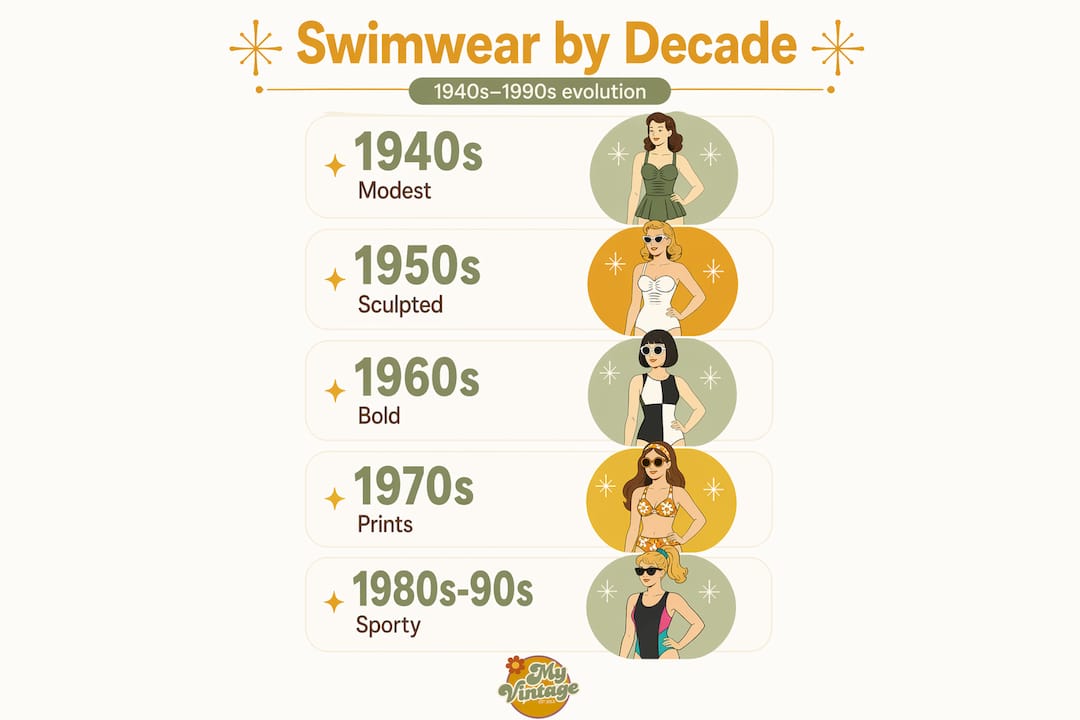
The 1980s and 1990s gave us the high-leg cut, vibrant neon colours, and the fully athletic swimsuit as a fashion statement in its own right. These decades produced some of the most wearable vintage pieces today because the materials have aged well and the cuts flatter a wide range of body types.
Iconic prints and motifs by era worth looking for:
1940s: Nautical stripes, polka dots, simple florals
1950s: Roses, gingham checks, abstract atomic patterns
1960s: Bold geometric blocks, Pop Art-inspired graphics
1970s: Tropical botanicals, leopard print, psychedelic swirls
1980s: Neon brights, Memphis-style shapes, mixed colour panels
1990s: Minimal abstract prints, tie-dye, earth tones
For the very latest pieces crossing our rails, new vintage arrivals are updated regularly and worth checking if you are after a specific decade.
The enduring appeal and unique value of vintage swimwear

Here is something the broader conversation about vintage fashion rarely acknowledges clearly enough: vintage swimwear is not nostalgic in a sentimental, wistful way. It is nostalgic in a better engineering way.
Mid-century fibres like Lastex offered functional construction and a relationship between material and shape that many modern swimsuits simply do not bother with. Today’s fast-fashion swimwear is often a single layer of stretch fabric cut and sewn with minimal internal structure. A 1950s suit, by contrast, was closer to a piece of tailoring, with multiple layers, internal support, and fabric engineered specifically to hold a sculpted line.
“Understanding fibre and construction is not a hobby for specialists. It is the foundation of genuine vintage appreciation, because the fabric tells you everything: what era a piece is from, how it was meant to fit, and whether it will serve you for seasons to come.”
We always advise enthusiasts to read the garment before they wear it. That means looking at the construction details, understanding the textile, and reading any available vintage care tips before cleaning or storing. The joy of a mid-century suit lies not just in how it looks but in how it holds you.
Pro Tip: Before buying any vintage swimwear, ask the seller to stretch a small section of the fabric and photograph it. Genuine Lastex or early Lycra blends will spring back immediately and evenly. Degraded elastic will pucker or stay slightly stretched. This one test tells you more about a garment’s wearable life than any photograph of the outside.
There is also a genuine sustainability argument here. A well-made vintage suit, properly cared for, will outlast several seasons of disposable modern swimwear. Choosing vintage is choosing quality over quantity, structure over stretch, and intention over impulse. That is a point of view we feel strongly about, and it shapes everything we curate at My Vintage.
Discover Your Retro Swimwear Style at My Vintage

At My Vintage, we curate homeware that speaks the same design language as the swimwear you love. The 1950s vintage atomic magazine rack is a genuine original piece that brings the optimism of the space age directly into your living room. For something more decorative, our retro shabby chic painted letters add a warm, personal touch that suits any mid-century inspired interior. Pairing your vintage fashion passion with thoughtfully chosen vintage homeware creates a cohesive aesthetic that is far more satisfying than either in isolation. Browse our full vintage homeware collection and find the pieces that feel like they have always belonged with you.
Frequently Asked Questions
What fabrics are typical in authentic mid-century vintage swimwear?
Authentic mid-century swimwear often features Lastex, a rubber-core yarn wrapped in fibres like cotton or silk, enabling durable stretch and sculpted shapes not found in earlier wool or cotton suits. Nylon and early Lycra blends also appeared from the 1960s onwards.
How should I care for vintage swimwear to maintain its shape?
Rinse your swimsuit immediately in cold fresh water after every swim and air dry it flat in the shade, avoiding wringing, heat, and tumble drying to protect the elastic fibres from permanent damage.
Where can I find authentic vintage swimwear in the UK?
You can find authentic vintage swimwear through UK vintage shops, specialised online platforms, and community forums, where Panache and eBay are frequently recommended as reliable starting points for 1960s style pieces.
What are the key vintage swimwear styles across different decades?
Styles moved from modest, wool-heavy 1940s designs through structured 1950s Lastex suits, playful 1960s two-pieces, bold 1970s prints with Lycra blends, and on to the high-leg, neon-bright cuts of the 1980s and 1990s, each decade reflecting distinct cultural and material shifts.
Recommended


Comments