


Yves Saint Laurent: Vintage Legacy and Influence

Few designers have genuinely changed the rules of fashion rather than simply following them. Yves Saint Laurent was one of those rare figures who reshaped what people wore, how they wore it, and who was allowed to wear it at all. From the ateliers of haute couture to the streets of Paris, his vision collapsed the boundaries between art, gender, and luxury. Whether you are a seasoned collector or simply fascinated by the history of fashion, understanding YSL’s legacy will deepen your appreciation of every vintage piece that carries his name.
The revolutionary beginnings of Yves Saint Laurent
The story of Yves Saint Laurent begins with an almost implausible ascent. Born in Oran, Algeria, in 1936, he moved to Paris as a teenager and quickly caught the attention of Christian Dior himself. At just 21, Saint Laurent became head designer at Dior following the legendary couturier’s death in 1957. His first collection for the house was a triumph, and the Trapèze line, with its flared silhouette and youthful energy, was celebrated as a breath of fresh air in post-war fashion.

However, his tenure at Dior was short-lived. After being called up for military service and suffering a breakdown, Saint Laurent was replaced. Rather than retreating, he channelled the experience into something extraordinary. Yves Saint Laurent founded his haute couture house in 1961 with Pierre Bergé, his life partner and business collaborator. That partnership was unlike any other in fashion history. Bergé handled the commercial and organisational side of the business with formidable skill, freeing Saint Laurent to focus entirely on his creative vision. Together, they built one of the most influential fashion houses the world has ever seen.
What made YSL’s early vision so compelling was its democratic spirit. He wanted to create clothes that were beautiful and wearable, not just spectacular and unattainable. He was among the iconic vintage designers who believed that great style should not be locked behind the doors of private salons. His ambitions from the very beginning pointed towards a wider audience.
Key milestones from his early career include:
Becoming head designer at Dior at just 21 years old
Launching his own couture house in 1961 with Pierre Bergé
Establishing a reputation for blending artistic inspiration with wearable design
Positioning luxury fashion as something that could speak to a broader cultural moment
“Fashion is not something that exists in dresses only. Fashion is in the sky, in the street; fashion has to do with ideas, the way we live, what is happening.” — Yves Saint Laurent
Signatures of Style: Defining YSL’s design legacy
If you want to recognise a vintage YSL piece, you need to understand his design language. It was bold, art-informed, and often deliberately transgressive. His most iconic creations were not simply beautiful garments; they were statements about culture, identity, and possibility.
The Mondrian dresses of 1965, inspired by the Dutch abstract painter Piet Mondrian, remain among the most celebrated examples of art-into-fashion in history. Clean geometric blocks of primary colour on a white shift dress. Simple in concept, revolutionary in execution. That same year, he introduced the safari jacket in the late 1960s and the beatnik look in 1960, bringing a rugged, masculine energy into women’s wardrobes. He also championed women’s trousers at a time when doing so was genuinely controversial.
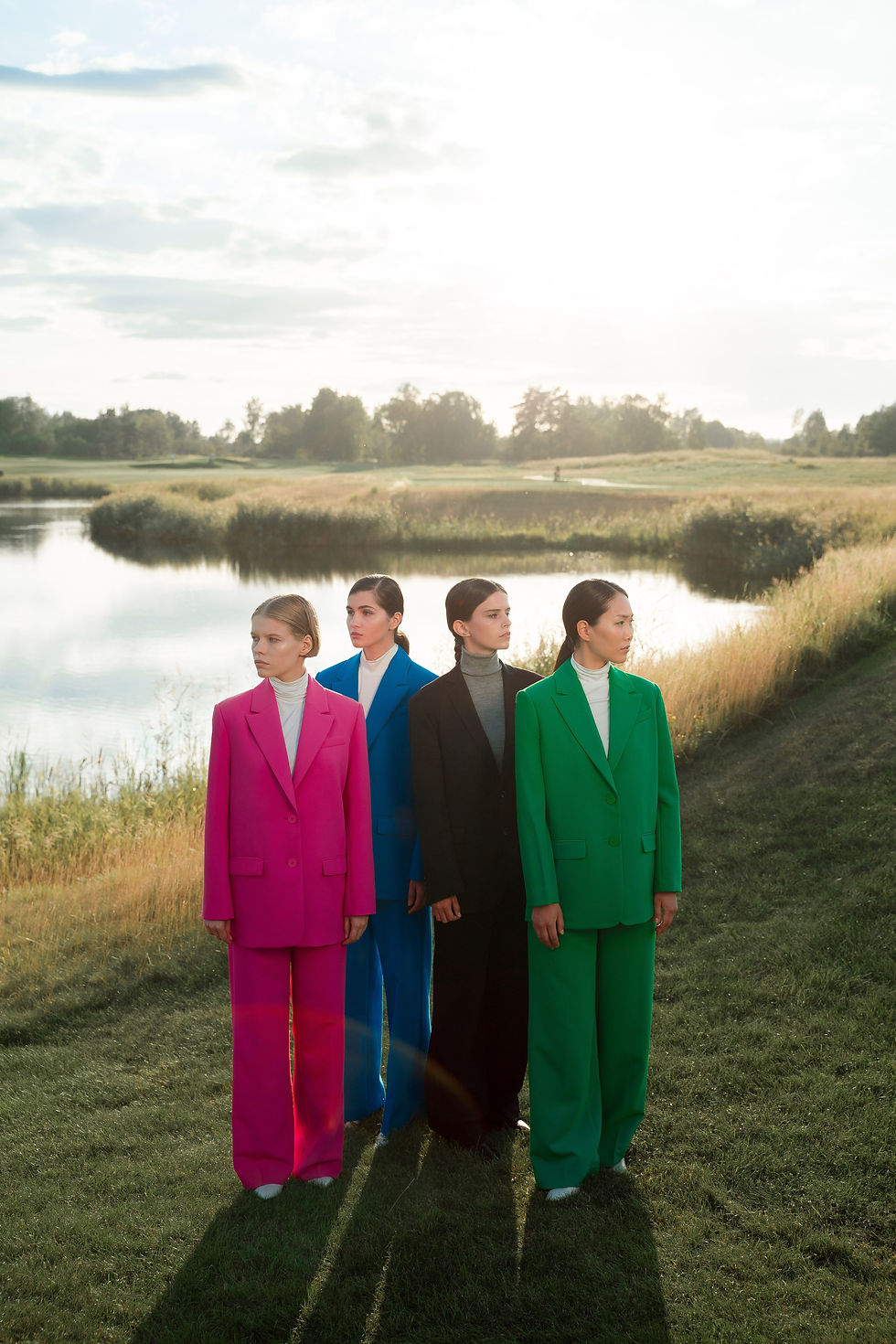
Then there was Le Smoking, the tuxedo suit for women introduced in 1966. It is hard to overstate how radical this was. A woman in a tailored tuxedo was not merely a fashion choice; it was a cultural challenge. Restaurants refused entry to women wearing it. Critics were divided. And yet, Le Smoking became one of the most enduring silhouettes in fashion history, worn by everyone from Bianca Jagger to Helmut Newton’s models.

Iconic YSL design | Year introduced | Cultural significance |
Trapèze line | 1958 | Redefined post-war feminine silhouette |
Beatnik look | 1960 | Brought street culture into couture |
Mondrian dress | 1965 | Merged fine art with wearable fashion |
Le Smoking tuxedo | 1966 | Challenged gender norms in dress |
Safari jacket | Late 1960s | Introduced utilitarian chic to women’s wear |
For collectors, these design signatures are essential reference points. A YSL Rive Gauche green mini dress from the 1980s, for example, carries the hallmarks of his bold colour confidence. Similarly, a YSL silk shirt dress in hot pink reflects his love of vivid, unapologetic femininity. And a YSL navy nautical wrap dress shows his mastery of clean lines and classic references reinterpreted with flair.
Pro Tip: When examining a vintage YSL garment, look at the label carefully. Couture pieces will carry a numbered label and the words “Yves Saint Laurent Paris.” Rive Gauche pieces will be labelled accordingly. The font, stitching quality, and label placement all changed across different eras, so cross-referencing with dated auction catalogues can help confirm authenticity.
Democratising luxury: The Rive Gauche revolution
If YSL’s couture work was the creative heart of his legacy, Rive Gauche was its beating pulse in the real world. In 1966, he pioneered ready-to-wear with his Rive Gauche boutique), becoming the first couture designer to launch a dedicated diffusion line. This was a seismic shift. Before Rive Gauche, high fashion meant bespoke garments made to measure for wealthy clients. After it, the conversation changed entirely.
The Rive Gauche boutique on the Rue de Tournon in Paris was an immediate sensation. Young women who could never afford a couture gown could now wear a YSL design. The clothes were still beautifully made and unmistakably his, but they were priced and sized for a broader market. This move inspired countless other designers to follow suit, fundamentally reshaping the fashion industry.
From a collector’s perspective, Rive Gauche pieces represent a fascinating category. They are more accessible than couture items in terms of price, yet they carry genuine historical significance. The YSL brand’s 2024 sales reached 2.9 billion euros), and the ready-to-wear division was sold to Gucci in 1999 for $1 billion, which tells you everything about the lasting commercial power of what Saint Laurent started in 1966.
What makes a Rive Gauche piece desirable today? Here is a practical guide:
Era of production: Pieces from the late 1960s through the 1970s are the most historically significant and tend to command higher prices.
Condition: Look for minimal fading, intact seams, and no alterations. Original buttons and hardware add considerable value.
Silhouette recognition: Pieces that clearly reflect a signature YSL design moment, such as a blazer with strong shoulders or a wrap dress in a bold print, are more collectible.
Label integrity: The label should be securely stitched, legible, and consistent with the era. Faded or poorly attached labels can indicate either heavy wear or, in some cases, inauthenticity.
Provenance: Any documentation, receipts, or photographs linking the piece to its original owner adds both story and value.
A vintage YSL skirt suit in hot pink is a perfect example of a Rive Gauche piece that ticks many of these boxes. Bold colour, classic tailoring, and unmistakable YSL confidence.
Collecting vintage YSL: Tips for enthusiasts
Collecting vintage YSL is one of the most rewarding pursuits in fashion, but it requires a trained eye and a little patience. The good news is that once you understand his aesthetic language, spotting his work becomes almost instinctive.
Authentication is the first priority. YSL’s revolutionary blending of haute couture with streetwear and menswear for women means his pieces often have a distinctive cross-genre quality. A jacket that feels both masculine and deeply feminine, a dress that references art history while remaining entirely wearable. These qualities are hard to fake convincingly.
Key things to look for when authenticating:
Label consistency: Couture labels are numbered and include the season. Rive Gauche labels evolved in font and layout across decades.
Fabric quality: YSL used exceptional materials. Silk, wool crepe, and fine cotton were staples. If a fabric feels thin or synthetic in a way that seems wrong for the era, be cautious.
Construction details: Hand-finished seams, covered buttons, and precise tailoring are hallmarks of genuine pieces. Machine-finished edges on a supposed couture item are a red flag.
Hardware and fastenings: Zips, buttons, and clasps should be consistent with the era. YSL often used distinctive gold-tone hardware on accessories and fastenings.
Overall proportion: His silhouettes are very specific. The shoulder line, waist placement, and hem length all reflect deliberate design choices that are hard to replicate without deep knowledge.
Condition matters enormously for value. A piece in excellent original condition will always outperform a heavily worn example, even if the latter is rarer. Store vintage YSL pieces in breathable garment bags, away from direct light and humidity. For silk and fine wool, professional dry cleaning is advisable before storage.
Pro Tip: Source from reputable vintage retailers who specialise in authenticated designer pieces. They will have done the hard work of verification and can often provide provenance information that adds to the piece’s story and value. A pair of YSL designer sunglasses from a trusted source, for example, will come with the confidence of expert curation behind it.
Beyond the icon: What most fashion guides miss about YSL
Most articles about Yves Saint Laurent focus on the triumphs. The Mondrian dress. Le Smoking. The Rive Gauche revolution. And rightly so. But there is something important that gets lost in the celebration of his genius, and it is this: his most significant contributions were initially rejected.
Le Smoking is the clearest example. When women first wore the tuxedo suit publicly, restaurants banned them from entry. The garment was seen as provocative, even offensive. Saint Laurent did not retreat. He doubled down. And within a decade, the tuxedo suit had become one of the most copied silhouettes in fashion history. What was once a scandal became a benchmark.
This pattern repeated itself throughout his career. His embrace of androgyny, his use of African and Asian cultural references, his insistence on bringing the energy of the street into the rarefied world of couture, all of these were initially met with resistance. Critics called him reckless. Some accused him of cultural appropriation before the term existed in popular discourse. He pressed on regardless.

For collectors and enthusiasts today, this is a genuinely useful lesson. The most valuable vintage pieces are rarely the safe ones. They are the pieces that carry the energy of a moment when fashion was doing something genuinely new. When you find a YSL piece that feels a little unexpected, a little subversive, that is often precisely where the real value lies. Do not just seek the classic shapes. Seek the ones that still feel like they are pushing against something.
YSL’s legacy is not simply about beautiful clothes. It is about the courage to make fashion that matters, that challenges assumptions and invites people to see themselves differently. That spirit is what makes his vintage pieces so enduringly compelling, and it is what keeps collectors returning to his work decade after decade.
Where to find vintage Yves Saint Laurent treasures
If reading about YSL’s legacy has sparked the urge to own a piece of it, you are in good company. The hunt for authentic vintage YSL is one of the great pleasures of collecting, and knowing where to look makes all the difference.
At My Vintage, we have been curating authenticated vintage designer pieces since 2004, and our love for the craft of great fashion runs deep. Our collection includes genuine YSL pieces across clothing, accessories, and more, each selected for quality, condition, and that unmistakable sense of style that only the real thing delivers. Whether you are after a bold Rive Gauche dress or a perfectly tailored jacket, browsing a trusted source means you can shop with confidence. And if you fancy something beyond fashion, our vintage homeware selection is equally carefully curated for those who love beautiful things in every corner of their lives.
Frequently Asked Questions
What makes a vintage Yves Saint Laurent piece valuable?
Pieces from YSL’s early Rive Gauche collections), those with iconic silhouettes, or limited collaboration items are particularly prized for their rarity and historical significance.
How can I spot a genuine vintage YSL label?
Authentic YSL items typically display a period-appropriate label with neat stitching and materials consistent with the era, such as the fine fabrics seen in his celebrated designs from the 1960s including the Mondrian dress and safari jacket.
Did Yves Saint Laurent design only women’s wear?
No, YSL also designed for men and was groundbreaking in bringing androgynous looks and menswear styles to women’s collections, with his work revolutionising fashion by blending haute couture with streetwear and menswear influences.
Are vintage YSL accessories as sought after as clothing?
Yes, accessories like sunglasses and handbags are popular due to their exceptional craftsmanship and strong legacy appeal among collectors worldwide.
Why is the Rive Gauche line important for fashion collectors?
Rive Gauche represents the pivotal shift of high fashion into ready-to-wear, as YSL pioneered this approach in 1966) as the first couture designer to do so, making his designs more accessible and highly collectible today.
Recommended

Comments